 |  |  |  |  |  |  |  |  |  |  |  |  |  |  |  |
| العربية | Čeština | Dansk | Deutsch | Ελληνικά | English | Español | Français | עברית | Italiano | ქართული | Nederlands | Polski | Português | Pyccĸий | Svenska |






Coronavirus: A French Disaster
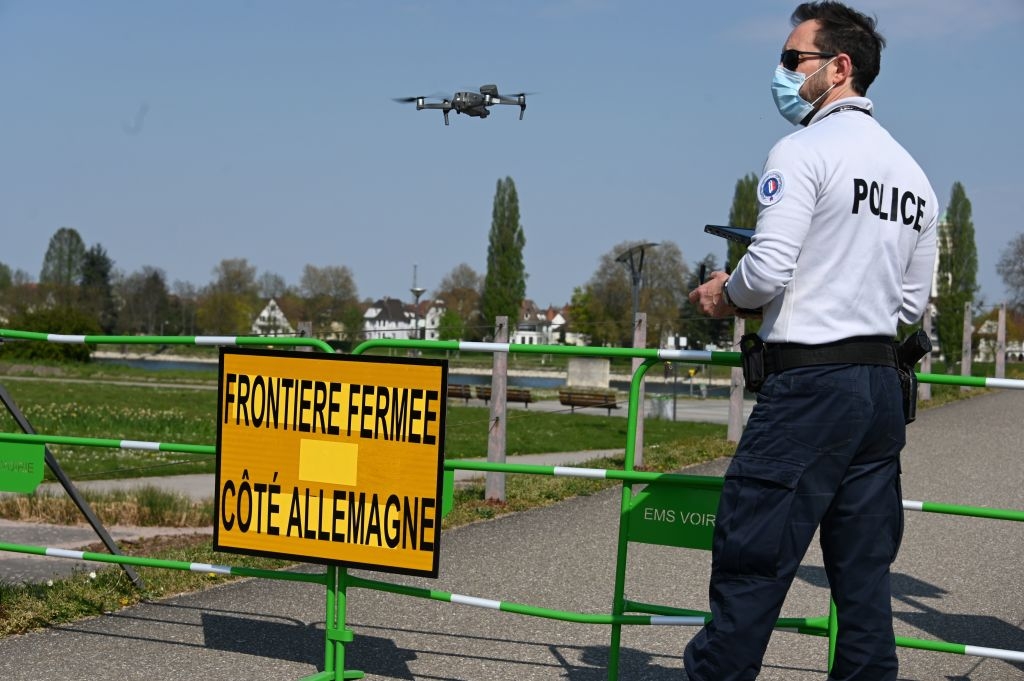
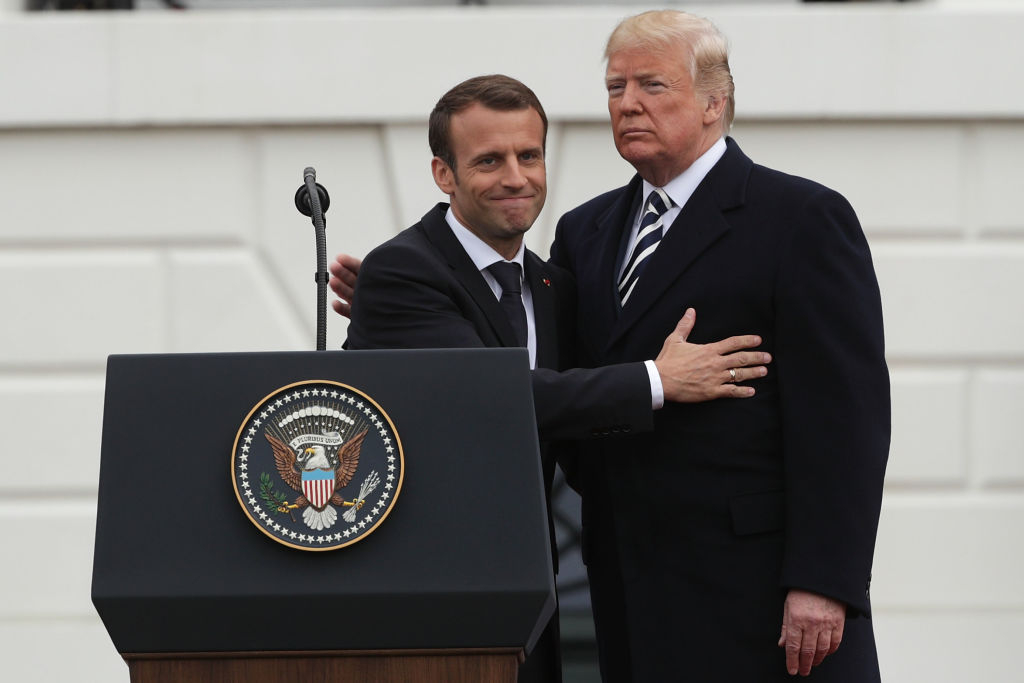
On April 9, in France, one of the three European countries most affected by COVID-19 -- the others being Spain and Italy, 1,341 people died from the Chinese Communist Party virus. For Italy, the main European country affected so far, the figure on April 9 was 610 deaths; for Spain 446, and for Germany 266. While the pandemic has been stabilizing in Italy and Spain -- and in Germany seems contained -- in France it seems still expanding. Extremely bad decisions taken by the authorities created a situation of contagion more destructive than it should have been. The first bad decision was that, in contrast to European Union fantasies, borders apparently do matter. France never closed them; instead it allowed large numbers of potential virus-carriers to enter the country. Even when it became clear that in Italy the pandemic was taking on catastrophic proportions, France's border with Italy remained open. The Italian government, by contrast, on March 10, prohibited French people coming to its territory or Italians going to France, but to date, France has put no controls on its side of the border. The situation is the same on France's border with Spain, despite the terrifying situation there. Since March 17, it has been virtually impossible to go from France to Spain, but coming to France from Spain is easy: you just show a police officer your ID. The same goes for France's border with Germany. On March 16, Germany closed its border with France, but France declined to do the same for its border with Germany. When, on February 26, a soccer match between a French team and an Italian team took place in Lyon, the third-largest city in France, 3,000 Italian supporters attended, even though patients were already flocking to Italy's hospitals. France never closed its airports; they are still open to "nationals of EEA Member States, Switzerland, passengers with a British passport, and those with residence permits issued by France" and healthcare professionals. Earlier, until the last days of March, people arriving from China were not even subject to health checks. French people in Wuhan, the city where the pandemic originated, were repatriated by a military plane, and, upon their arrival in France, were placed in quarantine. While Air France interrupted its flights to China on January 30, Chinese and other airlines departing from Shanghai and Beijing continue to land in France. French President Emmanuel Macron summarized France's official position on the practice: "Viruses do not have passports," he said. Members of the French government repeated the same dogma. A few commentators reminded them that viruses travel with infected people, who can be stopped at borders, and that borders are essential to stop or slow the spread of a disease, but the effort was useless. Macron ended up saying that the borders of the Schengen area (26 European states that have officially abolished all passport and border control with one another) could not be shut down and raged at other European leaders for reintroducing border checks between the Schengen area member countries. "What is at stake," he said, seemingly more concerned with the "European project" than with the lives of millions of people, "is the survival of the European project." Other bad decisions the disastrous management of the means of fighting the pandemic. In early March, when people in large numbers started to arrive ill at hospitals, doctors and caregivers warned that they did not have enough masks and said that working without any protective equipment put them at high risk. Journalists quickly discovered that in 2013, France had possessed a reserve of several million masks, but that the government had decided to destroy them to reduce storage costs. In January 2020, a few hundred thousand masks were still available, but on February 19, President Macron decided to send them to Wuhan, as a "gesture of solidarity with the Chinese people". The French government then announced that masks would be available soon, but by the end of March, most doctors and caregivers still had no masks. Several doctors fell ill. As of April 10, eight have died from COVID-19 and several others are in critical condition. On March 20, the government's spokeswoman, Sibeth N'Diaye, incorrectly said that "masks are essentially useless". At the end of February, France had almost no tests available, and no means of manufacturing them. The government decided to buy tests from China, but by March 19, the number of tests was still insufficient. While Germany performed 500,000 screening tests per week, France was only able to only perform 50,000. Rather than admit that tests were unavailable, or that the government had mismanaged situation, the France's minister of health, Olivier Veran, announced that large-scale screening was useless, and that France had chosen to "proceed differently". Municipal elections, scheduled for March 15, took place despite the virus and despite the fact that many doctors warned that polling stations were places of contagion. Sure enough, in the days that followed, hundreds of people in charge of polling stations flocked to the hospitals. On March 16, President Macron delivered a speech declaring that "France is at war" and that on the following day, March 17, France would be placed on lockdown. Lockdown is still in place and the French government has decided to extend it indefinitely. The rules are strict. The French can only leave home, within a radius of one kilometer, for one hour a day, to buy food, and must have written authorization to present to the police who patrol the streets. Anyone who is on a street without authorization is fined 135 euros ($145) the first time, 1,500 euros ($1,630) the second time, and after three offenses, can be subject to a sentence of six months in prison. Any meeting with a person not sharing the same place of lockdown is prohibited. Most of the population has complied, except in the no-go zones. The police have been ordered to turn a blind eye to what happens there. The no-go zone in Seine Saint Denis, for instance, has a fatality rate 63% higher than in the rest of the country. It was not exactly a secret that before the pandemic that the French economy had also not been doing that well. Growth was barely above zero and unemployment high. Now, the French economy has effectively stopped. It is hard to imagine what the situation will be after the pandemic. Now, almost all the French hospitals are full; patients wait on beds in the halls. On March 18, France had only 5,000 ventilators, so "triage" procedures began: some patients survived, others, for lack of treatment, did not. A scandal erupted. Agnes Buzyn -- who was Minister of Health until February 16, then a candidate for mayor of Paris; then, on March 15, defeated -- said on March 18: "I knew a tsunami [presumably meaning a deadly pandemic] was going to hit France". She added that she had told everything to President Macron in January. Immediately, Marine Le Pen, President of the National Rally, the main opposition party in France, said that "by staying silent about a worrying situation, Agnes Buzyn behaved in an unconscionable manner". Le Pen added, "if Agnes Buzyn is speaking the truth, the government and President Macron have seriously failed in their duties, and the case will have to be brought before a Court of Justice". Another scandal, however, even more important, had erupted before that. On February 25, a celebrated French epidemiologist, Professor Didier Raoult, President of the Marseille University Hospital Institute for Infectious Diseases (Méditerranée Infection), one of the main European research centers on epidemics and pandemics, published a video, "Coronavirus: Towards a way out of the crisis". In it, he said that he had found a treatment to infected people quickly: hydroxychloroquine (a drug used against malaria since 1949) and azithromycin (a commonly used antibiotic), that had already cured 24 patients. Immediately, Olivier Veran, the new French minister of health, said that Professor Raoult's statements were "unacceptable". A harsh medical and political battle began. Many doctors close to President Macron agreed with Veran and denounced Raoult. Some even claimed he was a "charlatan", apparently forgetting that, until then, Professor Raoult had been considered by many France's most prestigious epidemiologist. Other doctors said that Dr. Raoult was right and supported his findings. In an attempt to quell the controversy, the French government, by decree, authorized Professor Raoult's treatment in "military hospitals" for "patients reaching the acute phase of the disease" -- but prohibited family doctors from prescribing hydroxychloroquine. Professor Raoult replied that the treatment was only effective if administered "before the disease reaches its acute phase". [Emphasis added] A clinical trial was launched by the government but Professor Raoult said that "the trial is not based on the treatment I use and is destined to fail." On April 10, Professor Raoult published data showing that he had treated and cured 2,401 patients. A recent international poll of thousands of doctors rated hydroxychloroquine the "most effective therapy" for combating COVID 19. The U.S. Food and Drug Administration (FDA) has authorized widespread "compassionate use" of hydroxychloroquine, while awaiting the results of scientific tests, projects to be complete in "a year or a year and a half". Philippe Douste Blazy, Professor in Medicine, former French Minister of Health, said that "the obstructive behavior of Emmanuel Macron and the French government 'was "criminal'". He added that "the treatment proposed by Professor Raoult has positive results" and that "France will soon be the last country to refuse the use by doctors of hydroxychloroquine." He then launched a petition calling on the government to stop obstructing the use of the treatment. The text was signed by thousands of doctors, professors of medicine and other former ministers of health. The treatment recommended by Professor Raoult still cannot be prescribed by French family doctors. A decree promulgated by President Macron on March 28 authorized doctors to use Rivotril (clonazepam) to "alleviate the suffering of patient in a state of respiratory distress". Clonazepam slows breathing and can lead to respiratory arrest. Dr. Christian Coulon, a renowned anesthesiologist, tweeted: "Euthanasia of our elders suffering from respiratory failure. Yes, they decided [to do] it. As a doctor, I suffer deeply".Dr. Serge Rader explained on radio on April 3 that many senior citizens living in retirement homes and who get Covid-19 are not sent to a hospital because the hospitals are overwhelmed; instead they receive an injection of Rivotril and die alone in their rooms. Many other doctors expressed their horror on social media, but added that they were powerless. The result is that anxiety and anger have increased sharply in the population and add to the distress arising from the pandemic and the strict lockdown. A French lawyer, Regis de Castelnau, wrote in Marianne, a center-left magazine: "The behavior of our leaders has been marked by unpreparedness, casualness, cynicism, and many of their acts imply the enforcement of the criminal law. Deliberate endangerment of the lives of others and failure to provide assistance to people in danger are obvious... In war, generals who are judged incompetent are sometimes shot. The President and other officials are well aware of this and have to know that they will be held accountable."Economists expect the GDP of France in the second quarter of 2020 to be in free fall. One economist, Emmanuel Lechypre, said, "France will experience a very severe recession.... What is happening has never been seen in the past and the country will never be the same." A recent survey shows that 70% of French people think that the government is not telling the truth, and 79% think that the government and the President do not know where they are going. Before the pandemic, France was on the edge of chaos. From the moment President Macron was elected, not a single week in France has passed without demonstrations. The uprising of the "yellow vests" lasted 70 weeks and was accompanied by riots. A strike against a reform of the bankrupt French pension system that began in December 2019 lasted until the appearance of the pandemic. On March 27, Macron said in a threatening tone that those who criticized his handling of the pandemic were "irresponsible" and that he would remember "those who did not live up to his expectations". On April 1, the columnist Ivan Rioufol wrote in Le Figaro: "The president is not only wrong, but he lied and let others lie. He and his team are guilty. The official speech was unable to assess the seriousness of the situation. It denied, to the point of absurdity, the usefulness of national borders... It is the government that repeated, before claiming the contrary, that masks and tests are useless. It is the State that maintains an incomprehensible confusion around chloroquine... The law of silence that Macron would like to impose is completely untenable."Those who hold power in France seem more clueless today than before the pandemic. Sadly, a debacle in France seems increasingly closer. In the French mainstream media, China is treated extremely politely. No journalist will remind the public that that the pandemic began in Wuhan, China. Reporters say that the United States is in a difficult situation and show New York hospitals, as if showing the suffering of Americans would alleviate the suffering of the French. France's mainstream media would do well to fight harder for physicians to be able supply hydroxychloroquine with azithromycin and zinc sulfate. The French media would also do well to be more aware of the dirty game China is playing. On April 5, reports started coming in that in January, before China had let the world know there was a problem, it had begun deliberately lying about it. On January 14, 2020, in a tweet, the World Health Organization repeated China's lie: "Investigations conducted by the Chinese authorities have found no clear evidence of human-to-human transmission of the novel #coronavirus (2019-nCoV) identified in #Wuhan, #China"Meanwhile, Maria Bartiromo disclosed on Fox News, that, before alerting the world about the coronavirus crisis, China had begun cornering the market in medical supplies. It bought $2 billion worth of medical masks -- China makes half the world's supply; why would it buy them? -- as well as hundreds of millions of dollars' worth of other medical gear. Now, reports are stating that China is demanding payment from Italy for donated medical equipment that Italy had donated to China and that China now wants Italy to buy back. Finally, it would not hurt the French media to show more compassion, to pay more attention to what they say, to watch with more care their own society, and to think about ways to find remedies to the economic and political dysfunction that unleashed such an unimaginable horror. Dr. Guy Millière, a professor at the University of Paris, is the author of 27 books on France and Europe. |