Palestinian 'Support' for Saudi Arabia
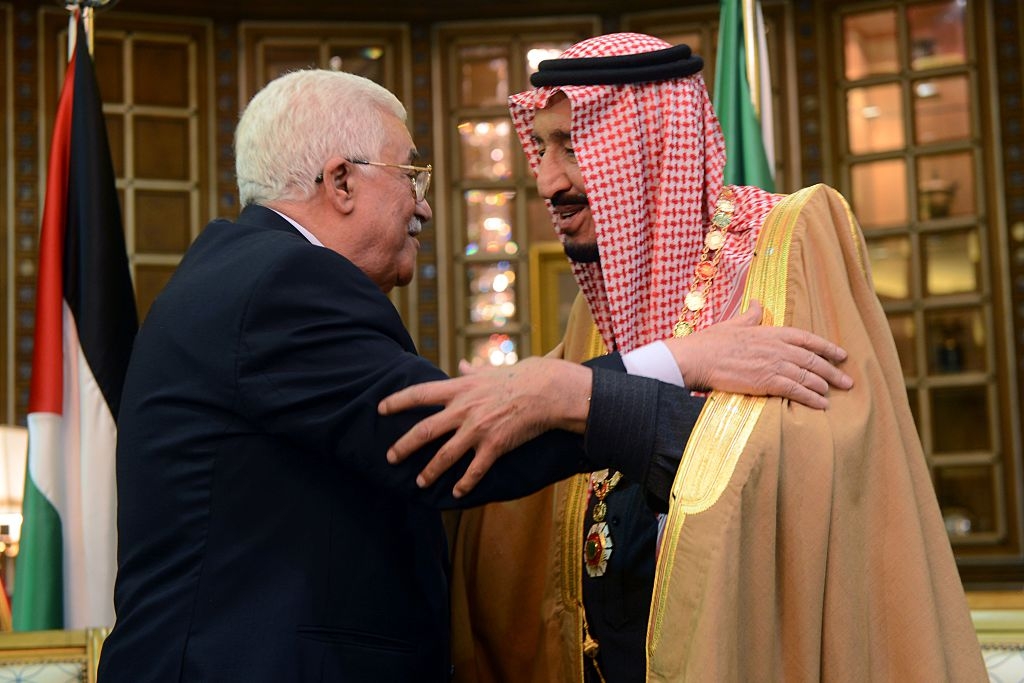
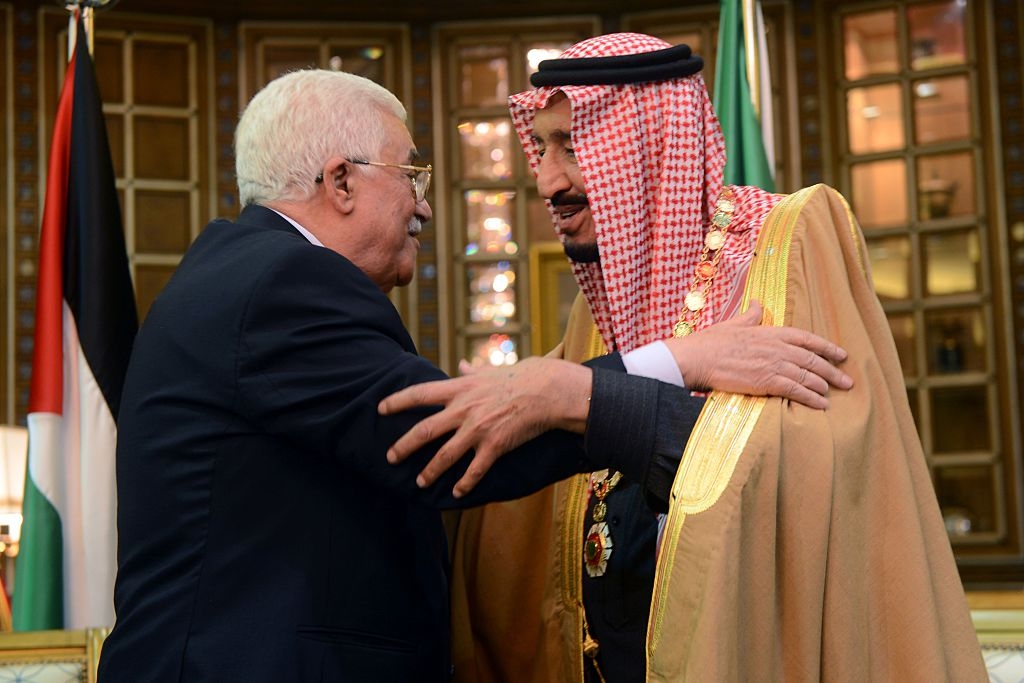
Palestinian Authority President Mahmoud Abbas did not wait for Saudi Arabia to admit that Washington Post columnist Jamal Khashoggi was killed in its consulate in Turkey. Days before the Saudi announcement, Abbas decided that he and the Palestinians have "absolute confidence" in King Salman bin Abdel Aziz and this son, Crown Prince Mohammed bin Salman. As Abbas was busy praising the Saudis for their "justice, values and principles," the London-based Action Group for Palestinians of Syria issued a statement in which it accused the Saudi authorities of preventing Palestinian refugees from entering the kingdom. "Palestinian refugees fleeing war-ravaged Syria have been denied access into Saudi territories," the group said. It pointed out that the Saudi ban excluded Palestinians heading to the kingdom to perform the Islamic hajj, or pilgrimage. The group also pointed out that Palestinians who fled Syria to Saudi Arabia "have been shorn of their right to visas, education, and health care, among other vital services." Saudi Arabia, the group added, "continues to opt for a closed-door immigration policy regarding Palestinian refugees seeking asylum in its territories." This is only one example of Saudi discrimination against the Palestinians. The group's announcement was published on the same day that Abbas was heaping praise on the Saudi leaders. In a statement issued by his office on October 14, Abbas, who described himself as the "President of the State of Palestine," said he "appreciated the positions of Saudi Arabia, a country that has always stood, and continued to do so, on the side of our just cause and the rights of our people." The statement quoted Abbas as expressing "absolute confidence" in the Saudi monarch and his son and said that "Palestine has always stood next to Saudi Arabia, and will continue to do so." This announcement of blind support for the Saudi king and crown prince came as the international community was still demanding answers from the Saudi government concerning the disappearance of Khashoggi. No one knows on what basis Abbas decided to voice, on behalf of all Palestinians, "absolute confidence" in the Saudi leaders at a time when the Saudis were still denying responsibility for the disappearance and murder of the columnist. Abbas's support for Saudi Arabia could be directed against Qatar, which he believes is backing his rivals in Hamas. Relations between Abbas's Palestinian Authority and Qatar have been strained after the emirate decided to buy Israeli fuel for the power plant in the Hamas-ruled Gaza Strip as part of an effort to solve the power shortage there. Abbas's aides have accused Qatar of "meddling in the internal affairs of the Palestinians" by helping the residents of the Gaza Strip and Hamas. Last year, Saudi Arabia and several Arab countries severed diplomatic relations with Qatar over the emirate's alleged support for terrorism, especially the Muslim Brotherhood and Hamas. On the same day the Saudis finally admitted that Khashoggi had been killed inside their consulate, Abbas released yet another statement in which he again expressed full support for Saudi Arabia. This time, Abbas went a step further by publishing the statement on behalf of the "State of Palestine." Here is what the statement, which was released in Ramallah, said about the Khashoggi affair and the Saudi admission that the columnist was killed during a "fight" inside the diplomatic mission in Turkey: "The State of Palestine affirmed that Saudi Arabia, under the leadership of King Salman bin Abdel Aziz and Crown Prince Mohammed bin Salman, shall remain the country of justice, values and principles. The State of Palestine has praised the decisions taken by the Custodian of the Holy Sites (King Salman) to implement justice, fairness, truth and law."First, it is worth noting that Abbas and the Palestinians were not the only Arabs and Muslims publicly to embrace the Saudi leaders in the wake of the controversy surrounding the Khashoggi affair. Several Arab and Islamic countries, including Egypt, Yemen, Jordan, the United Arab Emirates, Bahrain, Oman, Kuwait, Djibouti, and Mauritania have also issued similar statements expressing full support for King Salman bin Abdel Aziz and his son. The Arab League has also come out in support of the Saudi leadership. A statementissued by the Arab League praised Saudi Arabia for its "measures to achieve justice and hold accountable" those responsible for the Khashoggi killing. It is not hard to imagine why so many Arab and Islamic countries would rush to heap praise on Saudi Arabia even before the full details of the Khashoggi case remain unclear. Many Arabs and Muslims can hardly afford to alienate a country as rich as Saudi Arabia. This is a good example of "money talks." However, this does not mean that the Saudi money will ever change the hearts and minds of Palestinians, especially with regards to a peace agreement with Israel. Some Palestinians have been suspicious of Crown Prince Mohammed bin Salman's intentions. Earlier this year, Palestinians across the political spectrum launched a scathing attack on the crown prince after he was quoted as having told Jewish leaders in New York that Palestinians should accept US President Donald Trump's upcoming plan for peace in the Middle East or "shut up." Abbas is not different from the rest of his Arab and Muslim brothers. His statements of support for the Saudi leadership are in the context of his wish that the Saudis will give his Palestinian Authority financial aid. The Saudis claim that they have given the Palestinians $6 billion since the year 2000. Abbas, therefore, has good reason publicly to declare his support for Saudi Arabia in the standoff with the rest of the world over the Khashoggi affair. The $6 billion that the Palestinians received in the past 18 years from the Saudis are sufficient to make Abbas and other Palestinian leaders declare their support for the king and his son even if they commit a crime as bad as demolishing the Al-Aqsa Mosque. The Saudi money also explains why Abbas and his top aides have been silent over the way Saudi Arabia treats Palestinians. This is not the sort of treatment that makes the Palestinian leadership proud. However, when a wealthy country like Saudi Arabia humiliates your people, it is not a good idea to complain too loudly. Last month, it was reported that Saudi Arabia has banned Palestinians holding temporary Jordanian passports from entering the country. The move, according to the reports, basically affects more than 600,000 Palestinians, who will not be able to perform the hajj to the holy cities of Mecca and Medina. Another report said that Saudi Arabia has issued new directives banning up to 300,000 Palestinians in Lebanon from performing the pilgrimage. Perhaps these reports about the Saudi discrimination against Palestinians have not reached Abbas's ears. Or perhaps they have, but why should he or any other Palestinian leader care about the plight of his own people if the perpetrators are so wealthy and influential? In fact, the mistreatment of Palestinians at the hands of their Arab brethren has never been of concern to Abbas and his leadership. They are silent when Palestinians are killed and expelled from their homes in Syria. They are silent when Palestinians face discrimination and apartheid laws in Lebanon. This is because Abbas and the Palestinian officials do not seem to care much about what happens to their people in the Arab countries. Now, it is also clear that they do not care about what Saudi Arabia does to their own people (or to a dissident Saudi columnist) -- just let that Saudi cash keep flowing into the Palestinian coffers. Khaled Abu Toameh, an award-winning journalist based in Jerusalem, is a Shillman Journalism Fellow at Gatestone Institute.
© 2018 Gatestone Institute. All rights reserved. The articles printed here do not necessarily reflect the views of the Editors or of Gatestone Institute. No part of the Gatestone website or any of its contents may be reproduced, copied or modified, without the prior written consent of Gatestone Institute.
|
Our goal is to have intelligent discussion of the topics of the day. We realize everyone has their opinion and they should be allowed to express it in a discussion forum without calling each other names. We learn from discussion and not from name calling or argument.We use cookies to personalise content and ads, to provide social media features and to analyse our traffic. We also share information about your use of our site with our social media, advertising and analytics partners. See details
Contact Form
Showing posts with label Lebanon. Show all posts
Tuesday, October 23, 2018
Saudis And The Palestinians--Poor Brothers Get No Special Treatment
Thursday, November 30, 2017
It's Time For The Palestinians To Stand On Their Own And Be Responsible. Impossible Dream?
Saudis Fed Up: "Palestinians Milking Us for Decades"
A young Saudi man has posted videos on social media in which he calls the Palestinians "dogs" and "pigs." The man says that Saudi Arabia has provided the ungrateful Palestinians with "billions of dollars" during the past few decades. "The Palestinians," the Saudi man charges, "have been milking us for decades."
The videos, which have since gone viral, have understandably drawn strong condemnations from Palestinians, who say they would not have been made public without the tacit approval of the Saudi authorities. For the Palestinians, the abusive videos represent yet another sign of increased tensions in their relations with Saudi Arabia. Further evidence of Saudi disdain for the Palestinians was provided in a video posted by Saudi Arabia featuring a Palestinian gunman as a terrorist. Last July, the Saudi ambassador to Algeria, Sami Saleh, shocked many Palestinians when he described Hamas as a terror group. Hamas responded by saying that such remarks were "harmful to Saudi Arabia and its record and stances towards the Palestinian cause and the legitimate rights of the Palestinian people." The apparent shift in Saudi Arabia's position towards the Palestinians should not come as a surprise. Like most Arab countries, the Saudis too have finally realized that the Palestinians are ungrateful and untrustworthy. Saudi Arabia and most of the Arab countries are obviously fed up with the recurring attempts by the Palestinians to blackmail them and extort money from them.
The Palestinians were ungrateful to Kuwait when they supported Saddam Hussein's invasion of the tiny emirate in 1990. Kuwait was one of the wealthy Arab countries that used to give the Palestinians millions of dollars in aid. The Palestinians were ungrateful to Lebanon, a country that opened its doors to them and allowed the PLO to create its own state within Lebanon. The Palestinians played an important role in tearing the country apart and brought disaster and death to Lebanon, until they were finally expelled in 1982. Before that, in Jordan, in the armed conflict known as "Black September" (1970-71), the Palestinians did the same thing until the late King Hussein ordered his army to eradicate the PLO and all the terror groups in the country. Now, the Palestinians are being disrespectful towards Saudi Arabia -- a country that has provided them with billions of dollars over the past few decades. It is no wonder, then, that a growing number of Saudis are beginning to voice their disgust for the way the Palestinians are behaving and talking. The Palestinians seek to continue holding Saudi Arabia and the rest of the Arab countries hostage. In fact, the Palestinians wish to retain their death grip against Israel at the cost of their Arab brethren. Any Arab who dares to challenge the Palestinians is denounced as a traitor and a Zionist. Palestinian officials say that Palestinian Authority (PA) President Mahmoud Abbas, who visited Saudi Arabia in early November, left the kingdom with a bad taste in his mouth. A senior Palestinian official was quoted as saying that Abbas feels that Saudi Arabia and some Arab countries are would like to see him removed from power and replaced with someone who would be more acceptable to the Americans and Israelis. The Palestinians believe that Saudi Arabia's crown prince, Mohammed bin Salman, is personally spearheading his country's rapprochement with Israel. Some of them are even convinced that it is only a matter of time before Saudi Arabia and Israel establish diplomatic ties as part of a peace treaty. The general feeling among the Palestinian public is that their Saudi brothers have decided to "throw them under the bus" by signing a peace treaty with Israel. The Palestinians claim that Saudi Arabia has accepted the Trump administration's "ultimate solution" for peace in the Middle East -- a plan the details of which remain largely unknown, but is said to promote peace between the Arab countries and Israel before the Israeli-Palestinian conflict is solved. Their biggest fear is that once Saudi Arabia embarks on such a dramatic move, many other Arab countries will follow suit, leaving the Palestinians isolated in the international arena and abandoned by their Arab brethren. The Palestinian Authority, however, is keen not to be seen as taking a public stance against a powerful and wealthy country such as Saudi Arabia. In an attempt to defuse tensions between Saudi Arabia and the Palestinians, some Palestinian officials have come out in defense of the kingdom. Mahmoud Al-Assadi, the PA Consul-General in Jeddah, for example, said that reports claiming that Saudi Arabia was headed towards normalizing its relations with Israel were false and based on malicious rumors. "Saudi Arabia's position towards the Palestinian cause and people is historic and consistent," Al-Assadi said in an interview. "The Saudi leadership has repeatedly made it clear that there will be no normalization with Israel until the Palestinian issue is solved." The PA ambassador to Saudi Arabia, Bassam Al-Agha, has also taken pains to exonerate the kingdom from the "allegation" that it is seeking to normalize its relations with Israel. In an interview with a Saudi newspaper, Al-Agha heaped praise on Saudi Arabia for its continued support for the Palestinians. The Palestinians, he added, "Will always remember Saudi Arabia's generosity, hospitality and support." The public statements of Palestinian officials, however, stand in jolting contrast with the sentiments of the Palestinian public, which seems to be overtly hostile towards Saudi Arabia and its crown prince. The Palestinians believe that the abusive videos posted by the Saudi man and other derogatory remarks by Saudi citizens in the past few days are part of a larger campaign by the Saudi authorities to prepare the Saudis for a peace treaty between the kingdom and Israel. The Palestinians point to a Twitter campaign launched by Saudi citizens under the title of "Riyadh is more important than Jerusalem." The campaign is accompanied by abusive remarks against the Palestinians, who are blamed for the "loss of Jerusalem and Palestine." The campaign also repeats the charge made by many Arab countries, namely that the Palestinian "dogs" have always been ungrateful in the face of massive financial aid from their Arab brothers. The Palestinians have been firing back with full force to this unprecedented online onslaught by the Saudis. "This is a media campaign spearheaded by the boys of the [Saudi] monarch to pave the way for Saudi normalization with Israel," commented Khalid Omar. He and many Palestinians claimed that Mohammed bin Salman was behind the online campaign "that smears and discredits the Palestinian cause." Yusef Jadallah wrote in response: "We're not surprised to hear some Saudis say that Riyadh is more important than Jerusalem. The Saudis are returning to their Zionist origin, which is hostile to Arabs and Muslims. We used to say that the Saudis support us. Unfortunately, the Saudis support Israel publicly."Another comment from Radwan Al-Akhras, of the Gaza Strip: "This online campaign is aimed at fomenting strife among the Arabs and Muslims. The only ones who benefit from it are the Zionists and those who are trying to be Zionists." The Palestinians also point to more troubling voices emerging from Saudi Arabia in recent days. Here, for instance, is what Saudi academic Sa'ad Al-Hussein tweeted on November 25, in reference to the 2007 Fatah-Hamas "reconciliation" agreement: "History relates that it's the Palestinians who sold out their cause. History is also witness that the Palestinians fought amongst each other and betrayed and violated the Mecca accord."Again, many Palestinians took to social media to attack the Saudi academic and the royal family in Saudi Arabia. They accused the academic of being "ignorant" and "illiterate" and claimed that his charges were also designed at paving the way for normalization between Saudi Arabia and Israel. Mustapha Anan, a Palestinian, retorted: "You are a trivial and despicable person; shame on you and your king!" Another Palestinian, Yusri Yusef, responded: "What's the secret behind this Saudi smear campaign against the Palestinians? If you [the Saudis] want to make peace and form an alliance with the Zionists, that's your business. But why these unjustified attacks on the Palestinians?"Echoing the Palestinian public's sentiment, Palestinian political analyst Majed Abu Diak also voiced concern over the apparent rapprochement between Saudi Arabia and Israel. He accused the Saudis of bowing to pressure from the Trump administration. "Saudi Arabia and Israel appear to be in a hurry to normalize their relations," Abu Diak claimed. "The Saudi regime is preparing for Mohammed bin Salman to succeed his father. That's why the regime is prepared to pay the price [to the Americans], which includes normalizing relations with Israel as a way to improve Saudi relations with the US. For Israel, this is an old-new dream of ridding itself of the status of an alien body in the Middle East."Most Arabs, in fact, do not seem to care about the Palestinian "cause" any more, as pointed out in a previous article, which showed how the Arab League ministers were focusing on Iran and Hezbollah while ignoring the Palestinians. Many people in the West are not aware that the Palestinians are trying to torpedo any peace initiative in order to blame others. The Palestinians are crying Wolf, Wolf! -- but only a few in the Arab world are listening to them. This, in a way, is encouraging and offers hope for them finally to be released from decades of repressive and corrupt governance. These are just some of the challenges Saudi Crown Prince is facing. It is important to support him in the face of attacks by some Palestinians and other spoilers. The question now is whether the Saudis and the rest of the Arabs have had enough of the great Palestinian shakedown. Bassam Tawil is a Muslim based in the Middle East.
© 2017 Gatestone Institute. All rights reserved. The articles printed here do not necessarily reflect the views of the Editors or of Gatestone Institute. No part of the Gatestone website or any of its contents may be reproduced, copied or modified, without the prior written consent of Gatestone Institute.
|
Subscribe to:
Posts (Atom)