Shalom, Modi!
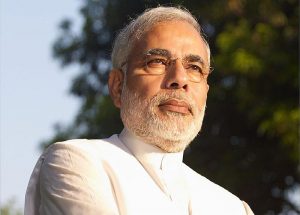
Narendra Modi via Wikimedia Commons
BESA Center Perspectives Paper No. 514, June 30, 2017
EXECUTIVE SUMMARY: The first week in July, Narendra Modi will become the first Indian prime minister ever to visit Israel. Start-ups and defense will be high on his agenda.
Much as the revolutionary kibbutz collectives shaped the state of Israel as it emerged in 1948 in a hostile neighborhood, its vibrant and innovative start-ups are now the building blocks of the modern Jewish state. This sliver of a country of 8.4 million is a leading innovation hub with the highest density of startups and venture capital in the world. It has more NASDAQ-listed companies than any other country save the US and China – more than India, France, Germany, Japan, South Korea, Singapore, and Hong Kong combined. The total market capitalization of these Israeli companies exceeds $85 billion.
The Israeli innovation ecosystem has engendered many groundbreaking advances. Israeli companies either pioneered or were among the first to commercialize firewalls (Check Point), voicemail (Comverse), USB flash drives (M-Systems), VoIP (Vocaltec), and digital printing (Indigo). Israeli startups have also driven innovation across all major technology sectors, as in the cases of Amdocs and Comverse in telecommunications applications, Verint and NICE in contact center applications, Mercury in information technology (IT) management, Check Point in security, DSPG in semiconductors, and Mellanox in Infiniband.
Research and development (R&D) is a major thrust in Israel, which has proportionately more scientists and tech professionals than any other country in the world. Almost 40% of Israeli high-tech employees are engaged in R&D for many major global tech companies that have subsidiaries or research centers in Israel. These include Intel, Microsoft, Google, Cisco, Facebook, Applied Materials, Apple, IBM, Hewlett-Packard (HP), Oracle, and Motorola. Their innovations are used the world over, as with Intel’s Pentium PC/laptop processors, Google’s Google Suggest, and most of HP’s software infrastructure.
India, too, is a thriving hub for start-ups, having launched over the past decade trailblazers like Flipkart, Snapdeal, redBus, ItzCash, Myntra, SVG Media, Paytm, FreeCharge, Citrus Pay, and many more. This sector, in which billions of dollars are invested, will be high on Prime Minister Narendra Modi’s agenda as he embarks on his landmark visit to Israel in the first week of July.
Modi’s visit will be the first by an Indian prime minister to Israel since its establishment. He and his counterpart, Benjamin Netanyahu, will commemorate the 25th anniversary of the two nations’ opening of respective embassies in 1992. India had formally recognized Israel much earlier, on September 17, 1950, and a consulate was opened in Bombay in 1953 (primarily as a facility to cater to the Jewish population in India).
New Delhi nevertheless kept aloof over the years for two reasons: its dependence on the Arab world for oil, and its extensive expatriate population working in the Gulf states.
BJP-led Indian governments have traditionally had closer ties with Jerusalem than governments led by other parties. Those ties have flowered into areas ranging from agriculture, education, science and technology, and IT to diamonds, defense, counter-terrorism, and homeland security.
Amazingly, the senior partner in the bilateral relationship has been Israel, a country 0.63% the size of India. Its population is 0.64% that of India and its GDP $297 billion to India’s $2.25 trillion, but its GDP per capita is $34,800 to India’s $6,700. Israel enjoyed a trade surplus in its two-way trade with India of $4.16 billion in 2016, exporting goods worth $2.4 billion while importing only $1.76 billion of merchandise.
If defense were to be included, Israel’s trade surplus would be even more lopsided. India is the world’s largest arms purchaser, and Israel is among its chief suppliers of military equipment alongside the US and Russia.
With India its largest arms client, Israel netted its biggest-ever defense contract in April when New Delhi awarded Israel Aerospace Industries (IAI) contracts totaling almost $2 billion. IAI will supply the Indian Army with medium-range surface-to-air missiles (MR-SAM), air and missile defense systems, and a long-range SAM (LR-SAM) air and missile defense system for India’s first indigenous aircraft carrier, the Vikrant (still under construction). These systems are groundbreaking air and missile defenses that provide the ultimate protection against a variety of aerial threats.
An IAI subsidiary, ELTA Systems, also supplied an Integrated Underwater Harbor Defense and Surveillance System (IUHDSS) commissioned by the Mumbai-based Western Naval Command in February. This state-of-the-art system integrates radar, advance sensors, electro-optic cameras, and sound navigation and ranging systems (SONARs). Its sensors have been strategically deployed around the harbor to provide comprehensive real-time situational awareness for monitoring and analysis. It is capable of detecting, tracking, identifying, and generating warnings for any underwater or surface threat.
India buys military hardware worth an average of over $1 billion from Israel every year. More arms deals are expected to be announced during Modi’s Israel visit.
Though there is much public focus on the defense relationship, authorities on both sides are exploring the many ways Israeli technology and know-how can be used to boost the development of India’s critical sectors, including food security, water management and efficiency, cyberspace and data protection, e-learning and innovation, and digitalization.
Modi’s visit will draw on the paths defined by President Pranab Mukherjee’s visit to Israel in October 2015 – the first by an Indian president – and the reciprocal visit by Reuven Rivlin last November, the second visit to India by an Israeli president since Ezer Weizmann’s in 1996. Only one Israeli Prime Minister, Ariel Sharon, has ever visited India (in 2003). Last year also saw visits to Israel by Indian External Affairs minister Sushma Swaraj and Agriculture Minister Radha Mohan Singh. Israeli Agriculture Minister Uri Ariel has visited India twice and Science, Technology, and Space Minister Ofir Akunis once.
The presidential visits aroused much interest at both ends, particularly in the field of academia, resulting in many university exchanges. As many as 21 MoUs were concluded between Indian and Israeli academic institutions during Rivlin’s visit to India. Israel has been offering post-doctoral scholarships to students from India and China from 2012 and since then, 300 out of almost 400 fellowships have been awarded to Indian students. Israel also offers 250 summer scholarships for Indian and Chinese students in chosen courses at Israeli universities. India offers five ICCR (Indian Council for Cultural Relations) scholarships to Israelis every year and an equal number of scholarships are offered by Israel for 10-month programs in specialized fields of study.
Under the bilateral action plan for 2015-18 for cooperation in agriculture, 10 of the proposed 26 Centers of Excellence being developed with Israel have already been commissioned across India. New Delhi has benefited from Israeli expertise and technologies in horticulture mechanization, protected cultivation, orchard and canopy management, nursery management, micro-irrigation, and post-harvest management. Israeli drip irrigation technologies and products are now widely used in India. The two countries signed an MoU on Cooperation in Water Resources Management as well as a Declaration of Intent to further cooperation in agriculture during Rivlin’s India visit.
Apart from the Cooperation in Science and Technology (S&T) Agreement of 1993, an MoU was signed in 2005 on the Industrial Research and Development Initiative. This led to the setting up of a joint industrial R&D fund, i4RD. In 2013, the Karnataka State Council for S&T and the Karnataka S&T Promotion Society signed an MoU with the Israel Innovation Authority. That program provides financial support to industries for bilateral R&D projects involving at least one small- or medium-scale company in Karnataka and one such Israeli company.
Prime Minister Modi has said the countries’ vision of cooperation was of a strong high technology partnership, as befits two leading knowledge economies. He told Israel’s visiting agriculture minister Uri Ariel that India was keen to learn from the Israeli start-up ecosystem and incubation centers, and announced the Startup India Initiative in January of last year.
Indian majors have begun leveraging the Israeli innovation ecosystem. In 2013, Tata Industries and Ramot, the technology transfer company of Tel Aviv University, signed an MoU for funding and generating commercial technologies in fields such as engineering, exact sciences, environmental and clean technology, pharmaceuticals, and healthcare. Ramot CEO Shlomo Nimrodi states that with a $5 million investment, Tata Industries became the lead investor in Ramot’s $20 million Technology Innovation Momentum Fund.
In 2016, Tata joined with several leading global players to set up a new technology incubator, i3 Equity Partners (i3), which focuses on developing next-generation IoT technologies. Wipro has invested in TLV Partners, an Israel-based venture capital firm. Sun Pharma has signed research collaborations with Technion University and the Weizmann Institute for developing drugs for oncology and brain diseases, respectively.
At the recent annual conference held in Tel Aviv by Geektime, Israel’s largest start-up and tech blog, Geektime convenor and editor-in-chief Yaniv Feldman said Israeli start-ups had been affected by the bursting of the Silicon Valley bubble in 2015 as much of their venture funding comes from American investors. “In the first half of 2016, it looked like Israel was onto a record year in start-up funding, raising $2.32 billion in financing compared to $2.8 billion for all of 2015,” he said. “But while the second half of the year usually brings in more funding, only $1.85 billion was raised, an over 20% drop.” However, he added that despite the slump, Israeli start-ups performed significantly better in 2016 (with $4.2 billion of financing) than they did in 2015, with $2.8 billion, and in comparison with many markets around the world. He attributed the dip to various global events, such as Brexit, the US election, and China’s economic slowdown.
The Geektime event had 100 startups presenting products. “We look for companies that have not been revealed to the general public, have raised less than $3 million, and are interested in unveiling their products for the first time on the conference stage,” explained Feldman. Geektime Next also featured a Geektime Match event bringing together Israeli startups and representatives of international corporations not usually present in Israel for the purpose of generating cooperative efforts.
Uri Gabai, Chief Strategy Officer of the Israel Innovation Authority (formerly the Office of the Chief Scientist of the Ministry of the Economy), says the Authority is mindful of the fact that an innovation ecosystem is complex and changes rapidly. “In order to serve our clients in the best possible way, we constantly strive to adapt our support tools to the changing demands and challenges of the high tech industry in Israel,” he states. “Accordingly, we design and operate a variety of dedicated programs for private sector companies, promoting unique initiatives that translate policy into practical tools for the industry.”
This, he adds, ensures the continuous development of the Authority’s operational scope, along with the expansion and strengthening of technological R&D in Israel. The Authority advises Knesset committees regarding innovation policy in Israel and also monitors and analyzes the dynamic changes taking place throughout the innovation environments in Israel and abroad. He points out that the Authority creates cooperation with counterpart agencies to promote technological innovation in the Israeli industry and economy.
Gali Bloch Liran, marketing manager of SOSA (South of Salame), a multidimensional platform for global start-up ecosystems founded by the pioneers of the Israeli innovation community, explains that Israel is so entrepreneurial because of the early role of military R&D. That industry helped to create the nation’s tech industry, much as it did in the US. At 4.2% of GDP, Israel spends more on R&D — public and private combined — than any nation in the world.
The government also takes more direct measures to boost the tech sector. In the 1990s, it subsidized venture capital, incubators, university R&D, and technology transfer programs. While less than 1% of start-ups in the US manage to scale and expand, 4% of new businesses in Israel do. This success rate is largely attributed to Israel’s seamless relationship between mandatory military training and an evolving culture of independence that encourages a desire to redefine the modern marketplace.
Also, its lack of natural resources and raw materials has redoubled Israel’s efforts to hone a highly qualified labor force, scientific institutes, and R&D centers. Today, Israeli industry concentrates mostly on manufacturing products with high added value by developing products based on Israel’s scientific creativity and technological innovation.
“India and Israel are two ancient peoples, proud of their cultures and respective history, two vibrant democracies whose peoples are curious and eager to grasp the future,” said Rivlin during his presidential visit. “I believe that together, we can shape a better future for Israel, India and the world.”
Sarosh Bana is Executive Editor of Business India.


