
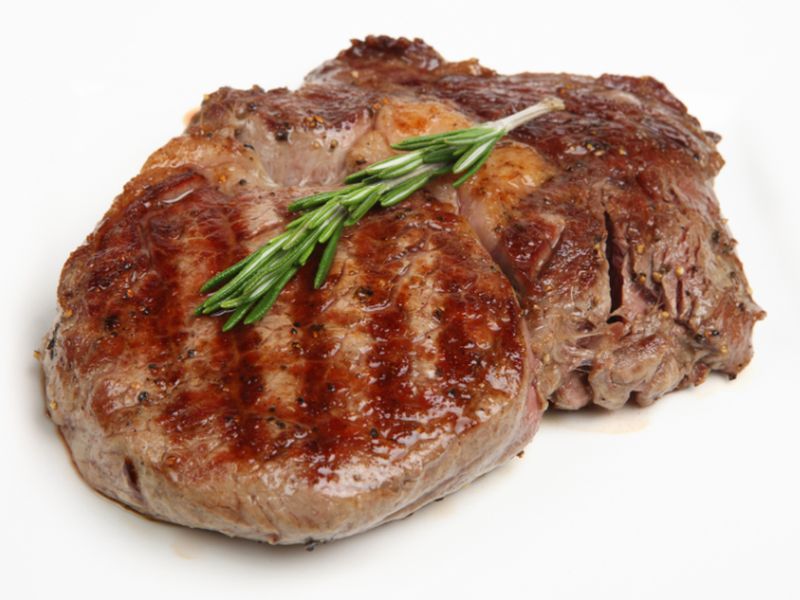
WEDNESDAY, March 21, 2018 -- You might think twice about how you want that steak cooked.
People who like their steak well-done instead of rare might face a slightly increased risk of high blood pressure, a preliminary study suggests.
The study, of more than 100,000 U.S. adults, found the odds of high blood pressure were a bit higher among people who liked their meat grilled, broiled or roasted, versus those who favored more temperate cooking methods.
The same was true of people who were partial to well-done meat. Compared with fans of rarer meat, they were 15 percent more likely to develop high blood pressure over 12 to 16 years.
The findings do not prove cause and effect, researchers said.
But they do add to evidence suggesting people should not only limit the amount of meat in their diets -- but also pay attention to how they cook it.
"Our results imply that both reducing the amount of meat -- especially red meat -- and avoiding the use of open-flame or high-temperature cooking methods may potentially aid in [high blood pressure] prevention," said lead researcher Gang Liu, of the Harvard T.H. Chan School of Public Health.
What's wrong with a grilled steak?
Research suggests that cooking to the point of "charring" is the main issue, said Linda Van Horn, a spokesperson for the American Heart Association who was not involved in the study.
The process produces chemicals that are not normally present in the body, explained Van Horn, who is also a professor of preventive medicine at Northwestern University's Feinberg School of Medicine in Chicago.
Those chemicals include heterocyclic aromatic amines (HAAs) and polycyclic aromatic hydrocarbons (PAHs).
According to Liu, lab studies suggest the chemicals can trigger inflammation within the body, which could contribute to high blood pressure and other health problems.
Meanwhile, studies have found that people who eat a lot of well-done meat tend to face increased risks of certain cancers, as well as heart disease and type 2 diabetes.
The new study is the first to look for a connection to high blood pressure, Liu said.
High blood pressure can lead to stroke.
Liu was scheduled to present the findings Wednesday at a heart association meeting, in New Orleans. Studies presented at meetings are generally considered preliminary until they have been published in a peer-reviewed journal.
The findings are based on three long-term health studies of nearly 104,000 U.S. health professionals in total.
All were meat eaters, and were free of high blood pressure and heart disease at the outset, when they gave detailed information about their diets and lifestyle habits. Over the next 12 to 16 years, more than 37,000 study participants developed high blood pressure.
It turned out that the risk was higher among those who favored high-temperature cooking or well-done meat, Liu said.
People who grilled, broiled or roasted their meat more than 15 times a month had a 17 percent greater risk of high blood pressure, versus people who used those cooking methods fewer than four times a month. "Meat" included beef, poultry and fish.
The findings were similar when the researchers compared fans of well-done meat with those who usually took their meat rare.
Finally, Liu's team estimated people's HAA intake, based on their diet details. And those in the top 20 percent for HAA intake had a 17 percent greater risk of high blood pressure than those in the bottom 20 percent.
There could, of course, be other differences between people who favor well-done meat and those who opt for rare.
But Liu said his team accounted for many of those factors, including overall diet, exercise habits, smoking and body weight.
So how should people cook their meat?
According to Liu, pan-frying and boiling -- at "moderate temperatures and duration" -- seem like potentially healthier choices.
Van Horn agreed that avoiding charred meat is a prudent move. She also stressed, though, that overall diet and lifestyle habits are critical to having healthy blood pressure numbers.
"We have so many recommendations for lowering blood pressure that studies have shown to be effective," Van Horn said. "Reduce your sodium intake. Eat plenty of fruits and vegetables. Get regular exercise. Maintain a healthy weight.
"Limiting well-done meat," she said, "is just one measure of many."
More information
The American Heart Association has more on lifestyle and blood pressure.
Copyright © 2018 HealthDay. All rights reserved.


