Contact Form

Name

Email *

Message *

Showing posts with label obama crap care. Show all posts

Monday, December 17, 2018

ObamaCrapCare Is It Dying?

Why a Judge Ruled Obamacare Unconstitutional, and What Policymakers Should Do Next
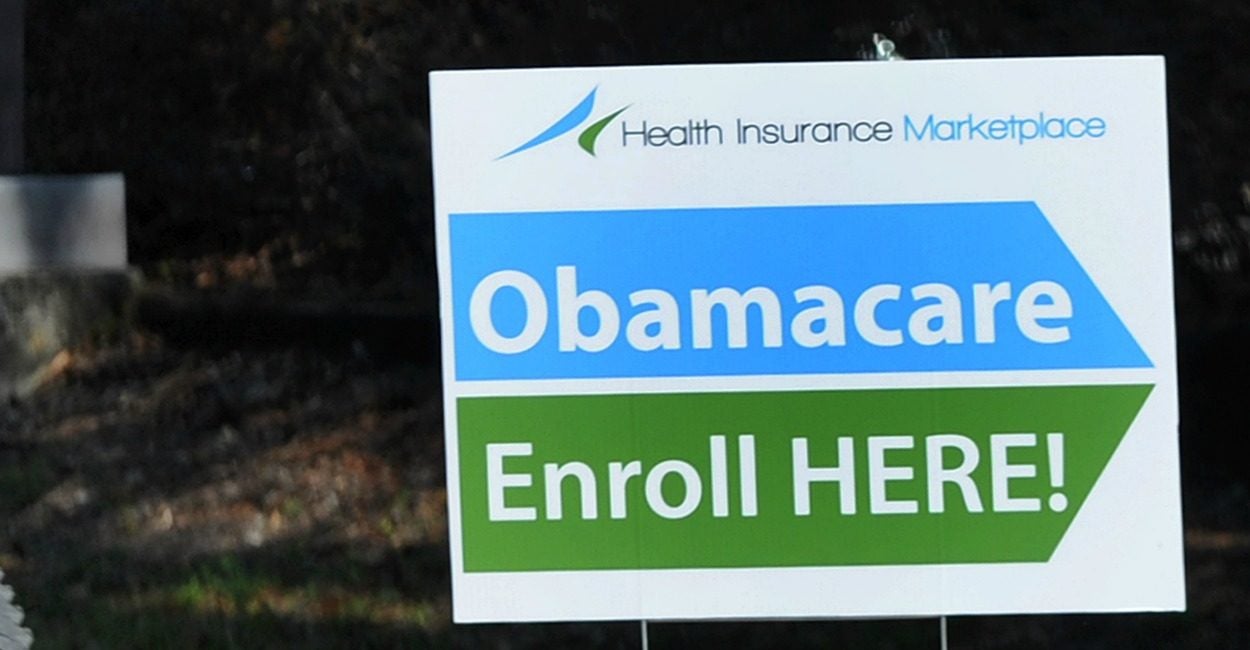
An Obamacare sign is seen outside a health insurance marketplace enrollment center in Orlando, Florida, on Feb. 15, 2015. (Photo: Paul Hennessy/Polaris/Newscom)
A judge has declared Obamacare unconstitutional—but the case is far from over.
U.S. District Judge Reed O’Connor, a George W. Bush appointee, granted a motion for summary judgment Friday in favor of 20 states led by Texas that had filed a lawsuit seeking to strike down the Affordable Care Act.
Now that O’Connor has ruled, the losing side is sure to appeal to the 5th U.S. Circuit Court of Appeals, and ultimately the Supreme Court.
However, as the case continues to wind its way through the legal system, it is imperative that policymakers pursue real health care reform. Obamacare isn’t working for too many American families and individuals slammed with high premiums and few choices. Rather than looking for ways to keep Obamacare in place amid these legal challenges, lawmakers should pursue real solutions.
The liberal Left continue to push their radical agenda against American values. The good news is there is a solution. Find out more >>
The Judge’s Reasoning in Striking Down Obamacare
As part of the last year’s Tax Cuts and Jobs Act, Congress repealed the financial penalty associated with failing to comply with the individual mandate, effective in 2019.
In 2012, in NFIB v. Sebelius, the Supreme Court upheld the constitutionality of the individual mandate by the narrowest of margins when Chief Justice John Roberts, providing the deciding vote, devised a novel theory construing the penalty associated with violating the individual mandate as a tax that Congress has the power to levy under the Constitution.
Texas argues that once the penalty is reduced to $0, it can no longer be considered a legitimate tax, and that therefore the individual mandate would no longer have a constitutional leg to stand on.
Moreover, Texas argues, in upholding the individual mandate, the Supreme Court appeared to rely on the argument that Congress considered the individual mandate to be a central—indeed, indispensable—component of Obamacare that is not “severable” from the rest of its provisions, and that without it, the rest of the law should be invalidated.
A group of 17 states led by California are defending the law, arguing that even a tax of $0 is still a tax, and that it was never Congress’ intent to get rid of the rest of Obamacare when it repealed the financial penalty associated with the individual mandates as part of last year’s tax bill.
In granting the plaintiffs’ motion, O’Connor stated, showing his agreement with Texas’ argument:
The [Tax Cuts and Jobs Act] eliminated that [individual mandate] tax. The Supreme Court’s reasoning in NFIB—buttressed by other binding precedent and plain text—thus compels the conclusion that the individual mandate may no longer be upheld under the tax power. And because the individual mandate continues to mandate the purchase of health insurance, it remains unsustainable under the Interstate Commerce Clause—as the Supreme Court already held.
Finally, Congress stated many times unequivocally—through enacted text signed by the president—that the individual mandate is “essential” to the ACA. And this essentiality, the [Affordable Care Act’s] text makes clear, means the mandate must work ‘together with the other provisions’ for the Act to function as intended. All nine justices to review the [Affordable Care Act] acknowledged this text and Congress’s manifest intent to establish the individual mandate as the [Affordable Care Act’s] ‘essential’ provision. The current and previous administrations have recognized that, too. Because rewriting the ACA without its ‘essential’ feature is beyond the power of an Article III court, the Court thus adheres to Congress’s textually expressed intent and binding Supreme Court precedent to find the individual mandate is inseverable from the [Affordable Care Act’s] remaining provisions.
What Should Be Next
But the legal fight aside, we need a better health care solution than Obamacare.
One of Obamacare’s core conceits was that what (allegedly) worked in Massachusetts would also work on a national scale. That hasn’t borne out.
Instead, Obamacare led to years of increasing costs and decreasing choices. Premiums doubled in the first four years of the program. Millions lost the coverage they used to have. Americans found it harder to pick the right plan and doctor, as health plan choices declined and provider networks narrowed. Frustrated providers are drowning in red tape and increasingly feeling burned out. Meanwhile, taxpayers are on the hook for the money needed to paper over Obamacare’s flawed structure.
Those who seem to benefit most from Obamacare are big insurance companies that embraced the law and receive a steady stream of taxpayer subsidies and politicians who made endless promises to reform Obamacare but failed to deliver.
Real Solutions for Pre-Existing Conditions
Regardless of these facts, expect many in Congress to call for immediate restoration of Obamacare in the name of protecting the sick and people with pre-existing conditions.
Some on the left claim Congress must protect Obamacare because only Obamacare allows Americans with pre-existing conditions to get coverage. That’s an irresponsible, false dilemma and Congress should reject it.  
There are steps that states can take right now to ensure people with pre-existing conditions are protected, even if Obamacare ultimately goes away.
Congress should let states review their health care regulations and pursue innovative ways to make coverage more affordable and accessible to Americans—regardless of their income or medical status.  Every state legislature is about to go into session in early 2019, so this is both a desirable and possible approach.
Empower the States 
Congress does have a role to play in helping families and individuals get the quality private coverage they want, and helping health care professionals meet their needs. Conservatives have a proposal to achieve this: the Health Care Choices Proposal, which undoes Obamacare’s damage by letting states innovate.
Under Obamacare, insurance companies receive taxpayer subsidies dollar for dollar as they raise prices.  This proposal does away with that flawed spending scheme.
Instead, it would convert existing Obamacare spending into a grant that states would use to ensure chronically-ill patients have access to the health coverage of their choice. Greater flexibility and resources to the states means that all Americans, even those who are chronically sick, would have access to more health plans at better prices.
The Health Care Choices Proposal would lower premiums up to an estimated 32 percent and ensure that everyone can access a quality private coverage arrangement of their choice.
And everyone who gets a subsidy could decide what coverage to use it for, including private or employer-sponsored health insurance.
Individuals and families would be able to decide what coverage arrangement works for them, and decide whether to work directly with a doctor for primary care and buy catastrophic coverage, or get a plan that covers more costs up front. The proposal would be especially helpful to the working poor, who may want to have private coverage but lack the means to pay for it.
For most people, this is a much better option than what happens today: being pushed onto a government-controlled plan a bureaucrat thinks is best for them.
This proposal would build on a promising, emerging trend already happening in the states. When states have been given even a little bit of freedom from Obamacare’s mandates, they’ve been able to lower premiums using tools that ensure that the sick still retain access to care.
Politicians have long promised to replace Obamacare with solutions that help everyone. It’s time to deliver—no matter which way the courts go.

Thursday, November 7, 2013

For Those Who Believe That Obama Is The Second Coming, This Video Clearly Shows How His Lies Are Now Coming Back To Hurt Him. Kinda Reminds Us Of The "Great Right Wing Conspiracy"

THIS 2009 WHITE HOUSE VIDEO ABOUT OBAMA’S HEALTH CARE VOW MIGHT MAKE THE PRESIDENT PRETTY UNCOMFORTABLE RIGHT NOW

Here’s something that could prove embarrassing for the White House: The Obama administration in a 2009 “fact check” video worked hard to refute specific claims that consumers could lose their private insurance due to Obamacare and said anyone saying so is “twisting” the president’s words.
Obviously, as news of millions of private health care insurance cancellations continues to grab headlines, the 2009 YouTube video would seem to add to the administration’s already damaged credibility on the issue.
In the “fact check” video, Linda Douglass — the communications director for the White House’s Health Reform Office — works hard to refute critics who said certain private health insurance plans would be cancelled, even saying they were were “twisting” the president’s word.
“(N)othing can be farther from the truth,” Douglass says, specifically pointing to a headline on the Drudge Report. “You know the people who always try to scare people whenever you try to bring them health insurance reform are at it again.”
This 2009 White House Video About Obamas Health Care Vow Might Make the President Pretty Uncomfortable Right Now
Image source screen grab.
“(T)hey’re taking sentences and phrases out of context, and they’re cobbling them together to leave a very false impression,” she said, adding that Obama’s critics have been “cherry-picking” his speeches.
The video then tries to reassure the public that any such elimination is untrue, even playing a July 28, 2009 video of Obama saying the following: “Here’s a guarantee that I made: If you have insurance that you like, then you will be able to keep that insurance. If you got a doctor that you like, you will be able to keep your doctor.”
But that’s not all!
An Aug. 4, 2009 post on the official White House blog stated: “For the record, the President has consistently said that if you like your insurance plan, your doctor, or both, you will be able to keep them.”
Contrary to these “fact checks,” millions are indeed being dropped from their private insurance plans, with Obamacare being cited as the main reason.
In fact, the cancellations — and the subsequent consumer outrage — has forced the president to add a disclaimer to his previous “you can keep it” claim.
“Now, if you have or had one of these plans before the Affordable Care Act came into law and you really liked that plan, what we said was you can keep it if it hasn’t changed since the law passed. So we wrote into the Affordable Care Act, you’re grandfathered in on that plan,” Obama said Monday at an Organizing for Action event. “The bottom line is that we are making the insurance market better for everybody and that’s the right thing to do.”
Still, despite the president’s attempt to amend earlier campaign promises, the 2009 “fact checks” may ultimately prove embarrassing for the Obama administration.
And if the above video of Linda Douglass looks familiar, it may be because it was lampooned by none other than Glenn Beck in 2009:

Tuesday, July 16, 2013

ObamaCrapCare: Outrageous Spending, Little Choice, Higher Premiums

We read the following story with disgust. First of all it comes from an insurance website which should be embarrassed by the lack of specificity in the facts. Secondly, the amount of money being spent in Vermont is atrocious. $168.1 million to institute the program in the small state of Vermont. One can only wonder what the amount would be in larger states like New York.

Thirdly, Vermont will only have two companies providing insurance through their exchange. Isn't that wonderful, so much for choice and options!

Fourthly, the rates quoted do not say what age this hypothetical person is to receive the premiums quoted. We would suspect it is a 20 some year old. Premiums at older ages would be substantially higher.

Fifth, it appears as if the Vermont system will not be up and running on October 1 even though hundreds of millions have been spent on it.  One can only imagine what the mess will result when the manual payments are processed. Can anyone see "cluster?"

And lastly, regulators shaving 4.3% off the rates, did anyone go back and ask what the rates would have been before ObamaCrapCare?  Our guess, significantly less!

The closer we get to the actual start of ObamaCrapCare, the worse it looks and the more problems that will result when it finally gets running.  It will cost trillions of dollars, be very inefficient, provide very limited choice and will eliminate the  plan you like.  That sounds like a real recipe for success!

Conservative Tom


Vermont HIX Sets Health Plan Rates

BY: ELLIOT M. KASS
JULY 15, 2013
 PRINT
 EMAIL
Vermont, one of 17 states building its own health insurance exchange, last week finalized the rates for the policies to be sold through the online marketplace beginning October 1.
Last April, the board of the state’s exchange, known as Vermont Health Connect, announced tentative rates subject to the approval of state regulators. This week the regulators shaved 4.3 percent off the rates initially proposed by Blue Cross Blue Shield of Vermont and MVP Health Care, the only two insurers planning to sell health plans through the exchange.
Under the revised rates, an individual purchasing the benchmark “silver plan” through Vermont Health Connect would pay $388 a month for the Blue Cross offering and $410 a month for the MVP policy. All health plans sold on the exchange must offer certain ‘‘essential health benefits” as defined by the Affordable Care Act, but fall into one of four “metal” tiers—bronze, silver, gold and platinum—that differ in terms of monthly premiums, deductibles and other out-of-pocket costs.
The premiums are similar to what a healthy individual currently pays for a similar level of coverage, according to a Blue Cross Blue Shield spokesman. But people with lower incomes who qualify for the federal tax credits and state premium subsidies offered through the exchange will pay substantially less than they do now, as will people who are currently charged higher premiums owing to a long-standing medical condition.
‘‘For those who qualify for the tax credits and premium subsidies, there’s a pretty big difference,’’ said Anya Rader Wallack, chairwoman of the Green Mountain Care Board, the state regulatory body that approved the policy rates.
As an example, a Vermont resident earning the median individual income of about $34,000 a year would qualify for subsidies that would lower the cost of the Blue Cross silver plan to around $230 a month and the MVP plan to about $252 monthly.
Around 100,000 Vermonters who currently have no health coverage will be required to purchase insurance through the exchange.
In a related development, Vermont Health Connect received this week a $42.7 million grant from the Centers for Medicare and Medicaid Services to help cover the costs of launching the new web-based marketplace. This was the fifth major federal grant Vermont has received to date to help launch the exchange, bringing the total to $168.1 million.
The money is slated for a call center, a system to process premium payments and for contingency planning against the possibility that the exchange’s IT systems are not up and running by October 1, the deadline set by the ACA for the exchange to begin selling policies. Last month, exchange officials told state legislators that, in the event of a system failure, they were preparing to “manually process” insurance enrollments at the start of October.

Friday, June 28, 2013

ObamaCrapCare -- The Upcoming Mess

Oh, yes, there are problems in River City and the problem beings with an "O" and it ends with ObamaCrapCare.  This mess of dishonest, misleading legislation is going to bankrupt the nation  and if it does not do that it will decimate the health care system. It was NOT intended to work. It's only use is a transition from individually controlled health care to nationalized health care.

Don't be confused, this was the original intent. Otherwise, it would not have been underfunded (ten years of taxes for 7 years of benefits, allowance for many companies to opt out of the system, overburdening doctors offices with, if you believe the hype, millions of new patients and no new doctors, hogtying insurance companies with unrealistic claims verses benefit payment percentages and so on and so on.  

Now we are starting to see the cracks develop and as the article says, this is going to be a planned "train wreck."  We only hope that you and yours do not fall into the cracks that surely will develop. Remember, this all was planned.

Conservative Tom


Even with perfect implementation, ObamaCare’s a train wreck

By Hadley Heath - 06/28/13 03:00 PM ET
Every week – nearly everyday – we hear about a new “glitch” in the implementation of the president’s health law.  Last week, we found out that states are behind schedule establishing “exchanges,” the regulatory bodies that will oversee the sale of insurance to people not covered by employer-sponsored plans.
But Americans should keep in mind that ObamaCare is not a good law that is being executed poorly. The real problem with implementation is that ObamaCare is a fundamentally flawed law.  Moreover, the law’s creators were aware of its design flaws, but passed it anyway, hoping to fix things as they went along.
Indeed the law already has had some massive make-overs of its most egregious flaws: A paperwork-tsunami provision that would have forced businesses to file 1099 forms for other businesses (not just individuals) has been repealed. ObamaCare’s long-term care insurance program was also scrapped when bureaucrats had to admit it was financially unsound.  And it took a Supreme Court case to remind Washington that states could not be forced to expand their Medicaid programs.

But many problems remain.  One important design flaw was the creation of a new federal subsidy that was authorized only in states that establish their own exchanges.  This puts in jeopardy the law’s functionality – from the subsidies to the taxes and mandates they trigger – in 34 states that have refused to create their own exchanges.

The restriction of subsidies to exchange-establishing states was intentional, not a “glitch.”  This was one way the federal government expected to coax all states into creating exchanges.  It just didn’t work, as many state lawmakers recognized that running an exchange was a raw deal: a costly endeavor without meaningful control.

While the IRS has attempted to correct this through a regulatory “interpretation,” it’s not clear that the agency has the authority to deliver these subsidies in 34 states.

When money for the law’s Pre-existing Condition Insurance Plan ran out earlier this year, this was played off as another unanticipated implementation hiccup.  Enrollment was cut off, denying some40,000 applicants still waiting for coverage.   Yet lawmakers knew funding for this program was insufficient when passing the law.  Even the CBO warned that $5 billion in funding was far too low. 

Similarly, HHS Secretary Kathleen Sebelius – who this summer has been approaching outside organizations asking for money to implement the law – admitted during a Capitol Hill hearing that she and others knew from the outset that the law was not passed with enough funding.

Could it be that lawmakers avoided properly funding the law in order to get a more favorable CBO score, so they could misrepresent the law as “deficit-neutral?” This was no glitch; this was a part of the smoke and mirrors.

Finally, anyone with an understanding of economics could see that the law’s employer and individual mandates would not work as advertised. 

Employers seeking to avoid the penalties associated with the employer mandate are slashing employees’ hours to keep them from full-time status (which requires coverage or triggers the penalty).  This was predictable.

ObamaCare advocates originally promised widespread decreases in premiums – $2500 on average – but now they are walking back on this promise and explaining that higher premiums are simply the price we all must pay to get more coverage (as mandated by the law).  This isn’t a “glitch” either.

For some Americans, the law may actually incentivize them to become uninsured. Yes, there is a penalty for that, but the penalty is so low ­– especially when compared to the price of insurance – that many people could be better off waiting until sickness or catastrophe strikes to buy insurance.  After all, the law’s “guaranteed issue” provision means we can buy insurance from a hospital bed, because insurers will no longer be able to take health status into account.

As healthy individuals exit insurance pools, premiums will go higher for those who remain.  That’s something creators of the “Affordable” Care Act should have known.

There are many more examples of programs and provisions in the law that will no doubt be called “glitches” when they turn out badly.  But each time we hear a headline about how “far fewer than expected” benefit from ObamaCare, or how the costs are “much higher than anticipated,” let’s remember that it’s not the law’s implementation that is the problem.  It was a messy, dishonest legislative process that produced a terrible, fundamentally flawed law.
Heath is senior policy analyst at the Independent Women’s Forum (www.iwf.org).


Read more: http://thehill.com/blogs/congress-blog/healthcare/308267-even-with-perfect-implementation-obamacares-a-train-wreck#ixzz2XXgJySQd 
Follow us: @thehill on Twitter | TheHill on Facebook

Saturday, April 27, 2013

Even Democrats Concerned Over ObamaCrapCare

Last week the retiring Senator Max Baucus, raised concerns over the Affordable Care Act (ACA) to which we refer in this blog as ObamaCrapCare. Now that concern seems to be spreading to the entire Democratic host of Senate Democrats. 

One wonders where they were when this terrible piece of legislation was passed. We also wonder why they did not see the problems when they wrote this abortion. Or were they so stupid and did not read the bill before they voted for it.

This is another example of Congressional/Senatorial malfeasance. We see it every day, on every piece of legislation.  There are NO leaders in Washington, only political hacks who vote according to their leaders. They do not focus on the impact on America, only how it will effect their re-election.

It is time for a house cleaning in Washington. We need to remove them all from office. Additionally, we must limit terms and remove all the wonderful benefits they have voted for themselves. It is time they return to the status of "public servant" instead of being hogs at the trough.

Conservative Tom


.Senate Democrats Raise Concerns Over Implementation of Obamacare
Friday, 26 Apr 2013 12:26 PM
By Lisa Barron
Share:
More . . .
A    A   |
   Email Us   |
   Print   |
Democratic lawmakers are worried about political fallout if the final implementation of Obamacare next year fails to hold down premium costs and only ends up confusing more Americans about what their options are.

According to The New York Times, the Democrats raised concerns directly with administration officials at a recent luncheon meeting with Denis McDonough, the White House chief of staff.

Their message? They are beginning to hear from constituents who are confused and worried about how the law will affect them and some lawmakers voiced concerns about programs within Obamacare that aren't being run as planned.

New Hampshire Sen. Jeanne Shaheen, told the Times she is "hearing from a lot of small businesses in New Hampshire that do now know how to comply with the law.” She said many are still “trying to figure out whether it would be in their interest to reduce employees’ hours” to avoid the law’s requirement that they cover health insurance premiums for full-time workers.

Shaheen, who is up for re-election next year, said the White House “acknowledged that these are real concerns, and that we’ve got to do more to address them.”

Iowa Sen. Tom Harkin, chairman of the Senate Appropriations subcommittee on healthcare, also voiced his concerns, telling the Times: “I am greatly disappointed —and beyond upset — that the administration chose to help pay for the Affordable Care Act in fiscal year 2013 by raiding the Public Health and Prevention Fund.”

Harkin was referring to the White House’s acknowledgement that it had transferred $322 million from the prevention fund to pay for promotion of the new insurance exchanges.

At Congressional hearings this week, Secretary of Health and Human Services Kathleen Sebelius reportedly said the administration needed to tap the fund because Congress had refused to provide money for outreach activities.

In addition, Maryland Sen. Benjamin Cardin told the Times he is worried about big rate increases being sought by the largest health insurer in his state, CareFirst BlueCross BlueShield. He said the company is seeking increases of roughly 25 percent for individual policies that will be sold in the state health insurance exchange, and a 15 percent increase for small businesses. The company reportedly said the higher premiums reflect the costs of complying with the new law.

Meanwhile, Congressional leaders in both parties are concerned about the potential cost of healthcare for lawmakers and their staffs if the federal government does not continue to provide subsidies to them for insurance premiums they will be required to purchase from state exchanges.


© 2013 Newsmax. All rights reserved.


Read Latest Breaking News from Newsmax.com http://www.newsmax.com/Newsfront/senate-democrats-obamacare-implementation/2013/04/26/id/501566?s=al&promo_code=134BA-1#ixzz2Rhgka5yM
Urgent: Should Obamacare Be Repealed? Vote Here Now!