 C
Friday, April 12, 2019


Thursday, April 11, 2019
Just Another Notch On Her Belt
Kenneth Starr Admits He Thinks Hillary Triggered Vince Foster's Suicide
image: https://aanews-structure-psyclone.netdna-ssl.com/client_assets/aanews/media/picture/5a7c/6207/6970/2d4b/b2d3/0100/Slideshow_hillary-1724469_1920.png?1518101022

Starr chose to omit these details from his 1998 report to Congress on President Bill Clinton's perjury and infidelity to spare the first lady further pain. (The Washington Examiner)
Hillary Clinton's humiliation of Foster in front of his peers steered him to take his own life on July 20, 1993, six months into her husband's presidency. But Starr, appointed independent counsel in 1994, "did not want to inflict further pain" on the first lady, according to author Ronald Kessler, who pressed Starr on the matter after a recent speaking appearance in Maryland, at the Annapolis Book Festival.
Circumstances of Foster's suicide have long been fodder for conspiracists, with Clinton critics contending the first couple had something to do with it in order to cover of misdeeds from Whitewater, a late 1970s Arkansas land deal in which they lost money. President Clinton and Foster had been friends since kindergarten in Arkansas.
Kessler, according to the Daily Mail, says that a week before Foster's death, Hillary Clinton berated and belittled him in front of other senior White House aides during a healthcare policy discussion, harshly ridiculing him over his small-town Arkansas background. Former FBI agents Coy Copeland and Jim Clemente said Hillary Clinton told Foster in front of his colleagues that he was not ready to be in D.C., among the highest rungs of government, according to Kessler.
"Hillary put him down really, really bad in a pretty good-size meeting," Copeland said. "She told him he didn't get the picture, and he would always be a little hick town lawyer who was obviously not ready for the big time."
Foster's profound struggle with depression was exacerbated by his move to Washington, D.C. – halfway across the country from his wife and son, still attending school in Arkansas.
Read more at http://americanactionnews.com/articles/kenneth-starr-admits-he-thinks-hillary-triggered-vince-foster-s-suicide#xlpLZhOzTCqcJ6z0.99

Thursday, April 4, 2019
Are Democrats Wanting Barr To Break The Law That They Passed?
 |  |  |  |  |  |  |  |  |  |  |  |  |  |  |  |
| العربية | Čeština | Dansk | Deutsch | Ελληνικά | English | Español | Français | עברית | Italiano | Nederlands | Polski | Português | Pyccĸий | Slovenčina | Svenska |






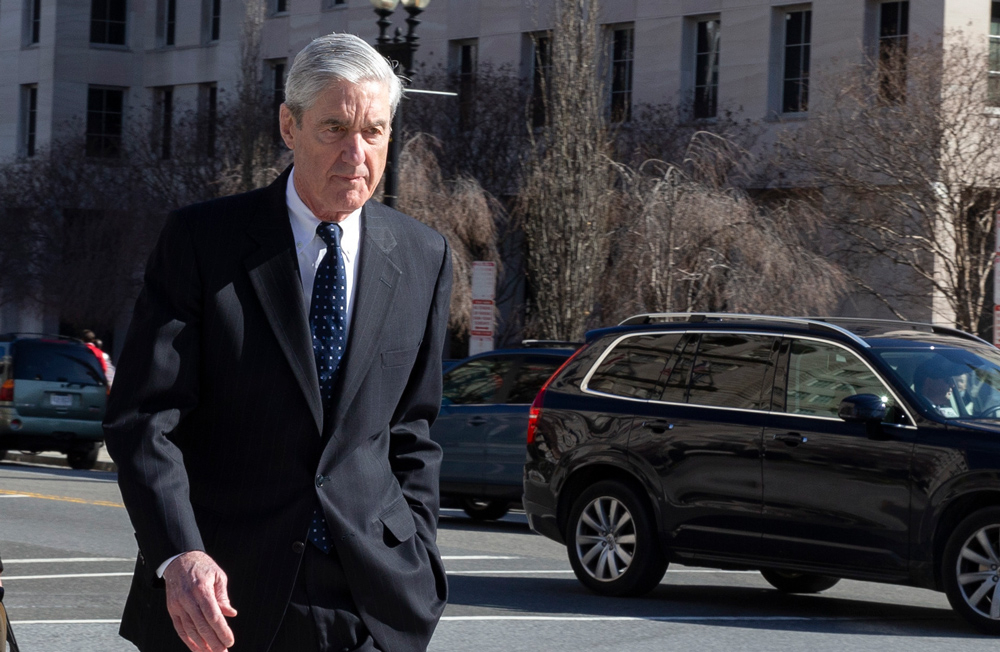
The Mueller Waiting Game
The waiting game is on as politicians and pundits try to read the tea leaves regarding the soon-to-be-released Mueller Report. We know the major conclusions: no criminal conspiracy between the Trump campaign and Russia; and no charges of obstruction by President Trump, based on a division of opinion among the investigators and a decision by the Attorney General and the Deputy Attorney General. What we do not know is how critical the report will be, especially with regard to obstruction. We can reasonably expect that those investigators who favored accusing the President with obstruction will lay out their case against Trump. This raises the legal and ethical question of whether it is proper for prosecutors publicly to disclose the evidence and arguments against the subject of a criminal investigation who is not being charged. Let us subject that question to the "shoe on the other foot test." To do so, we must go back to the statement made by then-Director of the FBI James Comey after he completed his investigation of Hillary Clinton and her private email server. Assume, for purposes of this test, that Comey had simply announced the decision not to charge Clinton with any crime, but the Republicans had learned that he had submitted a report to the Attorney General giving the reasons for not charging her. There were rumors that the report was critical of Clinton's handling of her private server as careless, maybe even extremely careless. Assume further that the Republicans demanded the public release of that critical report. Democrats would be outraged, insisting that all the public had the right to know was that a decision had been made not to charge her. The public did not have the right, nor did prosecutors have the authority, to disclose any other conclusions they may have reached about her non-criminal carelessness during their criminal investigation. The public certainly did not have the right to see grand jury testimony critical of Clinton. So, what is different now that the shoe is on the other foot — now that it is the Democrats who want the public to see the same type of information against Trump they would not have wanted them to see against Clinton? The answer is that both sides of the political aisle repeatedly fail the "shoe test" in our hyper-partisan age of "anything is fair in gotcha politics." What is good for the goose is not good for the gander if they are with different political parties. To be sure, both sides of the aisle want the Mueller Report released, and it will be released because the American people want to know what is in it. We are all understandably curious. Trump is our President and Mueller is our Special Counsel. So consistency goes out the window. But the law cannot be ignored. The law requires the Attorney General not to disclose grand jury evidence without a court order. It also requires the non-disclosure of privileged material, including executive privilege, and of legitimately classified material. The public, and even Congress, will therefore have to wait until the Attorney General completes his legal review. The courts should not shortcut that review by enforcing subpoenas from partisan Congressional committees. Even if the Attorney General refuses to release any part of the report, there would be no legitimate legal recourse because there is nothing in the law that mandates its public release. This is, of course, a moot issue because Attorney General William Barr will release a redacted version of the report relatively soon. Patience, everyone. You will get to read the nearly 400-page report before long. It is unlikely to contain major bombshells or really new evidence of a dramatic nature. More likely, it will construct negative narratives based largely on what we already know. Remember that the report, however redacted, will be a one-sided document, based on uncrossexamined witnesses selected by prosecutors. No witnesses favorable to the subjects of the investigation will have testified before the grand jury. An investigation by a special counsel is not a search for objective truth. It is a search for incriminating evidence sufficient to charge. It should be read with that in mind. When it is released, I will be writing an introduction to it that will accompany the Report that will be published by Skyhorse. So stay tuned for my take. Alan M. Dershowitz is the Felix Frankfurter Professor of Law Emeritus at Harvard Law School and author of The Case against the Democratic House Impeaching Trump (Hot Books, January 2, 2019), and a Distinguished Senior Fellow of Gatestone Institute.
© 2019 Gatestone Institute. All rights reserved. The articles printed here do not necessarily reflect the views of the Editors or of Gatestone Institute. No part of the Gatestone website or any of its contents may be reproduced, copied or modified, without the prior written consent of Gatestone Institute.
|


If The Monroe Doctrine Is Being Violated, Shouldn't We React?
| | | | | | | | | | | | | | | |
| العربية | Čeština | Dansk | Deutsch | Ελληνικά | English | Español | Français | עברית | Italiano | Nederlands | Polski | Português | Pyccĸий | Slovenčina | Svenska |
Russia's Military Must Leave Venezuela Immediately
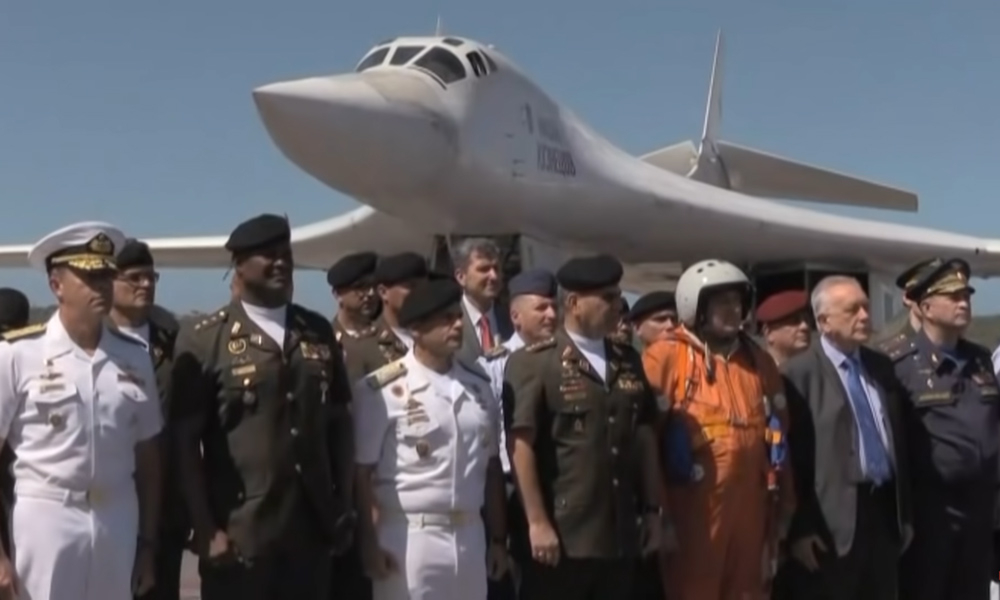
After the landing of two Russian aircraft in Caracas on March 23 -- one an Ilyushin Il-62 passenger plane transporting 100 ground forces and the other an Antonov An-124 military cargo plane carrying 35 tons of materiel – U.S. President Donald J. Trump said that "Russia has to get out" of Venezuela. In January, two months before this arrival of Russian military personnel and equipment in Venezuela, two Russian Air Force Tu-160 strategic bombers flying over the Arctic region near the North American coastline were detected and escorted out of the area by Canadian and U.S. Air Force jets. Although it was not clear where these Russian bombers were headed, a similar incident had occurred a few weeks before, when two of the same type of Russian Tu-160 strategic bombers landed outside Caracas -- sorties indicating that these, too, were headed to Venezuela. According to the Moscow Times, the Russian newspaper Nezavisimaya Gazetareported earlier in December that Russia was considering deploying strategic bombers full-time in Venezuela. The Russian media outlet also reported that an agreement had been reached between Moscow and Caracas to allow the deployment of Russian aircraft at a military base on Venezuela's Caribbean island of La Orchila, where Russian advisers were dispatched in December. The above moves are all part of Russia's open support for the beleaguered government of Venezuelan President Nicolás Maduro, which the U.S. and dozens of other nations have declared illegitimate. These countries support the popular young chairman of Venezuela's National Assembly, opposition leader Juan Guaidó, who has claimed an interim presidency. Most 21st century Russian invasions have been launched in order to bring about or prevent regime change. Putin invaded Georgia in 2008 to undermine President Mikheil Saakashvili, who had pushed aggressively for Georgia's entry into NATO and the EU. Putin's 2014 invasions in Crimea and eastern Ukraine were a response to what viewed as an illegal and unconstitutional coup in Kiev, which removed Ukraine from the Kremlin's orbit. While intervening in the Syrian civil war, which began in 2011, ostensibly to save Syrian President Bashar Assad's rule, Putin also aimed at projecting Russian power into the eastern Mediterranean. By late 2018, Putin had achieved both goals. Meanwhile, Trump -- heir to a covert war started by his predecessor, President Barack Obama -- decided to withdraw U.S. forces from Syria. Putin's response was to defrost the conflict with Ukraine in the Azov Sea. Instead of attacking the port city of Mariupol, however -- as some had expected -- he turned his attention to the more timely crisis in Venezuela. As it did for Syria's Assad, Russia has been providing the Maduro regime with economic and military aid. While Syria is an important energy-transfer state, Venezuela is an energy jewel: in fact, it harbors one of the world's largest oil reserves. Maduro's Venezuela is also part of what U.S. National Security Adviser John R. Bolton has termed the "troika of tyranny," the others being Cuba and Nicaragua. The recent landing of the two Russian planes in Venezuela came a mere a few days after the Trump administration's special envoy to Venezuela, Elliott Abrams, met with Russian Deputy Foreign Minister Sergei Ryakbov in Rome. At that meeting, the two negotiators agreed to disagree over who was the real leader of Venezuela, Maduro or Guaidó. Ryakbov failed to mention, however, that Russia was about to dispatch military aircraft and manpower to Caracas. Although this and other recent Russian moves in Venezuela are relatively minor at the moment, Moscow's intervention, if kept unchecked, obviously will grow as it did in Syria. The same also applies to moves by Beijing. As Gordon G. Chang recently wrote: "[China and Russia] back Maduro to the hilt because they have much to lose if his leftist government falls. Both maintain crucial military facilities in the country... In recent months, China, the regime's largest creditor, has been digging itself in deeper. In September, Beijing extended Venezuela another $5 billion in credit. Russia has also loaned the country billions."Meanwhile, two Leninist-turned-narcotics traffickers – the Revolutionary Armed Forces of Colombia (FARC), and the National Liberation Army (ELN) -- have been coordinating their activities with the Maduro regime, which is also backed by Iran. It is therefore not sufficient for Trump to tell Russia to leave Venezuela. It is imperative for the U.S. to liberate the people of Venezuela -- in the throes of a major humanitarian catastrophe -- from Maduro's stranglehold. It is urgent for Washington to act before Russia and Venezuela reach their imminent formal military agreement. President Trump should declare that no additional Russian and Chinese military planes and ships will be allowed to enter Venezuela, and, if legally possible, back up this announcement with an air and sea blockade. At the same time, NATO membership should be offered to Brazil, a major ally, and economic aid should be provided to Colombia. Only a speedy, tough response can salvage what is left of the Monroe Doctrine, the basic premise of which is to keep extra-hemispheric hostile forces out of the U.S.'s strategic backyard. A few weeks ago, when Maduro denied food and medical assistance to his starving people, the U.S. had a compelling enough reason, political considerations permitting, to invade Venezuela, even before the Russians got militarily involved. Delay, as Moscow's move constitutes a dangerous encroachment on U.S. national security, has made things both more complicated and more necessary. While the Trump administration contemplates how to proceed further to prevent Venezuela from falling to Russia, it might recall the words of the late American diplomat George Kennan, best known for advocating the policy of "containment" to oppose Soviet expansionism after World War II. Kennan, in a 1950 memorandum, summed up his view of how the U.S. should approach and keep Latin America from falling to the Soviets. He wrote to the countries south of the border an "imaginary statement" that read, in part: "We hold out to you what perhaps no great power—no power of our relative importance in world affairs — has ever held out to neighboring smaller powers: the most scrupulous respect for your sovereignty and independence, the willing renunciation of the use of force in our relations with you, the readiness to join with you at any time in a large variety of forms of collaboration which can be of benefit to us both. But you will appreciate that the payoff for this unprecedentedly favorable and tolerant attitude is that you do not make your countries the sources or the seats of dangerous intrigue against us..."Dr. Jiri Valenta is a member of the U.S. Council on Foreign Relations in New York, and formerly served at the Brookings Institution and the Wilson Center for International Scholars in Washington, D.C. A former tenured associate professor at the U.S. Naval Postgraduate School, he is presently a senior research associate at the Begin-Sadat Center for Strategic Studies at Bar-Ilan University in Israel. The author of Soviet Intervention in Czechoslovakia, 1968, and other books, his publications include the BESA monograph, "Washington and Moscow: Conflict or Cooperation?"
© 2019 Gatestone Institute. All rights reserved. The articles printed here do not necessarily reflect the views of the Editors or of Gatestone Institute. No part of the Gatestone website or any of its contents may be reproduced, copied or modified, without the prior written consent of Gatestone Institute.
|
Subscribe to:
Posts (Atom)