Germany: Migrant Sex Crimes Double in One Year
Two German police officers have been removed from their posts after they failed properly to provide emergency assistance to a woman who was raped by a migrant in Bonn.
The lack of attention by the police has added to the perception that German authorities are not taking seriously a rape crisis in which thousands of German women and children have been sexually assaulted since Chancellor Angela Merkel allowed in around two million migrants from Africa, Asia and the Middle East.
The incident occurred shortly after midnight on April 2, when a 23-year-old woman was raped at a campground at the Siegaue nature reserve. When the woman's panic-stricken 26-year-old boyfriend called the police emergency number for help, a female officer answered the phone. The man said: "My girlfriend is being raped by a black man. He has a machete." The policewoman responded: "Are you f**cking with me?" ("Sie wollen mich nicht verarschen, oder?"). The man replied: "No, no." The policewoman responded: "Hmm." After some moments of silence, she promised to dispatch a police car to investigate. She then said, "thank you, bye-bye" and abruptly hung up the phone. A few minutes later, the boyfriend again called the police emergency number and another officer answered the phone. The man said: "Hello, I just called your colleague." The officer replied: "What is it?" The man: "It's about my girlfriend being raped." The officer: "This is in Siegaue, is not it?" The man: "Exactly." The officer then told the man to call police in Siegburg, a town north of Bonn. "They can coordinate this properly," the officer said before hanging up. Police finally arrived at the scene about 20 minutes later. Frank Piontek, a spokesman for the Bonn police department, initially defended the police conduct: "Even if police would have handled this differently, nothing could have been done to stop the rape." Facing a wave of public outrage, however, the Bonn police department police announced on May 31 — two months after the rape — that the two officers involved in the case would "never again" be allowed to work at the police emergency control center. Meanwhile, six days after the rape, police arrested a suspect, a 31-year-old migrant from Ghana named Eric Kwame Andam X., based on DNA evidence. Eric X. was well known to German police: he had previously been arrested five times for a variety of crimes, was never charged and always set free. It later emerged that he had fled Ghana in 2016 after murdering his brother-in-law. After leaving Ghana, Eric X., whose late father was one of the country's top cocoa producers, travelled to Libya. From there he crossed the Mediterranean Sea to reach Italy, where he applied for asylum and spent nine months in a migrant shelter. In early 2017, Eric X. got on a train in Rome; he arrived in Germany on February 10, 2017 and applied for asylum there. One month later, German officials rejected his asylum application. Eric X. should have been deported on March 17 — two weeks before the rape in Bonn — but an immigration attorney filed a petition on his behalf to appeal the asylum decision, even though EU law clearly stipulates that Eric X. was allowed to apply for asylum in only one EU country, in his case Italy. Local judges were unable to decide the appeal in a timely manner because of an overload of similar cases. The case of Eric X. and his 23-year-old rape victim has exposed, once again, the systemic failure by German authorities to enforce the law and to ensure public safety: a failure to secure borders; a failure to vet incoming migrants; a failure to prosecute and imprison criminals; a failure to deport failed asylum seekers; and a failure by police to take seriously the migrant rape crisis engulfing Germany. An annual report — Criminality in the Context of Migration (Kriminalität im Kontext von Zuwanderung) — published by the Federal Criminal Police Office (Bundeskriminalamt, BKA) on April 27 revealed an increase of nearly 500% in migrant sex crimes (defined as sexual assaults, rapes and sexual abuse of children) during the past four years. The report showed that migrants (Zuwanderer, defined as asylum seekers, refugees and illegal immigrants) committed 3,404 sex crimes in 2016 — around nine per day. This was a 102% increase over 2015, when migrants committed 1,683 sex crimes — around five per day. By comparison, migrants committed 949 sex crimes in 2014, around three per day; and 599 sex crimes in 2013, around two per day. According to the report, the main offenders in 2016 were from: Syria (up 318.7% from 2015); Afghanistan (up 259.3%); Iraq (up 222.7%); Pakistan (up 70.3%); Iran (up 329.7%); Algeria (up 100%); and Morocco (up 115.7%). Germany's migrant sex-crime problem is being exacerbated by its lenient legal system, in which offenders receive relatively light sentences, even for serious crimes. In many instances, individuals who are arrested for sex crimes are released after questioning from police. This practice allows criminal suspects to continue committing crimes with virtual impunity. In Hamburg, for example, a 29-year-old Afghan asylum seeker sexually assaulted a 15-year-old girl while she was asleep in a room at a local hospital. The Afghan had been admitted to the hospital's emergency room due to his advanced state of inebriation. Unattended, the Afghan first wandered into the room of a 29-year-old woman who managed to get him to leave her alone. He then entered the room of the 15-year-old and performed sex acts on her. He was detained and released. Police said there were insufficient grounds to press charges. Also in Hamburg, a court on June 8 ruled that Ali D., a 29-year-old migrant from Iraq who raped a 13-year-old girl in the city's Jungfernstieg subway station, could not be guilty of the charge of sexual abuse of children (Sexueller Missbrauch von Kindern) because he could not have known that the girl was under 14. According to German law, children are children if they are under 14 years of age. By dropping the charge of sexual abuse of a child, Ali D. faces only a single charge of rape which, in this case, carries a maximum sentence of four years in prison. The court showed leniency because Ali D. — who fled to Hungary after the attack and was extradited to Germany on March 2 — confessed to raping the girl. The court also said that Ali D. had "diminished responsibility" (verminderte Schuldfähigkeit) because he was drunk when he raped his victim. The same court previously handed suspended sentences to a group of Serbian teenagers who gang-raped a 14-year-old girl and left her for dead in sub-zero temperatures. At the time, the judge said that although "the penalties may seem mild to the public," the teens had all made confessions, appeared remorseful and longer posed a danger to society. The ruling, which effectively allowed the rapists to walk free, provoked a rare moment of public outrage over the problem of migrant sex crimes in Germany. An online petition calling for the teens to see time in prison has garnered more than 100,000 signatures, and prosecutors said they would appeal the verdict. The court has not yet, however, agreed to retry the case. In Berlin, a court acquitted a 23-year-old Turkish man of rape because his victim could not prove that she did not give her consent. The court heard how the man shoved the woman's head between the steel bars of the headboard of a bed and repeatedly violated her over a period of more than four hours. The woman cried "stop" and resisted by scratching the accused on the back, but at some point she stopped resisting. The court asked: "Could it be that the defendant thought you were in agreement?" The court said it could not determine whether, from the perspective of Turkish culture, what she thought was rape he might have thought was simply wild sex. In neighboring Austria, the Supreme Court reduced the sentence of Amir A., a 21-year-old migrant from Iraq, from seven years to four for raping a 10-year-old boy at a public swimming pool in Vienna. During his initial trial, Amir A. confessed to raping the boy. He said it was a "sexual emergency" because he had not had sex for four months. His defense attorney persuaded the Supreme Court that the seven-year sentence was "draconian" and "excessive." Counting time already served, Amir A. will soon be free. Meanwhile, if opinion polls are any indication, Chancellor Merkel appears not to have to worry about paying a political price for her role in the migration crisis. Indeed, she is just as popular now as she was before the migrant crisis erupted in August 2015. An ARD-Deutschlandtrend poll published on June 8 found that 64% of Germans are "satisfied" or "very satisfied" with Merkel. If the German chancellor were to be directly elected, 53% (up 4% from previous month) would choose Merkel, while 29% would opt for her Social Democratic challenger, Martin Schulz (down 7% from previous month). In September 2016, the ARD-Deutschlandtrend poll showed Merkel's popularity rating had plunged to 45%, a five-year low, and down from a high of 67% a year earlier. At the time, more than half (51%) of those surveyed said it would "not be good" if Merkel ran for another term in 2017. The polls seem to show two factors in Merkel's favor: the lack of a political rival strong enough to challenge her; and voters may think she is the least bad candidate to lead the country. Soeren Kern is a Senior Fellow at the New York-based Gatestone Institute. Follow him on Facebook and on Twitter. Sexual Assaults and Rapes by Migrants in Germany, May 2017A 25-year-old migrant from Syria raped a 24-year-old woman in Magdeburg. A "dark-skinned" man (dunkle Hautfarbe) sexually assaulted a 17-year-old girl while she was jogging in Hockenheim. Two "dark-skinned" men (dunkler Teint) sexually assaulted a 21-year-old woman in Coburg. An 18-year-old migrant from Tunisia sexually assaulted several women, including a female police officer, at the railway station in Freiburg. He was detained and released.A Turkish taxi driver raped a 23-year-old woman in Wiesbaden. Three "southern- or Arab-looking men" (südländischem bzw. arabischem Aussehen) sexually assaulted a 21-year-old woman in Pforzheim. A 19-year-old migrant from Nigeria attempted to rape a 22-year-old woman in Munich. Three "Arab-looking" men (arabisches Aussehen) sexually assaulted a 21-year-old woman in Pforzheim. A "southern-looking" man (südländischer Typ) sexually assaulted several women in Chemnitz. A "dark-skinned" man (dunklerer Teint) tried to molest an 11-year-old girl in Bielefeld. A "foreign-looking man with brown-colored skin" (ausländischem Aussehen mit bräunlicher Hautfarbe) sexually assaulted a 16-year-old girl on a train in Marburg. A "southerner" (südländischer Typ) was arrested for sexually assaulting several women between the ages of 20 and 50 in Bonn. A man with "dark skin" (dunkle Haut) exposed himself to a 20-year-old woman in Herten. A "southern-looking" man (südländisches Erscheinungsbild) sexually assaulted a 17-year-old girl in Kaltenkirchen. A 17-year-old Afghan raped a 17-year-old girl in Calden. A man with "possibly a Russian accent" sexually assaulted a 15-year-old girl in Kierspe. Two "dark-skinned" men (dunkle Hautfarbe) attempted to abduct a seven-year-old girl in Kiel. Two men speaking German with an Eastern European accent attempted to rape a 45-year-old woman in Papenburg. A 19-year-old "refugee" raped a 16-year-old girl in Minden. The suspect is known to police for a variety of previous offenses. A "dark-skinned" man (dunkler Teint) sexually assaulted a 20-year-old female jogger in Kleve. A "southern-looking" man (südländische Erscheinung) sexually assaulted a woman in Nürnberg. A 28-year-old migrant from Somalia sexually assaulted a woman in Gießen. She defended herself with pepper spray; he was arrested at the scene. A group of Afghan and Somali asylum seekers gang-raped a 15-year-old girl in Tulln (Austria). The perpetrators were identified after all 59 men in a local asylum shelter were ordered to provide DNA samples. Two men "speaking broken German" sexually assaulted a 20-year-old woman in Munich. Several migrants sexually assaulted a 21-year-old woman in Augsburg. An unidentified man sexually assaulted a ten-year-old girl in Stuttgart-Zuffenhausen. An unidentified man sexually assaulted several teenage girls in Kierspe. An "Eastern European" man tried to rape a 45-year-old woman in Papenburg. At the time of the attack, the woman was walking her dog, a German Shepherd, which promptly bit the man and caused him to run away. A 26-year-old migrant from Eritrea raped an underage girl near the railway station in Hennef. Four "dark-skinned" men (dunkelhäutigen Männern) sexually assaulted a 51-year-old man in Bad Reichenhall. A "dark-skinned" man (dunklen Teint) sexually assaulted a 24-year-old woman in Gießen. Three "dark-skinned" men (dunkelhäutiger Mann) sexually assaulted four women in downtown Stuttgart. Two Turkish men, ages 19 and 31, raped a 13-year-old girl in Wismar. The men had groomed the girl, who was home alone at the time of the attack, on the internet. Two "Africans" (schwarzafrikanischer Typ) unleashed a dog on a 21-year-old woman and sexually assaulted her at a train station in Munich. A 36-year-old migrant from Bulgaria sexually assaulted a 21-year-old woman in Kassel. A "southern-looking" man (südländisches Aussehen) sexually assaulted a 17-year-old woman at the railway station in Ulm. A "southern European-looking" man (südosteuropäisches Aussehen) sexually assaulted a woman in Nürnberg. A "dark-skinned" man (südländischer/dunkler Hauttyp) sexually assaulted a 26-year-old woman in Essen. A 22-year-old Syrian man raped his ex-girlfriend in the presence of her two small children in Barsinghausen. A "dark-skinned" man (dunklen Teint) sexually assaulted a 24-year-old woman at knifepoint in Gießen. A "southerner" (südländischer Typ) sexually assaulted a 22-year-old woman while she was jogging in Augsburg. A man with a "strong Eastern European accent" (starkem osteuropäischen Akzent) attempted to abduct a 21-year-old woman in Herden. A 19-year-old Moroccan man sexually assaulted two women in Stuttgart. A "southern-looking" man (südländisches Aussehen) sexually assaulted a 13-year-old girl in Lörrach. A 21-year-old migrant from Libya sexually assaulted a 20-year-old woman while was using a restroom at a restaurant in Plauen. A "dark-skinned" man (dunkelhäutigen Mann) sexually assaulted a 30-year-old woman in Freilassing. Three asylum seekers were arrested for sexually assaulting several women at an outdoor festival in Darmstadt. A "southern-looking" man (südländisches Erscheinungsbild) exposed himself to a female jogger at a park in Oberhausen. An unidentified man exposed himself to a woman in Bremen. An "Arab-speaking" man sexually assaulted a 14-year-old girl who was riding her bicycle in Elmshorn. A 24-year-old migrant from Guinea sexually assaulted a 32-year-old woman on a bicycle path in Olpe. A "dark-skinned" man groped a woman at an outdoor festival in Nürtingen. When she slapped him on the face, the suspect, who remains at large, smashed a beer glass in her face. A 27-year-old asylum seeker was arrested for raping a 37-year-old woman in Hamburg-Sülldorf. A 40-year-old man from India sexually assaulted a 52-year-old woman on a train in Chemnitz. An "African-looking" man (Erscheinungsbild her afrikanischer Abstammung) sexually assaulted a 34-year-old woman at the railway station in Ottbergen. Three "southern-looking" men (südländisches Erscheinungsbild) sexually assaulted two women in Winsen. Court Cases involving Migrants Accused of Sexual Crimes, May 2017May 10. An 18-year-old Somali man was sentenced to seven-and-a-half years in a psychiatric hospital for sexually assaulting two elderly men and murdering an 87-year-old woman at a nursing home in Neuenhaus. The Somali had entered the nursing home at night through an unlocked door. He performed sex acts on an elderly man who was asleep. He then entered the adjacent room performed sex acts on another elderly man who was also asleep. When the man's wife woke up and caught the Somali in the act, the Somali beat her so severely that she died a few moments later.May 11. In Landshut, a 37-year-old asylum seeker from Uganda was sentenced to four years in prison for raping a 29-year-old woman. The woman was riding her bicycle when the man stopped her, tore off her clothes and threatened her with a gun if she resisted sexual intercourse. The judge said the man had "diminished responsibility" (verminderte Schuldfähigkeit) because he was drunk when he raped his victim. The judge also noted that the man cannot be deported because he is bisexual and homosexuality is illegal in Uganda. May 11. In Bremgarten (Switzerland), a 20-year-old migrant from Eritrea was sentenced to 38 months in prison for attempting to rape a 19-year-old woman. In his defense, the suspect blamed alcohol and the devil. May 16. In Bochum, Ziyad K., a 32-year-old migrant from Iraq, was sentenced to 11 years in prison for raping two Chinese women. The judge said he had the impression that the man, who confessed to the crimes, "did not understand what he did." The judge added: "It is important to note that this case is not against refugees or asylum seekers." May 22. In Leipzig, Mirza B., a 23-year-old migrant from Pakistan, was sentenced to one year and ten months in prison for sexually assaulting seven women. During his trial, Mirza B., whose German is reportedly limited to three words, "I f*ck you" ("Ich f... dich!"), admitted to committing the crimes. His excuse: alcoholism ("I drink seven beers a day") and ignorance ("I did not know that sexual assault is a crime.") Mirza B. cannot be deported because he does not have a passport or other official identification.
© 2017 Gatestone Institute. All rights reserved. The articles printed here do not necessarily reflect the views of the Editors or of Gatestone Institute. No part of the Gatestone website or any of its contents may be reproduced, copied or modified, without the prior written consent of Gatestone Institute.
|
Showing posts with label Bonn. Show all posts
Showing posts with label Bonn. Show all posts
Tuesday, June 13, 2017
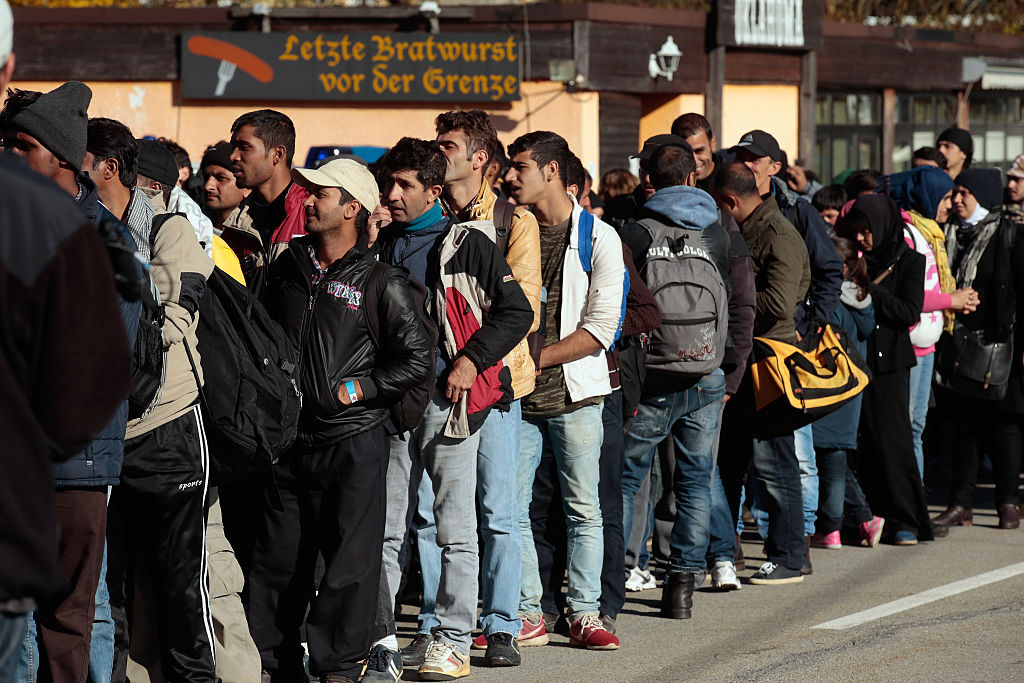
Migrants Have Doubled Their Attacks On German Women In One Year!




Wednesday, May 31, 2017
The Hate Filled Climate Believers Threaten Trump
BREAKING: Climate Mob Threatens Trump – ‘Quit Paris and You’re Toast!’
The international climate mob have made President Trump an offer he can’t refuse: “Stay in Paris – or the U.S. gets it!”
From Breitbart
Among the threats made so far, should the president honor his election trail promise to quit the UN Paris climate agreement.The U.S. will lose $6 trillion worth of jobs in “clean” energy.The U.S. will become a “rogue country”.The U.S. will be removed from Angela Merkel’s Weihnachtskarte list.The U.S. may become the victim of further weaponized handshakes and other typically Gallic “your mother was a hamster and your father smelt of elderberries” insults from prepubescent Mummy’s little tough boy President Macron of France.The U.S. presidential administration may become subject to further awkward rifts between those who want a “seat at the table” in Paris – Tillerson; Jared Kushner; Ivanka; Gary Cohn; Rick Perry – and those who want out.The U.S. may add to “global warming” by 0.3 degrees C, causing the world to boil and melt or, if not that, then at least provoking much bitterness and resentment among all the countries that haven’t yet quit Paris even though they’d all secretly like to.Quite how Trump will respond to these threats is still anyone’s guess. On the one hand, he has reportedly told various allies that he intends to pull out. On the other, he is known for changing his mind at the last minute.What we do know is that the climate gravy train is trundling on regardless. And that as far as the U.S. climate negotiators are concerned, the current president might still just as well be Barack Obama.Yup, that’s the inside gossip from EU news specialist Euractiv:But, according to our sources, the US team are exploiting the vacuum to press ahead with the agreement, which was signed by Trump’s predecessor Barack Obama.They told open-mouthed officials, “We are following the Obama procedure. As long as there are no new instructions, the old ones are still valid.”They agreed a limited budget increase to plans in Bonn. Diplomats told their opposite numbers that they should seize the opportunity to get as much agreed before Trump makes up his mind, awestruck sources gossiped.Another source blasted that “climate should be humanity’s number one concern and this guy hasn’t found the time to sit down with his climate negotiators in more than 120 days in office”.This international determination to keep the U.S. in the Paris Agreement at all costs sits slightly at odds with reports that several other signatory nations are privately desperate to escape.According to Climate Home, former Eastern Bloc countries Poland, Czech Republic, Slovakia and Hungary are trying to “gut, block or water down” the Paris accord’s emissions-reductions promises because they interfere with their economic growth and commit them to useless, expensive renewable energy.Europe’s steelmakers – among them, Arcelor-Mittal , Germany’s Thyssenkrupp and Austria’s Voestalpine – have written to EU leaders begging not to be burdened with any of the carbon emissions costs they say would make them uncompetitive against foreign rivals.Meanwhile a report produced by the Commission on Carbon Prices claims that says the carbon dioxide price needs to rise ten- or twentyfold if it is to meet Paris pledges. This would – to coin a phrase – cause electricity prices necessarily to skyrocket…As Cliff Forrest notes in the Wall Street Journal, the ‘business case’ for Paris is bunk.The economic merits of the Paris Agreement take on a different air when more fully considered. Climate-change advocates’ bizarre premise is that economic gains will come from restricting access to the most abundant, reliable and affordable fuel sources. Never mind that this defies the experience of many European nations that have invested heavily in renewable energy. After “Germany’s aggressive and reckless expansion of wind and solar,” for example, the magazine Der Spiegel declared in 2013 that electricity had become “a luxury good.” Apparently this time will be different.Which is why – as I remarked yesterday – it is so absurd and wrong and dishonest of the President’s so-called Economics Adviser Gary ‘Wormtongue’ Cohn to be pretending otherwise.No one is pretending Trump won’t get a lot of stick from the Climate Industrial Complex, from the Euro weenies, from the globalists, the Bilderbergers, the eco Nazis and Davos Man if he does the right thing and pulls out of Paris.No one is pretending that pulling out of Paris won’t earn him an even stiffer handshake from President Macron and even dirtier looks from Mrs Merkel next time they meet.But increasingly – at least from this Englishman’s perspective – whether President Trump pulls the U.S. out of Paris boils down to one very simple question:“Are you a man or a mouse, Mister President?”
Thursday, April 20, 2017
Russia, A Superpower Or Something Less
Russia: Rubber Ducks and Green Paint
For all the hyperbole in Washington about Russian hacking, Russian disinformation, Russian influence, and Russian espionage, the really remarkable events in Russia over the weekend appear barely to have registered.
One hundred years after the assassination of the last Czar, and two-and-a-half decades after the fall of the communist regime, Russian people have taken to the streets. In early March, anti-corruption activist Alexei Navalny posted a report on YouTube detailing the corruption of Prime Minister Dmitry Medvedev. After more than 13 million views in roughly three weeks, people, including a large number of teenagers, answered Navalny's call for public protest. They flooded the streets of 95 Russian cities, as well as London, Prague, Basel, and Bonn. Many carried rubber ducks -- or real ducks -- referring to reports of a luxury duck farm on one of Medvedev's properties. Navalny is now in jail.
Depending on the source, 7,000-8,000 (Russia's Interior Ministry) or 25,000-30,000 (Navalny's Anti-Corruption Foundation) people turned out in Moscow, and hundreds -- or thousands -- were arrested. The Anti-Corruption Foundation claims there were more than 150,000 protesters across the country. Navalny himself was doused with bright green dye by an opponent in an eerie parallel to the poisoning that disfigured the face of Ukrainian politician Victor Yushchenko. Navalny's supporters, in solidarity, have taken to green face paint. These courageous protests may call to mind the 2015 "Sunflower" movement in Taiwan or the "Umbrella" movement in Hong Kong. The former opposed Taiwanese trade with China, a plan that could have made the island dependent on the mainland for its economic future. The latter demanded the "full autonomy," promised by Britain and agreed to by China, when the British departed in 1999. Both were notable for the number of students in the forefront. The protests also call to mind the Arab Spring demonstrations of 2011, grounded in the belief by Arab citizens that their governments were hopelessly corrupt; also Iran's massive 2009 Green Movement protests, in which citizens believed the government had conducted a fraudulent election. For the Trump administration, this moment is immensely important. How the United States responds to these protests abroad can determine not only the future of those protesting, but also the future of the governments that find themselves under pressure. Taiwan, a fully functioning democracy, saw a change of government in its latest election. Hong Kong's change of government, however, was fully controlled by Beijing. The Arab Spring opened the way for power vacuums that allowed the rise of ISIS and al Qaeda. And Iran's government smashed the nascent rebellion so thoroughly that no large-scale protest has been able to take place there since. It has been said that Vladimir Putin personally has a high favorability rating Putin critic and lawmaker Denis Voronenkov (2017), Boris Nemtsov (2015), human rights lawyer Stanislav Markelov (2009), journalists Anastasia Baburova (2009) Natalia Estemirova (2009), Anna Politkovskaya (2005) and Paul Klebnikov (2004), and politician Sergei Yushenkov (2003) were all shot. Boris Berezovsky (2013) died after falling out with Putin; the cause of his death has not yet been established. Alexander Litvinenko was poisoned in 2006. The lawyer Sergei Magnitsky (2009) died in police custody. Last week, his family's lawyer, Nicolai Gorokhov, was said to have fallen out of a fourth floor window "while installing a hot tub." Vladimir Kara-Murza, leader of the Russian political opposition, directly accused the Kremlin of assassinating political enemies. Earlier this month, Kara-Murza was in a life-threatening coma with elevated levels of heavy metal in his blood; it was the second time he was poisoned. Partially recovered now and not in Russia, Kara-Murza called it retaliation for his work with American lawmakers on the Magnitsky Act, designed to prevent human rights abusers in Russia from keeping their wealth in Western countries. Perhaps Navalny's call to the public is grounded in the understanding that, one by one, brave people can be eliminated, but thousands at a time in the streets are harder to target. The outpouring of support by young people who have never known any government other than that of Putin or Medvedev is an indication of how deeply they understand. The usual method of tamping down widespread unhappiness is with money. But the Russian economy has been in a recession for two years, in part due to the decline in oil prices, and its "rainy day" fund has declined from $91.7 billion in September 2014 to $32.2 billion two years later, according to the Russian Finance Ministry. Defense spending is slated to drop by 27% in the draft 2017 budget. On the nationalist side, the Russian public historically does not like losing soldiers in foreign wars -- think "Afghanistan." Losses in Ukraine, never officially enumerated by the Russian government, were accepted grudgingly as part of the price for restoring Crimea. But casualties in Syria cannot be dealt with so easily. The number remains small -- according official counts just over 100, including both soldiers and military contractors -- but there seems to be widespread unease. More than a few (small) anti-war demonstrations have been seen in Moscow and St. Petersburg. The public is aware of the scale of Russian and Syrian bombing and the resulting casualties of a war that are not understood to be of importance in the homeland. They may be important to us -- and to the Russian government, but the Russian people have never liked wars unrelated to Russian territory. That is probably why they could accept Stalingrad, but balked at Afghanistan. Russia seeks superpower status in the Middle East and Europe, but real superpower status has always required the ability to shoulder burdens abroad without fear of upheaval at home. World War II is a clear example of American success, but when the domestic situation was turbulent in the late 1960s, the U.S. withdrew from Vietnam and spent decades restoring its international credibility. A shaky domestic situation in Russia may force Putin to consider spending more resources at home than abroad. Ignoring the Green Movement in Iran was a missed opportunity for the West and a tragedy for the people of Iran. It is not America's job to create or foment unrest in Russia or anywhere else. But it is in the interest of the West to support and hearten those who have the courage to take on a corrupt and aggressive government. President Trump can take a page from Ronald Reagan, who spoke out for the rights of the people, especially Soviet refuseniks, even as he worked to negotiate arms-control with Gorbachev. If we ignore the rubber ducks and green paint, it will be at our peril. Shoshana Bryen is Senior Director of the Jewish Policy Center.
© 2017 Gatestone Institute. All rights reserved. The articles printed here do not necessarily reflect the views of the Editors or of Gatestone Institute. No part of the Gatestone website or any of its contents may be reproduced, copied or modified, without the prior written consent of Gatestone Institute
|
Subscribe to:
Posts (Atom)