Middle East: A Shift from Revolution to Evolution
After each Islamist terrorist attack in the West, the public is divided into two camps: one angry and one indifferent. The problem with defeating Islamist terrorism seems to be that either it is attacked by conservatives who call Islam an evil cult or it is forgiven entirely by liberal apologists. What, then, is the answer?
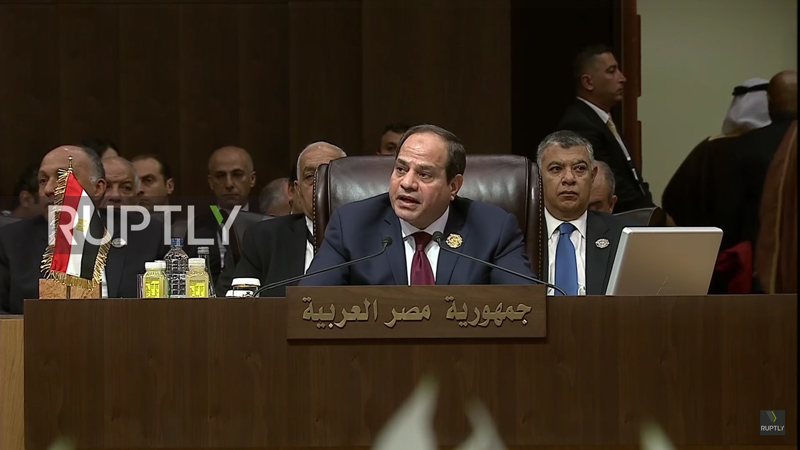
One of the main failures in Western analyses of the origins of terrorism in the Middle East and North Africa is that the West attributes them to a lack of democracy and a lack of respect for human rights. This is, indeed, part of the cause, but the root of the problem is a lack of development and modernity. U.S. President Donald Trump did not exaggerate when he said that the Obama administration's foreign policy was disastrous. It was catastrophic mainly for two reasons. One was the knee-jerk support for the "Arab Spring" and for extremist Islamic political groups such as the Muslim Brotherhood. The second was the alliances the Obama administration built with unreliable countries such as Qatar, which supports radical political groups such as the Muslim Brotherhood. In addition, Obama made the mistake of continuing to try to appease Iran's theocratic regime. The Arab Spring's uncalculated, hasty attempt to establish so-called democracy only generated more turmoil and chaos in the region. Certain radical political groups simply exploited the elections to serve their own political and sectarian agendas; that swoop for power only resulted in more authoritarian and dictatorial regimes, as have played out, for instance, in Egypt, where we have witnessed the murder of civilians and police officers by the Muslim Brotherhood. In other countries, the situation is even worse; attempts to install democracy have totally destroyed the state and facilitated the spread of terrorist militias, as in Libya. It is ironic that Western countries and their advocates stress the need to apply democratic practices in Arab countries, but evidently do not recall that development and secularism preceded democracy in Western Europe. The United Kingdom, which has the oldest democratic system, did not become fully democratic until 1930. France became fully democratic only in 1945, 150 years after the French Revolution. The Emir of Qatar, Sheikh Tamim bin Hamad Al-Thani, at the Arab Summit in Jordan on March 28, 2017 delivered a speech in which he indicated his continuous support for the Muslim Brotherhood: "If we are serious about focusing our efforts on armed terrorist organizations, is it fair to consider any political party we disagree with as terrorist? Is our goal to increase the number of terrorists?"Many Arab leaders were infuriated by his speech; at the forefront was President Abdel Fattah el-Sisi of Egypt, who left the Arab Summit Hall during the speech to meet King Salman of Saudi Arabia. Most Arab leaders and analysts, in fact, are enraged by Qatar's continuous support for Islamist political groups such as the Muslim Brotherhood, because these groups are a threat to their national security.
Another consequence of Obama's foreign policy -- in particular attempts to get close to Iran's hostile regime -- has been a fraying of relationships with old Arab allies of the United States. Some of Obama's advisors thought that replacing Saudi Arabia with Iran was somehow "better" for the United States, if Iran "is beginning to evolve into a very civilized and historically important country" -- an analysis that can be described as completely short-sighted. The Saudi regime, with all its flaws, is a monarchy run by princes; the Iranian regime is a theocracy run by clerics. The Saudi regime is not a theocratic regime but a hybrid structure, which is neither wholly secular nor wholly religious. As such, the religious class functions under the authority of the ruling class. Princes are driven by self-interest; clerics are driven by ideology. In terms of extremism, the Iranian regime is pushing for hegemony, whilst Saudi Arabia has been taking only a defensive, rather than an expansionist, position. The motivation of Saudi Arabia in exporting mosques world-wide and installing radical Saudi imams is defensive, not expansionist as in Iran. Saudi Arabia's impetus is to confront Iran's hegemony and the spread of its hostile ideology. It is this strategy, which Saudi Arabia has practiced since 1979 to balance Iran's power and to combat its rebellious ideology, that must change. That Iran's Khomeini regime sought to embarrass Saudi Arabia -- a country that is home to Islam's two holiest mosques, in Mecca and Medina -- by portraying it as not sufficiently Islamic, meant that the foundational Islamic Wahhabism of the Saudi Kingdom was aggressively reinforced. This emphasis resulted in even more constraints being put in place in Iran: especially on entertainment. Since the Khomeini revolution in 1979, all plays, fashion shows, international events, and cinemas have been banned. As for women, the Commission for the Promotion of Virtue and Prevention of Vice has increasingly harassed them. As for minorities, especially Shia challenging the Iranian Shia regime and its support for Shia militias -- particularly the dominant Revolutionary Guards -- books were published attacking the Shia: More books appeared, attacking the Shias and especially Khomeini's views. These books – like the arguments of Khomeini's followers – rejected modern thinking as an "intellectual invasion." Saudi Arabia, considered the guardian of Sunni Islam, spent billions of dollars on challenging the Khomeini-backed Shiites.This religious one-upmanship -- a competition over which body can be the "most religious" -- must stop. Saudi Arabia would do well to understand that in order to confront the hegemony of the Iranian theocratic regime, the answer is not to radicalize Saudi society but to return to the way it was before 1979. The best way to defeat the rebel hostile regime in Iran might be through creating an inclusive and tolerant society in Saudi Arabia. Saudi Arabia needs to change its approach towards Iran because the current strategy has not worked. The current strategy has done nothing except to strengthen the Iranian regime's dominance; distort, globally, the image of Saudi Arabia and accelerate terrorism. The lesson the Trump administration might learn from the disastrous mistakes of its predecessor is that the main source of terrorism in the region are political Islam and all its related religious groups. All these radical groups including ISIS, Al-Qaeda, Jabhat Al-Nusra and Hamas have been spawned by a political Islam driven by the ideology of the Muslim Brotherhood. Extremist jihadists such as Osama bin Laden, Abdullah Azzam and Ayman al-Zawahiri were all taught by the Muslim Brotherhood. Political Islam practiced by the Iranian theocratic regime has been comfortably generating Shia radical militias, including the terrorist group, Hezbollah. The fight, therefore, should not be against Islam, but against political Islam. Islam needs to be practiced the way other religions are, as a private personal faith that should be kept separate from public life and politics, and whose expression should be confined to worship only. Mosques, whether in the Arab and Muslim world or in the West, should be places of worship only and must not transformed to centers for polarizing society or for recruitment by political religious groups. Unfortunately, Western countries have turned a blind eye to the political activities inside these mosques. The danger of these religious political groups is that they do not believe in democracy or human rights; they just use elections to grasp power in order to impose a system of "Islamic Caliphate" as their only form of government. Most of these groups use religion as an ideology to oppose governments other than their own, and when they are criticized or attacked, they play the role of the oppressed. The Trump administration needs to take advantage of the fact that the majority of people in the Middle East and North Africa have lost faith in religious political groups, especially since the failure of the Muslim Brotherhood in Egypt and Tunisia. Before the Arab Spring, support for these groups was huge; now it stands at less than 10% of the population. This study was conducted in the Arab world, not including Turkey. The Muslims who support Turkish President Recep Tayyip Erdogan are the Muslim Brotherhood. Most recent polls indicate that the majority of people in Arab and Muslim countries prefer religion to be kept separate from politics. The country that is working the most systematically to fight these religious political groups in the region is the United Arab Emirates (UAE). There are several institutes and think tanks researching how to combat these groups. Dr. Jamal Sanad Al-Suwaidi, Director General of the Emirates Center for Strategic Studies and Research (ECSSR), has given a robust analysis of these groups and how to combat them in his book, The Mirage. In it, he cites a study on public opinion on political religious groups: A survey of the UAE population, on how these groups are able to influence the public by taking advantage of certain flaws in the system: 53.9% because of corruption; 47.9% because of poverty and 29.1% because of an absence of civil society groups that confront these opportunists. The Middle East-North Africa region will undoubtedly have to go through several stages before it can successfully establish democracy. An evolutionary developmental approach will definitely be better than the failed revolutionary democratic one pursued by the Obama administration. Secularization is also crucial in the fight against terrorism. Trying to build a democracy before going through the stages of secularism and political reformation -- which includes rectifying existing flaws, such as corruption; modernization which means the liberation of the region from extremist totalitarian religious dogma and all other forms of backwardness in order to kick-start a renaissance; and scientific development -- will not only be inadequate but will actually generate more terrorism by helping radicals to keep gaining power. It would be like a farmer who wants to plant roses in arid desert soil full of thorns. Najat AlSaied is a Saudi American academic and the author of "Screens of Influence: Arab Satellite Television & Social Development". She is an Assistant Professor at Zayed University in the College of Communication and Media Sciences in Dubai-UAE. She can be reached at: najwasaied@hotmail.com
© 2017 Gatestone Institute. All rights reserved. The articles printed here do not necessarily reflect the views of the Editors or of Gatestone Institute. No part of the Gatestone website or any of its contents may be reproduced, copied or modified, without the prior written consent of Gatestone Institute.
|
Our goal is to have intelligent discussion of the topics of the day. We realize everyone has their opinion and they should be allowed to express it in a discussion forum without calling each other names. We learn from discussion and not from name calling or argument.We use cookies to personalise content and ads, to provide social media features and to analyse our traffic. We also share information about your use of our site with our social media, advertising and analytics partners. See details
Contact Form
Showing posts with label Jabhat al-Nusra. Show all posts
Saturday, April 8, 2017
Islam Must Become The Same As Other Religions--Only A Religion Of Personal Faith Separate From Public Life And Politics!
Friday, December 2, 2016
The "Successes" Of The US Backed Syrian Rebels. Check These Victories For Them.
These stories are those covered by PJ Media, yes, a conservative site. However, it gives you a background on the past couple years of the Obama capitulation toward those we should not be supporting.
A note: don't watch the July 20, 2016 video unless you want to see what villanous, cowardly animals we are supporting. It will turn your stomach.
Conservative Tom
Video Shows Syrian 'Rebel' Group That Beheaded Child Still Using CIA-Provided TOW Missiles
For two and a half years I've been reporting here at PJ Media on the dangerously bizarre Obama administration support for the Syrian "rebels":
July 7, 2014: U.S. ‘Vetted Moderate’ Free Syrian Army Brigades Surrender Weapons, Pledge Allegiance to Islamic StateSept. 9, 2014: Fighter With ‘Vetted Moderate’ Syrian Rebels Tells L.A. Times They Fight Alongside Al-QaedaSept. 10, 2014: ‘Vetted Moderate’ Free Syrian Army Commander Admits Alliance with ISIS, Confirms PJ Media ReportingSept. 13, 2014: Yet Another U.S.-Backed Syrian Rebel Group Makes Peace with ISISSept. 24, 2014: U.S.-Backed Syrian Group Harakat al-Hazm Condemns U.S. Strikes on ISIS as ‘Attack on the Revolution’Dec. 2, 2014: US-Backed Syrian Rebels Ally with al-Qaeda in South, Surrender CIA-Supplied Weapons in the NorthMarch 3, 2015: U.S.-Backed Syrian Rebel Group Collapses, U.S.-Supplied Weapons End Up in Al-Qaeda HandsMarch 24, 2015: Video Shows Al-Qaeda’s Jabhat al-Nusra Using U.S.-Provided TOW Anti-Tank Missiles in SyriaApril 16, 2015: U.S. Analyst Admits ‘Moderate’ Syrian Rebels Have Been Working with Al-Qaeda All AlongJuly 9, 2015: Report: 'Vetted Moderate' Free Syrian Army Fighting Alongside Al-Qaeda, Islamic State Against Assad RegimeJuly 23, 2015: U.S.-Funded Free Syrian Army Unit Shows Off Its Kidnapping Skills in New Training VideoJuly 27, 2015: #BringBackOurRebels: Obama's 50-Man 'Vetted Moderate' Syrian Rebel Army Vanishes After Training in TurkeyJuly 29, 2015: #BringBackOurRebels Part 2: Al-Qaeda Arrests 18 U.S.-Trained Rebels On Their First Day in SyriaSept. 22, 2015: Report: U.S.-Trained, 'Vetted Moderate' Syrian Rebel Leader Defects to Al-Qaeda, Turns Weapons Over to Terror GroupNov. 24, 2015: U.S.-Backed Syrian Rebels Destroy Russian Helicopter with CIA-Provided TOW Anti-Tank MissileJuly 20, 2016: CIA-Vetted, "Moderate" Syrian Rebels Behead Child Soldier
Thursday, December 10, 2015
Do You Think Results Would Be Any Different In The US?
Police Recently Shut Down and Searched Three Mosques in Paris — Now We Know What They Found
9.1K
SHARES
Kalashnikov ammunition and Islamic State propaganda was seized during multiple raids in France last week, following the closure of a mosque in the outskirts of Paris.
The mosque, located in Lagny-sur-Marne or about 30km east of Paris, was shut down last Wednesday,according to the Agence France-Presse. It is the third mosque to be closed by French officials in the wake of last month’s Paris terror attacks.
Kalashnikov ammunition was seized in raids following the closure of a Paris mosque, Dec. 2. (Getty Images)
As as result of the raids, nine people were placed under house-arrest, while another 22 were barred from leaving the country.
In addition, another man, who was in possession of a revolver, was taken into police custody. Police say that man, who was a mosque leader, was also in possession of “extremist documents.”
Interior Minister Bernard Cazeneuve said the number of weapons seized since the terror attacks is staggering.
“In 15 days we have seized one-third of the quantity of war-grade weapons that are normally seized in a year,” he said, according to Express UK.
More from AFP:
“Police also found recordings of religious chants ‘glorifying the martyrs of jihad linked to the terrorist organization Jabhat al-Nusra,’ the Syrian branch of al-Qaeda, the prefecture added.“The recordings were found among a wealth of teaching material for youngsters in an undeclared madrassa, or religious school.”
France remains in a state of emergency following last’s months terror attacks, which left
Thursday, September 11, 2014
The People Obama Has Tied Our Hopes To In Iraq, The Free Syrian Army, Is Tied In With ISIS. If We Know This, Why Doesn't Obama? Or Does He?
September 10, 2014 - 10:29 pm
As President Obama laid out his “strategy” last night for dealing with the Islamic State of Iraq and Syria (ISIS), and as bipartisan leadership in Congress pushes to approve as much as $4 billion to arm Syrian “rebels,” it should be noted that the keystone to his anti-Assad policy — the “vetted moderate” Free Syrian Army (FSA) — is now admitting that they, too, are working with the Islamic State.
This confirms PJ Media’s reporting last week about the FSA’s alliances with Syrian terrorist groups.
On Monday, the Daily Star in Lebanon quoted a FSA brigade commander saying that his forces were working with the Islamic State and Jabhat al-Nusra, al-Qaeda’s official Syrian affiliate — both U.S.-designated terrorist organizations — near the Syrian/Lebanon border.
“We are collaborating with the Islamic State and the Nusra Front by attacking the Syrian Army’s gatherings in … Qalamoun,” said Bassel Idriss, the commander of an FSA-aligned rebel brigade.“We have reached a point where we have to collaborate with anyone against unfairness and injustice,” confirmed Abu Khaled, another FSA commander who lives in Arsal.“Let’s face it: The Nusra Front is the biggest power present right now in Qalamoun and we as FSA would collaborate on any mission they launch as long as it coincides with our values,” he added.
In my report last week I noted that buried in a New York Times article last month was a Syrian “rebel” commander quoted as saying that his forces were working with ISIS and Jabhat al-Nusra in raids along the border with Lebanon, including attacks on Lebanese forces. The Times article quickly tried to dismiss the commander’s statements, but the Daily Star article now confirms this alliance.
Among the other pertinent points from that PJ Media article last week was that this time last year the bipartisanconventional wisdom amongst the foreign policy establishment was that the bulk of the Syrian rebel forces were moderates, a fiction refuted by a Rand Corporation study published last September that found nearly half of the Syrian “rebels” were jihadists or hard-core Islamists.
Another relevant phenomenon I noted was that multiple arms shipments from the U.S. to the “vetted moderate” FSA were suspiciously raided and confiscated by ISIS and Jabhat al-Nusra, prompting the Obama administration and the UK tosuspend weapons shipments to the FSA last December.
In April, the Obama administration again turned on the CIA weapons spigot to the FSA, and Obama began calling foran additional $500 million for the “vetted moderate rebels,” but by July the weapons provided to the FSA were yet again being raided and captured by ISIS and other terrorist groups. Remarkably, one Syrian dissident leader reportedly told Al-Quds al-Arabi that the FSA had lost $500 million worth of arms to rival “rebel” groups, much of which ended up being sold to unknown parties in Turkey and Iraq.
At the same time U.S.-provided FSA weapons caches were being mysteriously raided by ISIS and Jabhat al-Nusra, one of the senior FSA commanders in Eastern Syria, Saddam al-Jamal, defected to ISIS. In March, Jabhat al-Nusra joined forces with the FSA Liwa al-Ummah brigade to capture a Syrian army outpost in Idlib. Then in early July I reported on FSA brigades that had pledged allegiance to ISIS and surrendered their weapons after their announcement of the reestablishment of the caliphate. More recently, the FSA and Jabhat al-Nusra teamed up last month to capture the UN Golan Heights border crossing in Quneitra on the Syria/Israel border, taking UN peacekeepers hostage.
But the Free Syrian Army is not the only U.S.-armed and trained “rebel” force in Syria that the Obama administration is having serious trouble keeping in the “vetted moderate” column.
Earlier this week I reported on Harakat al-Hazm, which was the first of the “vetted moderates” to receive U.S. anti-tank weaponry earlier this year. Harakat al-Hazm is reportedly a front for the Muslim Brotherhood as well as Turkey and Qatar, its Islamist state sponsors.
An L.A. Times article was published this past Sunday from the battle lines in Syria. The reporter recounted a discussion with two Harakat al-Hazm fighters who admitted, “But Nusra doesn’t fight us, we actually fight alongside them. We like Nusra.”
Despite a claim by the L.A. Times that Harakat al-Hazm had released a statement of “rejection of all forms of cooperation and coordination” with al-Nusra Front, I published in my article earlier this week an alliance statement signed by both Jabhat al-Nusra and Harkat al-Hazm forging a joint front in Aleppo to prevent pro-Assad forces from retaking the town.
As the Obama administration began to provide heavy weaponry to Harakat al-Hazm, the Washington Institute for Near East Policy published an analysis hailing Harakat Hazm as “rebels worth supporting,” going so far as to say that the group was “a model candidate for greater U.S. and allied support, including lethal military assistance.”
That error was not as egregious as the appeal by three members of the DC foreign policy establishment “smart set” (including one former senior Bush administration National Security Council official) who argued in the pages of the January issue of Foreign Affairs for U.S. engagement with another Syrian “rebel” group, Ahrar al-Sham.
At the time their article appeared, however, Ahrar al-Sham was led by one of al-Qaeda chief Ayman al-Zawahiri’s top lieutenants and former Bin Laden courier, Mohamed Bahaiah (aka Abu Khaled al-Suri). This is why the article was originally subtitled “An Al-Qaeda affiliate worth befriending.” Giving too much of the game away for non-Beltway types, that subtitle was quickly changed on the website to “An Al-Qaeda-linked group worth befriending.”
That dream of “befriending al-Qaeda” was dealt a major blow earlier this week when a blast of unknown origin killed most of Ahrar al-Sham’s senior leadership. Bereft of leadership, many analysts have rightly expressed concern that the bulk of Ahrar al-Sham’s forces will now gravitate towards ISIS and other terrorist groups.
While a McClatchy article on the explosion laughably claimed that the dead Ahrar al-Sham’s leaders represented the group’s “moderate wing” who were trying to come under another fictional “vetted moderate” alliance to obtain the next anticipated flood of U.S. weapons, others have observed that tributes to the dead leaders have poured in from al-Qaeda leaders for their “moderate wing” allies.
This is what the D.C. foreign policy establishment has reduced itself to when it comes to Syria — cozying up to al-Qaeda (or Iran and Assad) in the name of “countering violent extremism,” namely ISIS, and entertaining each other with cocktail party talk of “moderate wings” of al-Qaeda. As my colleague Stephen Coughlin observes, our bipartisan foreign policy establishment has created a bizarre language about Iraq and Afghanistan to avoid the stark reality that we lost both wars. This is the state American foreign policy finds itself in on the 13th anniversary of the 9/11 attacks by al-Qaeda.
As congressional Republicans and Democrats alike will undoubtedly rush in coming days to throw money at anyone the Obama administration deems “vetted moderates” to give the appearance of doing something in the absence of a sensible, reality-based strategy for understanding the actual dynamics at work in Syria and Iraq, an urgent reexamination of who the “vetted moderates” we’ve been financing, training and arming is long overdue. It is also essential to know to whom the State Department has contracted the “vetting.” This is especially true as ISIS leaders are openly bragging about widespread defections to ISIS amongst FSA forces that have been trained and armed by the U.S.
Predictably, the usual suspects (John McCain and Lindsey Graham) who have been led wide-eyed around Syria by the “vetted moderate” merchants and have played the administration’s “yes men” for a fictional narrative that has never had any basis in reality will undoubtedly hector critics for not listening to their calls to back the “vetted moderate” rebels last year when they could have contained ISIS — an inherently false assumption. These usual suspects should be ashamed of their role in helping sell a fiction that has cost 200,000 Syrians their lives and millions more their homes while destabilizing the entire region. Shame, sadly, is a rare commodity in Washington, D.C.
Notwithstanding Obama’s siren call for immediate action, Congress should think long and hard before continuing to play along with the administration and D.C. foreign policy establishment’s “vetted moderate” fairy tale and devote themselves to some serious reflection and discussion on how we’ve arrived at this juncture where we are faced with nothing but horribly bad choices and how to start walking back from the precipice. As we remember the thousands lost on that terrible day thirteen years ago, truly honoring their memory deserves nothing less.
Thursday, June 12, 2014
Iraq Is Lost. This Is What Happens When You Start A War And Don't Finish It. You Lose. America Lost.
How ISIS and Iraq upheaval threatens the wider world
By Charlie Cooper, Middle East researcher at Quilliam, Special to CNN
updated 11:52 PM EDT, Wed June 11, 2014
STORY HIGHLIGHTS
- Islamic State of Iraq and Syria (ISIS) has taken over Iraq's second largest city, Mosul
- Charlie Cooper of anti-extremism think tank Quilliam says development is worrying
- "Rejected by al Qaeda because of its ferocity," ISIS "has a fetish for anti-Shia sectarianism"
- International community -- and Iraq -- must act against ISIS's gains, says Cooper
Editor's note: Charlie Cooper is a researcher on the Middle East atQuilliam, a think tank formed to combat extremism. The opinions in this commentary are solely his.
(CNN) -- The Islamic State of Iraq and Syria (ISIS) has taken over much of the Iraqi province of Nineveh, including the country's second largest city, Mosul. In the course of doing so, they havereleased thousands of jihadist prisoners, reportedly taken hundreds of people hostage and -- perhaps most worryingly of all -- fortified their already strong territorial position in the region.
The group has made impressive gains in the last year. Besides this week's achievements, ISIS have come to dominate the international media discourse on the war in Syria and wrested control of the city of Falluja, which, astonishingly, is less than an hour from Baghdad.
We should be worried. This, after all, is a group that was rejected by al Qaeda because of its ferocity. Its mysterious leaders are far beyond the extremist pale, and that they seem to be consolidating a territorial base must be put at the forefront of international counter-terrorism policy.
Charlie Cooper from think tank Quilliam
ISIS, currently led by Abu Bakr al-Baghdadi is an al Qaeda offshoot and a spawn of Abu Musab al-Zarqawi's Islamic State of Iraq (ISI). For the ISI, the last few years have been rocky to say the least, but the unprecedented instability caused by the Syrian civil war has given the group a new lease of life.
Since it was formed when al-Baghdadi announced an unanticipated (by all sides) merger with Jabhat al-Nusra in April 2013, ISIS has gone from strength to strength.
Commentators on Syria often refer to ISIS as the most radical of the myriad jihadist factions operating there. For some reason, though, coverage from Iraq this week has stuck to calling them Sunni "rebels," "insurgents" or "militants." These terms of reference are woefully unsuitable -- ISIS fighters in Iraq are of exactly the same inclination as those in Syria, who have repeatedly been called out for their unparalleled barbarity on -- and off --the battlefield.
This doesn't just matter to Iraq, though, it matters to the rest of the world as well. In the wider region, ISIS's presence in Syria will continue to skew the fight against the Assad regime for the worse. After all, these "rebels" are fighting the same people as the Syrian army.
On an international level, any gains for ISIS are particularly troubling because it is by far the most popular group for foreign fighters to join. This is because, more than anything else, their membership requirements are minimal -- far less, for example than those for Jabhat al-Nusra. Citizens from across the world who have been going to fight in Syria -- Europeans and Americans included -- usually end up fighting alongside ISIS.
Syria commentators and counter-terrorism experts alike have warned time and again of the threat posed by ISIS returnees: if they are already extremists when they go out to Syria, what they are when they return is significantly more dangerous, not least because of the weapons training they receive.
The Long War Journal has also reported that foreign ISIS fighters operate in single-nation battalions, something which equips them even better to bring the terrorist threat back home.
The shooting in May at Brussels' Jewish Museum was probably the first instance of a returnee ISIS fighter committing a terrorist offence. It will most likely not be the last.
A frequently-referenced study into foreign fighters in 1980s Afghanistan concluded that about one in nine returnees went on to commit terrorism offences. That may not sound like much, but if one considers that there are an estimated 2,000 EU citizens fighting in Syria now(according to Europol, the European Union's law enforcement agency) it becomes a far more troubling statistic.
Syria aside, ISIS's new dominance in northwestern Iraq will be the principal destabiliser of the region. If left alone, Nineveh will become a jihadist's playground, one that will welcome -- and train up -- any foreigner sympathetic to ISIS's ideology.
Besides that, though, the world needs to act because of the terrible risk this runs for Iraq's Shi'ite population, a minority in Nineveh but still numbering in the thousands.ISIS has a fetish for anti-Shia sectarianism and is alsoreported to have targeted Christians. They are certain to perpetrate many more horrific offences there if left unchallenged.
The international community has a humanitarian and strategic prerogative to act against ISIS's most recent gains in Iraq; the Iraqi government needs as much support as it can get in challenging ISIS.
Aside from a robust military response, Iraqi President Nuri al Maliki's government needs to challenge the jihadists ideologically. He needs to reach out to the disenfranchised Sunni population, a group that has become marginalised economically and socially during his time in power, for this is the well from which most ISIS fighters are drawn. Taking a purely heavy-handed approach will just feed into the jihadist propaganda.
Encouragingly, al Maliki seemed receptive to such suggestions in March when he attended, alongside Quilliam representatives,Baghdad's first anti-terrorism conference. One thing is for sure, though, and that is that this is Iraq's war now, and no one else's.
Subscribe to:
Posts (Atom)