Will the Dutch Protect their 'Decadence' from Islamic 'Redeemers'?
General elections in the Netherlands are over, but now begins a much bigger campaign: who will defend the famous Dutch freedoms?
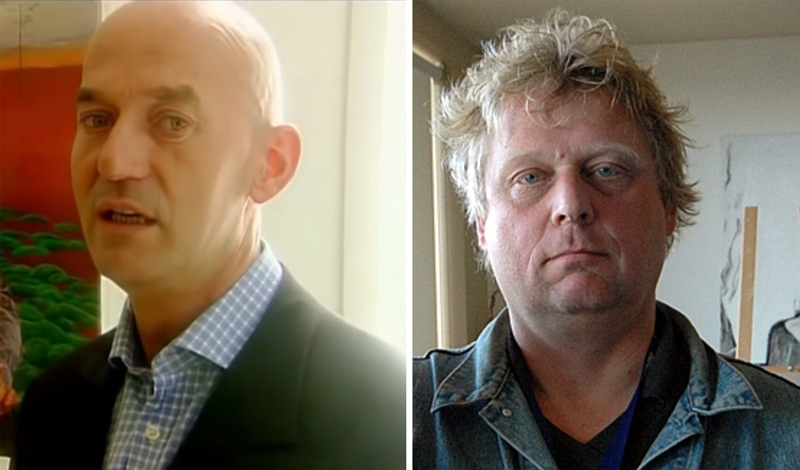
Only in the Netherlands is it conceivable that a politician such as Geert Wilders, a brave maverick who for 13 years, 24 hours a day, has lived under police protection; held rallies while wearing a bulletproof vest; moved from one secret location to another one and was guarded as if he were an Asian potentate. The country has already had two political assassinations related to Islam: the politician Pim Fortuyn, and the filmmaker, Theo van Gogh. Another Dutch MP at the time, Ayaan Hirsi Ali -- whose name, with Wilders's, was next on the hit-list pinned with a knife to van Gogh's corpse -- ended up fleeing to the United States. Only Wilders's protection, generously provided by the Dutch government, has so far avoided a third political murder.
In the Netherlands, the philosopher Baruch Spinoza became the prophet of tolerance, Karl Marx investigated capitalism and John Locke penned his "Letter on Tolerance". The mainstream media has claimed that Wilders's rise and the new "populist" shift of Prime Minister Mark Rutte (who, in January, told immigrants to "act normal or leave") has been a betrayal of that Dutch tolerance. Exactly the opposite is true. It is from this tolerance that hard Dutch liberalism gets the will to fight against intolerance. Tolerating the intolerant does not sound like the way to have tolerance continue. This is how the Dutch multiculturalists turned their great legacy upside-down. The Dutch see themselves as "Enlightenment fundamentalists", upholding the values of Enlightenment -- even in the Islamic world. The question now is: will the Dutch defend these freedoms or instead gradually dismantle them? Dutch Minister of Justice Piet Donner recently suggesting introducing Islamic sharia law into the Netherlands by democratic means. The "hard liberal" Dutch tradition goes back to Pim Fortuyn, a homosexual proud of the supposed "decadence" of his country, its tolerance, and the freedoms it offers. As the late British journalist Alexander Chancellor wrote: "The Muslim fanatics berate the West for its decadence, and many in the west guiltily agree that they have a point, but Fortuyn did not think so. He crusaded on behalf of what many would regard as decadence, and was so concerned for its survival".Fortuyn considered permissiveness the heart of Western culture. He was a "hard liberal", militantly defending the post-9/11 Judeo-Christian, Western values against Islamic intolerance, in the same way as Oriana Fallaci, Bat Ye'or, Michel Houellebecq and Geert Wilders have been trying to do. After last week's Dutch elections, it is time for the Netherlands to rediscover Pim Fortuyn's legacy and ideas. A flamboyant, shaven-headed homosexual who taught sociology, Fortuyn wore elegant Italian suits, lived in a palatial home in Rotterdam and wrote a great book entitled, "The Islamization of Our Culture". He promised resistance against Islam, "a cold war against Islam", as he called it in an interview in Rotterdam's Dagblad. "You have said", the newspaper Volkskrant reported in an interview, "that foreigners snatch all our blonde women, and then turn around and call them 'whores'". "No", Fortuyn calmly corrected him. "I said Islamic men do that. That's quite different, sir, than 'foreigners'". Then, the Volkskrant asked, in what would become the defining moment of Pim Fortuyn's life, "why the hate toward Islam?". "I do not hate Islam", Fortuyn said. "I find it a backward culture. I've traveled a great deal in the world; and wherever Islam rules, it is appalling". The Islamic supremacists in the Netherlands see themselves as "redeemers," rescuing the West from Fortuyn's "decadence": drugs, prostitution, gay life, a blasphemous press. Will the Dutch establishment be able to defend these freedoms? "Decadence" can become lethal for a country when it turns into hedonism, devirilization, the decline of education, and loss of historical memory. By "decadence", however, Islamic supremacists seem to mean all Western freedoms, not just Dutch permissiveness. But these freedoms are what we should be proud of. And these are what we must be ready to fight to protect. Fortuyn did, and he paid the ultimate price: his own life. Theo van Gogh also did with his film on the submission of women under Islam. After van Gogh was slaughtered by Mohammed Bouyeri, the film immediately disappeared from public view. The Dutch Left also needs to rediscover its roots. A debate about integration was started in the Netherlands not by the "xenophobic" right wing parties, but by Paul Scheffer, a respected academic belonging to the Labour Party, who in 2000 wrote an essay entitled, "The Multicultural Disaster" -- before Fortuyn and Wilders had ever entered the picture. Scheffer wrote of a lenient Dutch people whose multicultural policies had failed to promote the Dutch culture in immigrant communities. Unfortunately, the Dutch Left took the opposite path and that is why it was severely beaten in the election last week. Mark Rutte's party also has a lot to learn from this hard liberalism. It was the liberals who put into practice many of Fortuyn's ideas: banning the burqa, which many Muslims call a way of "protecting" their women, but others call a symbol of Islam dominating women. Prime Minister Rutte's reaction against the Turkish Republic's interference in Dutch life would be unthinkable in other European countries: Rutte, fearing Wilders' rise, stood for his country's independence and refused to bow to Islamist pressure to allow Turkish President Erdogan's ministers to address a rally in Rotterdam. In France, in fact, the authorities allowed Turkish rallies, and thereby showed a submissive mentality to political Islam. Rutte and the Dutch would be wise continue on their road, which is what allowed Rutte to retain his government. Fiscal conservatism may be important, but Western values are, too. After Fortuyn's murder, Wilders set himself as the "defender of liberalism": on gender equality, separation of church and state, and personal autonomy. Unlike many liberals in the United States and Canada, however, Wilders is not willing to surrender these freedoms to Islam. Liberals and feminists in the United States refuse to stand for women's rights in the Muslim world. They never raise the question of the separation of mosque and state. Instead, they blamed the carnage that the satirical magazine Charlie Hebdo suffered in 2015 on freedom of expression. Did the Dutch "hard liberals" ever think about Ayaan Hirsi Ali's brave battle for female rights under Islam, Theo van Gogh and other Dutch journalists, or the crusade Wilders has been leading to protect the country from Islamist intolerance? Why are the LGBT militants not condemning the crimes of Islam, as Pim Fortuyn did? The editor of an LGBT magazine in Bangladesh was just hacked to death by Islamists; how come no one from the LGBT community in the West condemned or spoke out about it? Why are gay activists keeping silent about homosexuals being murdered by Islamists after, in Florida, a Muslim terrorist butchered 50 of them? You can be gay, decadent and willing to fight for your freedom. If you are just gay and decadent, you are doomed. Han ten Broeke, a candidate for foreign minister in Rutte's government, recently justified the Dutch ban of Turkish ministers by noting that Erasmus came to the Netherlands "because it was a haven for freedom of thought". This Erasmian tolerance remains very strong at the heart of the Dutch identity, but the presence, among them, of non-European, illiberal Muslims keeps testing the limits of it. The Dutch libertines and libertarians in line with Fortuyn and Wilders do not seem willing to commit suicide, unlike the liberals of Middlebury College in the US, who seem busy trying to lynch any conservative who stops by their campus. The Dutch and the Europeans should be proud of what Islamic fundamentalists call "decadence", but they also must be ready to fight to defend it. "Safe spaces" are not enough. The world does not provide them. Otherwise, they will all end up in one of the "safe houses" that Geert Wilders's puritanical tormentors have obliged him to spend his life in. "I am in jail", he has said; "They are walking around free". Giulio Meotti, Cultural Editor for Il Foglio, is an Italian journalist and author.
© 2017 Gatestone Institute. All rights reserved. The articles printed here do not necessarily reflect the views of the Editors or of Gatestone Institute. No part of the Gatestone website or any of its contents may be reproduced, copied or modified, without the prior written consent of Gatestone Institute.
|