Contact Form

Name

Email *

Message *

Showing posts with label Norway. Show all posts

Friday, August 17, 2018

Unschooled Socialists Erronerously Cite Capitalist Countries As Success Stories. Once Again They Are Wrong

Why Democratic Socialists Can’t Legitimately Claim Sweden, Denmark as Success Stories

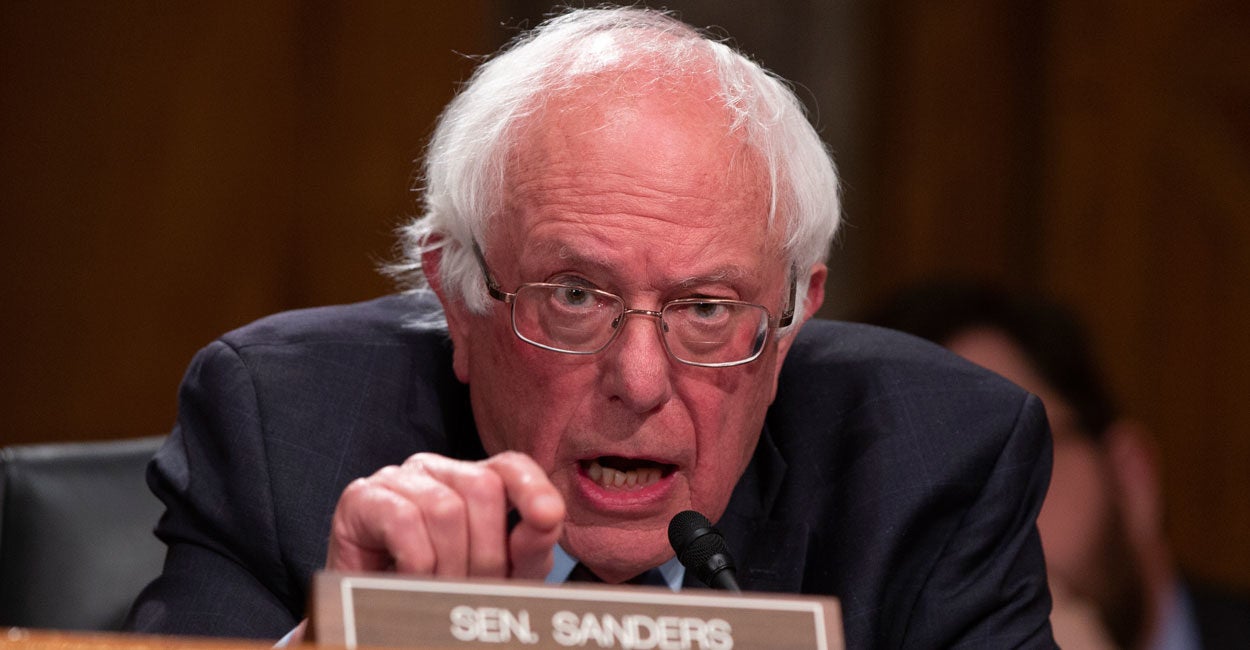
Sen. Bernie Sanders, I-Vt., asks a witness a question during a Senate hearing on presidential war powers on June 6. (Photo: Alex Edelman/picture alliance / Consolidated/Newscom)
Sen. Bernie Sanders and congressional candidate Alexandria Ocasio-Cortez are popularizing the philosophy of democratic socialism, especially among younger age groups.
Meanwhile, the Young Democratic Socialists of America (YDSA) are gaining influence on college and high school campuses, claiming to have organizing activities planned at more than 250 campuses across the nation.
The YDSA website describes the group’s vision as “a humane social order based on popular control of resources and production, economic planning, equitable distribution, feminism, racial equality and non-oppressive relationships.”
Many on the right question this vision, pointing to countries such as Venezuela and Cuba as examples of socialist disasters. Democratic socialists claim those countries implemented socialism “incorrectly” or that other factors are to blame.
They prefer to cite Norway, Sweden, and Denmark as examples of socialist success. There are, however, several key problems with that.
First, these countries are not technically socialist. By the YDSA’s definition, socialism entails a centrally planned economy with nationalized means of production. Although these countries have high income taxes and provide generous social programs, they remain prosperous because of their free-market economies.
Denmark ranks as the 10th most economically free country in The Heritage Foundation’s Index of Economic Freedom, which cites free-market policies and regulatory efficiency as reasons for the high standard of living. Sweden is ranked 15th and Norway 23rd, both with similar descriptions of thriving private sectors and open markets.
These three countries are clearly not operating under centrally planned economies, or their economic freedom scores would be significantly lower.
Second, the success of these countries is clearly based on a capitalist foundation, and it predates the expansion of social programs. Sweden, for example, became a wealthy country in the mid-20th century under a capitalist system with low tax rates.
Social programs and high tax rates were not implemented until the 1970s, which caused the economy to significantly underperform and unemployment to rise.
In recent years, Sweden has been privatizing socialized sectors, such as education and health care, cutting tax rates, and making welfare less generous. Even though tax rates and government spending remains comparatively high, open-market policies generate the revenue to support the spending.
Finally, these countries are largely homogeneous and have a culture that is conducive to a large welfare state. Scandinavians are described as hardworking citizens with extremely high levels of social trust and cohesion.
By contrast, America is a much larger country with lower levels of social trust, and therefore, a comparison is difficult to assess. Norway, Denmark, and Sweden are not democratic socialist countries that the U.S. can be accurately compared with, and could be better described as “compassionate capitalists.”
As such, the “democratic socialists”—as they define socialism—are left with no successful examples of their vision, only disastrous ones.

Monday, March 12, 2018

"Socialistic" Author Gets Her Clock Cleaned

WaPo Columnist Who Advocated Socialism: No, I Really Just Meant Norway. Okay, Here Are Some Facts About Norway.

Photo by Clive Mason/Getty Images
Elizabeth Bruenig is back.
The Washington Post columnist memorably wrote last week that she wished for an upsurge in support for socialism. I critiqued that column. Now she’s written a response to that critique, claiming that I (among others) interpreted her in bad faith for mentioning several countries that have tried socialism and failed, from Venezuela to the Soviet Union, and for pointing out that many of the supposedly socialist countries that socialists so often proclaim as their examples aren’t actually socialist (see, for example, Denmark and Sweden).
First off, it’s worth noting that Bruenig mentioned no country in her original article. She talked about the concept of socialism in rather classical Marxist terms — terms which better describe Cuba and Venezuela than mixed economies like Denmark and Sweden, as I pointed out.
Nonetheless, Bruenig thinks I somehow misinterpreted her purposefully.
So, let’s consider her latest argument.
She writes:
Last week, I wrote a column arguing that liberals concerned about ongoing failures in the American experiment should consider socialist remedies. I knew there would be quite a bit of disagreement. And I knew that most — though, crucially, not all — of it would unfold in bad faith…In the case of my column, this meant many interlocutors taking socialism to mean something along the lines of Soviet communism or the Venezuelan system, genocides, calamities, disasters and all. I don’t think anybody actually believes I’m rooting for totalitarian forms of socialism, nor for its most devastatingly ill-managed variants: I said I wasn’t, after all. If one genuinely thought a person was campaigning for genocide, one surely wouldn’t engage with someone so unreasonable.
Now this is a strawman. Nobody claimed that Bruenig wants the outcomes we’ve seen in Venezuela or under the Soviets. But it would be ridiculous to ignore the results of those socialist experiments in responding to an argument calling for the advent of socialism. I seriously doubt whether the original instigators of socialism in Venezuela wanted people eating dogs in the streets. But that’s not stopping the starving citizens of Venezuela from eating dogs in the streets as a result of that socialist philosophy in action.
According to Bruenig, I wronged her by mentioning those countries — but then I also wronged her by mentioning Nordic states socialists frequently claim as their own.
I also suspect my critics knew I wasn’t recommending the United States go Khmer Rouge based on a particular theme they kept returning to: Scandinavia. I hadn’t named the Nordic countries in my piece, but my opponents were quick to discard them from the conversation. After all, they’re inconvenient when arguing that socialism necessarily means mass murder and famine. “No, Sweden and Denmark aren’t socialist countries,” the Daily Wire’s Ben Shapiro noted, apropos of nothing, in his piece on my alleged Stalinism, “. . . they’re capitalist countries with redistributionist tendencies.” It’s the kind of preemptive rebuttal one supplies when one knows what their opponent means but would rather spend time attacking something else.
Now you would expect Bruenig to rebut the presumption that Sweden and Denmark are capitalist countries with redistributionist tendencies, and claim that they are actually socialist. But she doesn’t bother. Instead, she sets up a new metric: she doesn’t want full-scale socialism, she just wants some redistributionism here or there:
I think it makes sense to think of socialism on a spectrum, with countries and policies being more or less socialist, rather than either/or. It’s fair to say, for example, that single-payer health care is a more socialist policy than private, market-based health care. But that doesn’t mean that single-payer is the most socialist health-care policy one could dream up, nor that any country that uses such a system is de facto socialist. Certain policies will lean more in the direction of decommodification and social or cooperative ownership of certain goods, and others will incline toward commodifying certain goods and relying on market devices to decide their distribution. Along these axes, we can determine whether policies are more or less socialist.
This is, of course, a fair argument. At least, it’s a much better argument. It’s also not the argument she made in her original column. Her original column suggested that capitalism itself was soul-sucking, and she stated clearly, “capitalism seems to be at odds with the harmonious, peaceful, stable liberalism of midcentury dreams.” Not “certain capitalist institutions.” Not “the privatized health care system.” Capitalism itself.
So this is a rather major concession on her part, which she pretends never happened, of course.
Finally, she decides on her favorite new socialist paradise: Norway.
Now, this is useful. We can argue over whether the United States ought to embrace policies more like those of Norway. Again, that wasn’t her original argument. But let’s talk about her case for Norway:
As of 2015, Norway owned roughly 59 percent of the country’s wealth; by contrast, China, which is still considered at least a quasi-communist state by many, owned only 32 percent of its national wealth. In Norway, government also owns about a third of the country’s stock market, along with some 70 businesses valued at almost 90 percent of the nation’s gross domestic product……Taken together, this means that the people of the Nordic states have come a long way toward democratizing ownership, dispersing wealth, lowering inequality and placing workers’ lives under their own control — in other words, the socialism of the Nordic states seems pretty close to the kind of socialism that I wrote would satisfy me.
First off, a huge portion of Norway’s wealth ownership is thanks to their nationalization of their oil industry; like the United Arab Emirates or Venezuela, this gives them an enormous amount of cash to play with (their social wealth fund, worth $1 trillion, was seeded with oil money). The oil industry represents approximately 22% of Norway’s GDP two-thirds of their exports. (It also pays for 36% of the national government’s revenue.) That’s not the extent of their government holdings — Norway also nationalized all German-owned stocks after World War II, which partially explains the state’s high level of ownership of the stock market. Stockholding in companies does not mean the state runs the companies — in fact, the board runs the companies separately, not for the benefit of the state specifically or for the benefit of the workers, as Marx would prefer; Norwegian law requires that all shareholders be treated equally, with no preference for state shareholders. In fact, companies in which the state owns majority stock have even gone into bankruptcy before. The state essentially operates along the lines of so-called “state capitalism.”
Furthermore, Norway is a relatively friendly business climate; Heritage Foundation ranks it 23rd in the world, with the United States ranking 18th.
More than that, it’s important to recognize that the total population of Norway is 5.6 million; the total population of the United States is 323 million. It’s also rather important to recognize the cultural homogeneity of Norway: just 15.6% of the population are immigrants or children of immigrants, and 32% of the population has a higher education degree. Why does that matter? Because if we’re to compare Norway and the United States, we should probably compare Norwegian Americans with Norwegians in Norway. Here’s National Review’s Nima Sanandaji:
It was mainly the impoverished people in the Nordic countries who sailed across the Atlantic to found new lives. And yet, as I write in my book, Danish Americans today have fully 55 percent higher living standard than Danes. Similarly, Swedish Americans have a 53 percent higher living standard than Swedes. The gap is even greater, 59 percent, between Finnish Americans and Finns. Even though Norwegian Americans lack the oil wealth of Norway, they have a 3 percent higher living standard than their cousins overseas.
So, how’s state capitalism working out? Norway has a significantly higher per capita GDP than that of the United States — about $70,600 per year, as opposed to $59,500 in the United States. But a large portion of that per capita GDP is due to oil wealth. And the top personal income tax rate is 47.8%, and the corporate tax rate is 25%; overall, the tax burden represents 38.1% of total domestic income (compared to 26.4% in the United States). Government spending amounts to 48.6% of GDP (compared to 38.1% in the United States). Norway is an incredibly expensive country to live: it’s the second-most expensive country to buy food in Europe, and the most expensive to buy alcohol and tobacco. A haircut can cost $50. Vehicles can cost nearly twice as much as in the United States, and food costs vastly more than in the United States. There’s a reason that in 2013, Norway elected a far more conservative government — and they re-elected that government in 2017.
So, is Norway actually a socialist country? Not quite. It’s far more socialistic than the United States — but that’s not really a good thing, which is why immigration to Norway has been historically low, while immigration to the United States has remained remarkably high. And making apples to orange comparisons between Norway and the U.S. isn’t statistically or intellectually honest.

Sunday, February 25, 2018

Americans Becoming Childish, Immature Weaklings

Seattle Residents Complained About A 'Confederate Flag.' It Was Actually The Flag Of Norway.

"Suddenly there is a Confederate flag flying in front of a house in my Greenwood neighborhood."

Wikimedia Commons/Tastocke CC 2.0 License
Over the weekend the Seattle Times jumped at a news tip: there was a Confederate flag flying beneath the American flag in the city's Greenwood neighborhood, and residents were very concerned.
Only, it turns out, it wasn't the Confederate flag at all. It was the state flag of Norway, and a group of friendly Norwegians were just trying to show their patriotism and support for their Olympic Team when their very concerned neighbors contacted local media.
“Hi. Suddenly there is a Confederate flag flying in front of a house in my Greenwood neighborhood. It is at the north-east corner of 92nd and Palatine, just a block west of 92nd and Greenwood Ave N.," the tipster wrote, according to the Times. "I would love to know what this ‘means’ … but of course don’t want to knock on their door. Maybe others in the area are flying the flag? Maybe it’s a story? Thank you."'s 
Eager to get the scoop, reporters for the Seattle Times hopped into a car and hightailed it to view the offending flag for themselves. Only, it turned out, they weren't in for quite the controversial sighting they'd anticipated.
“That’s a Norwegian flag,” said the Norwegian owner of the flagpole in question. “It’s been up there since the start of the Olympics."
“I’m a proud Norwegian-American. My parents emigrated here in the mid-1950s. He skippered tugboats," the man continued.
Indeed, Norwegians have something to be proud of. The country leads the Winter Olympics medal count with a staggering 35 medals, 13 of which are gold (they're currently tied for the most gold medals with Germany). The Norwegians are on track to breaking the Olympic record for most medals won by a single country in a single Olympic games.
Perhaps embarrassed by their fellow residents, the Seattle Times was quick to note that other people have confused the Norwegian red-and-blue banner for the Confederate stars-and-bars. There was an incident last year in New York, the Seattle Times points out, were a group of residents complained loudly to city hall about a Confederate flag seen flying in their own neighborhood. The woman flying the flag was also, unsurprisingly, a Norwegian transplant, who had never even seen the Confederate flag before.

Friday, January 12, 2018

Why Should The US Be The Dumping Ground For All The Poor Nations? Trump Is Right!

'Why are we having all these people from s***hole countries come here?' The astonishingly blunt question Trump asked in Oval Office immigration meeting (but he'd welcome more from Norway)

  • President was meeting in the Oval Office with senators from both parties about proposals for immigration reform
  • He reportedly asked them why the U.S. had to shoulder the burden of refugees coming to the U.S. after Third World natural disasters 
  • 'Why are we having all these people from s***hole countries come here?' he asked, according to a Washington Post report 
  • He also said: 'Why do we need more Haitians? Take them out' 
  • Trump has been rescinding 'Temporary Protected Status' for otherwise-illegal immigrants who came from Haiti, Nicaragua and El Salvador because of earthquakes and hurricanes
  • In addition to Haitians, he was referring to people from African countries
  • Trump said he wanted people from countries like Norway, whose prime minister he held a press conference with Wednesday 
  • The White House did not deny Trump made the comments in a statement
  • Haiti's government came out and said they 'vehemently condemn' Trump's comments in relation to their country 
  • Haitian ambassador Paul Altidor said Trump's remarks were 'based on stereotypes' and he was either 'misinformed' or miseducated'
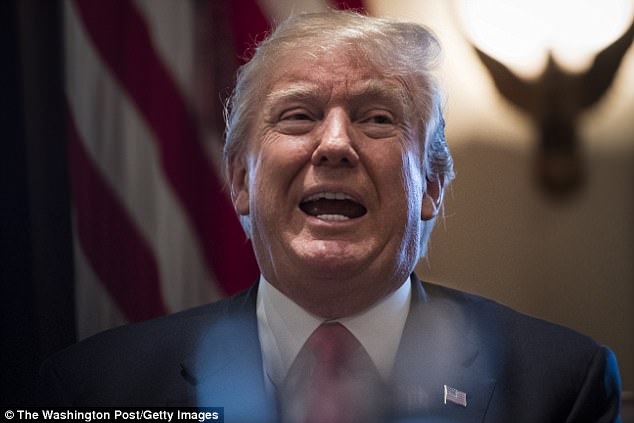
President Donald Trump, frustrated with America's continued responsibility for immigrants fleeing Third World natural disasters, asked members of Congress Thursday in vulgar terms why the United States had to shoulder such a burden.
'Why are we having all these people from s***hole countries come here?' Trump said, according to two people who were briefed on the meeting and then leaked the comment to The Washington Post.
Trump was reportedly speaking about Haitians and citizens of various African nations.   
'Why do we need more Haitians? Take them out,' he told people in the meeting, according to CNN.
The comments has caused outrage around the world, with the United Nations calling President Trump 'racist'.
SCROLL DOWN FOR VIDEO 
President Donald Trump reportedly told lawmakers Thursday in the Oval Office that he was mystified about why the U.S. imports people from 's***hole countries' in the Third World
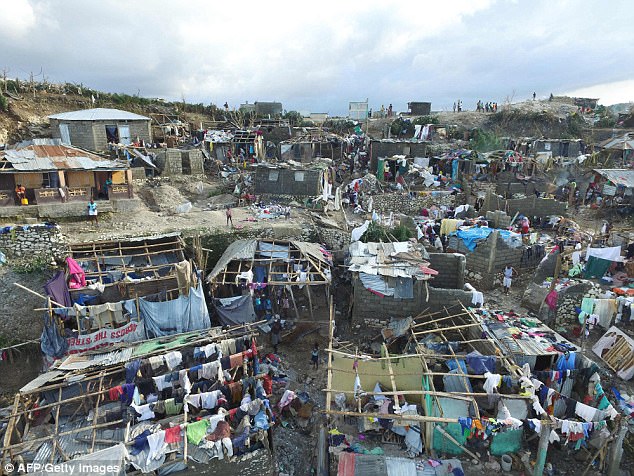
'S***HOLE COUNTRY': shows people walking past a street damaged by Hurricane Matthew, in Jeremie, in western Haiti. The country's perilous state had meant its citizens have temporary protected status in the U.S. - apparently one of the causes of Trump's extraordinary outburst - which is now being rescinded

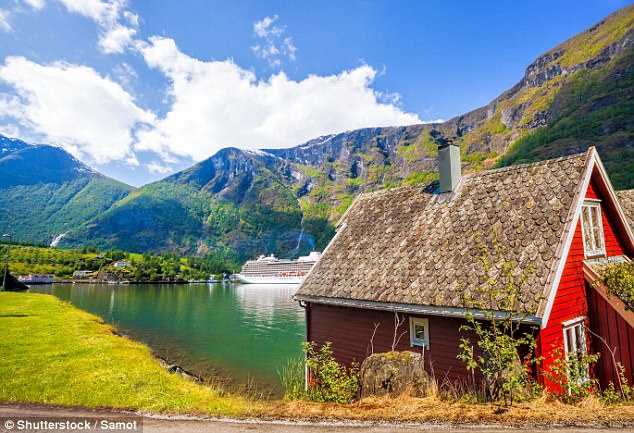
NATO PARADISE: Trump told senators that instead of importing immigrants from the Third World, America should seek out people from countries like Norway, whose prime minister Erna Solberg he met Wednesday at the White House
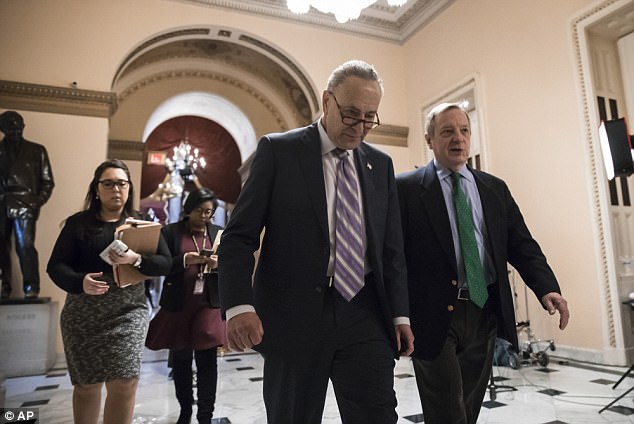
ON THE RECEIVING END: Dick Durbin (right) was part of a bipartisan group of six senators who went to the Oval Office to seek Trump's approval for a deal which would have exchanged ending the visa lottery for resuming 'temporary protected status' for some arrivals from some countries
U.N. human rights spokesman Rupert Colville said 'racist' was the only world that could be used to describe Trump's comments
He added: 'You cannot dismiss entire countries and continents as 's***holes', whose entire populations, who are not white, are therefore not welcome.' 
Trump also said that instead of accepting Africans and Haitians, the U.S. should seek to assimilate people from countries like Norway, whose prime minister he met with a day earlier.
Unlike Haiti and all the nations of Africa, Norway is both a NATO member and a stalwart U.S. ally.  
CNN reported that the outburst came at the private Oval Office meeting as Democratic senator Dick Durbin outlined a bipartisan immigration deal put together by six senators which they took to Trump for backing.
Dick Durbin, the Democratic senator who is minority whip, was outlining his proposal in which the visa lottery system, of which Trump has been a fierce critic, would be ended in return for 'temporary protected status', known as TPS, resuming for El Salvador and Haiti.
Trump has moved to end it for immigrants from those countries but as Durbin went through a list of countries which would gain TPS under the deal, he reached Haiti and 'Trump asked why the US wants more people from Haiti and African countries', CNN reported.
Haiti's government came out late Thursday and said they 'vehemently condemn' Trump's comments in relation to their country.
The country's ambassador to the US told NBC that Trump's remarks were 'based on stereotypes' and the president was either 'misinformed' or 'miseducated.' 
The White House issued a needle-threading statement on immigration policy Thursday afternoon, while not denying the story's accuracy.
'Certain Washington politicians choose to fight for foreign countries, but President Trump will always fight for the American people,' deputy press secretary Raj Shah said in the statement. 'The President will only accept an immigration deal that adequately addresses the visa lottery system and chain migration – two programs that hurt our economy and allow terrorists into our country.'
President Trump meets with GOP lawmakers to discuss immigration

Loaded: 0%
Progress: 0%
1:32
Play
Unmute
Current Time1:32
/
Duration Time1:32
Fullscreen
Need Text
UP NEXT

King Hussein of Jordan arrives in New York City …

f
Cancel
Wreckage from natural disasters is endemic in nations like Haiti (pictured) and El Salvador, while African refugees from nations like Rwanda and Sudan flee oppressive governments and long-lasting civil wars between warring tribes and sects
TROUBLED: Members of the MS-13 gang, notorious for its brutality, detained in San Salvador, one of the many troubles the country is suffering from
President Trump pushes for bipartisan bill on immigration reform

Loaded: 0%
Progress: 0%
0:00
Previous
Play
Skip
Mute
Current Time0:00
/
Duration Time1:49
Fullscreen
Need Text
'Like other nations that have merit-based immigration, President Trump is fighting for permanent solutions that make our country stronger by welcoming those who can contribute to our society, grow our economy and assimilate into our great nation,' Shah added. 
'He will always reject temporary, weak and dangerous stopgap measures that threaten the lives of hardworking Americans, and undercut immigrants who seek a better life in the United States through a legal pathway.' 
Policy squabbles notwithstanding, Trump's comments shocked senators from both major parties, according to the Post.
Democrat Dick Durbin of Illinois was in the Oval Office to argue that the Trump administration should scale back a proposal to eliminate a diversity visa lottery, which seeks to import people from places that would otherwise be 'underrepresented' among immigrants in the U.S.
Trump's comment about 's***hole countries' comes at a time when his White House is ending protections for people who sought shelter following natural disasters years, or sometimes decades, ago. 
There are approximately 436,900 people with such 'Temporary Protected Status' living in the U.S. from 10 countries – South Sudan, Sudan, Somalia, Honduras, Nicaragua, El Salvador, Syria, Haiti, Nepal and Yemen.  
Haitians and Nicaraguans have already been told their protection is ending. 
The Trump administration said this week that it was also removing the protection for Salvadoran nationals who have been allowed to reside in the U.S. since a pair of earthquakes struck their country in 2001.
The Haitians were fleeing an equally devastating 2010 earthquake.
The astonishing comments came on an afternoon of chaos as Huckabee Sanders dismissed senators' claims they had a bipartisan deal on 'Dreamers.'
Six senators boasted they had a deal in place that would solve the issue of what to do with hundreds of thousands of people brought to the U.S. illegally as children and whose legal status granted under the Obama administration is about to expire.
When Huckabee Sanders was asked about the deal at the White House press briefing she told reporters, 'There has not been a deal reached yet.'
But minutes after the briefing, Sens. Dick Durbin, Democrat from Illinois, and Cory Gardner, Republican from Colorado, tweeted a statement saying there was indeed a deal.
'Several of my colleagues and I have reached an agreement that reflects the discussion we had this week with @realDonaldTrump on a solution for Dreamers and border security,' Gardner wrote, sharing a statement that was co-signed by five of his colleagues.
The group of senators working together included Gardner and Durbin, along with Republicans Sens. Jeff Flake and Lindsey Graham, as well as Democrats Michael Bennet and Bob Menendez.
'We have been working for four months and have reached an agreement in principle that addresses border security, the diversity visa lottery, chain migration/family reunification, and the Dream Act – the areas outlined by the President. We are now working to build support for that deal in Congress,' the statement said.
However, a spokeswoman for President Trump told DailyMail.com that what Huckabee Sanders said from the podium stands 
At the briefing, Huckabee Sanders warned that the Democrats best not play politics over immigration and risk a government shutdown.
'Democrats should stop making our brave troops and essential government functions political pawns in their swamp games,' she said. 'They should stop their obstruction and work with Republicans to fund the government.'
She also told reporters that she believed a deal would get done.
'We are confident and we feel we're going to get there,' the press secretary said as she exited the podium for the day.
Trump says won't sign DACA bill without border wall funding

Loaded: 0%
Progress: 0%
0:00
Previous
Play
Skip
Mute
Current Time0:00
/
Duration Time0:50
Fullscreen
Need Text
The White House meeting was also attended by Republicans including Sens. Tom Cotton and David Perdue, along with Reps. Bob Goodlatte and Kevin McCarthy, according to Sen. John Cornyn.
Cornyn indicated to CNN that the gang of six's proposal wouldn't be enough to get an immigration bill over the finish line.
'I think the message has now been delivered that we need to get everybody at the table and we'll take the best of their ideas,' Cornyn said.
Goodlatte, who serves as the chairman of the House Judiciary Committee, unveiled an immigration bill Wednesday afternoon that would also deal with DACA or Deferred Action for Childhood Arrivals, the name of the policy that gave Dreamers legal status.
Huckabee Sanders was asked by a reporter about that plan too, questioning whether it would act as a 'poison pill' for being too conservative.
She said no.
'I think that's why it's called a negotiation,' the press secretary replied.
'Everybody puts everything on the table they want. You figure out what you're not willing to give up, which we've laid out. And you try to come out with everybody winning and that's what we're hoping to do,' she said.

IMMIGRATION FROM HAITI, AND EL SALVADOR, WHICH TRUMP CALLED 'S***HOLES'

Haiti
Until November, Haitians had 'temporary protected status', or TPS, which means hey are not subject to removal even if they have no other legal status. 
It was introduced after the devastating 2010 earthquake, which shattered the country and killed 230,000 people.
But that status is ending, with the change to take effect on July 22 2019, which will force all Haitians who have the status to either find a legal way to stay or face deportation. 
The total number of people affected is estimated at 46,000 but that may be a  significant under-estimate. 
Already large numbers of Haitians have fled to Canada, generating a mini-crisis there last year as it dealt with arrivals at its border crossings. 
Haiti, however, is itself in bad shape. It is by far the poorest country in the Americas, and rated 209th poorest country in the world, out of 230 in total, putting it below Afghanistan and Ethiopia.
Unemployment is 40 per cent, and less than a third of the workforce have formal jobs, while the economy is still recovering from the latest massive natural disaster, Hurricane Mathtew, which hit in 2016.
Other statistics are also appalling: illiteracy is as high as 40 per cent, average per capita income has been estimated at $400 per person, and even though the country's debt was canceled in 2010, it has already reached more than $2 billion, mostly owed to Venezuela.   
A mass arrival of tens of thousands from the U.S. would be doubly bad news, economists say, as there are no jobs for them and the cash from remittances which they sent has become a key part of the economy. 
El Salvador
El Salvadorans have had TPS since 2001, when an earthquake similar to Haiti's hit an already troubled country.  
It had never truly recovered from the 12-year-long civil war which started in 1980 and killed an estimated 75,000, and January 2001's earthquake and the mudslides it triggered caused more havoc.
The death toll was less than 1,000, but up to a quarter of a million homes and buildings were destroyed or damaged and the country lost half its economic output.
In total, an estimated 250,000 El Salvadorans are in the U.S. on TPS, compared to a population of 6.1 million - making their remittances once of the key sources of foreign cash. In total remittances from all emigrants account for a fifth of its gross domestic product.
Compared to Haiti, El Salvador is far wealthier, ranking 143rd in the world on wealth, and literacy rates are far higher, but it is scarred by gang crime which makes it one of the world's most dangerous places.
There were 81.2 murders for every 100,000 people in 2016, the highest casualty rate outside a war zone anywhere in the world. In 2016, there were 5,200 murders.
In comparison, the U.S. had 17,25 murders in 2016, a rate of 5.3 per 100,000. The rate in Norway - where Trump welcome arrivals from - was 0.6 per 100,000 in 2015.
The most notorious in the U.S. is MS-13, which ironically originated in Los Angeles, as did its rival M-18.
Their bitter rivalry fueled the murder rate and also overshadows the criminal justice system, with police constantly in the crossfire.


Read more: http://www.dailymail.co.uk/news/article-5260595/Trump-asked-U-S-people-s-hole-countries.html#ixzz53zpTvzNo
Follow us: @MailOnline on Twitter | DailyMail on Facebook