Palestinians vs. Trump: The Battle Begins
Over the past year, the Palestinians have managed to keep under wraps their true feelings about US President Donald Trump and his Middle East envoys and advisors. In all likelihood, they were hoping that the new US administration would endorse their vision for "peace" with Israel.
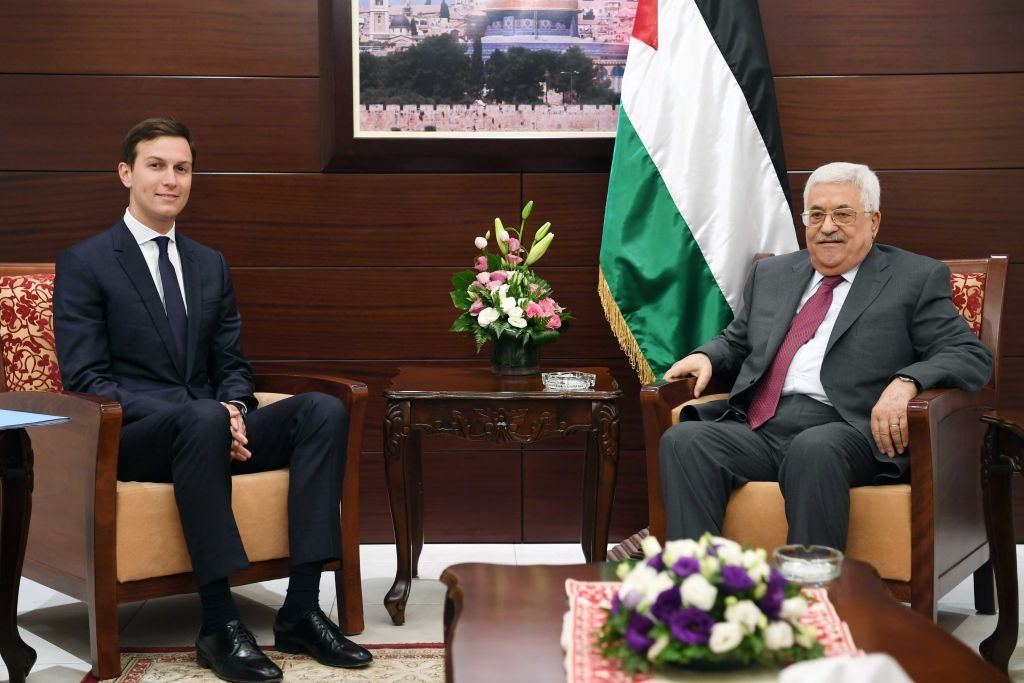
Palestinian Authority (PA) President Mahmoud Abbas ensured that his spokesmen and senior officials spoke with circumspection about Trump and his Middle East advisors and envoys. The top brass of the Palestinian Authority in Ramallah felt it was worth giving Trump time to see if he was indeed gullible enough to be persuaded to throw Israel under the bus and fork over their demands. Well, that bus has long passed. The Palestinians are now denouncing Trump and his people for their "bias" in favor of Israel. Even more, the Palestinians are openly accusing the Trump administration of "blackmail" and of seeking to "liquidate the Palestinian cause." To top off the tone, the Palestinians are insinuating that Trump's top Jewish advisors and envoys -- Jared Kushner, Jason Greenblatt and David Friedman -- are more loyal to Israel than to the US. The Palestinians' unprecedented rhetorical attacks on the Trump administration should be seen as a sign of how they plan to respond to the US president's plan for peace in the Middle East, which has been described as the "ultimate solution." Although the full details of the proposed plan have yet to be made public, the Palestinians have already made up their mind: Whatever comes from Trump and his Jewish team is against the interests of the Palestinians.
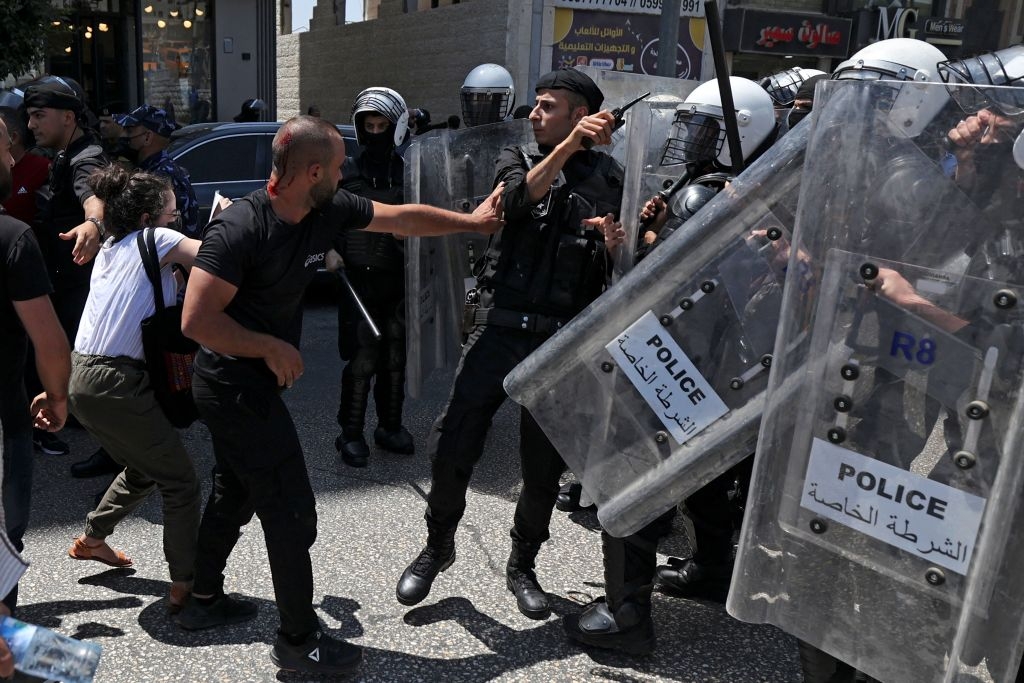
The Palestinian tone makes it clear that the Palestinian leadership and people have already relegated Trump's peace plan to the trash-bin as nothing more than Israeli-American conspiracy, in collusion with some Arab countries, to impose a solution on the Palestinians and "liquidate" their cause. To them, the "real" Trump is now apparent. This is how one Palestinian political analyst, Dr. Mazen Safi, reacted to Trump's proposed peace plan and what he perceives as continued US support for Israel. "The US president and his administration have removed the mask from their face," he stated. "They are paving the way for a new Israeli aggression on our people and moving the region toward an explosion." So what is really behind the Palestinian outrage with the Trump administration? First, the Palestinians reject the idea of "regional peace" between Israel and Arab countries. The Palestinians maintain that peace between Israel and the Arab countries should come only after, and not before, the Palestinian issue is resolved. The Palestinians fear that any peace agreements between Israel and the Arab countries would come at their expense. Echoing this fear, the Palestinian daily Al-Quds, which often reflects the views of the Palestinian Authority leadership, pointed out that the recent Arab League foreign minsters' meeting in Cairo chose to focus on the Iranian and Hezbollah "threat," breaking from the long-standing traditional obsession of the Arabs with the Palestinian issue. The Palestinians, according to the paper, feel abandoned by their Arab brothers. "The Arab League meeting in Cairo came out with strong positions against the Iranian threat and didn't hesitate to classify Hezbollah as a terrorist group," Al-Quds complained in an editorial. "The meeting ignored the Palestinian cause. We are facing new Arab alliances against Iran, all under American pressure. This will have a negative impact on our cause." The Palestinian daily went on to lambast the floating Trump peace plan. It stated that the proposed plan, as published in various media outlets, "Doesn't serve our interests and aspirations." Second, the Palestinians are furious with US threats to shut down the PLO's diplomatic mission in Washington. They see the threat as an attempt to blackmail them not file charges of war crimes against Israel with the International Criminal Court. The Palestinians also see the threat as an attempt to force them to resume peace talks with Israel unconditionally. "The US threat to close the PLO's diplomatic mission in Washington shows disrespect for the Palestinian rights and blind bias in favor of Israel," Al-Quds said in the same editorial. "It also coincides with growing hollow talk about a US peace plan that has been endorsed by President Trump." Third, the Palestinians are now openly talking about Trump's Jewish advisors and envoys and their "influence" on him and his administration's policies. This is something that Palestinian Authority officials had refrained from mentioning in the past year because it rings of out-and-out anti-Semitism. Now, however, Palestinian officials and political analysts do not seem to have a problem talking about the influence of the "Jewish lobby" on Trump's decision-making process and policies. Hassan Al-Batal, a political analyst closely associated with the Palestinian Authority, referred in a recent article to what he called "the three Jewish pillars of the Trump peace plan – Trump's son-in law (Kushner), Middle East envoy (Greenblatt) and the US Ambassador to Israel (Friedman)." Al-Batal expressed "regret" that the recent meeting of the Arab League foreign ministers chose to condemn Hezbollah and Iran. "Palestine is currently witnessing a crisis with Washington," he said. Bassam Abu Sharif, a former advisor to Yasser Arafat, went as far as referring to Trump's Jewish advisors as a "dangerous clique." Abu Sharif said that he had no doubt that "what Kushner and his dangerous clique are planning is destructive and inhumane." The US, he charged, has one major goal: to take full control of the Middle East and steal its resources for once and for all. This requires -- according to their scheme -- the liquidation of the Palestinian cause." Another political analyst, Talal Okal, who is also linked to the Palestinian Authority and its leadership, accused the Trump administration of "misinformation" and attempting to "blackmail" the Palestinians. Referring to the US demand that the Palestinians refrain from filing charges against Israel with the International Criminal Court and threatening to shut down the PLO's diplomatic mission in Washington, Okal wrote: "The US administration is practicing blackmail against the Palestinian leadership by demanding that the Palestinians engage in unconditional negotiations with Israel and that the Palestinians refrain from pursuing war crimes against Israel with the International Criminal Court. It's obvious that the Trump administration is practicing a policy of misinformation."Palestinian political analyst Hani Habib claimed that the Trump administration was preparing to blame the Palestinians for the failure of the next peace process. The Palestinians, Habib said, "must be united in facing all forms of American-Israeli blackmail. The US administration's threat to shut down the PLO's diplomatic mission in Washington calls into question its ability to play the role of a fair and honest mediator." In an article entitled "Cheap American Blackmail," columnist Omar Hilmi Al-Ghul complained: "The US administration is once again ignoring Palestinian rights and interests. It's shamelessly and flagrantly seeking to confiscate the Palestinians' independent decision-making process." Al-Ghul, too, made a reference to Trump's Jewish team: "The team surrounding Trump, which is in collusion with Israel, is acting in a way that contradicts what the Palestinian leadership wants -- to maintain bridges with the US. The American blackmail of the Palestinian leadership is cheap and miscalculated."This conspiracy theory, which claims that Trump's team cares more about Israel than US interests, is repeated in a statement by Fatah: "The US political blackmail contravenes international laws and resolutions pertaining to the Palestinian issue in particular and the peace process in general. This US position endorses the Israeli policy to end the two-state solution." The Palestinians' rhetorical attacks on the Trump administration are designed to prepare the ground for their rejection of the proposed "ultimate solution." The Palestinians want it to be seen as a plan concocted by a few Jewish officials in the Trump administration who are more loyal to Israel than their own country, the US. These officials, the Palestinians argue, have endorsed the position of the Israeli government and serve as its mouthpiece. That is why, they argue, the Palestinians are unable to accept a plan that is in effect a "Jewish-American conspiracy to eliminate the Palestinian cause." The Palestinians are also preparing the stage to accuse some Arab countries of "collusion" with this "conspiracy" -- putting them on a collision course with Saudi Arabia. The Palestinian message to the Arab countries, especially Saudi Arabia, should be seen as a warning shot: Collaborate with the Trump administration in the alleged scheme at your peril. The anti-Trump Palestinian stance is sounding the death-knell for US administration's effort to achieve comprehensive peace in the Middle East. Take careful note: these warning shots may well be translated into yet another intifada against Israel under the fabricated pretext that the Americans and Israelis, with the help of some Arab countries, seek to strip the Palestinians of their rights. One wonders when the world will wake up to the fact that those rights have already been stripped from the Palestinians -- by none other than their own brainwashing, inciting and corrupt leaders. Bassam Tawil, a Muslim, is based in the Middle East.
© 2017 Gatestone Institute. All rights reserved. The articles printed here do not necessarily reflect the views of the Editors or of Gatestone Institute. No part of the Gatestone website or any of its contents may be reproduced, copied or modified, without the prior written consent of Gatestone Institute.
|
Our goal is to have intelligent discussion of the topics of the day. We realize everyone has their opinion and they should be allowed to express it in a discussion forum without calling each other names. We learn from discussion and not from name calling or argument.We use cookies to personalise content and ads, to provide social media features and to analyse our traffic. We also share information about your use of our site with our social media, advertising and analytics partners. See details
Contact Form
Showing posts with label arab. Show all posts
Saturday, November 25, 2017
Palestinians Ready To Miss Another Opportunity For Peace
Thursday, June 30, 2016
Creeping Sharia Spreading Throughout Europe
Turkey's Growing Influence over Islam in Austria
The selection of an ethnic Turk to lead the Islamic Religious Community in Austria (Islamischen Glaubensgemeinschaft in Österreich, IGGiÖ), the primary representative of Muslims in the country, is being challenged by Muslim groups opposed to Turkey's growing influence over the practice of Islam in Austria.
Ibrahim Olgun, a 28-year-old Austrian-born Islamic theologian with ties to the Turkish state, was quietly named on June 19 to replace 62-yer-old Fuat Sanac, who stepped down after serving as IGGiÖ president for five years. Sanac, also a Turk, was reviled by Turkish authorities for helping the Austrian government draft a new Islam Law (Islamgesetz) that aims to promote an "Islam with an Austrian character." The law, which was promulgated in February 2015, seeks to reduce outside meddling by prohibiting foreign funding for mosques, imams and Muslim organizations in Austria. It also stresses that Austrian law must take precedence over Islamic Sharia law for Muslims living in the country. Observers worry that Olgun — a member of the Turkey-financed Turkish-Islamic Union for Cultural and Social Cooperation in Austria (ATIB), an influential group that has vowed to challenge the Islam Law at Austria's Constitutional Court — will use his new position both to undermine the Islam Law and to increase further Turkey's influence over Muslims in Austria. At least eight Austrian Muslim groups (representing Albanian, Arab, Bosnian and Sufi Muslims) are challenging Olgun, who was selected by the IGGiÖ's Shura Council (Schurarat), a rules committee (Shura is an Arabic word for consultation) whose five members all happen to be ethnic Turks. IGGiÖ statutes require a person to be at least 35 years old to head the group, but the Shura Council secretly annulled that stipulation last December, according to Hassan Mousa, head of the Arab Religious Community in Austria (Arabischen Kultusgemeinde in Österreich). He said that Olgun's selection was "undemocratic" and "illegal" and added that his ties to ATIB would shift IGGiÖ's balance of power further in Turkey's direction. ATIB, an umbrella group that operates more than 60 mosques in Austria, is directly managed by the religious affairs attaché at the Turkish embassy in Vienna, and the imams of these mosques are Turkish civil servants. ATIB and its German counterpart, the Turkish-Islamic Union for Religious Affairs (DITIB), are financed by the Turkish government's Directorate for Religious Affairs, known in Turkish as Diyanet. According to the Berlin-based expert on Turkey, Ralph Ghadban, the primary mission of ATIB and DITIB is to "install the Turkish government's official version of Islam" in Austria and Germany. He says the two groups are the "extended arms" of Turkish President Recep Tayyip Erdogan, who uses them to promote Turkish nationalism as an antidote to integration among the Turkish diaspora. Ghadban warns that the Islam being preached in Turkish-controlled mosques in Europe is a "Sharia Islam with strong Turkish-nationalist overtones" that calls for a "strict separation from Western individualistic values." He also says that DITIB has been strengthening its ties to Milli Görüs (Turkish for "National Vision"), an influential Islamist movement strongly opposed to Muslim integration into European society. Olgun, who studied Islamic theology at the University of Ankara, has vowed to represent all Muslims in Turkey: "I myself have experienced what it is like to grow up in Austria and to question my own identity. What is religion and what is tradition? It is worthwhile to reflect on it and then do theological research. Today I feel at home as a Muslim in Austria, but I also do not forget my roots. Therefore I will build bridges."Olgun insists that he will not be Erdogan's puppet and will not allow himself to be influenced by ATIB. Until recently, however, Olgun was ATIB's point man for "interreligious dialogue," a key method of spreading Islam in the West by portraying it as a religion of peace and tolerance. In Austria, ATIB directly competes with the Vienna-based, Saudi-funded King Abdullah bin Abdulaziz International Centre for Interreligious and Intercultural Dialogue, which, according to critics, is a permanent "propaganda center" in central Europe from which to spread the conservative Wahhabi sect of Islam. Olgun also was an "inspector for Islamic religious instruction" (Fachinspektor für islamischen Religionsunterricht) for the IGGiÖ in Vienna, where he worked to ensure that Muslim children are being taught a version of Islam that presumably complies with standards established by the Turkish government.
The IGGiÖ, which represents more than 250 Muslim associations across Austria, suppliesstate-funded Islamic religious education at Austrian public and private schools. In 2014, the IGGiÖ introduced new taxpayer-funded textbooks for the formal teaching of Islam in all public elementary schools across the country. According to the IGGiÖ, the new textbooks — called "Islam Hour" (Islamstunde) — are based on "secure and recognized sources of Islam" aimed at "embedding Islam into the lives of students." Unlike previous versions of the books, which were criticized for being "overly martial in tone" and for not being "sufficiently oriented toward European values," the new books have been developed based a "completely new didactic model for competency-based education." In February 2016, however, the University of Vienna published study which found that Islamic kindergartens in the capital are dominated by "intellectual Salafists and political Islamists" who are contributing to the "theologically-motivated isolation" of Muslim pupils. The report calls into question claims by the IGGiÖ that anti-Western textbooks have been removed from Austrian schools: "In many of their publications the Muslim Brotherhood and Milli Görüs reject the Western way of life as an inferior worldview." Olgun rejects the criticism levelled against him: "They say that I am too young, that I am the extended arm of the Turkish state. That is not true. I was born in Austria. I grew up here and am an Austrian citizen. I am not a Turkish civil servant." Olgun's supporters say it is time for a "generational change" at the IGGiÖ because Austria's Muslim community is young and growing fast. The Muslim population in Austria now exceeds 500,000 (or roughly 6% of the total population), up from an estimated 150,000 (or 2%) in 1990. The Muslim population is expected to reach 800,000 (or 9.5%) by 2030, according to recent estimates. Muslim students now outnumber Roman Catholic students at middle and secondary schools in Vienna, according to official statistics, which show that Muslim students are also on the verge of overtaking Catholics in Viennese elementary schools. The data confirms a massive demographic and religious shift in Austria, traditionally a Roman Catholic country. Soeren Kern is a Senior Fellow at the New York-based Gatestone Institute. He is also Senior Fellow for European Politics at the Madrid-based Grupo de Estudios Estratégicos / Strategic Studies Group. Follow him on Facebook and on Twitter. His first book, Global Fire, will be out in 2016.
© 2016 Gatestone Institute. All rights reserved. The articles printed here do not necessarily reflect the views of the Editors or of Gatestone Institute. No part of the Gatestone website or any of its contents may be reproduced, copied or modified, without the prior written consent of Gatestone Institute.
|
Monday, August 18, 2014
Palestinians Not Welcome In Most Arab Countries, Why No Outrage?
Why Jordan Doesn't Want More Palestinians
by Khaled Abu Toameh
August 18, 2014 at 5:00 am
Comment
|
By mistreating the Palestinians and depriving them of their basic rights, Jordan and other Arab countries are driving them into the open arms of extremists, especially Islamist groups such as the Muslim Brotherhood and Hamas.It is no secret that many Arab countries despise Palestinians and subject them to apartheid laws and strict security measures that deny them most basic rights.
Jordan, Lebanon and Syria can continue their practices against Palestinians without having to worry about the responses of the international community or the media. No one is going to take to the streets of European and American cities to condemn Arabs for mistreating Arabs.
The mistreatment of Palestinians at the hands of their Arab brothers is an issue that is rarely mentioned in the mainstream media in the West. Most journalists prefer to look the other way when a story lacks an anti-Israel perspective.
A story is big only when it is Israel that arrests, kills, or deports.
When Arab countries such as Jordan, Syria and Lebanon move against Palestinians, however, foreign journalists choose to bury their heads in the sand. Such has been the case with Jordan and its mistreatment of the kingdom's Palestinian majority.
Jordan's dilemma is that if it allows more Palestinians into the country, the kingdom, which already has a Palestinian majority, would be transformed into a Palestinian state. But by mistreating the Palestinians and depriving them of basic rights, Jordan and other Arab countries are driving them into the open arms of extremists, especially Islamist groups such as the Muslim Brotherhood and Hamas.
The Jordanians have clearly chosen to follow the second option, which means keeping as many Palestinians as possible out of the kingdom. As far as King Abdullah is concerned, it is better to have radicalized Palestinians outside the kingdom than to let them into the kingdom, where they would cause him more trouble.
The Jordanians see the Palestinians as a "demographic threat" and are constantly searching for a solution to this problem. Jordan's biggest fear is that its kingdom will one day become a Palestinian state. Jordanian authorities seem determined to do their utmost to avoid such a scenario, even if that means being condemned by human rights groups.
The Jordanians know that UN agencies are not going to denounce them if they deport Palestinians or revoke their citizenship.
Jordan wants to solve its Palestinian problem quietly and far from the spotlight.
A series of measures taken by the Jordanian authorities over the past three years serve as an indicator of Amman's increased concern over the Palestinian "threat." These measures include revoking the citizenship of many Palestinians and forcibly deporting others who are fleeing from Syria.
Ironically, the Jordanians say that these measures are designed to help the Palestinians. Jordan wants the Palestinians to believe that depriving them of basic rights and deporting them from the kingdom is something good for the Palestinian cause. The Jordanians say they do not even understand why the affected Palestinians are not welcoming the anti-Palestinian measures.
How do the Jordanians justify their anti-Palestinian policy? By arguing that if they aid the Palestinians and provide them with shelter and passports, this would serve Israeli interests.
"We don't want to be an Israeli tool for re-settling Palestinians who come to Jordan, by granting them citizenship,"explained former Jordanian interior minister Nayef al-Qadi. "Otherwise, we would be telling the Palestinians to forget Palestine."
Al-Qadi, who played a key role in drafting the policy of withdrawing Jordanian citizenship from Palestinians, said he is also opposed to granting citizenship to the children of Jordanian women married to Palestinians and other non-Jordanian nationals.
"Why don't they call them the children of the men married to Jordanian women? Why aren't these children given the citizenship of their fathers? We have about 500,000 Jordanian women married to non-Jordanians. If we multiply that by 3-4, we will have to hand this country over to Israel and go away. We won't have anything left here."
The former Jordanian minister's attempt to justify the crackdown came shortly after Human Rights Watch released a report detailing Jordan's mistreatment of Palestinian refugees fleeing Syria. Entitled, "Not Welcome: Jordan's Treatment of Palestinians Escaping Syria," the report, which has won little attention in the international media, accuses the Jordanians of breaching their international obligations.
The "Cyber City" refugee camp in Jordan, where a number of Palestinians are being held. (Image source: ICRC)
|
Unfortunately for the Palestinians (but fortunately for the Jordanians), the damning report against Jordan was released on August 7, at a time when the world's attention was focused on the war between Hamas and Israel.
According to the report, Jordan, in a clear breach of its international obligations, refuses entry to, or forcibly deports, Palestinian refugees escaping Syria. "Jordan has officially banned entry to Palestinians from Syria since January 2013 and has forcibly deported over 100 who managed to enter the country since mid-2012, including women and children," the report revealed.
The report quotes Basma, a Palestinian woman from Yarmouk refugee camp in Syria, who describes how the Jordanians turned her and others back. "They told us, 'You are Palestinians, you aren't allowed to enter,'" she recounted. "They took us in a bus and dropped us on the Syrian side of the border at 2 a.m."
Another Palestinian refugee from Damascus, 47-year-old Abdullah, was quoted as saying: "As we were crossing, the Jordanian army started firing at us. We all laid down flat on the ground to avoid the gunfire. After some moments two trucks with army officers came to us, before we knew what was happening an army officer shot five of us in our legs. We weren't trying to flee."
During the past three years, Jordan has received millions of Syrian refugees. But when it comes to Palestinians, the story is different.
The Jordanians are not afraid of the Syrian refugees because they know that once the crisis is over in their country, they will return to their homes. Unlike the Palestinians, the Syrians are not seeking Jordanian citizenship or new lives in the kingdom. The Syrians see their presence in Jordan as a temporary situation.
There is also no talk about transforming Jordan into a "Syrian state," as opposed to calls for creating a homeland for the Palestinians in the kingdom. As such, the Jordanians' problem is with Palestinians, not Syrians or other Arabs.
Fayez Tarawneh, head of the royal court and former prime minister, defended the anti-Palestinian measures in a meeting with Human Rights Watch last year. He said that a large influx of Palestinians from Syria would alter the demographic balance of the kingdom and cause instability.
The human rights group said that as a result of the Jordanian government's policy, many Palestinians from Syria do not have proper residency papers in Jordan, "making them vulnerable to exploitation, arrest, and deportation."
It continued that, "undocumented Palestinians from Syria dare not seek protection or redress from the Jordanian government against exploitation or other abuses."
Jordan, Lebanon and Syria can continue their abusive practices against Palestinians without having to worry about the response of the international community. No one is going to take to the streets of American and European cities to condemn Arabs for mistreating Arabs.
Subscribe to:
Posts (Atom)