Contact Form

Name

Email *

Message *

Showing posts with label future of libya. Show all posts

Saturday, February 11, 2012

Is Syria The Next UN Target For Takeover?

Syria is now under the gun as was Libya was a couple months ago, will Bashar have the same ending as Gafaffi?  Will the UN run him out of power? Will the UN be successful?


Fresh off their victory in Libya, the UN now believes they can run the world. Is this the beginning of a world wide order where the most inefficient organization in the world, runs over  individual countries under the cover story that people are being killed by  current government forces.

What happens when the UN replaces a duly elected government? Will those who support non-intervention still be supporters of the UN?  Will there be an outcry from other governments or will they meekly agree with the UN as to not bring down the wrath of them? What would you do if the UN tried to take over the US?

We think that Americans should be very careful in supporting the activities of the UN as we could become their target.  If martial law were instituted here, would the UN agree or protest it? For example, if an Occupy movement site were raided by police and many were killed, would the UN attack us?

OK, that sounds conspiratorial, but if it can happen in Libya and Syria, why could it not occur here?

Tell us what you think.

Conservative Tom


Has World War III Begun?

February 10, 2012 by
Has World War III Begun?
UPI
The new Syrian flag of independence covers the body of Syrian girl who was allegedly killed by Syrian government forces.
A “Libya-styled” NATO attack on Syria grows closer by the day. Already, British and French Special Forces are on the ground in Syria providing logistical support to the opposition. And U.S. commanders are making plans for military action there.
Fighters from the NATO-backed al-Qaida opposition group that just fought in Libya — and once fought American forces in Afghanistan and Iraq — are being airlifted into Syria as I write and are fighting with the opposition forces in Syria.
Iran is now sending fighters and material into Syria to support the Bashar Assad regime. Russia and China support Syria and Iran and are opposing NATO intervention.
Syria is about to develop into a proxy war between the West and Iran. What explodes from there is anybody’s guess.
There are unpleasant certainties. The regime of President Barack Obama will benefit from war with Syria, Iran and, if it comes, Russia and China. American jingoism will push his approval numbers up in the short term and possibly hold through the election. The military-industrial complex and the banksters pushing for the New World Order will also benefit.
The American people, however, will suffer. U.S. troops will again be used as cannon fodder, the U.S. deficit will balloon and the people will be further impoverished. The authoritarians will find new excuses to steal our liberty. The military-industrial complex will grow more powerful. Banksters’ coffers will fill.
Governments love war because it masks its debasing of the currency. War is used to stave off collapse; money printing and increasingly confiscatory taxes can be implemented in the name of war. Karl Marx long ago suggested that capitalist economies escape from their “internal contradictions” by going to war.

Saturday, December 17, 2011

How Many Mideast Countries Want Nukes?

We are starting to hear that Middle East countries are trying to get nuclear weapons. Is this in response to the instability in other countries or the Iranian threat?

Iran definitely is an issue. When you have a leader who threatens the destruction of a neighboring country and is not condemned, you know there is a concern.  If Abadingdong would drop the bomb on Israel, how long would it be before he would go after other neighboring countries? Who would be next, Saudi Arabia? For that reason, I can understand the desire for them to get a bomb, as a deterrent.

However, the instability of Egypt, Libya, Tunisia and possibly Pakistan and Syria makes this entire region a bomb, primed for explosion. Why would the world want to have this region primed with nuclear weapons? Are we suicidal?

Having unstable nations run by religious zealots whose religion encourages its believers to kill unbelievers (potentially with nuclear weapons) is a recipe for disaster.  If one believed they would go to heaven by killing millions, why would one not drive a bomb into a neighboring country and explode it? No need for expensive and complicated delivery systems, just drive a truck.

The world better wake up before we face Armageddon! We must NOT allow these nations to get the bomb!  This region is not the same as most other countries that currently have the bomb.  With Russia, France, England, we had leaders who understand the concept of "mutually assured destruction."  With Abadingdong, there no concern with other human life and the more of his enemies that he destroys the higher his position will be in heaven. 

The UN (for whatever good it can do) and the rest of the civilized world needs to join together to prevent these nations from getting these very dangerous weapons.

Conservative Tom


Prince Turki Al Faisal: Saudi Arabia plans to obtain nuclear weapons, but its nuclear power will be only for “peaceful use,” a former intelligence official told a security conference.
“Our efforts and those of the world have failed to convince Israel to abandon its weapons of mass destruction, as well as Iran… therefore it is our duty towards our nation and people to consider all possible options, including the possession of these weapons,” said Prince Turki al-Faisal, quoted by AFP.
He added, “A (nuclear) disaster befalling one of us would affect us all.”
The Sunni Muslim kingdom last summer said it would build 16 nuclear reactors for energy, but Faisal’s remarks were the first indication, at least in public, that Saudi Arabia may acquire nuclear weapons.
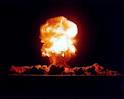
Israel has maintained a policy of “nuclear ambiguity,” meaning it does not confirm or deny assumptions that it has nuclear weapons, perhaps as many as several hundred.
However, Saudi Arabia’s biggest worry is Iran, run by a Shi’ite Muslim regime that openly says it wants to head a new Islamic empire in the Middle East.
fireThe Islamic Republic is on a collision course with the West – and Shi’ite Muslim Arab countries – as it proceeds towards the capability of both manufacturing and delivering a nuclear weapon.
Saudi Arabia focused on peaceful use of nuclear energy at the energy conference in the oil-rich monarchy. “Once our nuclear project is complete and we have satisfied the kingdom’s demand for electricity,” Saudi Arabia plans to export electricity, said Khalid Al-Sulaiman, vice president of renewable energy at King Abdullah City.
As the world looks for alternative energy sources, Saudi Arabia, which produces 20 percent of the world’s crude oil, is looking to a future of not being dependent on oil to keep its economy strong.

Tuesday, October 25, 2011

Surprise, Surprise Sharia Law Is the Law of the Land in New Libya


For those of you who are not living under a rock, the announcement by the new leaders of Libya that Sharia Law would be the rule of law and any law that violates Sharia would be null and void is not a surprise.  If you are surprised, you should be ashamed of your naivete.

The entire "Arab Spring" is nothing more than a Muslim uprising against anyone who has 


been a leader in the Middle East. In our opinion, it short order, those countries which 

experienced the "spring" will soon see how it is to live under not only totalitarian states but
religious totalitarian states.

Maybe this view is a bit extreme but so are the leaders of Iran who we believe is 

instrumental in the effort to remove all existing leadership in the Middle East. Of course,

time will tell, however, don't ever vote against the extremists as they always win.

Here is the article posted yesterday regarding Sharia law in the "new" Libya.


Sharia law declaration raises concerns in new Libya

The announcement that Islamic sharia law will be the basis of legislation in newly liberated Libya has raised concerns, especially among women, despite Islamists insisting moderation will prevail.
Interim leader Mustafa Abdel Jalil said on Sunday, during his speech to the nation in Benghazi to formally declare the country's liberation from the ousted regime of Moammer Kadhafi, that sharia would be Libya's principal law.
"Any law that violates sharia is null and void legally," he said, citing as an example the law on marriage passed during the slain dictator's 42-year tenure that imposed restrictions on polygamy, which is permitted in Islam.
"The law of divorce and marriage... This law is contrary to sharia and it is stopped," Abdel Jalil said.
His comments have provoked criticism and calls for restraint both in Libya and in Europe, amid fears that the Arab Spring may give rise to a potentially intolerant Islamist resurgence.
Many Libyans awaiting Sunday's historic speech expressed surprise at the decision by the National Transitional Council leader to mention the role of sharia law in the new country before addressing such important issues as security and education.
"It's shocking and insulting to state, after thousands of Libyans have paid for freedom with their lives, that the priority of the new leadership is to allow men to marry in secret," said Rim, 40, a Libyan feminist who requested anonymity.
"We did not slay Goliath so that we now live under the Inquisition," she told AFP.
In his speech, Abdel Jalil also announced the introduction of Islamic banking in Libya in keeping with sharia which prohibits the earning of interest, or riba in Arabic, that is considered a form of usury.
Adelrahman al-Shatr, one of the founders of the centre-right Party of National Solidarity, launched just last week, said it was premature for the NTC leader to speak about the policies of the new state.
"It is a subject that should be discussed with the different political groups and with the Libyan people," he said.
"These declarations create feelings of pain and bitterness among women who sacrificed so many martyrs," in the eight-month battle against Kadhafi loyalists, he added.
"By abolishing the marriage law, women lose the right to keep the family home if they divorce. It is a disaster for Libyan women."
Western leaders also responded swiftly to Abdel Jalil's comments, with EU foreign policy chief Catherine Ashton saying on Monday Libya's introduction of sharia law must respect human rights and democratic principles.
Abdel Jalil, a respected former justice minister of Kadhafi who distanced himself from the old regime, is seen as a pious man and a Sufi follower of Islam who is at odds with extremism.
He has already said that the new Libya would not adopt any extremist ideology, and sought to reassure the international community by stating on Monday that Libyans were moderate Muslims.
Nevertheless, Libya's Islamists are a rising force in the country's political arena, some of whom, such as Abdelhakim Belhaj, the founder of the Al-Qaeda linked but now-disbanded Libyan Islamic Fighting Group (LIFG), are expected to hold prominent positions.
After suffering decades of persecution by Kadhafi, they are also working hard to present themselves as proponents of tolerant, democratic values and policies.
"The rules and laws (in new Libya) should take Islam as a basic reference," Islamist leader Sheikh Ali Sallabi, a supporter of Belhaj, told AFP.
He insisted that freedom, justice, equality and respect for human dignity should be enshrined in the new constitution, along with the peaceful rotation of power.
"We believe in the rights of others to show their programmes to the people, and to let the people decide," said Sallabi, who was jailed for eight years during the 1980s in Tripoli's notorious Abu Salim prison.
"We also believe in the freedom of the press and the right to self expression. We believe that our religion accommodates these rights," he added

Monday, October 24, 2011

Challenges to Libya's Future


To think that Libya will suddenly become a democracy (or better yet a representative republic) overnight, is foolish and not founded in any reality. For 42 years, the Qaddafi regime ruled the country with an iron fist. There was no voting, no civil rights, no democratic institutions.  How many people living in the country even remember when a King governed Libya?


In addition to the challenges the country faces that are itemized in the following article,  we are starting to hear about mass murders of Qaddafi supporters. Will this country descend into the same genocidal killings that made the Cambodian killing fields famous or is this the retribution for those people who were accomplices to the regime?  Will the new administration bring charges against those who killed Qaddafi instead of having him face a trial? 

Check out the following article which we believe at least starts putting the issues facing the country now in perspective.


Libya's Five Biggest Challenges After Qaddafi

John Hudson - The Atlantic Wire,  October 21st, 2011

With Qaddafi gone and Sirte fallen, scholars and embedded reporters are surveying the wreckage left by 42 years of totalitarian rule. From sunny predictions to ominous premonitions, here's what experts are saying about the challenges in front of Libya's people and the National Transitional Council:
Democracy-building  
Views about the interim government's ability to create a law and order society with rights for individuals range from deeply pessimistic to cautiously optimistic. William MacLean at Reuters has a nice breakdown of the important dates for democratic initiatives. According to the rules agreed on by the NTC, the fall of Sirte triggers a move of the NTC's headquarters from Benghazi to Tripoli forming an interim government in 30 days. In 240 days, a 200-member national conference will be elected into office paving the way for a prime minister 30 days later. On the optimistic side, CNN's Isobel Coleman is encouraged by the fact that Libya has well over $160 billion in foreign assets to cover the costs of the new government and a well-educated population. “Public education was free and compulsory through secondary school under Gadhafi, and the country enjoys a literacy rate of nearly 90%. In the 2007-2008 school year, women enrolled in universities outnumbered men significantly.”
The Militia factor 
Both McClatchy and Foreign Policy have smart items on the challenges of incorporating the militias into the political system. McClatchy speaks with Diana Eltahway, an expert on Libya with Amnesty International. “There are an uncountable number of militias roaming the country, and these militias are really taking the law into their own hands. Among the biggest challenges will be trying to absorb them in whatever becomes the police force and national army or disarming them.” On this point, Vincent Cornell of Emory University is optimistic about militia integration stemming from the fact a number of the leaders are “Western-educated” and “know that they have to transcend old schisms if they are to make a new state,” she tells FP.  However, Manal Omar, of the United States Institute of Peace is more worried, noting that rebel commander Abdul Fatah Younes was assassinated in July and there still has been no investigation of the death, which is angering Younes allies.
Islamic extremism 
As USA Today emphasizes, “Gadhafi had been a check on Islamic extremists in the region, and now those extremists are collecting the weapons Gadhafi stashed across the country.” That's a point the Council on Foreign Relations's Ed Husain takes very seriously. “The head of the military council in Tripoli, Belhadj, for example, is a prominent figure of that Islamist trend. How will they respond to a secular government in Libya? Across the Middle East, the greatest political benefactors thus far have been Islamist groups. Qaddafi's killing will set in place a new beginning for Libya that will pose difficult policy challenges for Libyans and NATO.”
Oil
Libya sits on a mountain of oil wealth. As The Washington Post notes “One major issue is figuring out how to divide oil revenue among more than 100 tribes in the country.” A big point on that front is setting up relations with multinational corporations. “International companies will also have to be reassured that a new government won’t try to drastically change contracts that have already been signed. And they want to be assured that their oil-field engineers will be safe.” On the upside, there has already been success with at least one European company. Last week, an Italian company called Eni reopened the pipeline that runs natural gas from Libya to Italy for the first time in eight months.
Rooting out the loyalists According to Reuters and ABC News, Qaddafi's son Saif al-Islam is still at large. That's particularly worrisome, Ed Husain senior fellow for Middle Eastern studies at the Council on Foreign Relations, says. The fall of Sirte was one thing but keeping loyalists down is another. “Qaddafi's networks of loyalists still remain across the country,” he says. “Their sense of deep humiliation at the way in which their leader was killed will most likely prompt revenge attacks. At their helm is the British-educated, defiant, and media-savvy Saif al-Qaddafi, Qaddafi's son. Emotionally volatile, highly ambitious, and now an enemy of the West, he can become a rallying force for his late father's loyalists unless he is captured and put on trial soon.” But the Guardian's Moez Zelton stresses that many aspects of Libyan society are in utter disarray. “Water shortages, liquidity in the banks, mass availability of weapons, treatment of injured Libyan patients and the disaster that is the health and education sector as a whole are just a few of the worries Libyans face.”