Mr. President, Don't Put America at Risk with Flawed Iran Deal
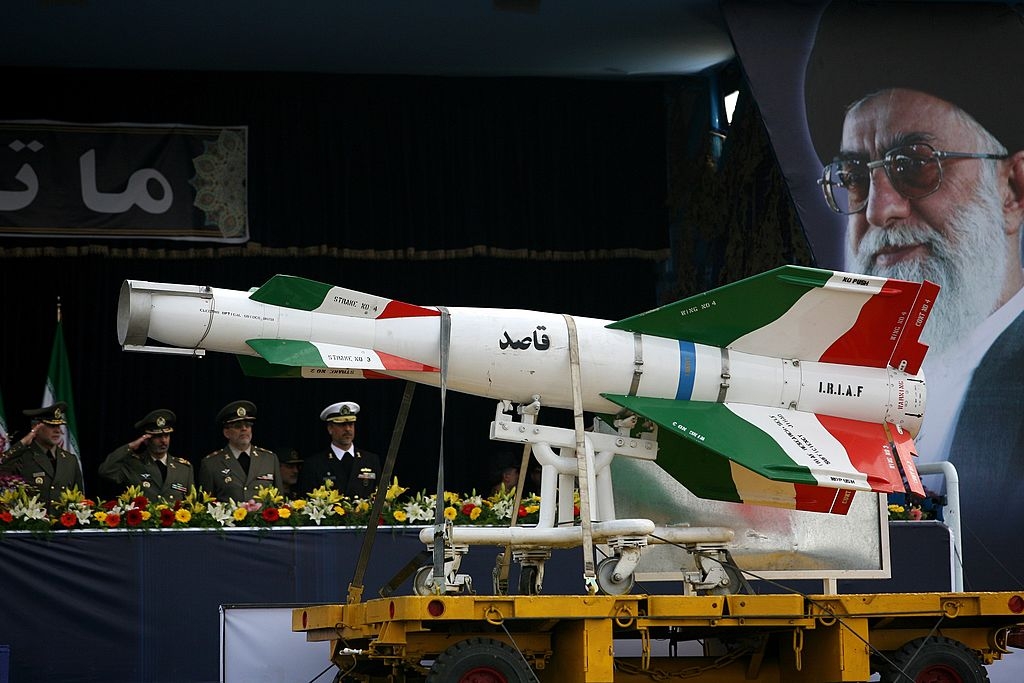
President Trump will address U.S. policy toward Iran on Thursday, doubtless focusing on his decision regarding Barack Obama's badly flawed nuclear deal. Key officials are now briefing Congress, the press and foreign governments about the speech, cautioning that the final product is, in fact, not yet final. The preponderant media speculation is that Trump's senior advisers are positioning him to make a serious mistake, based on their flawed advice. Wishful thinking about Iran's mullahs, near-religious faith in the power of pieces of paper, and a retreat from executive authority are hallmarks of the impending crash.
In short, Obama's Iran nuclear deal is poised to become the Trump-Obama deal. The media report that the president will not withdraw from the Joint Comprehensive Plan of Action (JCPOA), but instead, under the misbegotten Corker-Cardin legislation, will "decertify" that it is in America's national interest. Congress may then reimpose sanctions, or try somehow to "fix" the deal. Curiously, most of the suggested "fixes" involve repairing Corker-Cardin rather than the JCPOA directly. Sure, give Congress the lead on Iran. What could go wrong? Whatever the problem with Iran, Congress is not the answer. No president should surrender what the Constitution vests uniquely in him: dominant power to set America's foreign policy. In the iconic Federalist Number 70, Alexander Hamilton wrote insightfully that "decision, activity, secrecy and dispatch" characterize unitary executive power, and most certainly not the legislative branch. President Trump risks not only forfeiting his leading national-security role, but paralysis, or worse, in the House and Senate. If Congress really wants to "fix" Corker-Cardin, the best fix is total repeal. The substantive arguments for decertifying but not withdrawing are truly Jesuitical, teasing out imagined benefits from adhering to a deal Iran already treats with contempt. Some argue we should try provoking Iran to exit first, because our withdrawal would harm America's image. This is ludicrous. The United States must act in its own self-interest, not wait around hoping Iran does us a favor. It won't. Why should Tehran leave (or even modify) a deal advantageous beyond its wildest imagination? This "shame" prediction was made against Washington's 2001 unilateral withdrawal from the Anti-Ballistic Missile Treaty, and proved utterly false. America's decision to abrogate the hallowed "cornerstone of international strategic stability" produced nothing like the storm of opprobrium Anti-Ballistic Missile Treaty adherents predicted. No nuclear arms race followed. Instead, withdrawal left the United States far better positioned to defend itself against exactly the threats Iran and others now pose. Some say that trashing the deal will spur Iran to accelerate its nuclear-weapons program to rush across the finish line. Of course, before the JCPOA, Iran was already party to the Nuclear Non-Proliferation Treaty, which barred it from seeking or possessing nuclear weapons, but which it systematically violated. JCPOA advocates are therefore arguing that although one piece of paper (a multilateral treaty, no less) failed to stop Iran's nuclear quest, the JCPOA, a second piece of paper, will do the trick, with catastrophic consequences if we withdraw. Ironically, these same acolytes almost invariably concede the JCPOA is badly flawed and needs substantial amendment. So they actually believe a third piece of paper is required to halt Iran. Two are not enough. This argument flunks the smile test: Burying Iran in paper will not stop its nuclear program. Iran's ability to "rush" to have nuclear weapons existed before the deal, exists now, and would exist if America withdrew. The director of the Atomic Energy Organization of Iran said recently it would take a mere five days for Iran to resume its pre-deal level of uranium enrichment. This rare case of regime honesty demonstrates how trivial and easily reversible Iran's JCPOA concessions were. What alone deters an Iranian "rush" is the threat of preemptive U.S. or Israeli military strikes, not pieces of paper. Nor will U.S. withdrawal eliminate valuable international verification procedures under the JCPOA. In fact, these measures are worse than useless for nonproliferation purposes, although they serve Iran well. By affording the appearance of effective verification, they camouflage Iran's active, multiple violations of United Nations Security Council Resolution 2231: on uranium-enrichment levels, advanced-centrifuge research, heavy-water production and missile programs. The International Atomic Energy Agency recently admitted explicitly it has no visibility whatever into weapons and ballistic-missile work underway on Iran's military bases.
It is simple common sense that Iran would not conduct easily discoverable weapons-related work at already-known nuclear sites like Natanz and Esfahan. Warhead design and the like are far more likely at military sites like Parchin where the IAEA has never had adequate access. No wonder the IAEA is now barred from Parchin. It is not just weapons-related work the JCPOA fails to uncover. Substantial uranium-enrichment production and research are also far more likely at undeclared sites inside Iran or elsewhere, like North Korea. This is the lesson Tehran learned after Israel destroyed the nuclear reactor under construction by North Koreans in Syria in 2007. Nor will abrogating the deal somehow induce Iran to become more threatening in the Middle East or in supporting global terrorism than it already is with the JCPOA in force. Consider Tehran's belligerent behavior in the Persian Gulf, its nearly successful effort to create an arc of control from Iran through Iraq and Syria to Lebanon, threatening Israel, Jordan and the Arabian Peninsula, and its continued role as the world's central banker of international terrorism. The real issue is how much worse Iran's behavior will be once it gets deliverable nuclear weapons. I have previously argued that only U.S. withdrawal from the JCPOA can adequately protect America from the Iranian nuclear threat. Casuistry deployed to persuade President Trump to stay in the deal may succeed this Thursday, but it does so only at grave peril to our country. This is no time to let our guard down. John R. Bolton, former U.S. Ambassador to the United Nations, is Chairman of Gatestone Institute, a senior fellow at the American Enterprise Institute, and author of "Surrender Is Not an Option: Defending America at the United Nations and Abroad".
© 2017 Gatestone Institute. All rights reserved. The articles printed here do not necessarily reflect the views of the Editors or of Gatestone Institute. No part of the Gatestone website or any of its contents may be reproduced, copied or modified, without the prior written consent of Gatestone Institute.
|
Our goal is to have intelligent discussion of the topics of the day. We realize everyone has their opinion and they should be allowed to express it in a discussion forum without calling each other names. We learn from discussion and not from name calling or argument.We use cookies to personalise content and ads, to provide social media features and to analyse our traffic. We also share information about your use of our site with our social media, advertising and analytics partners. See details
Contact Form
Showing posts with label iran nuke deal. Show all posts
Tuesday, October 10, 2017
Iran Nuke Deal Causing More Problems
Tuesday, August 22, 2017
The World Is Getting Closer To Armageddon With Iran And North Korea Having Nukes
Iran and North Korea: Two Peas in a Nuclear Pod
By Maj. Gen. (res.) Yaakov AmidrorAugust 22, 2017

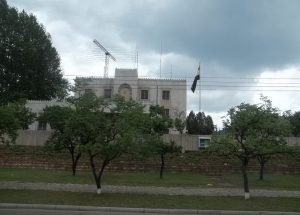
Iranian Embassy in Pyongyang, via Wikipedia
BESA Center Perspectives Paper No. 566, August 22, 2017
EXECUTIVE SUMMARY: Much separates Iran and North Korea, but the two have plenty in common when it comes to nuclear ambitions. Whenever they move to appease the West, they somehow get closer to realizing their goals, while the world fumbles to curtail them.
The world recently marked two years since Iran and the West signed a landmark nuclear agreement, and much has been said on the issue.
Those who support the deal celebrated it, saying it was the best alternative and that Iran’s compliance with the terms of the agreement, apart from several minor violations, proves its success. Those who opposed the deal (myself included) have pointed out that it has enabled Iran to be readmitted into the family of nations, and the alliance it has since formed with Russia, which I believe was forged only because of the deal, has allowed it to become a regional power. Iran’s control of the axis between Tehran, Baghdad, Damascus, and Beirut will one day lead to a bloody struggle, both with Israel and with the Sunni Arab states, which see Iran’s expansionist aspirations as a threat to their very existence.
Recently, ostensibly in an unrelated move, North Korea took a major step towards creating a nuclear balance of terror toward the US by testing an intercontinental ballistic missile that could potentially hit the American heartland. Pyongyang saw this move as necessary to ensure that under no circumstances would Washington pressure it to change its ways, thus ensuring the isolated nation’s complete freedom in navigating its future course.
Over the past few decades, North Korea’s leaders have assumed that the US would be wary of pressing a nuclear state capable of threatening major American cities. It was the North’s way of insuring itself against any use of force by the West.
The North Korean case is interesting because over the past 25 years, the West had held negotiations with it in various fora, and several agreements have been signed with the aim of halting the nuclear project launched by Pyongyang in the mid-1980s. North Korea’s violations of the agreements always earned condemnation, but it never suffered any real penalties. Economic sanctions proved futile, and Pyongyang forged ahead even when it was made to pay a heavy economic price (which it still pays today). UNSC resolutions against the rogue nation proved equally fruitless.
Still, there have been a few moments of optimism along the way. The North’s 2005 deal with the US, for example, was lauded as a breakthrough, and some in Israel had hoped similar efforts would lead to an effective nuclear deal with Iran. But the US and the international community’s feeble reaction to the country’s first nuclear test in 2006 made by then-leader Kim Jong Il, the father of current leader Kim Jong Un, proved that violating the deal harbored no risk. The “breakthrough agreement” turned into yet another step towards North Korea’s becoming a nuclear threshold state.
The strong correlation between the North Korean and Iranian cases is clear. It was underscored further in 2007, when Iran’s top nuclear negotiator, Ali Larijani, said, “Pay attention to North Korea’s conduct. What has come of two years of negotiation with North Korea? It led to [the West’s] acceptance of North Korea’s nuclear technologies in the field of uranium enrichment. So now, they [the West] will accept ours.”
One would have to be blind not to see the astounding resemblance between the international processes opposite Iran and North Korea. Both have undergone the same stages of dialogue with the global community, led by the US.
One would also have to be incredibly naive to think that Iran, which is far more powerful than North Korea, would not exploit the weakness shown by the international community, again led by the US. It is clear Iran is biding its time and will not hesitate to break free of the restrictions imposed on it by the toothless 2015 agreement. It will continue on its nuclear path as soon as the opportunity presents itself.
That said, there are major differences between Iran and North Korea and the spheres in which they operate.
The first is the position and international standing of South Korea, the North’s wealthy neighbor, versus the position and standing of Iran’s neighbors. South Korea’s capital, Seoul, is less than 40 kilometers (25 miles) from the border with North Korea – a border along which thousands of artillery guns are deployed, ready to strike Seoul instantly. There are also massive North Korean armored forces on the border, ready to march through the huge tunnels running underneath it to take the South.
In stark contrast, Iran’s Persian Gulf neighbors and even Israel would take severe measures against the Islamic Republic, including the use of military force, though the Islamic Republic would certainly mount a forceful response.
The second difference stems from the relative power wielded by North Korea and Iran. While the former is insignificant in terms of the global economic system, the latter is a regional power with a prominent position in the international energy market, especially for China and India. This makes North Korea a country against which it is relatively easy to mobilize the international community, as opposed to the real difficulty of garnering global support to pressure Iran.
In retrospect, it is clear that one of the reasons the international community came together to pressure Iran stemmed from the shared concern that without such pressure, Israel would potentially have no choice but to strike Iran’s nuclear facilities. It seems the world wanted to curb Israel, and to an extent the US, far more than it wanted to curtail Iran.
Once it became clear that under the Obama administration the military option was off the table and Israel had accepted (under protest) the American move toward a nuclear deal, global concern waned. It is clear that without this constraint, the international community will do nothing to stop Iran once it crosses the nuclear threshold. Anyone who fails to see this is ignoring the lessons learned from the North Korean precedent.
Meanwhile, Iran is promoting the development of an envelope scheme that will allow it to embark on a path towards nuclear power. Assisted by Russia, it is intensively building its air defense systems. It is cultivating a solid economy that can better withstand potential future sanctions and other means of economic pressure, which was what brought it to the negotiation table on its knees – an achievement wasted by the American negotiators as soon as they allowed the Iranians to see that Washington was as eager to strike a deal as they were. It is developing missiles that would allow it to launch nuclear weapons to any range, as well as the next generation of centrifuges, which would allow it to make the leap to enriched uranium at peak speed.
Israel must learn the lessons of the nuclear agreement with Iran as well as study how North Korea became a nuclear power that threatens the US. Iran must not be allowed to duplicate the success of its friend on the Korean peninsula.
This article was originally published in Israel Hayom on August 7, 2017.
Maj. Gen. (res.) Yaakov Amidror is the Anne and Greg Rosshandler Senior Fellow at the Begin-Sadat Center for Strategic Studies. He is also a distinguished fellow at JINSA’s Gemunder Center for Defense and Strategy.
Wednesday, April 26, 2017
The More We Learn About The Iranian Nuclear Deal, The Worse It Gets. In Short Order, We Will Have To Deal With A Nuclear Armed Iran Much As We Are Now Dealing With North Korea
Obama Lied, Americans Died: Released Iranians Tied to Terror, Nuclear Proliferation

AP/Jacquelyn Martin
Former President Barack Obama lied to the American people about the infamous prisoner swap that was part of the Iran deal in 2016, and released fugitives who were considered major national security threats, according to an investigative report by Politico.
“Obama, the senior official and other administration representatives weren’t telling the whole story on Jan. 17, 2016, in their highly choreographed rollout of the prisoner swap and simultaneous implementation of the six-party nuclear deal,” Politico’s Josh Meyer reports.
The seven men released on that day as a “humanitarian” gesture were deeply tied to Iran’s nuclear arms efforts, and one was connected with procurement for improvised explosive devices (IEDs) that killed American soldiers in Iraq.
“They didn’t just dismiss a bunch of innocent business guys,” a former federal law enforcement supervisor who was centrally involved in the hunt for Iranian arms traffickers and nuclear smugglers told Politico. “And then they didn’t give a full story of it.”
Politico noted that federal prosecutors and agents were shocked and furious when they learned of the release; many of them had reportedly spent years, others decades, “working to penetrate the global proliferation networks that allowed Iranian arms traders both to obtain crucial materials for Tehran’s illicit nuclear and ballistic missile programs and, in some cases, to provide dangerous materials to other countries.”
Politico wrote:
Three allegedly were part of an illegal procurement network supplying Iran with U.S.-made microelectronics with applications in surface-to-air and cruise missiles like the kind Tehran test-fired recently, prompting a still-escalating exchange of threats with the Trump administration. Another was serving an eight-year sentence for conspiring to supply Iran with satellite technology and hardware. As part of the deal, U.S. officials even dropped their demand for $10 million that a jury said the aerospace engineer illegally received from Tehran.
But that was not all.
Politico also noted that “in a series of unpublicized court filings, the Justice Department dropped charges and international arrest warrants against 14 other men, all of them fugitives.”
Those fugitives had allegedly sought to lease Boeing aircraft for an Iranian airline that authorities believe supported Hezbollah, a U.S.-designated terrorist organization.
Another, Behrouz Dolatzadeh, was reportedly charged with conspiring to buy thousands of U.S.-made assault rifles and illegally import them into Iran.
Amin Ravan was charged with smuggling U.S. military antennas to Hong Kong and Singapore for use in Iran. According to Politico, he was also responsible for the deaths of hundreds of Americans. “U.S. authorities also believe he was part of a procurement network providing Iran with high-tech components for an especially deadly type of IED used by Shiite militias to kill hundreds of American troops in Iraq,” Politico wrote.
The report also found that Obama’s Iran deal destroyed counter-proliferation efforts that ultimately made Iran’s path to nuclear arms easier.
Breitbart News has reported on new findings out of Iran indicating that the Iranian regime is violating the JCPOA (Joint Comprehensive Plan of Action), the formal name for the nuclear deal, by covertly developing nuclear material near the “off-limits” Parchin military site.
According to the Politico investigation, some current and former officials believe Loretta Lynch, who served as the nation’s top law enforcement official at the time, “failed in her responsibility as attorney general to protect the integrity of the Justice Department’s investigations and prosecutions from any political interference.”
At the same time, Lynch was allegedly also protecting then-presidential candidate Hillary Clinton from an email scandal that contributed to her devastating loss on Election Day 2016.
President Donald Trump has called the Iran deal the “worst deal ever negotiated.”
As it turns out, he may have been right.
Thursday, September 22, 2016
Sunday, September 13, 2015
Major Plank Of Iranian Nuclear Deal Becomes Meaningless. Iran Outsmarts Obama Etal Again!
Iran's Surprise Discovery of Massive Uranium Deposits
“People may cover their hatred with pleasant words, but they’re deceiving you. They pretend to be kind, but don’t believe them. Their hearts are full of many evils. While their hatred may be concealed by trickery, their wrongdoing will be exposed in public.” (Proverbs 26:24-26)
image: http://www.breakingisraelnews.com/wp-content/uploads/2015/08/iran-nuclear-radioactive-.jpg
(Photo: Graphic Stock)
The head of Iran’s Atomic Energy Organization announced on Saturday the discovery of high reserve of uranium soon to be extracted from a new mine.
Iran’s announcement has left critics of the nuclear deal questioning the strength of the agreement, which was structured on the basis of assessments by Western experts that Iran had a small and dwindling supply of fuel for their nuclear program, forcing them to import uranium ore, which is heavily regulated and monitored.
The Joint Comprehensive Plan of Action (JCPOA), the nuclear accord between Iran and P5+1 world powers, is based on regulating the Islamic Republic’s use of uranium. Iran has been accused in the past of trying to acquire uranium ore, called yellowcake, illicitly from other countries such as Kazakhstan and Zimbabwe.
Ali Akbar Salehi, the head of Iran’s nuclear program, was quoted by the Iranian news agency IRNA as saying, “I cannot announce (the level of) Iran’s uranium mine reserves. The important thing is that before aerial prospecting for uranium ores we were not too optimistic, but the new discoveries have made us confident about our reserves.”
Salehi said extraction of the ore was all ready to begin at the new mine in the province of Yazd. According to a report by the Institute for Science and International Security, Salehi was implicated in an Iranian attempt to acquire illicit nuclear technologies from a European supplier during the 1980’s and 1990’s.
In a 2013 report published by US think-tanks Carnegie Endowment and the Federation of American Scientists, experts stated that the scarcity and low quality of Iran’s uranium resources would require the country “to rely on external sources of natural and processed uranium…Despite the Iranian leadership’s assertions to the contrary, Iran’s estimated uranium endowments are nowhere near sufficient to supply its planned nuclear program.”
Uranium is used for peaceful nuclear energy programs, but it is also an essential ingredient for producing nuclear weapons. Iran has achieved a complete nuclear program which includes every step for taking raw uranium and producing nuclear rods. Though the JCPOA agreement has re-purposed some installations, it has left Iran’s nuclear program effectively intact.
Read more at http://www.breakingisraelnews.com/48803/iran-announces-discovery-of-domestic-uranium-deposits-middle-east/#07JM2DAGVfiHWzoe.99
Saturday, June 27, 2015
More Concessions By Obama Administration. What Will They Do To Get An Agreement With Iran?
Is the Obama Administration Forfeiting IAEA Inspections of Iranian Military Sites?
Author(s): Yaakov Lappin
Source: Special to IPT News. Article date: June 25th, 2015
The coming days represent a fateful stage in U.S.-led attempts to reach a diplomatic solution with Iran over its nuclear program, and disturbing signs are emerging that the Obama Administration is prepared to relinquish demands by the international community for Iranian transparency.
Source: Special to IPT News. Article date: June 25th, 2015
Negotiators from the five permanent United Nations Security Council countries, plus Germany (known as the P5+1 countries) had hoped for a smooth final round of talks leading to a comprehensive agreement.
Instead, they find themselves facing a firm Iranian refusal to allow international inspectors to visit military installations in Iran where suspected work had been carried out on a military nuclear weapons program.
Iran is also refusing to back down from its refusal to allow the International Atomic Energy Agency (IAEA) to question Iranian nuclear scientists about possible military dimensions (PMD) of Iran's nuclear program.
As crunch time looms ahead of the June 30 deadline, Iranian Supreme Leader Ayatollah Khamenei has clearly signaled that he will not budge on his refusal to let the IAEA gain access to suspicious sites and to key nuclear research personnel. If negotiators cave to these demands, the damage to global arms control efforts, and to international security as a whole, will be significant.
“We will never yield to pressure … We will not accept unreasonable demands … Iran will not give access to its (nuclear) scientists. We will not allow the privacy of our nuclear scientists or any other important issue to be violated,” Khamenei recently told Iranian state TV.
“I will not let foreigners talk to our scientists and to interrogate our dear children … who brought us this extensive (nuclear) knowledge,” he said.
Massoud Jazzayeri, deputy chief of staff of the Iranian Armed Forces, echoed the Supreme Leader's position, saying that that permission “will definitely never be issued for any kind of access to the military centers, even if it runs counter to the acceptance of the additional protocol (to the NPT) … Foreigners' visits to defense and military centers as well as obtaining information about the related equipment and tactics are against the orders (of the commander-in-chief Ayatollah Seyed Ali Khamenei) and also the demands of the entire Iranian nation.”
“Everyone should know that in our view, visiting the military centers is completely impossible since it is among our redlines and we will not allow anyone to opine on such issues,” the deputy Iranian chief of staff added.
If the international community accepts Khamenei's stance, it means it will effectively force the IAEA to close the case on previous Iranian attempts to gain information on how to build a nuclear warhead.
The signs from Washington indicate that the Obama administration may be prepared to acquiesce.
“We're not fixated on Iran accounting for what they did at some point. We know what they did. We're concerned about going forward,” Secretary of State John Kerry said in recent remarks, revealing just show just how far the administration is prepared to go to reach a deal.
The State Department then tried to walk back Kerry's remarks, insisting that the U.S. has not shifted its stance and continues to demand that Iran addresses IAEA concerns. But these efforts to play down a shift in the White House's stance are not particularly convincing.
Today, the New York Times reported on a letter sent to President Obama by five former advisers expressing their concern that administration concessions put it on a path toward a deal that “may fall short of meeting the administration's own standard of a 'good' agreement” and laying out a series of minimum requirements that Iran must agree to in coming days for them to support a final deal.
Others who remain skeptical include the former director of the Defense Intelligence Agency, Lt. General (ret.) Michael T. Flynn, who on June 10 told the Joint House Foreign Affairs and Armed Services Subcommittees that the would-be agreement “suffers from severe deficiencies.”
The deficiencies, Flynn, said, included “the matter of incomplete verification. Iran's leaders made it clear the furthest they will go is to allow international inspectors (IAEA) only 'managed access' to nuclear facilities, and only with significant prior notification. This makes it nearly impossible, as a matter of full transparency, to have real 'eyes on' the state of Iranian nuclear development to include their missile program….Iran's nuclear program has significant – and not fully disclosed – military dimensions. The P5+1 dialogue with Iran has glossed over a number of such programs (including warhead miniaturization blueprints) in pursuit of an agreement.”
The former DIA director warned that “it is prudent to conclude that there are elements of Iran's nuclear program that still remain hidden from view… Giving Iran a pass on these issues would send a deeply troubling signal to the nuclear Non-Proliferations of Nuclear Weapons Treaty (NPT).”
Such a willingness to forgo any semblance of Iranian transparency will surely set off alarm bells in Middle Eastern capitals threatened by Iran, from Jerusalem to Riyadh to Cairo. In fact, the European Union has reportedly indicated that it would reject any proposal for a deal that omits IAEA inspections of Iranian sites and the questioning of nuclear scientists.
The EU has pressed Iran on the need to cooperate with IAEA monitoring. It publicly voiced its disappointment last year when an IAEA report said Tehran refused to answer questions about PMDs, and called on Iran to cooperate with the UN agency.
Although the U.S. is by far the most influential member of the P5+1, and is the lead negotiator within the group, Washington would still require a consensus agreement from the other members in order to conclude any deal.
In order to try to allay concerns, CIA Director John Brennan came to Israel this month with a message, saying that the IAEA's supervision would have been symbolic, and that monitoring by state intelligence agencies provides the real guarantee against future Iranian attempts to break out to the bomb, not IAEA inspections.
According to a report by the Middle East Media Research Institute (MEMRI), Brennan had hoped to convince Israel – and through it, the EU – of the adequacy of intelligence monitoring for keeping tabs on Iran's nuclear program, and the lack of any real need for IAEA inspections at military sites.
Whether or not that claim is true, it still fails to deal with the fallout such an arrangement would trigger in the region, with its casual abandonment of past breaches of the NPT, and the ease with which arms control enforcement is dropped.
Such a development could easily be interpreted by Sunni Arab states, like Saudi Arabia and Egypt, as a green light to violate the NPT, too.
These states and others, which are not very stable and face challenges from radical Islamists, could begin work on their own nuclear program, to provide a counter to their threatening Shi'ite rival.
Should a nuclear arms race in the world's most unstable region break out, it would pose an enormous challenge to international security. It was supposed to be one of the things an agreement with Iran would avoid.
Yaakov Lappin is the Jerusalem Post's military and national security affairs correspondent, and author of The Virtual Caliphate (Potomac Books), which proposes that jihadis on the internet have established a virtual Islamist state.
Subscribe to:
Posts (Atom)