Palestinians: Americans Now Legitimate Targets
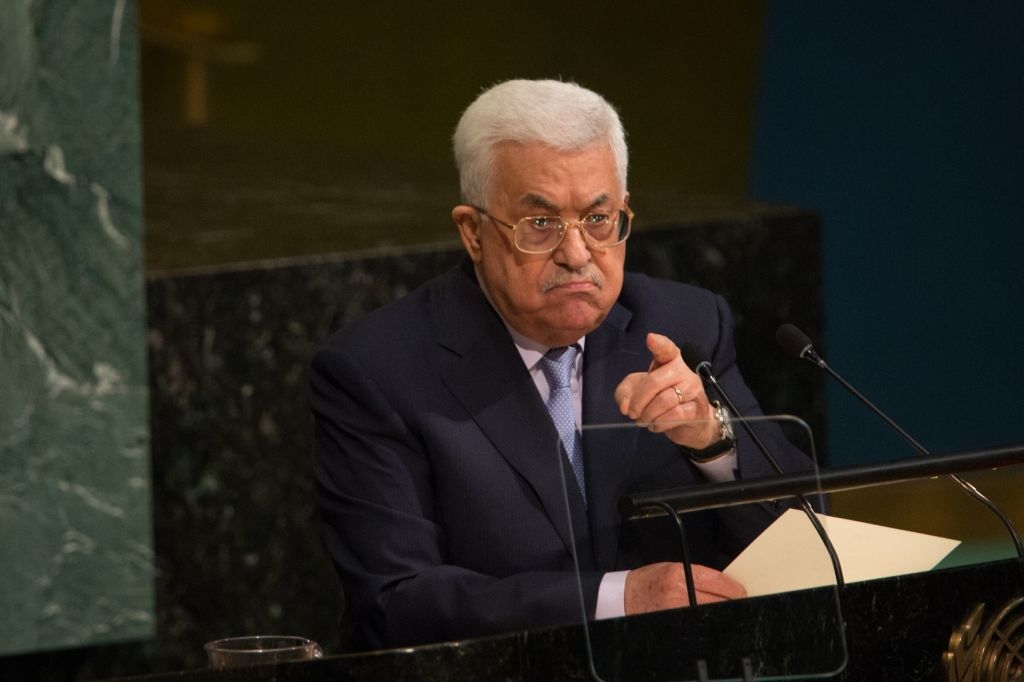
There is a new development in Palestinian hatred of the Trump administration: the Palestinian leaders' verbal attacks on the US are now being translated into acts of violence against US delegations visiting Palestinian communities in the West Bank.
The Palestinian campaign against the US began in December 2017, when President Donald Trump made his announcement recognizing Jerusalem as Israel's capital, and escalated after he announced that the US embassy in Tel Aviv would be moved to Jerusalem. The anti-US rhetoric has come from Palestinians representing all walks of life -- from the most senior, including President Mahmoud Abbas, to ordinary citizens in the West Bank and Gaza Strip, and from secular groups such as the ruling Fatah faction to extremist Islamist organizations such as Hamas and Palestinian Islamic Jihad. If there is anything that unites the vast majority of Palestinians, it is their hatred of the Trump administration's representatives and policies. It is hard to find even one Palestinian who is prepared to say a good word about the US administration or its policies, especially with respect to the Israeli-Palestinian conflict. Now, however, it is official: Palestinians view the US as an enemy. Even more worrying, some Palestinians even see US citizens and officials as "legitimate targets" for violent assaults. It does not seem to matter to these Palestinians whether the Americans they are targeting have come to help them or express sympathy with their cause. Attacks on Americans visiting Palestinian cities in the West Bank are no longer uncommon. It is only by luck that no US citizen has thus far been hurt as a result of these assaults, which are being carried out by Palestinian activists who have been told by their leaders that the US is an enemy of the Palestinians. The latest incident took place on May 21 in the town of Bet Jala, near Bethlehem. Activists belonging to the Palestinian Popular Resistance group attacked a US consular vehicle with eggs and shoes, forcing it to flee the town. The protesters chanted slogans denouncing the US as the "head of the snake" and carried banners which said, "US Government, You Are Not Welcome in Palestine" and "America is a State of Terror." A video posted on social media showed the protesters surrounding and kicking the US vehicle as it sped away. This was a rather humiliating scene for the Americans who came to Bet Jala to attend a graduation ceremony for Palestinian students who participated in a US-sponsored educational program. "Our message to the Americans today is that there is no room for the US Government in Palestine because this Government is in collusion with Israel," explained Mazen Al-Ezah, one of the leaders of the anti-US protest. "We love the American people, but their Government is part of the Israeli occupation of our land and people." Another protester, Mahmoud Brejiyeh, said that the goal of the protest was to convey to the Americans that they are "not welcome in Palestine. We are here to tell the Americans that the Palestinians no longer trust them and they can no longer play any role in the peace process [with Israel]."
This was the second incident of its kind in the Bethlehem area since the beginning of this year. In January, a group of Palestinian activists expelled an American delegation that was visiting the Bethlehem Chamber of Commerce and Industry as part of a cooperative effort between Palestinian businessmen and the US Consulate in Jerusalem. In February, Palestinian Authority (PA) policemen had to rescue an American delegation that was visiting a research center in Ramallah. The delegation, which included New York legislators and civil society groups, was pelted with eggs as Palestinians chanted, "America is the head of the snake." Again, no one was hurt. In addition to the violent attacks directed against Americans in the West Bank, Palestinians have also been burning effigies and photos of Trump, as well as US flags. During one protest in the Al-Aydah refugee camp near Bethlehem, Palestinian protesters staged a mock trial for Trump and Vice President Mike Pence. The verdict: a death sentence. The Palestinians then carried out the "death sentence" by hanging effigies of Trump and Pence in a public square in the camp. All these anti-US protests have a common feature: the Palestinian activists always coordinated their moves in advance with the local media. Palestinian journalists and photographers were invited to cover the protests to make sure that their message reaches the White House and the rest of the world. It is also worth noting that the Palestinian Authority security forces, which are partially funded and trained by Americans, did not take pre-emptive measures to stop the anti-US protests. It is hard to imagine that these security forces, which enjoy excellent intelligence information, did not know what several Palestinian journalists and photographers knew in advance about the planned protests. In fact, some Palestinians say that the anti-US protests could not have taken place without the prior approval of the Palestinian security forces. Why should the Palestinian security forces prevent such protests when President Mahmoud Abbas and many other Palestinian officials are engaged in almost daily rhetorical attacks against the US administration and its representatives? Why should these security forces prevent such protests when the Palestinian Authority itself has been boycotting the US administration and launching scathing attacks on Trump's "Jewish advisors" -- David Friedman, Jason Greenblatt and Jared Kushner? Hardly a day passes without the Palestinians gushing forth venom concerning the US administration. And as time goes on, the Palestinian tone gets more and more vicious. Trump and his advisors are being denounced as Zionists and settlers and accomplices in Israeli "war crimes." In addition, the Palestinians continue to accuse the Trump administration of "conspiring to liquidate the Palestinian cause and national rights" through the yet-to-be-announced US plan for peace in the Middle East. Under the current circumstances, it is hard to see how any representative of the Trump administration would ever be able to set foot in Ramallah or Bethlehem. The Palestinian Authority has whipped up anti-US sentiments to a point where no American can feel safe visiting any Palestinian city. Not even an American who comes to offer help in the business or educational fields. The Palestinian Authority leadership has made it clear to Palestinians that the Americans are now the enemy, and this puts the lives of US citizens and diplomats at risk. US diplomats and officials who continue to visit Ramallah and Bethlehem with good intentions to help the Palestinians are jeopardizing their lives in order to help those who are spitting into the cup they are drinking from. It is only a matter of time before one of the attacks on Americans in the West Bank ends in tragedy. Yet the Palestinian leadership is showing no signs of bringing down the volume of its verbal attacks on the US. On the contrary, each day brings more violent rhetoric by Palestinian leaders and spokesmen about the US administration. For some time now, Israeli Jews have been banned from entering Palestinian cities, out of concern for their safety. This ban by the Israeli authorities is not unjustified, as some Israeli Jews have been violently attacked after entering Palestinian cities. Perhaps soon we will see such signs warning US citizens against entering Palestinian cities, out of concern for their safety. Unless someone calls out the Palestinian leadership for its incitement against the US. Why are the Palestinians doing this? This is a bullying tactic to scare the US administration into supporting their cause and abandoning its "bias" in favor of Israel. This is a new/old tactic that the Palestinian leadership has long used to extract political support and financial aid from the world. It is like saying: Give me everything I want or I will exact revenge. The Palestinians consider the present US administration one of the most hostile American governments in history towards the Palestinians. They are hoping that the bullying, threats and violent attacks on US citizens and officials will make the White House backtrack on its support for Israel and start appeasing them. Ultimately, it is all about money. The Palestinian Authority is desperate for US financial aid; without it, the Palestinian leadership would not be able to survive. So the Palestinians are hoping to extort protection money from the Americans. It is like saying, "You see what will happen to you if you stop funding me? It could always get worse for you. I suggest that you restore my accountability-free funding, and perhaps I will see to it that you do not get hurt." The Americans should call the Palestinian bluff and send a warning to the Palestinian leadership that there will be consequences for their rhetoric and actions if they do not cease the incitement and brainwashing. The US should use the money as leverage to demand this from the Palestinians. The Palestinian Authority needs your money and you have the right to demand something good in return for it. There is no reason why any American should be funding the same Palestinian propaganda machine that is inciting not only against Israel, but also against the US and its citizens. Bassam Tawil is an Arab Muslim based in the Middle East. |
Our goal is to have intelligent discussion of the topics of the day. We realize everyone has their opinion and they should be allowed to express it in a discussion forum without calling each other names. We learn from discussion and not from name calling or argument.We use cookies to personalise content and ads, to provide social media features and to analyse our traffic. We also share information about your use of our site with our social media, advertising and analytics partners. See details
Contact Form
Showing posts with label west bank. Show all posts
Wednesday, May 23, 2018
Is Palestinian Threat Real Or Fake?
Friday, January 12, 2018
Is This The Opportunity For Mideast Peace?
Securing a Jewish Future in the West Bank Following Trump’s Jerusalem Declaration
By Rafael CastroJanuary 12, 2018

CIA map of the West Bank, image via Flickr
BESA Center Perspectives Paper No. 714, January 12, 2018
EXECUTIVE SUMMARY: The domestic and international outcry at President Trump’s recognition of Jerusalem as Israel’s capital suggests that Israel’s position in the West Bank is far from secure. If Israel wishes to secure a future for Jews in the West Bank, ordinary Palestinians there must also benefit from – and express their support for – coexistence with Jews.
President Trump’s recognition of Jerusalem as the capital of Israel roused euphoria in Zionist milieus. This euphoria was not justified. It is true that no new intifada has broken out, as Israel’s enemies had hoped one would. Still, Trump’s Jerusalem declaration might turn out to have been a Pyrrhic victory for Israel.
Since 1948, support for Israel has garnered overwhelming bipartisan support in the US and a near-unanimous consensus in the Jewish Diaspora. It should thus ring alarm bells that Trump’s recognition of the historical capital of the Jewish People drew outspoken opposition from leading Democratic politicians and Jewish communal leaders. If Israel can no longer rely on the head of the American Reform movement to advance its rights in Jerusalem, how will it overcome far stronger opposition when the time comes to defend Jewish interests in the West Bank?
Israel is perilously isolated. Except for the current tenant of the White House, Christian Zionists, and right-wing Jews, just about everybody else in the world seems to think a peace agreement between Israel and the Palestinians must be predicated on the mass expulsion of Jewish families who have been residing peacefully in the West Bank for three generations.
The recent brouhaha over Jerusalem highlights the strength of the international consensus on a solution to the conflict based on two states along 1967-equivalent borders. Even President Trump, the staunchest friend Israel has, made clear that his recognition of Jerusalem as Israel’s capital is not intended to determine the city’s boundaries in a future peace treaty. It is scarcely realistic to believe American diplomats will stand up for West Bank Jews against the whole world.
Those who think this does not matter are deluding themselves. It matters because Israeli leaders cannot count forever on Palestinian stupidity. Hamas, for instance, made a tremendous strategic blunder in using its foothold in Gaza to immediately declare jihad, build terror tunnels, and launch missiles in a bid to replace Israel with an Islamic state. Thanks to Hamas’s fanaticism, Israeli diplomats have persuaded key actors on the international stage that the status quo in the West Bank is tolerable and the time has not yet come for Palestinian statehood to be recognized.
Had Hamas thought pragmatically, it would have honored a long-term ceasefire in Gaza and refused to recognize the Oslo Accords with the politically savvy argument that it supports a binational state in the Holy Land rather than the two-state solution advocated by Israel and the Palestinian Authority. If Hamas had chosen that strategy, it is far from certain that the international community would today consider it a valid reason not to recognize Palestinian independence in the West Bank and East Jerusalem.
Unfortunately for Israel, Hamas can learn from its mistakes. There is no reason to assume it will be as foolhardy in the future as it has been so far. Israel must therefore brace itself for a future when international elites – not just foreign journalists and world public opinion – lay the brunt of the blame for the conflict on Israel’s presence in the West Bank.
It is essential that Israel justify Jewish residential rights in the West Bank primarily in terms of democracy and human rights rather than in Biblical language. But even if Israeli hasbara began to defend the rights of Jewish residents in the West Bank intelligently, just doing so would probably not suffice to secure a Jewish future in the area over the long run.
Forward-thinking Israelis such as Dr. Mordechai Kedar and Jewish Home leader Naftali Bennett have realized that Israel needs a long-term plan to secure its historical and security interests in the West Bank. Their recommendations to establish sovereign emirates in the West Bank and grant Israeli citizenship to Arabs in Area C is pragmatic and serves the material and security interests of both Israelis and Palestinians.
The shortcoming of these plans is their disregard for the need to secure Palestinian support. Without that support it will be very hard to counter charges that Kedar’s “emirates” are just Levantine Bantustans and that Bennett’s offer of “partial self-determination” to West Bank Palestinians amounts to permanent semi-apartheid.
The challenge for Israeli strategists is to secure Palestinian support for Jewish vital interests in the West Bank. Without it, the legitimacy of Israeli interests in this sphere will be near-zero, and not just in Brussels, Moscow, and Beijing, but in New York City and Washington DC as well. Indeed, only the acceptance by ordinary Palestinians of Israeli proposals will earn the Jewish State the overwhelming support of international elites and donor states – support that will be essential to compel the Palestinian leadership to give up its ambition of erasing Jewish life in the West Bank.
Naftali Bennett’s plan to offer Israeli citizenship to Palestinians residing in Area C is wise. However, for this move to be legitimized by the international community, it will need to reflect the wishes not only of Israeli leaders but of the approximately 100,000 Palestinians who will be affected. Bennett knows that the Palestinians living in Area C are torn between Arab-Islamic pride and fear and hatred of the Palestinian Authority. It is time for Israel to turn this situation into a win-win situation for everybody.
Israel should start to generously award work permits, scholarships, and preferential treatment rights in Israeli hospitals to Palestinians living in Area C. Furthermore, Israel should invest in the infrastructure and facilities available to Palestinians in Area C and raise them to a level comparable to neighboring Jewish communities.
The rationale behind these efforts is threefold: first, to (re)affirm the principle that Israel treats the people it rules equally; second, to demonstrate that Israeli rule in the West Bank cannot be labelled as apartheid; and third, to secure the support of Palestinians in Area C for Israel’s vital interests.
It would be a mistake to believe that if a referendum were now held in Area C most Palestinians would opt for Israeli citizenship. Decades of experience in East Jerusalem suggest that most Palestinians are too proud and patriotic to apply for Israeli citizenship. On the other hand, pride and patriotism do not prevent East Jerusalem Arabs from valuing Israeli salaries, national insurance, and unemployment benefits. Nor does it push them to murder Jews in droves as Fatah and Hamas incite them to do.
This suggests that many Palestinians are eager to find an avenue through which their honor and dignity can be reconciled with their self-interest. Israel must provide such an avenue if it wishes to secure a peaceful and prosperous future for both Israelis and Palestinians.
It is not realistic to hope that Palestinians living in the West Bank, or any substantial part of it, will endorse the plans of Kedar and Bennett in the near future. What is realistic, however, is to convince a majority of the Palestinians living in Area C that an improved status quo during an interim period of 10 years is preferable to ruinous subjugation to the Palestinian Authority.
In concrete terms, this means Israel should plan to hold referenda in Area C asking local residents to rank their preference among the following options:
- Palestinian Authority rule once a peace agreement between Israel and the Palestinian Authority is signed, with the subsequent loss of all Israeli economic and welfare benefits
- An interim period of 10 years with administrative autonomy, Israeli security, and guaranteed access to all economic and social rights awarded to Israeli citizens
- Israeli rule
Given sufficient Israeli savoir faire and the right incentives, it is probable that Area C residents would vote for the alternative that guarantees them a decade of social and economic progress. During that decade, Israel should make sure that Area C residents are rewarded for their loyalty and have excellent reasons to support option 3 in a second referendum a decade down the road.
Given free and democratic support from ordinary Palestinians in Area C for cooperation with Israel, the Palestinian Authority and Hamas will be discredited in their demands for a judenrein West Bank. This will pave the way for securing the peace and coexistence between Jews and Arabs in the West Bank that is the prerequisite for genuine peace between a sovereign Palestinian state and Israel.
Israel must seize the historic window of opportunity provided by an adamantly pro-Israel US administration, a weak and fragmented Arab and Muslim world, and Palestinian leaders who are corrupt, fanatical, and short-sighted, to engage ordinary Palestinians as peace partners.
It would be a critical mistake for Israeli leaders not to do so. The loud and powerful opposition to President Trump’s statement on Jerusalem clearly demonstrates that Israel will need the support of ordinary Palestinians for its interests in the West Bank to be recognized by the international community, the American establishment, and even by mainstream Diaspora Jews.
Rafael Castro is a Yale- and Hebrew University-educated political analyst based in Berlin. His pieces on Middle Eastern politics appear regularly on YNET. Rafael can be reached at rafaelcastro78@gmail.com.
Tuesday, December 26, 2017
The Palestinians Are Very Good At Deceiving The World
Palestinians: Another "Reconciliation" Bites the Dust
For more than two months, the Hamas-Fatah "reconciliation" agreement that was reached in Cairo in October has been hailed by many Arabs and Westerners as a sign that the Palestinians were finally marching forward together.
It turns out, however, that the dramatic announcement of the agreement, which was reached with the sponsorship of the Egypt, was all a bluff. Those in the know about the Palestinian world predicted that the latest "reconciliation" deal would fail. At least five previous agreements between Hamas and Fatah, reached under the auspices of Saudi Arabia, Qatar and Yemen over the past ten years, likewise failed. Every one of these agreements was stillborn, not worth the time it took to uncap the pen. The latest "reconciliation" agreement, then, has just joined this impressive list of defunct accords. Moreover, it is not too speculative to suggest that any truce struck in the foreseeable future between Hamas and Fatah would also swiftly join its predecessors in the graveyard of agreements. So, why do these "reconciliation" agreements between the two rival Palestinian parties keep failing? Why has it become impossible for the Palestinians to reunite themselves and work together for the sake of a better life for their people? Who is responsible for the divisions and internal bickering among the Palestinians and who are the biggest losers and winners from the continued power struggle between Hamas and Fatah?
These questions prod at one as Palestinian leaders continue to call for "days of rage" and incite their people in response to President Donald Trump's announcement recognizing Jerusalem as the capital of Israel. The small protests that have swept some parts of the West Bank and Gaza Strip (but were exaggerated by mainstream media in the West) served as a distraction from the failure of Hamas and Fatah to implement their "reconciliation" agreement. Once again, Hamas and Fatah have shown that their accords are about everything but "reconciliation." In fact, each time they sign such a pact, tensions between them skyrocket. For the Palestinians, the word "reconciliation" has become synonymous with dissension and disagreement. While Palestinians, incited by their leaders, were busy over the past week throwing stones at Israeli soldiers and burning US flags and effigies of Trump, Hamas and Fatah were quietly burying the "reconciliation" agreement that they had enthusiastically celebrated a few weeks before. Hamas and Fatah have begun the process of preparing for their people the news that this has been yet another short-lived marriage, and that the two parties are simply unable to live together in the same house. Echoing this mood, Hamas leader Yehya Sinwar told a group of Palestinians in the Gaza Strip on December 21 that the "reconciliation" deal with Fatah was "collapsing." He explained: "Anyone who doesn't see the reconciliation agreement collapsing is blind. The agreement is falling apart and everyone should intervene to save it." Another Hamas leader, Mahmoud Zahar, said that his movement does not want to be part of any "reconciliation" agreement that "harms the interests of Hamas and the religion of Islam." Zahar, in a speech before Muslim worshippers in the Gaza Strip on December 15, said that Hamas's "project" remains the "liberation of all of Palestine." He also repeated Hamas's long-standing position that it will never recognize Israel's right to exist and will never accept the so-called two-state solution. According to the two Hamas leaders, the main reason behind the failure of the agreement with President Mahmoud Abbas and his Fatah faction centers around the demand for Hamas to disarm and give up its security control over the Gaza Strip. Abbas and his Fatah leaders have been begging Hamas to allow them to regain security control over the Gaza Strip as part of the "reconciliation" agreement, but to no avail. Hamas' response: "Over our dead bodies!" Some Western political analysts and experts who had applauded the "reconciliation" agreement as a sign that Hamas and Fatah were finally moving in the right direction and doing something good for the sake of their own people are in a for disappointment. One of two things is happening: Westerners are either ignorant and naïve or they are willfully deluding themselves. Once again : Anyone who thinks that Hamas will voluntarily, and peacefully cede its security control over the Gaza Strip and lay down its weapons is living under an illusion. The idea that Hamas would disarm and stop digging tunnels and hand the Gaza Strip on a silver platter to Abbas and Fatah is pure fantasy. From the outset, it was clear that Hamas had no intention of relinquishing its security control over the Gaza Strip and that it plans to continue holding hostage the two million Palestinians of the Gaza Strip. How do we know that? The answer is simple: That is what Hamas leaders themselves have been stating in public almost every day for the past few weeks since the "reconciliation" agreement was announced in Cairo. The Hamas-Fatah "reconciliation" accord failed because Hamas will continue to prepare itself to pursue the fight against Israel. It wants to continue digging tunnels along the border with Israel so that it can use them one day to kill or kidnap Israelis. Hamas wants to continue building tunnels along the border with Egypt so that it can use them to smuggle weapons and terrorists into and out of the Gaza Strip. Hamas wants to hold on to the thousands of militiamen it employs and continues to recruit in the Gaza Strip because it will never allow anyone else to rule the Gaza Strip. Hamas denies that it had agreed to disarm or dismantle its security forces when it reached its agreement with Fatah. The "reconciliation" deal, however, not only failed because of the controversy over the security control of the Gaza Strip. The other reason the deal never materialized is because Hamas simply cannot accept a situation in which it is being asked to accept the so-called two-state solution. Hamas is worried that its partnership with Abbas and Fatah might be interpreted as a sign that Hamas recognizes the Oslo Accords and has abandoned its genocidal ideology, which calls for the destruction of Israel. As made clear by the Hamas leaders, their goal remains to seek the "liberation of all of Palestine, from the [Mediterranean] sea to the [Jordan] river." This is Hamas's mantra. The agreement failed because Hamas remains the same Hamas it has been for the past 30 years. The one thing Hamas has to its credit is honesty: it now, as it has always, aims to eliminate Israel. Hamas has been making this considerately clear in all languages. The Palestinians are now back in the kitchen. This means that the Palestinians will have to continue living with the reality that they have two separate political entities (or mini-states) – one in the West Bank and another in the Gaza Strip. Abbas and Fatah will continue to rule parts of the West Bank – under the protection of Israel, while Hamas will continue to have full control over the entire Gaza Strip, which has been turned into an Islamist emirate. This is purely an internal Palestinian affair which concerns neither Israel nor any other party. The power struggle among the Palestinians is the direct result of a dispute between corrupt leaders of Fatah and Hamas. These are leaders who are prepared to fight each other to the last Palestinian. These are leaders who insist upon indoctrinating their people and inciting them against Israel and the US as a way of distracting attention from bad government. These are the leaders who have led their people again and again, from one war after another, to the edge of devastation. Khaled Abu Toameh, an award-winning journalist, is based in Jerusalem.
© 2017 Gatestone Institute. All rights reserved. The articles printed here do not necessarily reflect the views of the Editors or of Gatestone Institute. No part of the Gatestone website or any of its contents may be reproduced, copied or modified, without the prior written consent of Gatestone Institute.
|
Subscribe to:
Posts (Atom)