|
Showing posts with label Hague. Show all posts
Showing posts with label Hague. Show all posts
Wednesday, December 27, 2017
The Difference Between Settlements And Settlements


Monday, October 24, 2016
Freedom Of Speech In Netherlands, Non-Existent
No Justice in the Netherlands
A court in The Hague decided on October 14 that the charges of hate speech against Dutch politician Geert Wilders, for statements he made in March 2014 at a political rally, are admissible in a court of law. It thereby rejected the Wilders' appeal to throw out the charges as inadmissible in a court of law on the grounds that these are political issues and that a trial would in fact amount to a political process. The criminal trial against Wilders will begin on Monday, October 31.
While campaigning in The Hague in March 2014, Wilders argued the need for fewer Moroccans in the Netherlands. At an election meeting in The Hague, he asked those present a number of questions, one of which was "Do you want more or fewer Moroccans?" After the crowd responded "fewer" Wilders said, "We're going to organize that."
Because of the "fewer Moroccans" statements, repeated again in an interview a few days later, Wilders will be prosecuted on two counts: First for "deliberately insulting a group of people because of their race." Second, for "inciting hatred or discrimination against these people." Wilders' defense attorney, Geert Jan Knoops, has argued that the trial amounts to a political trial against Wilders and his party, the PVV: "Sensitive issues must be judged by public opinion or through the ballot box,", Knoops said "The Prosecutor is indirectly asking for a ruling over the functioning of the PVV and its political program. The court must not interfere with this." As a politician, Wilders can say more than an ordinary citizen, Knoops said, arguing that Wilders used his statements to point out shortcomings in the Dutch state. "It is his duty to name shortcomings. He takes that responsibility and proposes solutions." Knoops argued that the prosecutor is limiting Wilders' freedom of speech by prosecuting him for his statements. The court's response was that although politicians are entitled to freedom of expression, they should "avoid public statements that feed intolerance" and that the trial would determine where the border lies between politicians' freedom of expression and their obligation, as the court sees it, to avoid public statements that feed intolerance. Other politicians, notably all from the Labour Party, have uttered the following about Moroccans without being prosecuted:
The statements of those other politicians, however, were, objectively speaking, far worse in their use of language ("sh*t Moroccans") and what could be considered direct incitement ("We must humiliate Moroccans"). What other time, place and context could possibly make the above statements more acceptable than asking whether voters would like more or fewer Moroccans? And what circumstances render it legitimate to call someone "sh*t" because of their ethnic origin? It is deeply troubling that the court already in its preliminary ruling, and before the criminal trial itself has even begun, so obviously compromises its own impartiality and objectivity. To the outside world, this court no longer appears impartial. Are other European courts also quietly submitting to jihadist values of curtailing free speech and "inconvenient" political views? The Netherlands is a party to the European Convention of Human Rights. This means that Dutch courts are obligated to interpret domestic legislation in a way compatible with the ECHR and the case law of the European Court on Human Rights. Article 10 of the European Convention on Human Rights states: 1. Everyone has the right to freedom of expression. This right shall include freedom to hold opinions and to receive and impart information and ideas without interference by public authority and regardless of frontiers...In its case law, the European Court of Human Rights has stated[1] that Article 10 "...protects not only the information or ideas that are regarded as inoffensive but also those that offend, shock or disturb; such are the demands of that pluralism, tolerance and broad-mindedness without which there is no democratic society. Opinions expressed in strong or exaggerated language are also protected".Even more important in the context of the trial against Wilders is the fact that according to the European Court of Human Rights' case law, "...the extent of protection depends on the context and the aim of the criticism. In matters of public controversy or public interest, during political debate, in electoral campaigns... strong words and harsh criticism may be expected and will be tolerated to a greater degree by the Court". [emphasis added]Let us review what Wilders said and the context in which he said it: "Do you want more or fewer Moroccans?" After the crowd responded "fewer" Wilders said, "We're going to organize that." He repeated that statement in a subsequent interview, where he said, "The fewer Moroccans, the better." The context in which he said it was an election campaign in March 2014 against the backdrop of considerable problems with Moroccans in the Netherlands. According to Dutch journalist Timon Dias: Statistics show that 65% of all Moroccan youths have been arrested by police, and that one third of that group have been arrested more than five times.Now, if you are a politician and concerned about the future welfare of your country, you should, logically, be able to discuss the pertinent issues of the day, including existing problems with immigrants and other population groups. This discussion will only make sense in a democratic society if it takes place in public, and certainly with voters at a political rally during an election campaign. Asking whether voters want fewer Moroccans in their city or country may seem crude to some and offensive to others. However, in the light of the case law of the European Human Rights Court, which specifically protects political speech with a very wide margin, especially that of political actors and political campaigns, it is very difficult to see, if not impossible, how the question Wilders posed could legitimately be covered by article 10 (2). According to article 10 (2), freedom of speech can be limited when "necessary in a democratic society, in the interests of national security, territorial integrity or public safety, for the prevention of disorder or crime, for the protection of health or morals, for the protection of the reputation or rights of others, for preventing the disclosure of information received in confidence, or for maintaining the authority and impartiality of the judiciary."Wilders did not incite to violence or prosecution (or humiliation), nor did he jeopardize national security or public safety or any of the other concerns noted above. It is more difficult to see how the statement, "We must humiliate Moroccans" by Labour politician Hans Spekman, who was not prosecuted, could be legitimized, as it constitutes direct incitement to some form of humiliating action towards Moroccans. Then again, Hans Spekman is not Geert Wilders. Clearly, in the Netherlands, justice is no longer blind and the courts no are longer independent and impartial state institutions. This should deeply concern all Dutch citizens. Judith Bergman is a writer, columnist, lawyer and political analyst. [1] Monica Macovei: A guide to the implementation of Article 10 of the European Convention on Human Rights, p 16, (Human rights handbooks, No. 2, 2004).
© 2016 Gatestone Institute. All rights reserved. The articles printed here do not necessarily reflect the views of the Editors or of Gatestone Institute. No part of the Gatestone website or any of its contents may be reproduced, copied or modified, without the prior written consent of Gatestone Institute.
|


Monday, July 6, 2015
Palestinians Start War And Then Claim They Are Harmed! Trouble Is ICC Believes Them.
Palestinians Officially File Israeli 'War Crimes' Charges at ICC
Author(s): Diaa Hadid
Source: NewYork Times. Article date: July 3rd, 2015
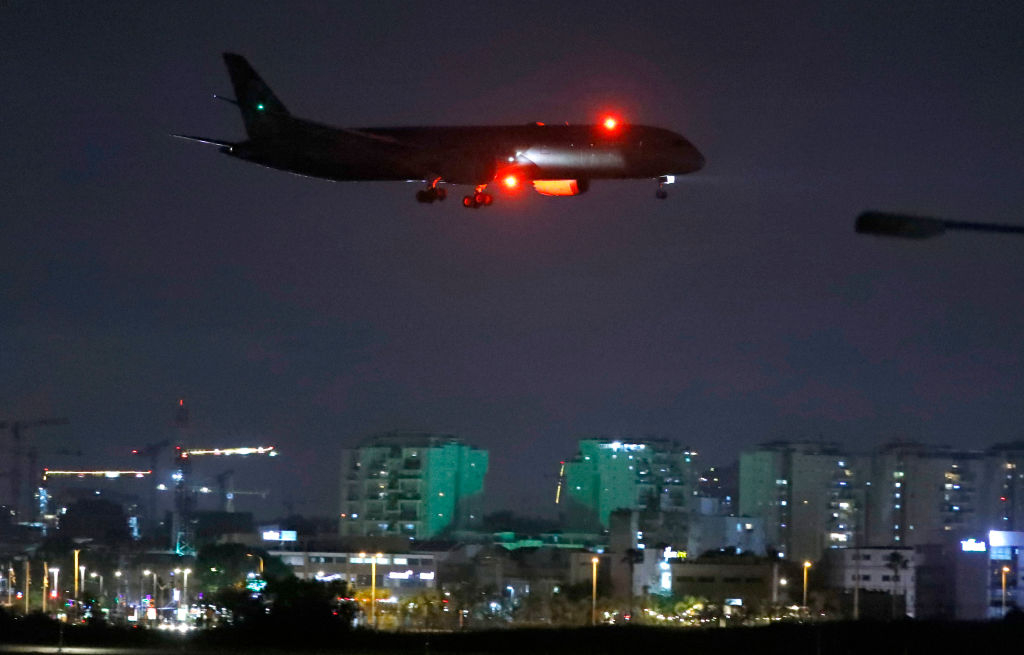
 Palestinians on Wednesday, July 01 2015 prepared to submit to the International Criminal Court what they called evidence of Israeli war crimes, a move that will saddle the beleaguered, overstretched court with a new and potentially long-running headache.
Source: NewYork Times. Article date: July 3rd, 2015
Palestinians on Wednesday, July 01 2015 prepared to submit to the International Criminal Court what they called evidence of Israeli war crimes, a move that will saddle the beleaguered, overstretched court with a new and potentially long-running headache.
The effort is part of the Palestinians’ campaign to punish Israel in the international arena and to advance their push for a state. It signals Palestinian defiance against Israeli threats of retaliation and underscores the breakdown of peace talks.
It comes on the heels of a United Nations Commission of Inquiry report released Monday, which found that both Israel and Palestinian militants might have committed war crimes in last summer’s conflict in Gaza. Palestinians are likely to incorporate parts of the 217-page report into the files they submit Thursday to the court, based at The Hague.
“We offered information on Israeli violations to international law which could amount to war crimes, and the aim is to convince the chief prosecutor to open an investigation that could lead to her making charges,” said Ghassan Khatib, the vice president of Birzeit University in the West Bank and a member of the Palestinian committee tasked with following up at the international court.
The Palestinian foreign minister, Riad al-Malki, is to give the files to the chief prosecutor, Fatou Bensouda.
The files are expected to contain mostly information already in the public record and are unlikely to have any immediate impact. The documents are meant to help Ms. Bensouda continue the preliminary examination that she began in January after the Palestinians moved to join the court. The move gives her the authority to look into crimes that occurred on Palestinian land since last July, when the war in Gaza began between fighters for Hamas, the Islamist militant group that controls the territory, and Israel.
Ms. Bensouda has yet to open an official investigation, and any indictment, which international court judges must approve, is a long way off.
The Palestinian case presents a delicate challenge for the international court as well, both legal and political. Because Israel has said it will not cooperate with any investigation, the prosecutor could, in turn, be accused of being one-sided.
It comes as the court is struggling to maintain its own credibility. It has no capacity to enforce its judgments, depending instead on governments around the world to do so. That is why it has not been able to secure the arrest of Sudan’s president, Omar Hassan al-Bashir, who has been indicted on charges of genocide, or most of the others it has charged with war crimes, crimes against humanity and genocide.
The court has won very few convictions. And it has been accused of unfairly targeting Africans, a charge the prosecutor, who is from Gambia, has vigorously rebutted.
The Palestinians could offer the court a chance to show that it is able to go after some of the most powerful people in the world, including Israelis, if necessary. On the other hand, the Palestinian case is likely to engender the most vigorous resistance, including from the United States, said Mark Ellis, president of the International Bar Association. Joining the international court represents perhaps the sharpest pressure point on Israel, which is not a member of the court and disputes the notion that it should face charges in an international tribunal.
“The court is going to be asked to deal with the most complicated conflict we have seen,” he said. “I think that’s a big ask for the court.”
Israel’s most important ally, the United States, has already said it is unhelpful for the Palestinians to make “unilateral” moves.
And it places other supporters of the court, particularly Europeans, in a tough spot. Should any Israelis face indictment, every country that is a member of the International Criminal Court, including Israeli allies like Germany, France and Britain, would be legally obliged to arrest them if they stepped onto members’ territory.
Israeli officials this week rebuffed French overtures to restart peace talks with the backing of a United Nations Security Council resolution. No such draft is likely to come up in the Council anytime soon.
Israeli officials maintain that their own justice system is sufficient to investigate their military’s actions. It has released its own updates of investigations into attacks in the Gaza war.
Still, the United Nations report said Israeli forces in Gaza had acted with “impunity” and described Israel as having a “lamentable track record in holding wrongdoers accountable.” The court was established to take on the gravest cases in which a state is unwilling or unable to investigate or prosecute in its own courts.
An Israeli official, who spoke on the condition of anonymity because he was not authorized to discuss the matter publicly, said: “We see this as a hostile move. The I.C.C. was established to deal with cases where there is no functioning legal system. And that obviously is not the case when dealing with Israel.”
The files that the Palestinians will hand over name individual Israelis accused of committing crimes, the Palestine Liberation Organization said in a statement. The Palestinian officials would not name the Israelis they identified. The files will cover the period from April 2014 to April 2015, officials said.
“All violations were documented in this regard, including annexation, settlement displacement, house demolition and preventing Palestinians from using their lands,” said Walid Assaf, the head of a committee that monitors Israeli settlement activity for the Palestine Liberation Organization, speaking on Palestinian radio on Wednesday. “We are talking about 1,856 violations, in addition to violations by settlers under the army protection and support.”
Other documents cover the 50-day war with Hamas last summer. Hundreds of Palestinian civilians were killed in that conflict, the homes of tens of thousands were destroyed, and hospitals and other facilities were badly damaged by bombing and shelling.
To punish Palestinians for joining the court, Israel withheld millions of dollars in tax revenue that was meant to be transferred to the Palestinian Authority, causing sharp budget shortfalls.
The United States, which provides the Palestinian Authority with about $400 million annually, is unlikely to take any immediate steps. Its most immediate difficulty with Israel is generated not by the Palestinian move, but by a nuclear deal it is negotiating with Iran, which has infuriated the government of Prime Minister Benjamin Netanyahu of Israel.
“Obama’s priority is to sell the Iranian agreement, full stop,” said Aaron David Miller, a former Middle East adviser to Democratic and Republican administrations, “not to open another front with Congress and Israel over the I.C.C.”
Wednesday, June 19, 2013
Ayers: Try Obama For War Crimes
Want to read a strange interview, look the following post by Greg Richter. In it Bill Ayers of Chicago and Weather Underground fame says that he admires Obama but believes that he should be tried at the Hague for war crimes.
Has Ayers lost it or is just a crackpot?
Conservative Tom
Bill Ayers: Try Obama for War Crimes
Tuesday, 18 Jun 2013 09:20 PM

Appearing on Real Clear Politics' "Morning Commute,"Ayers said every president enters "an office dripping with blood and then adds to it."
Ayers had been asked by co-host Charlie Stone if Obama, as the sole authority for Drone use, was engaged in terrorist activity.
"Absolutely," Ayers answered.
"Do you think Barack Obama should be put on trial for war crimes?" Stone asked.
"Absolutely," Ayers responded. "Every president in this century should be put on trial" for war crimes in The Hague.
"Yes, I think these are war crimes," Ayers said. "I think they're acts of terror."
Ayers, who also is a retired professor of education, gave Obama a failing grade.
"I don't at all feel like Obama's let anybody down," Ayers said, explaining that throughout the 2008 campaign Obama consistently said "I am a middle-of-the-road, pragmatic politician."
Still, Ayers likes his former Chicago neighbor personally.
"He's a curious person," Ayers said. "One of the things I like about him is he's curious. He wants to know things. He asks questions. He's not just charming, he's also interested. He reads. … And I liked him personally. I mean, he's a really good guy."
During his race for the White House in 2008, Obama's associations with Ayers were questioned. GOP vice presidental nominee Sarah Palin accused Obama of "palling around with terrorists," for his connections to Ayers.
Obama denied any close ties with Ayers, calling him "just a guy who lived in my neighborhood."
Ayers admitted in an interview with The Daily Beast that some of the things said about him and Obama, such as serving on boards together and Ayers holding a fundraiser for Obama in his living room, are true.
"Today, I wish I knew him better and he was listening to me," Ayers told The Daily Beast.
© 2013 Newsmax. All rights reserved.
Read Latest Breaking News from Newsmax.com http://www.newsmax.com/Newsfront/bill-ayers-obama-war/2013/06/18/id/510633?s=al&promo_code=13DF7-1#ixzz2WffAOdoC
Urgent: Should Obamacare Be Repealed? Vote Here Now!
Subscribe to:
Posts (Atom)