Contact Form

Name

Email *

Message *

Showing posts with label Reuters. Show all posts

Wednesday, May 23, 2018

If Only The Elections Were Today!


Nancy Pelosi STUNNED by poll shocker (oh boy!)

Since badly losing a series of elections to Republicans, House Minority Leader Nancy Pelosi has used her remaining political influence to hold onto power based using one simple promise.
Pelosi has vowed to deliver a “blue wave” and sweep huge numbers of liberals into office in the 2018 midterm election.

A stunning new poll just shattered that dream to pieces.
The stakes are high for the longtime California Democratic leader. Win, and Pelosi maintains power for years. Lose, and she’s fired. Which means this Reuters poll has likely left Pelosi in a blind panic
According to Reuters, the so-called “blue wave” has completely reversed itself. In a generic poll match-up, voters across the country say they’re more eager to vote Republican than Democrat in the next election.
“Of the 1,139 people surveyed earlier this month, 40.4 percent said they would vote for a Republican in their district in November, up from 32.4 percent of those who were surveyed in December 2017,” according to The Federalist. “Only 34.5 percent of respondents said they planned to vote for a Democrat in their district in the upcoming election, down from 45.5 percent in December.”

After two years of constant attacks on “deplorable” voters, the American people have decided they are sick of Pelosi and the establishment Democrats. With just months until the high-stakes elections in November, even liberal pollsters are predicting Pelosi will be thrown out of office.
That is very, very bad news for Pelosi’s job prospects in November.

Friday, March 30, 2018

Bill Clinton's Reactors Might Be Coming On Line


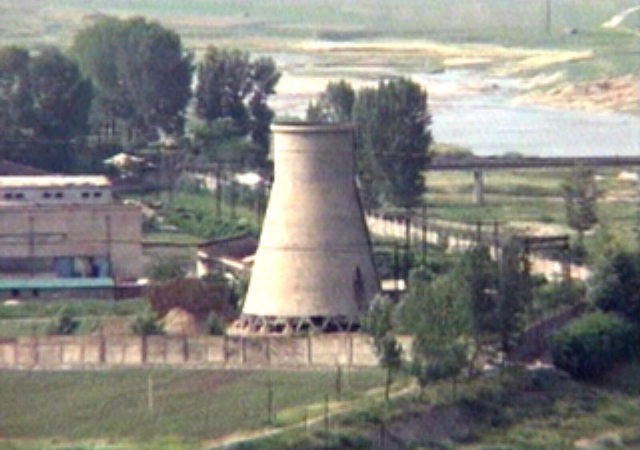
Activity Detected at North Korean Nuke Site Ahead of Trump-Kim Summit


Satellites have detected increased activity at North Korea’s Yongbyon nuclear test site, possibly indicating that one or two new nuclear reactors are close to coming online. If these findings are verified, the reactors could prove capable of creating weapons-grade nuclear material.

The Associated Press notes that these findings “come at a particularly sensitive time,” as North Korean dictator Kim Jong-un prepares for high-stakes denuclearization summits with South Korean President Moon Jae-in and U.S. President Donald Trump. Refraining from nuclear or missile testing has been a vital condition for North Korea to observe as this fragile diplomatic process moves forward.
Analysts concede it is difficult to tell exactly what is happening at Yongbyon based solely on satellite photos, but the best guess is that a new light-water reactor is undergoing preliminary tests and could suddenly become operational this year or in 2019. The North Koreans have long insisted this reactor is intended to provide electricity for civilian use.
Potentially even more troubling are indications of a second reactor, which appears to be generating steam despite efforts to hide it from satellites. This reactor is said to be more powerful and more likely capable of producing weapons-grade plutonium. In fact, analysts believe North Korea is poised to quadruple its plutonium production with these facilities.
advertisement
“While experts clash over how soon the North will develop warheads that can survive the blistering heats of re-entry, they agree that the North has already mastered the art of using reactors to make plutonium,” the New York Times observed on Tuesday.
The Times quoted President Trump’s new National Security Adviser John Bolton to the effect that as long as the enormous Yongbyon facility is operational it would be difficult to trust denuclearization promises from North Korea, since it would never be far from restarting the reactor and producing nuclear bomb materials. Bolton has suggested destroying the Yongbyon reactor the way Israel took out comparably dangerous facilities in Syria and Iraq.
Analysis of satellite imagery has revealed structures consistent with electrical production from the site, suggesting that North Korea has been racing to completion so it can portray the reactors as established facts on the ground, which civilians rely upon for power. Denuclearization talks will presumably include requirements that North Korea accept international inspectors to carefully monitor activity at the reactor, a demand the North Koreans have always refused.
Reuters notes that it could be politically difficult for Kim to accept such conditions now, since his regime has been telling its people for years that (a) its nuclear program is entirely peaceful, and also (b) its nuclear weapons are a “treasured sword of justice” that the regime is divinely entitled to wield against the hostile United States and puppet governments like South Korea and Japan. For this reason, Kim will want a deal that makes it look as if the West is “surrendering” to him, so he magnanimously begins to scale back nuclear weapons activity, because he has achieved his objectives and decided further research and development are unnecessary.
Another sticking point mentioned by Reuters is that North Koreans tend to view nuclear arms as a sacred crusade Kim inherited from his father and grandfather, so he has a legacy obligation to keep pushing until there are reliable long-range nuclear missiles in Pyongyang’s inventory. This would explain why Kim has been floating the idea that his father and grandfather secretly dreamed of denuclearization.

Thursday, March 15, 2018

How Would You Like Having The Government Own And Operate A New Cellular 5G Network?

AT&T Says It Will Launch 5G in a Dozen Cities
In 2018.

Mute
Current Time0:07
/
Duration Time0:37
Loaded: 0%
Progress: 0%

COMING UP...
AT&T’S 5G NETWORK IS COMING TO 3 U.S. CITIES
HERE’S WHAT APPLE COULD ANNOUNCE AT THE WWDC
THE FIRST 3D-PRINTED HOME IN THE U.S. TO RECEIVE A PERMIT FOR OCCUPANCY
By DAVID MEYER
January 30, 2018
Sunday brought a big surprise in the form of a leaked proposal to create a secure, government-controlled “5G” network in the U.S. that would keep out the Chinese (in more ways than one).
The document, leaked to Axios and largely verified by Reuters, was the product of a “senior National Security Council official” who recently presented it to senior officials from other agencies.
The proposal may or may not already be dead in the water, but it looks like the White House will continue to push for certain elements of what was in there. That means it’s worth taking a deeper look at what the memo called for.

Hold up. What’s 5G?

Right now you probably use fourth-generation (4G) mobile broadband through your phone and other mobile devices. It’s really fast, but fifth-generation (5G) wireless broadband should be able to provide even better connections. And that will make it useful as a substitute for fixed-line broadband in places like the rural U.S., where the economics of fixed-line rollouts have proven unattractive to cable companies.
If it lives up to the industry’s promises, 5G will also be much better suited than 4G to handling the data from the “internet of things”—from connected cars to smart vending machines—and it will allow telecom companies to run their networks more efficiently.

Gotcha. So what did the memo say?

There’s a lot to unpack here, but here’s the headline for the presentation: “The Eisenhower National Highway System for the Information Age”—a secure, nationwide 5G network that would reflect American values and counter China’s “dominant position in the manufacture and operation of network infrastructure,” along with China’s position as the “dominant malicious actor in the Information Domain.”
Here are the key details:
  • China, where the state owns the big mobile operators, reserves up to 70% of its mobile infrastructure market for its top equipment vendors, Huawei and ZTE, effectively funding them through protectionism. Meanwhile, U.S. vendors are mostly out of the picture these days. So the U.S. should push back.
  • That means the American government building a nationwide 5G network within just three years—a timespan that includes the recreation of a “telecommunications manufacturing base in the U.S.” There would need to be new national standards for deploying the infrastructure, in order to speed up the process.
  • There would also need to be new security standards for this version of 5G, in order to “build a network that is inherently secure” against Chinese cyberattacks. The network would make it possible to fight back against those who “steal intellectual property and private data, sow division and obscure bad behavior, slander and defame the innocent, prey on the weak and plans the seeds for total darkness in the event of all-out war.”
  • To make the 5G network a better defensive tool, anonymity would not be allowed on it.
  • Friendly countries might choose to partner with the U.S. on this—attracted by U.S.-developed security capabilities. This would create a “democratic counter” to China’s Belt and Road soft-power initiative.
  • Rural broadband would “guarantee a revenue stream” while the government figures out other business models that could pay for all this. The 5G network would “provide 100 Mbps speeds to approximately 80% of rural customers.”
  • The network’s development would also allow the U.S. to avoid losing the “AI arms race” to China, where “complete elimination of privacy standards” allows the authorities to mine people’s data freely. So what’s the political reaction?
Brutal. Once it went public, the proposal quickly met stiff resistance on many fronts.
Ajit Pai, the chairman of the Federal Communications Commission (FCC) said he opposed the “costly and counterproductive distraction” from the policies needed to put the U.S. at the forefront of 5G—the upcoming new generation of wireless broadband technology. (It’s worth noting that U.S. carriers are already preparing to roll out 5G, based on already-agreed standards, this year.)
Politicians from both parties rushed to condemn the proposal—”We’re not Venezuela,” said House Energy & Commerce Committee chair Greg Walden—as did telecom companies.
Within a day of the original leak, Recode reported White House officials as saying the leaked document was “outdated” and the nationalized 5G network plan “probably might never be.”
“There are a lot of things on the table,” White House press secretary Sarah Huckabee Sanders said. “Again, these are the very earliest stages of the discussion period, and there’s been absolutely no decision made other than…the need for a secure network.”
But how much of the proposal actually makes sense? According to experts, some elements aren’t actually so out there. But others are.

The economic case

“I’ve been wondering what the U.S. government was going to do,” said Joe Madden, a Mobile Experts analyst who has been fretting about China’s protectionist telecoms strategy.
China did indeed invest huge amounts of money in building out its 4G networks, and over a decade that took Huawei and ZTE to the number one and two spots when it comes to the number of radio transceivers that are sold to telecoms companies. However, Madden said, those companies still had to rely on U.S. firms’ semiconductors for that equipment. And this time China is planning to build out its own semiconductor capabilities for the 5G rollout.
“That puts the U.S. at a big disadvantage from an economic point of view,” said Madden. “The national security implications are secondary—I think this is a trade thing.”
But what about the idea of funding the network through revenue from rural broadband rollouts? That’s where it really makes no sense. “It’s a safe bet that if you put broadband out in rural areas, you will get some revenue, from ranchers [and so on],” said Madden. “There’s just not a lot of those people out there. The revenue stream is fairly risk-free, but it’s small.”
How about the proposed timescale then? Disruptive Analysis’s Dean Bubley is deeply sceptical about the three-years thing. “It would likely take a decade-plus to roll out genuine national coverage, including in rural areas. The U.S. probably doesn’t have the manpower,” he said.

The security aspect

As Sanders said, the one thing the White House is sure about right now is that it wants a secure network. But would what was proposed actually provide that?
According to Madden, there is a “valid concern” about using network equipment from an unfriendly country, particularly if they make everything down to the processing chips (a concern that has of course been animating the Chinese when it comes to American chips). “There is a danger that there could be a back door that could open a security hole in the system,” he said.
However, as Bubley noted, the proposal does not mention radio spectrum that would be useful for giving people connectivity indoors. So users’ devices would constantly need to switch over to other connections that aren’t part of some government-controlled network. “Which sort of blows up the idea of a completely firewalled separate Internet,” he said.
The cybersecurity expert Alan Woodward, a professor at the University of Surrey in England, said the proposed network would not “protect anyone more than the current Internet” because it would presumably have to connect to the regular Internet. “If the U.S. government were talking about building a standalone 5G network then maybe they could secure it from certain threats but I don’t see what use such a network would be,” he said.
However, Woodward added, there are some reasons why it might make sense to build a 5G network under government control. Firstly, it would make it easier to demand that equipment suppliers—such as Huawei—allow the authorities to strip down the equipment and check it for flaws that might aid a foreign government. Secondly, it would make it possible for the government to “flip the appropriate switches in an emergency and use it for essential use only.”
“Third, again if you build, own and operate a 5G network, and you assume that it will be the mobile network of choice in your country, then you can conduct surveillance operations much more easily,” Woodward added.
However, he noted, it would be difficult for the government to stop companies from rolling out competing networks. “Assuming the U.S. didn’t government didn’t give itself a monopoly on 5G, then it’s difficult to see how their network would be the preferred network for consumers in a few years’ time. Other countries do it, but they typically are much smaller and have maybe one state owned telecommunications company running their infrastructure already.”
“All in all I would be very surprised if the U.S. government progressed with this idea, but I can fully understand why it might be considered,” Woodward said.

Sunday, March 4, 2018

Is This Part Of The "Girly Boy" Trend?

Men's Sperm Counts Are Dropping, and Scientists Don't Know Why

Your sperm count may be significantly less than that of men 40 years ago.
The topic of overpopulation has been much discussed over the past few decades, but what if the real issue is a severe decline in population?
It sounds like something straight out of a dystopian nightmare, but new research shows sperm counts are drastically dropping across the Western world.
Researchers from Hebrew University-Hadassah Braun School of Public Health and Community Medicine in Jerusalem announced this week that sperm count in men residing in developed countries has dropped by a whopping 50 percent over the past 40 years. They claim this alarming trend could potentially result in a decline in male health, fertility and possibly even extinction if the trend doesn’t turn around.
“This study is an urgent wake-up call for researchers and health authorities around the world to investigate the causes of the sharp ongoing drop in sperm count,” explained study co-author Hagai Levine.
After data was collected from 185 studies looking at sperm count and concentration in men from North America, Europe, Australia and New Zealand from 1973 to 2011, researchers found that total sperm count declined by 59.3 percent and sperm concentration declined by 52.4 percent.
Data from men in South America, Asia and Africa were also examined, however, no serious decline was detected. Researchers did note that not as many studies have been conducted in these regions.
Researchers didn’t look into reasons why the drop in sperm count occurred, but noted that the phenomenon has been previously linked to factors ranging from exposure to chemicals and pesticides to lifestyle choices, including smoking, obesity and stress. They are worried that if things keep heading in this direction, the human race could be doomed.
Daniel Brison, an embryology and stem cell biology specialist at Manchester University who was asked to comment on the findings, told Reuters the study had “major implications not just for fertility, but for male health and wider public health.”
“An unanswered question is whether the impact of whatever is causing declining sperm counts will be seen in future generations of children via epigenetic (gene modifications) or other mechanisms operating in sperm,” Brison said.
The next step is obviously to pinpoint what is causing the sperm count to decrease so dramatically. “Given that we still do not know what lifestyle, dietary or chemical exposures might have caused this decrease, research efforts to identify (them) need to be redoubled and to be nonpresumptive as to cause,” added Edinburgh University’s Richard Sharpe.
In the meantime, if you are concerned about your own declining sperm count you should consider modifying your diet. Here are some foods that can help make your sperm more active, healthy and abundant.