France: Islamism in the Heart of the State
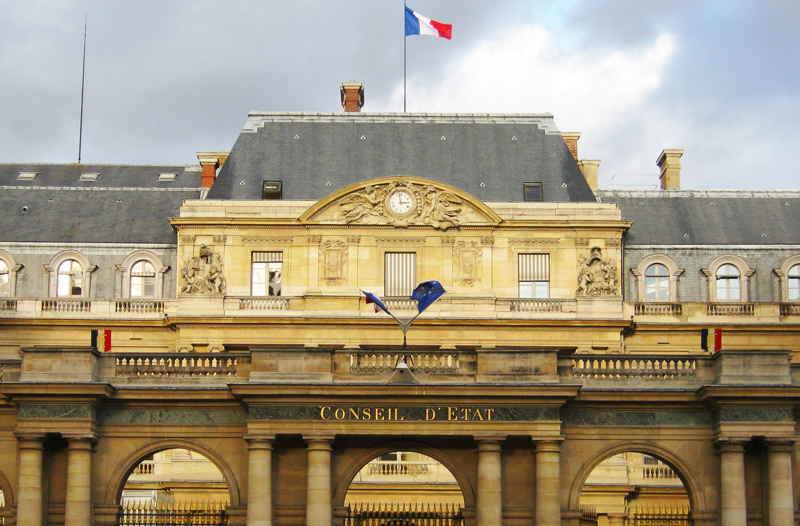
On October 25, 2017, the highest French administrative court, the Council of State (Conseil d'État), ordered the removal of a Roman Catholic cross from the top of a monument dedicated to Pope John Paul II in a public square in Ploërmel, Britanny. According to the France's highest administrative court, this cross was said to violate the secular nature of the State. Not the statue of the ex-pope John Paul II by itself; just the cross above it.
Social media, in France and abroad -- especially in Poland where John Paul II was born -- flew into an immediate uproar: How could the government of a country considered the "eldest daughter of the Catholic church" ask for the removal of a Catholic cross in a tiny village that nobody even knew about before this incident? The Council of State is an independent legal body that has jurisdiction over disputes concerning civil liberties, administrative police, taxes, public contracts, the civil service, public health, competition rules, environmental law and secularism, to name just a few of its missions. The Council of State is also -- as its name implies -- the main advisor of every branch of government. Each time a minister or a prime minister has a difficult political decision to make, he sends the case to the Council of State. Generally, the Council of State's advice becomes the law. The immense respect due to the Council of State seems to have caused even the keenest observers to miss the fact that, on all questions dedicated to immigration and Islam, the Council of State has become an Islamo-leftist body dedicated to encouraging Muslim immigration and protecting the expansion of Islam and Islamism in France.
A few examples include:
The question is: Why? Many French elites seem to be followers of a globalist ideology of no borders, no rules -- only the "human rights" of migrants from other nations vs. the rights of the citizens of France. Perhaps many elites feel guilty after French State actively collaborated with Nazis, especially against Jews, during World War II, so that now they are trying, instead, to help Muslims -- whose culture and goals could hardly be farther from that of the Jews. Nevertheless, many seem to think of Muslims as "the Jews" of 21st century. Perhaps many among the elites secretly do not like their country. Or perhaps many elites are looking for "redemption" after France colonized parts of Africa and Northern Africa. They are forgetting, however, that it was Muslims who colonized the Middle East, the Christian Byzantine Empire, North Africa, Greece, much of Eastern Europe and Asia, Northern Cyprus and Spain. Maybe it is a mix of all these guilts. What is certain is that after the collaboration of the French State with the Nazis, the judges of the Council of State are collaborating with yet another totalitarian ideology: political Islam. Yves Mamou, author and journalist, based in France, worked for two decades as a journalist for Le Monde. He is finishing a book about "Collaborators and Useful Idiots of Islamism in France," to be published in 2018.
© 2017 Gatestone Institute. All rights reserved. The articles printed here do not necessarily reflect the views of the Editors or of Gatestone Institute. No part of the Gatestone website or any of its contents may be reproduced, copied or modified, without the prior written consent of Gatestone Institute.
|
Our goal is to have intelligent discussion of the topics of the day. We realize everyone has their opinion and they should be allowed to express it in a discussion forum without calling each other names. We learn from discussion and not from name calling or argument.We use cookies to personalise content and ads, to provide social media features and to analyse our traffic. We also share information about your use of our site with our social media, advertising and analytics partners. See details
Contact Form
Showing posts with label Spain. Show all posts
Tuesday, December 5, 2017
The Recipe For Destroying A Country--France's Acceptance Of Muslim Immigration
Tuesday, November 7, 2017
20% Of German Citizens Share Migrant Background
The Migrant Crisis Upended Europe
A few weeks after Germany opened its borders to over a million refugees from the Middle East, Africa and Asia, Hungarian Prime Minister Viktor Orbán said that the migration crisis would "destabilize democracies". He was labelled a demagogue and a xenophobe. Two years later, Orbán has been vindicated. As Politico now explains, "[M]ost EU leaders echo the Hungarian prime minister" and the Hungarian PM can now claim that "our position is slowly becoming the majority position".
Many in Europe seem to have understood what Ivan Krastev, the Chairman of the Center for Liberal Strategies in Sofia and a member of the Institute of Humanities in Vienna, recently explained to Le Figaro: "The migrant crisis is the 9/11 of the European Union... That day in 2001, everything changed in the US. In a minute, America discovered its vulnerability. Migrants had the same effect in Europe. It is not their number that destabilizes the continent... The migration crisis profoundly undermines the ideas of democracy, tolerance and progress as well as the liberal principles that constitute our ideological landscape. It is a turning point in the political dynamics of the European project".
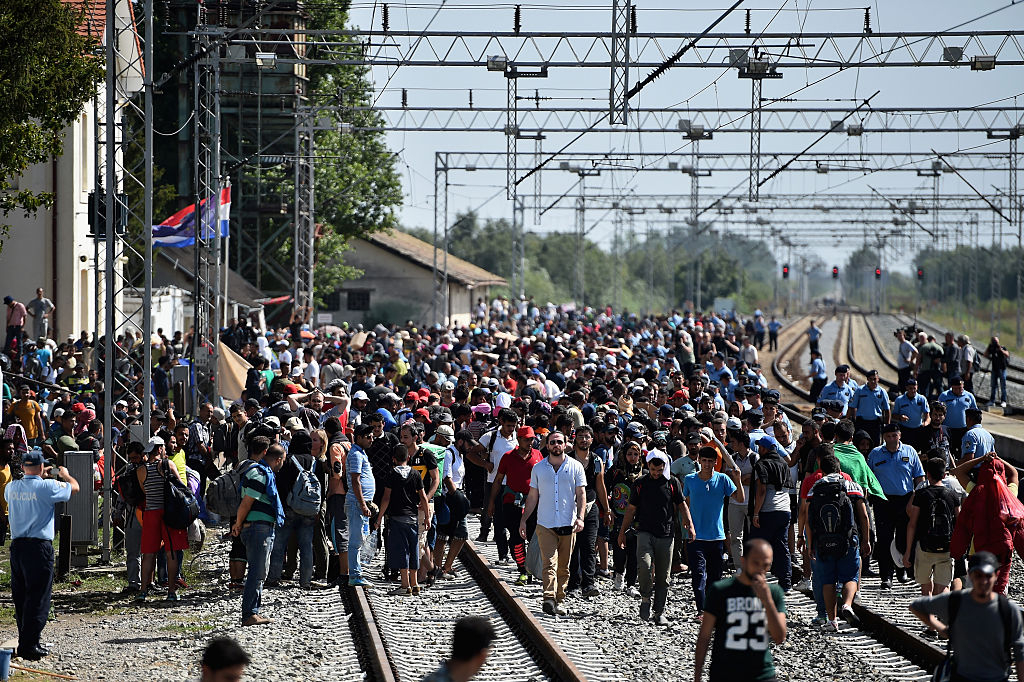
Migration is having a significant impact, for instance, on Europe's public finances. Take the two countries most affected by it. Germany's federal government spent 21.7 billion euros in 2016 to deal with it. Also reported was that Germany's budget for security this year will grow by at least a third, from 6.1 billion to 8.3 billion euros. In Italy, the Minister of Economy and Finance recently announced that the country will spend 4.2 billion in 2017 on migrants (one-seventh of Italy's entire budget for 2016). Spain recently announced that in North Africa, the fence around its enclaves of Ceuta and Melilla, which keeps migrants out of the Spanish territory, will be funded through a further infusion of 12 million euros. Everywhere in Europe, states are allocating extra resources to deal with the migrant crisis, which has also changed Europe's political landscape. The recent election victories of Sebastian Kurz in Austria and Andrej Babis in the Czech Republic have potentially enlarged the group of Central and Eastern European countries that oppose Brussels -- countries that do not want to accept the number of migrants that the EU is demanding. The topic of immigration is fracturing Europe along ideological lines. Not only fences, but rivalry, mistrust and hate now divide the European project more deeply than ever before. The European public now looks at EU institutions with contempt. They perceive them -- under multiculturalism and immigration -- not only as indifferent to their own problems, but as adding to them. Another political earthquake linked with the migration crisis is "the decline of social democracy in the West", as Josef Joffe, Editor and Publisher of Die Zeit, recently called it. Everywhere in Europe, the migration crisis has all but killed the social-democratic parties, long perceived as unable to cope with it. Twenty years ago, these left-liberal parties governed everywhere -- Spain, Britain, Germany, for instance -- but now they are in the opposition everywhere except Italy. From Norway to Austria, Europe is now led by conservative governments. More than half the terror plots in Germany since the onset of the migrant crisis in 2014 have involved migrants, according to headlines as well as a study by the Heritage Foundation. In addition, ever since the Islamic State -- now defeated in Raqqa -- took advantage of the destabilization caused by Syria's civil war to become a major driver of the migrant crisis, migration has been a major concern for Europe's security. From the territory it conquered, ISIS launched major terror attacks on Europe. The migration crisis has also led to the strategic strengthening in Europe of Turkish President Recep Tayyip Erdogan. He has been blackmailing European countries by threatening that if billions of euros and certain political concessions are not given to him, he will open Turkey's borders to let millions more migrants flood into Europe. Erdogan has not only demanded that Europe jail writers and journalists; he has also tried to influence elections in the Netherlands and Germany by appealing to his Turkish constituencies there. A Pew Research report shows how migration is reshaping European countries. In 2016 alone, Sweden's population grew by more than 1%. The increase is ascribed to mass migration, the second-highest in the EU. The number of immigrants rose from 16.8% to 18.3% of Sweden's population between 2015 and 2016. Austria and Norway, two other countries with large immigrant populations (at least 15% percent in 2016), saw a 1% rise from 2015. The newspaper Die Welt recently reported that 18.6 million German residents -- one-fifth of Germany's total population -- now come from migrant backgrounds. The Machiavelli Center in Italy reported in a study, "How immigration is changing Italian demographics", that an "unprecedented" shift in Italy's demography has been taking place due to the migration crisis. The Pandora's box of a demographic revolution has been opened. Two years ago, Hungarian Prime Minister Viktor Orbán was the only voice in Europe speaking of the need to keep Europe "Christian". Now one of his most vocal opponents, Donald Tusk, President of the European Council, has said: "We are a cultural community, which doesn't mean that we are better or worse -- we are simply different from the outside world... our openness and tolerance cannot mean walking away from protecting our heritage".In 2015, any talk about "culture" was condemned as "racism". Now it is becoming part of the mainstream. In trying to cope with the Islamists' war on Western politics, culture and religion, and the cultural clash they created, Europe has been upended. Giulio Meotti, Cultural Editor for Il Foglio, is an Italian journalist and author.
© 2017 Gatestone Institute. All rights reserved. The articles printed here do not necessarily reflect the views of the Editors or of Gatestone Institute. No part of the Gatestone website or any of its contents may be reproduced, copied or modified, without the prior written consent of Gatestone Institute.
|
Tuesday, August 22, 2017
Political Correctness In Spain Caused The Barcelona Tragedy. When Is The World Going To Awaken To The Dangers Of Being PC?
Spain: Barcelona Attack Was Preventable
As details emerge of the August 17 jihadist attack in Barcelona, the evidence points to one overarching conclusion: the carnage could have been prevented if a series of red flags had not been either missed or ignored.
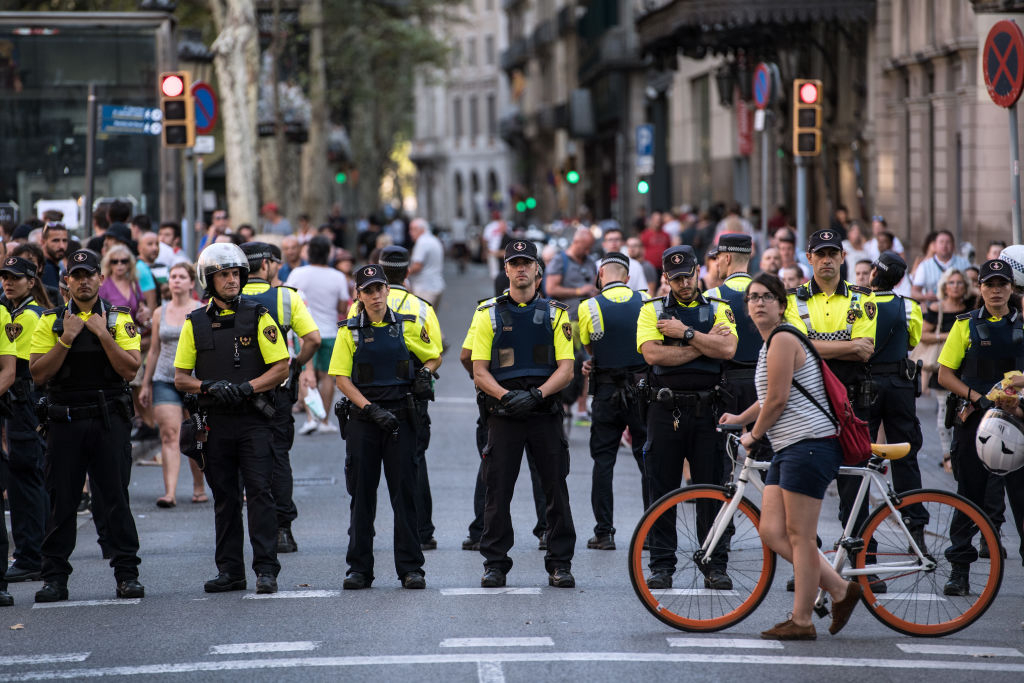
The failure to heed intelligence warnings, enhance physical security and report suspicious activity are all factors that facilitated the attack, which had been in the planning stage for more than six months. The attack was also enabled by the idiosyncrasies of Spanish politics, especially the tensions that exist between the central government and the leaders of the independence movement in Catalonia, the autonomous region of which Barcelona is the capital. Failure to Install Bollards on Las RamblasThe Barcelona attack could have been prevented had municipal officials complied with an order to install bollards, vertical poles designed to prevent car ramming attacks, on the Rambla, the city's main tourist thoroughfare.On December 20, 2016, one day after a Tunisian jihadist drove a truck into a Christmas market in Berlin, killing 12 people and injuring 56, Spanish National Police issued a circular ordering all central, regional and municipal police departments in Spain to "implement physical security measures to protect public spaces" to prevent jihadist attacks "in places with high numbers of people." The circular advised: "Municipalities should protect these public spaces by temporarily installing large planters or bollards at access points to hinder or prevent the entry of vehicles."The measures were never implemented in Barcelona because the leaders of the Catalan independence movement did not want to be seen as taking orders from the central government in Madrid. After receiving the directive, Catalan autonomous police, known as the Mossos d'Esquadra, accused the central government of "alarmism" and insisted that it would not order municipalities in Catalonia to implement this "indiscriminate measure." The Mossos also claimed to have the jihadist threat under control, that local police were trained to "detect symptoms or radicalization," and that there were "no concrete threats." After the Barcelona attack, Deputy Mayor Gerardo Pisarello blamed the absence of bollards on the Catalan Interior Ministry. "The City of Barcelona has never refused to install bollards. Whenever it has been requested, we have done so," Pisarello said. Ada Colau, Barcelona's leftwing mayor, however, has repeatedly refused to "fill Barcelona with barriers," insisting that it must remain "a city of liberty." El Periódico de Catalunya, a paper based in Barcelona, elaborated: "The total absence of police collaboration between the Mossos d'Esquadra, which is the police force deployed on the ground, and the National Police and the Civil Guard translates into huge security deficiencies. The relationship between police forces — influenced by the political situation — is terrible and, in the case of the Mossos and the National Police, it is open war.On August 19, hours after the jihadist attack in Barcelona, Spanish Interior Minister Juan Ignacio Zoido repeated that it would be "appropriate" for all municipalities to comply with the December circular. His ministry issued a new letter calling on municipalities to install safety measures in the neuralgic points of cities. It remains to be seen if Catalan officials will now implement the recommendations.
Failure to Heed WarningsIn June, the CIA reportedly warned Catalan police that Barcelona was being targeted by jihadists: "Two months ago the Central Intelligence Agency warned Catalan police of a threat to Las Ramblas," according to El Periódico.Additionally, on June 30, two weeks before the Barcelona attack, a Twitter account associated with the Islamic State warned of an impending attack against al-Ándalus, the Arabic name given to those parts of Spain, Portugal and France occupied by Muslim conquerors from 711 to 1492. Many jihadists believe that territories Muslims lost during the Christian Reconquest of Spain still belong to the realm of Islam and that Islamic law gives them the right to re-establish Muslim rule there. It remains unclear why Catalan authorities failed to increase security in light of the warnings and threats. El Periódico wrote: "In recent years Barcelona has become a city known all over the planet. Both because of its attraction as a tourist destination and because of the media impact of the Barça football club, the Catalan capital is a world icon. In the eyes of the jihadists, that makes it a priority objective, as they seek to attack sites that generate a great impact at the international level. Failure to Report Suspicious ActivityThe jihadists prepared for the Barcelona attack at a chalet in the beachfront town of Alcanar, situated 200 kilometers (120 miles) south of Barcelona. A year ago, the terror cell "occupied" the property, which was foreclosed and had been vacant. Squatters are protected by Spanish law, so it is common for youth in Catalonia to take over vacant properties. This may explain why neighbors did not contact the police.Far more difficult to explain is why no one reported suspicious activity at the chalet. During the course of several months, the jihadists collected more than 100 large gas canisters, which investigators believe were to be used as car bombs. An explosion on August 16, the night before the Barcelona attack, leveled the property. Investigators later found traces of the explosive triacetone triperoxide (TATP), also known as the "Mother of Satan," a substance widely used by members of the Islamic State in Europe. Failure to Follow-Up on LeadsPolice found the remains of at least two people in the rubble of the Alcanar chalet. The head of the Mossos d'Esquadra, Josep Lluís Trapero, confirmed that one of the bodies was that of Abdelbaki Es-Satti, a Muslim cleric who is suspected of organizing the terror cell and radicalizing its members.Es-Satti, a Moroccan national who lived in the Catalan town of Ripoll, served in a local mosque. He was a convicted drug trafficker who had spent four years at a prison in Valencia, where he is believed to have met Rachid Aglif, known as "The Rabbit," one of the main plotters of the 2004 Madrid bomb attacks that killed 192 people and wounded 2,000. Police are now looking into whether Es-Satti was involved in the ISIS attacks on the Brussels airport and metro in 2016. Ali Yassine, the director of the mosque in Ripoll, said that he had reported Es-Satti to local police more than a year ago as part of a security protocol to monitor Muslim preachers. Authorities did not place him on a watch list, however, even though he had been convicted of trafficking drugs and violating Spanish immigration laws. Catalan Migration Policy Fuels RadicalizationCatalonia not only has the highest Muslim population in Spain, it is also one of the most Islamized regions of the country. Catalonia has 7.5 million inhabitants, including an estimated510,000 Muslims, who account for around 7% of the total Catalan population. In some Catalan towns, however, the Muslim population is above 40% of the overall population.In his book "Jihadism: The Radical Islamic Threat to Catalonia," Catalan terrorism analyst Jofre Montoto estimates that at least 10% of the Muslims in Catalonia are "radicals" who are hardcore believers in the "doctrine of jihadism." A five-page diplomatic cable, dated October 2, 2007, described the link between mass immigration to Catalonia and the rise of radical Islam in the region: "Heavy immigration — both legal and illegal — from North Africa (Morocco, Tunisia, and Algeria) and Southeast Asia (Pakistan and Bangladesh) has made Catalonia a magnet for terrorist recruiters. ... The Spanish National Police estimates that there may be upwards of 60,000 Pakistanis living in Barcelona and the surrounding area; the vast majority are male, unmarried or unaccompanied, and without legal documentation. There are even more such immigrants from North Africa. ... They live on the edges of Spanish society, they do not speak the language, they are often unemployed, and they have very few places to practice their religion with dignity. ... Individually, these circumstances would provide fertile ground for terrorist recruitment; taken together, the threat is clear....Many of Catalonia's problems with radical Islam are self-inflicted. In an effort to promote Catalan nationalism and the Catalan language, Catalonian pro-independence parties have deliberately promoted immigration from Arabic-speaking Muslim countries for more than three decades, in the belief that these immigrants (unlike those from Latin America) would learn the Catalan language rather than speak Spanish. Although some Catalans are having second thoughts about the wisdom of promoting Muslim mass immigration as a strategy to achieve Catalan independence, at least 10,000 Catalans with links to the separatist movement have actually converted to Islam in recent years. It is believed that two out of every ten Catalan radicals who belong to the Republican Left of Catalonia (ERC), a far-left political party, are converts to Islam. The ERC, which now governs Catalonia, has vehemently refused to sign a cooperation agreement with the central government in Madrid to fight jihadist terrorism. Soeren Kern is a Senior Fellow at the New York-based Gatestone Institute
© 2017 Gatestone Institute. All rights reserved. The articles printed here do not necessarily reflect the views of the Editors or of Gatestone Institute. No part of the Gatestone website or any of its contents may be reproduced, copied or modified, without the prior written consent of Gatestone Institute.
|
Thursday, May 11, 2017
A "Pacifist" Imam Is A Conflict In Terms
Spain: "Pacifist" Imam Arrested on Terror ChargesThe New York Times once praised his moderation
Spanish authorities have arrested a Muslim cleric — whom the New York Times once praised for his efforts to fight radicalization within Germany's Islamic community — for alleged ties to the Islamic State.
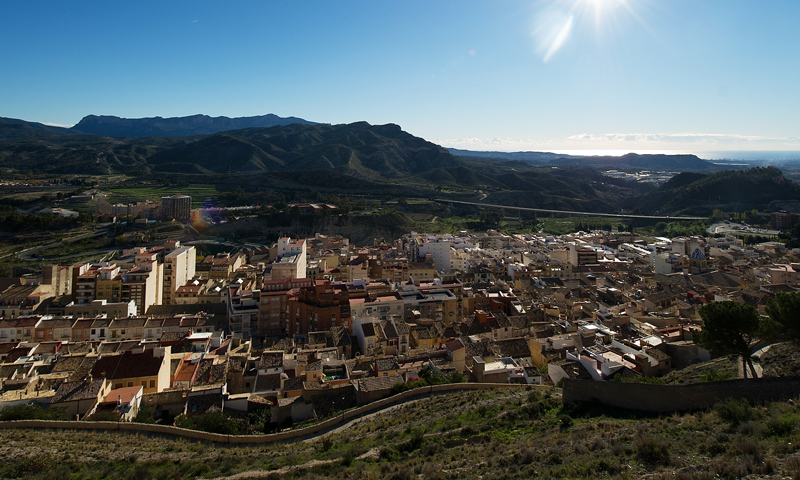
Hesham Shashaa (aka Abu Adam), a 46-year-old Egyptian-Palestinian, was detained near Alicante in southeastern Spain on April 26 on charges of aiding the Islamic State, extolling terrorism and promoting Salafi-jihadism. The Spanish Interior Ministry said that Shashaa had facilitated the travel to Spain of Islamic State jihadists from Syria and Iraq by providing them with money, refuge and fake documents. Most recently, Shashaa had made arrangements for two jihadists — who are the subjects of international arrest warrants for their membership of the Islamic State — to travel from Turkey to Spain by providing them with false passports. In addition, Shashaa fraudulently tried to obtain for two jihadists letters of invitation with the aim of facilitating their travel from Egypt to Spain. According to the Spanish Interior Ministry, Shashaa has also been charged with disseminating Islamic State propaganda: "The detainee took advantage of his privileged position within the Islamic Community of the province of Alicante to spread content extolling attacks committed by the terrorist organization Islamic State and cruelly disparaging their victims. In addition, he used social networks as a tool to generate hate by publishing videos in which terrorist leaders indoctrinate their followers to engage in violent jihad."
On April 29, Spanish High Court Judge Eloy Velasco ordered Shashaa — who lives in a 10,000 square meter (108,000 square foot) mansion in Teulada-Moraira, a small coastal town on Spain's Mediterranean coast, with his four wives and 18 children — to be held in prison without bail. Velasco ruled that Shashaa was a flight risk and that there was a danger he would repeat his criminal behavior (reiteración delictiva). Shashaa settled in Spain in 2012, shortly after the New York Times published a glowing profile of his moderation while he was an imam at the Darul Quran mosque in Munich, Germany. The story, entitled "Munich Imam Strives to Dilute the Elixir of Radical Islam," stated: "A growing number of imams in Europe and the Middle East have denounced suicide missions and terrorist acts. Many of these imams, however, still view Al-Qaeda, the Taliban or Hamas as legitimate resistance movements, while Mr. Shashaa openly declares that they are violating the tenets of Islam.In an interview with the Times, Shashaa portrayed himself as a pacifist: "They [the militants] use the religion for their personal aims and declare war on Jews and Christians, but I want people to follow what Islam really says. We cannot just sit down and let other people hijack our religion."The Times also quoted a senior German security official, who said: "We know that he speaks and works against terrorist groups like Al-Qaeda or the Taliban, and that is important. He is the only example of someone who is doing it in this way here in Germany, and in this sense he is effective."Shashaa told the Times that he ended up in Germany after he lost his briefcase there on a 2000 stopover while on his way to Britain from Romania, where he had been living. "Everything was gone, the papers, the money," he said. "So I thought it was God's will that I should stay here." Several months after the New York Times published its hagiography of Shashaa, he was arrested for physically assaulting his third wife, who was hospitalized with a broken nose and shoulder. "The attack was obviously very brutal," a hospital spokesperson said at the time. The woman, a Syrian, told police that she had wanted to live a more Western lifestyle; she wanted to find a job and stop wearing the hijab. Shashaa refused. After the woman called police, Shashaa refused to let them in. "What a man does with his wife does not concern the authorities," he said. Shashaa was arrested and then released. During a raid on Shashaa's mosque in Munich, police found copies of a book — Women in the Shade of Islam — which has been banned in Germany because of its calls for violence against women. Shashaa defended his possession of the book: "I need to know what is in these books. How else will I know how to argue with recruiters?" Spanish authorities believe Shashaa moved to Spain to evade German law enforcement, which had become increasingly suspicious of his activities. Die Zeit reported: "In 2012, German intelligence called him a Salafist: He opposed a pluralistic society, repeatedly stated that a woman should not leave the house without her husband's permission, and during the Gaza War in 2009 preached a sermon that disparaged Jews. He wants a theocracy, which would be inconsistent with the separation of powers, the rule of law and the parliamentary system. He posted several videos with extremist content. According to the 2012 intelligence findings, his claims to have distanced himself from extremism were deemed 'questionable.'"Shashaa, who does not speak Spanish, said he moved to Spain to establish a "center for cultural understanding." Through an interpreter, Shashaa told a Spanish newspaper that "spreading culture is the best way to end prejudice and to promote tolerance." He said that his cultural center would operate under the premise of "openness and integration" and that its doors would be "open to the whole world." He added that the walls of the center "must be made of glass so that everyone can see how we are and what is going on in there." Shashaa also insisted that "fundamentalism is a disease we must eradicate." Spanish authorities are now investigating the source of Shashaa's wealth. His mosque in Munich was shuttered in October 2015 due to financial difficulties, while the mansion he purchased in Spain in February 2015 is said to be worth more than half a million euros. Meanwhile, more than two weeks after Shashaa was arrested, the New York Times still has not reported on the fate of its poster boy for Salafist pacifism. Soeren Kern is a Senior Fellow at the New York-based Gatestone Institute. Follow him on Facebook and on Twitter.
© 2017 Gatestone Institute. All rights reserved. The articles printed here do not necessarily reflect the views of the Editors or of Gatestone Institute. No part of the Gatestone website or any of its contents may be reproduced, copied or modified, without the prior written consent of Gatestone Institute.
|
Subscribe to:
Posts (Atom)