France: Islamism in the Heart of the State
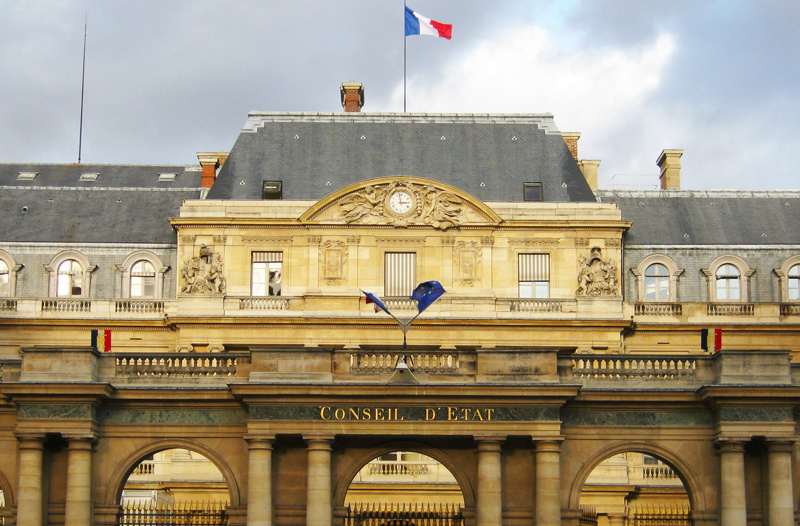
On October 25, 2017, the highest French administrative court, the Council of State (Conseil d'État), ordered the removal of a Roman Catholic cross from the top of a monument dedicated to Pope John Paul II in a public square in Ploërmel, Britanny. According to the France's highest administrative court, this cross was said to violate the secular nature of the State. Not the statue of the ex-pope John Paul II by itself; just the cross above it.
Social media, in France and abroad -- especially in Poland where John Paul II was born -- flew into an immediate uproar: How could the government of a country considered the "eldest daughter of the Catholic church" ask for the removal of a Catholic cross in a tiny village that nobody even knew about before this incident? The Council of State is an independent legal body that has jurisdiction over disputes concerning civil liberties, administrative police, taxes, public contracts, the civil service, public health, competition rules, environmental law and secularism, to name just a few of its missions. The Council of State is also -- as its name implies -- the main advisor of every branch of government. Each time a minister or a prime minister has a difficult political decision to make, he sends the case to the Council of State. Generally, the Council of State's advice becomes the law. The immense respect due to the Council of State seems to have caused even the keenest observers to miss the fact that, on all questions dedicated to immigration and Islam, the Council of State has become an Islamo-leftist body dedicated to encouraging Muslim immigration and protecting the expansion of Islam and Islamism in France.
A few examples include:
The question is: Why? Many French elites seem to be followers of a globalist ideology of no borders, no rules -- only the "human rights" of migrants from other nations vs. the rights of the citizens of France. Perhaps many elites feel guilty after French State actively collaborated with Nazis, especially against Jews, during World War II, so that now they are trying, instead, to help Muslims -- whose culture and goals could hardly be farther from that of the Jews. Nevertheless, many seem to think of Muslims as "the Jews" of 21st century. Perhaps many among the elites secretly do not like their country. Or perhaps many elites are looking for "redemption" after France colonized parts of Africa and Northern Africa. They are forgetting, however, that it was Muslims who colonized the Middle East, the Christian Byzantine Empire, North Africa, Greece, much of Eastern Europe and Asia, Northern Cyprus and Spain. Maybe it is a mix of all these guilts. What is certain is that after the collaboration of the French State with the Nazis, the judges of the Council of State are collaborating with yet another totalitarian ideology: political Islam. Yves Mamou, author and journalist, based in France, worked for two decades as a journalist for Le Monde. He is finishing a book about "Collaborators and Useful Idiots of Islamism in France," to be published in 2018.
© 2017 Gatestone Institute. All rights reserved. The articles printed here do not necessarily reflect the views of the Editors or of Gatestone Institute. No part of the Gatestone website or any of its contents may be reproduced, copied or modified, without the prior written consent of Gatestone Institute.
|
Our goal is to have intelligent discussion of the topics of the day. We realize everyone has their opinion and they should be allowed to express it in a discussion forum without calling each other names. We learn from discussion and not from name calling or argument.We use cookies to personalise content and ads, to provide social media features and to analyse our traffic. We also share information about your use of our site with our social media, advertising and analytics partners. See details
Contact Form
Showing posts with label John Paul II. Show all posts
Tuesday, December 5, 2017
The Recipe For Destroying A Country--France's Acceptance Of Muslim Immigration
Sunday, April 12, 2015
Will Muslims Be Enraged Over Pope's Words? Will This Give Them The Authority To Seize The Vatican?
Pope Enrages Turkey over Armenian 'Genocide' Comments
Sunday, 12 Apr 2015 11:43 AM
Pope Francis uttered the word "genocide" on Sunday to describe the mass murder of Armenians 100 years ago, sparking fury from Turkey which slammed the term as "far from historical reality".
In a solemn mass in Saint Peter's Basilica to mark the centenary of the Ottoman killings of Armenians, Francis said the murders were "widely considered 'the first genocide of the 20th century'," quoting a statement signed by Pope John Paul II and the Armenian patriarch in 2001.
Many historians describe the World War I slaughter as the 20th century's first genocide, but Turkey hotly denies the accusations.
"The pope's statement, which is far from the legal and historical reality, cannot be accepted," Turkish Foreign Minister Mevlut Cavusoglu said on Twitter.
"Religious authorities are not the places to incite resentment and hatred with baseless allegations," he added.
Theforeign ministry summoned the Vatican envoy to Ankara to explain the pope's comments.
It accused the pontiff of engaging in a "one-sided narrative" that ignored the suffering of Muslims and otherreligious groups at that time.
While Francis did not use his own words to describe the killings as genocide, it was the first time the term was spoken aloud in connection with Armenia by a head of the Roman Catholic Church in Saint Peter's Basilica.
"It was a very courageous act to repeat clearly that it was a genocide," Vatican expert Marco Tosatti told AFP.
"By quoting John Paul II, he strengthened the Church's position, making it clear where it stands on the issue," he added.
The Argentine pope described the "immense and senseless slaughter" and spoke of the duty to "honour their memory, for whenever memory fades, it means that evil allows wounds to fester."
The 78-year-old head of the Roman Catholic Church had been under pressure to use the term "genocide" publicly to describe the slaughter, despite the risk of alienating an important ally in the fight against radical Islam.
Before becoming pope, Jorge Bergoglio used the word several times in events marking the mass murders, calling on Turkey to recognise the killings as such.
As pope, Francis is said to have used it once during a private audience in 2013 -- but even that sparked an outraged reaction from Turkey.
Armenians say up to 1.5 million of their kin were killed between 1915 and 1917 as the Ottoman Empire was falling apart, and have long sought to win international recognition of the massacres as genocide.
But Turkey rejects the claims, arguing that 300,000 to 500,000 Armenians and as many Turks died in civil strife when Armenians rose up against their Ottoman rulers and sided with invading Russian troops.
More than 20 nations, including France and Russia, recognise the killings as genocide.
Vatican expert John Allen said ahead of the mass that the "truly bold" thing for Francis to do was "show restraint" -- something the pope may feel he has achieved by uttering the word "genocide" but only while quoting his Polish predecessor.
When Francis visited Turkey, President Recep Tayyip Erdogan offered the pontiff a pact under which he would defend Christians in the Middle East in exchange for the Church tackling Islamophobia in the West, Allen said -- describing it as "a potential game-changer".
In 2014, Erdogan, then premier, offered condolences for the mass killings for the first time, but the country still blames unrest and famine for many of the deaths.
Francis said the other two genocides of the 20th century were "perpetrated by Nazism and Stalinism", before pointing to more recent mass killings in Cambodia, Rwanda, Burundi and Bosnia.
"It seems that humanity is incapable of putting a halt to the shedding of innocent blood," he said.
The Armenian victims a century ago were Christian and although the killings were not openly driven by religious motives, the pontiff drew comparisons with modern Christian refugees fleeing Islamic militants.
He referred once again to the modern day as "a time of war, a third world war which is being fought piecemeal", and evoked the "muffled and forgotten cry" of those "decapitated, crucified, burned alive, or forced to leave their homeland."
"Today too we are experiencing a sort of genocide created by general and collective indifference," he said.
Vatican watcher Marco Politi said the address was typical of a pope who "uses language without excessive diplomatic cares" and whose aim was to "stimulate the international community" to intervene in modern-day persecutions.
In a solemn mass in Saint Peter's Basilica to mark the centenary of the Ottoman killings of Armenians, Francis said the murders were "widely considered 'the first genocide of the 20th century'," quoting a statement signed by Pope John Paul II and the Armenian patriarch in 2001.
Many historians describe the World War I slaughter as the 20th century's first genocide, but Turkey hotly denies the accusations.
"The pope's statement, which is far from the legal and historical reality, cannot be accepted," Turkish Foreign Minister Mevlut Cavusoglu said on Twitter.
The
It accused the pontiff of engaging in a "one-sided narrative" that ignored the suffering of Muslims and other
While Francis did not use his own words to describe the killings as genocide, it was the first time the term was spoken aloud in connection with Armenia by a head of the Roman Catholic Church in Saint Peter's Basilica.
"It was a very courageous act to repeat clearly that it was a genocide," Vatican expert Marco Tosatti told AFP.
"By quoting John Paul II, he strengthened the Church's position, making it clear where it stands on the issue," he added.
The Argentine pope described the "immense and senseless slaughter" and spoke of the duty to "honour their memory, for whenever memory fades, it means that evil allows wounds to fester."
The 78-year-old head of the Roman Catholic Church had been under pressure to use the term "genocide" publicly to describe the slaughter, despite the risk of alienating an important ally in the fight against radical Islam.
Before becoming pope, Jorge Bergoglio used the word several times in events marking the mass murders, calling on Turkey to recognise the killings as such.
As pope, Francis is said to have used it once during a private audience in 2013 -- but even that sparked an outraged reaction from Turkey.
But Turkey rejects the claims, arguing that 300,000 to 500,000 Armenians and as many Turks died in civil strife when Armenians rose up against their Ottoman rulers and sided with invading Russian troops.
More than 20 nations, including France and Russia, recognise the killings as genocide.
Vatican expert John Allen said ahead of the mass that the "truly bold" thing for Francis to do was "show restraint" -- something the pope may feel he has achieved by uttering the word "genocide" but only while quoting his Polish predecessor.
When Francis visited Turkey, President Recep Tayyip Erdogan offered the pontiff a pact under which he would defend Christians in the Middle East in exchange for the Church tackling Islamophobia in the West, Allen said -- describing it as "a potential game-changer".
In 2014, Erdogan, then premier, offered condolences for the mass killings for the first time, but the country still blames unrest and famine for many of the deaths.
Francis said the other two genocides of the 20th century were "perpetrated by Nazism and Stalinism", before pointing to more recent mass killings in Cambodia, Rwanda, Burundi and Bosnia.
"It seems that humanity is incapable of putting a halt to the shedding of innocent blood," he said.
The Armenian victims a century ago were Christian and although the killings were not openly driven by religious motives, the pontiff drew comparisons with modern Christian refugees fleeing Islamic militants.
"Today too we are experiencing a sort of genocide created by general and collective indifference," he said.
Vatican watcher Marco Politi said the address was typical of a pope who "uses language without excessive diplomatic cares" and whose aim was to "stimulate the international community" to intervene in modern-day persecutions.
© AFP 2015
Labels:
Armenian Massacre,
Armenians,
Christians,
conservative blogs,
conservative musings,
Conservative Tom,
Erdogan,
Islamophobia,
John Paul II,
Muslims,
Ottoman Empire,
Turkey,
Vatican
Subscribe to:
Posts (Atom)