Contact Form

Name

Email *

Message *

Showing posts with label Yemen. Show all posts

Wednesday, April 11, 2018

Are The Palestinians Being Abandoned By Their Arab Brothers For Good Reason?

Why do the Arabs hate the so-called “Palestinian” Arabs so?


(An erudite in-depth history and explanation of the “Palestinian” Arab Refugee Scam)
Redacted from a much more detailed article
By Dr. Mordechai Kedar
www.israel-commentary.org
The Arab world, for many reasons, is not at all interested in giving the Palestinian Arabs a state. The Palestinian Arabs don’t really want one either, because why kill the “refugee” goose that lays the golden eggs?
In Israel, and in much of the Western world, we tend to think that the Arab world is united in support of the Palestinians, that it  wants nothing so much as to solve the Palestinian problem by giving them a state, and that all the Arabs and Muslims love the Palestinians and hate Israel.
This, however, is a simplistic and partial point of view, because while It is true that many, perhaps even the majority of Arabs and Muslims hate Israel, there are a good many who hate the Palestinians just as much.
Their hatred of Israel stems from Israel’s success in surviving despite wars, terror, boycotts and the enmity aimed at the Jewish state; it stems from the fact that there is an existing Jewish state even though Judaism has been superseded by Islam, the ‘true religion.’ 
It is exacerbated by Israel’s being a democracy while they live under  dictatorships, because Israel is rich and they are poor, because Israel is Paradise compared to Arab countries, many of which resemble nothing so much as the last train stop before Hell (see Syria, Iraq, Libya, Yemen, Sudan – and the list goes on) …and most importantly, because Israel has succeeded in areas in which they have failed, and their jealousy drives them up a wall.
But why should they hate the ‘unfortunate’ Palestinian Arabs? After all, the Arab narrative says that the Palestinian Arabs’ land was stolen and they were forced to become refugees. The answer to this question is complex and is a function of  Middle Eastern culture, which we in Israel and most Westerners neither understand nor recognize.
One of the worst things in Arab eyes is being cheated, fooled or taken advantage of. When someone attempts to cheat an Arab – and even more so, if that person succeeds – an Arab is overcome by furious anger, even if the person involved is his cousin. 
He will call on his brother to take revenge on that cousin, in line with the Arab adage: “My brother and I against my cousin – and my brother, my cousin and I against a stranger.”
Regarding the Palestinian Arabs, first of all,  many are not originally Palestinians at all. They are immigrants who came to the Land of Israel from all over the Arab world during the British Mandate in order to find employment in the cities and on the farms the Jews had built.    ( a fact universally ignored especially by Jew and Israel haters)
These supposed indigent “Palestinian” Arabs are themselves immigrants who still have names such as “Al Hurani (from Huran in southern Syria)”, “Al Tzurani (from Tyre in Southern Lebanon)”, “Al  Zrakawi (from Mazraka in Jordan),” “Al Maztri (the Egyptian)” and many other names that point to their actual, geographically origin – not “Palestine” or Israel. Why, ask the other Arabs, should they get preferential treatment compared to those who remained in their original countries?
Starting with the end of the 1948 Israeli War of Independence, the politics in the Arab world began to center on Israel and the “Palestinian problem” whose solution was to be achieved only by eliminating Israel. In order to help succeed in that mission, the Arab refugees were kept in camps, with explicit instructions from the Arab League to  keep them there and not to absorb them in other  Arab countries.
UNRWA (United Nations Relief and Works Agency – whose only customers are 3 generations of Arabs that should  have been resettled by their 20 Arab brethren nations 60 plus years ago!) guarantees unlike any other genuine refugees that they were provided with food, education and medical care without charge – that is to say, the nations of the world footed the bill, while the Arab neighbors of these eternal “refugees” had to work and provide food, education and medical care for their families by the sweat of their brow.  
Refugees who were supplied with free foodstuffs, such as rice, flour, sugar and oil, for the use of their families, would often sell some  of it to their non-refugee neighbors and make a tidy profit.
Those living in the refugee camps do not pay municipal taxes, leading to a significant number of “refugees” who rent their homes to others and  collect exorbitant sums in comparison with those renting apartments in nearby cities, thanks to this tax exemption. In other  words, the world subsidizes the taxes and the refugees line their own pockets .
In Lebanon, several refugee camps were built near Beirut, but were incorporated into the expanding city, then turned into high class neighborhoods with imposing high rise apartment buildings. Someone has profited from this change, and it is not the man in the  street, who has every reason to feel cheated.
The Palestinian “refugee” camps located in Lebanon have been taken over by armed organizations, from the PLO to ISIS, including Hamas, the Popular Front, the Democratic Front and organizations of Salafist Jihadists. These organizations act viciously towards surrounding Lebanese citizens and in 1975 brought on a civil war that  lasted for 14 long  years of bloodshed, destruction and saw the emigration of hundreds of thousands of real Lebanese from their villages to lives of horrible suffering in tent camps all over the country’ Many took  refuge in Palestinian “refugee” camps, but the Lebanese refugees received less than 10 per cent of what  Palestinian Arabs received, causing much internecine jealousy  and hatred.
In Jordan, in 1970, the Palestinian Arabs, led by PLO head Yassir Arafat, attempted to take over the country by establishing autonomous regions of their own, complete with roadblocks and armed Palestinian Arabs in the country’s north that challenged the monarchy. In September 1970, known as “Black September”, King Hussein decided he had had enough and would show them who is boss in Jordan. The  war he declared against  them cost thousands of  lives on both sides.
Meanwhile, in Israel,  20% of the citizenry within the pre-1967 borders is made up of “Palestinian” Arabs who do not rebel or fight against the state. In other words, the “Palestinians” living in pre-1967 Israel enjoy life in the only democracy in the Middle East, while the Arab countries sacrifice their soldiers’ blood to liberate “Palestine.” Is there a worse case of feeling that you are being exploited than that of an Arab soldier putting his life in danger for this meaningless cause?
Worse still is what every Arab knows: Palestinian Arabs have been selling land to Jews for at least a century, profit immensely from the deals and then go wailing to their Arab brothers to come and free “Palestine” from the “Zionist occupation.”
Over the years, the Palestinian Arabs were given many billions of euros and dollars by the nations of the world, so that the yearly per capirta income in the PA is several times greater than that of the Egyptian, Sudanese or Algerian man in the street. His life is many, many times better than that of Arabs living in Syria, Iraq, Libya and Yemen over the past seven years,
On a political level, the Palestinians have managed to arouse the hatred of many of their Arab brethren: In 1990, Arafat supported Saddam Hussein’s Iraqi invasion of Kuwait. In revenge, Kuwait, once it was freed of Iraqi conquest, expelled tens of thousands of Palestinians, most of whom had been employed in its oil fields, leaving them destitute overnight. This led to an economic crisis for their families in Judea, Samaria and Gaza, who had been receiving regular stipends from their sons in Kuwait.
Today, Hamas and the Palestinian Islamic Jihad are supported by Iran, the country abhorred by many Arabs who remember that airplane hijacking and the ensuing blackmail were invented by the Palestinian Arabs who hijacked an El Al plane to Algiers in 1968, fifty years ago, beginning a period of travail still being endured by the entire world.
Despite the 1989 Taif agreement that ended the civil war in Lebanon and was supposed to lead to the de-weaponization and dissolution of all the Lebanese militias, Syria  allowed Hezbollah to keep its arms and to develop its military power unrestrainedly. 
The repeated excuse was that the weapons were meant to “liberate Palestine” and would not be aimed at the Lebanese. To anyone with a modicum of brains, it was clear that  the Palestine story was a fig leaf covering the sad truth that the weapons were going to be aimed at Hezbollah’s Syrian and Lebanese enemies. “Palestine” was simply an excuse for the Shiite takeover of Lebanon.
Worst of all is the Palestinian demand that Arab countries refrain from any relations with Israel until the Palestinian problem is solved to the satisfaction of the PLO and Hamas leaders. 
However, a good  portion of the Arab world cannot find any commonalities that could unite the PLO and  Hamas. They have given up on achieving an internal Palestinian reconciliation, watching the endless squabbles ruin any chances of progress regarding Israel. 
To sum up the situation, the Arab world – that part of it which sees Israel as the only hope in dealing with Iran – is not happy at the expectation that it must mortgage its future and  its very existence to the internal fighting between the PLO  and Hamas.
And let us not forget that Egypt and Jordan have signed peace agreements with Israel, have moved outside the circle of war for the “liberation of Palestine” and have  forsaken their Palestinian Arab “brothers,” leaving them to deal with the problem on their own.
Much of the Arab and Muslim world is convinced that the “Palestinians” do not want a state of their own. After all, if that state is established, the  world will cease to donate those enormous sums, there will be no more “refugees” and the Palestinian Arabs will have to work like everyone else. How can they do that when they are all addicted  to receiving handouts without any strings attacked?
One can say with assurance, that 70 years after the creation of the “Palestinian problem,” the Arab world has realized that there is no solution that  will satisfy those who have  turned “refugee-ism”  into a profession,so that the “Palestinian problem” has  become an emotional and financial scam that only serves to enrich the corrupt leaders of Ramallah and Gaza.
Translated by Rochel Sylvetsky, Senior Consultant to A7 English site, Op-ed and Judaism editor.

Tuesday, February 20, 2018

Iranians Now Have Ticked Off Russia

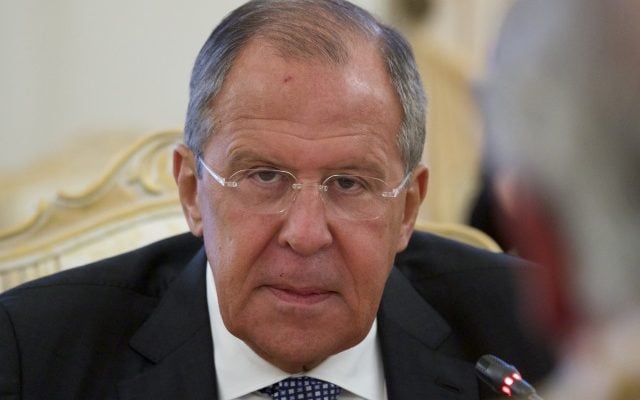
Russia’s foreign minister slams Iranian threats to destroy Israel

“We have stated many times that we won’t accept the statements that Israel, as a Zionist state, should be destroyed and wiped off the map,” Lavrov declared.
By: Adina Katz, World Israel News
Russian Foreign Minister Sergey Lavrov condemned Iranian threats to wipe Israel off the map, Russia’s TASS News Agency reported.
Speaking at the opening of the Valdai International Discussion Club’s conference, titled “Russia in the Middle East: Playing on All Fields,” Lavrov said, “”We have stated many times that we won’t accept the statements that Israel, as a Zionist state, should be destroyed and wiped off the map. I believe this is an absolutely wrong way to advance one’s own interests.”
He added, however, that the regional conflicts and instability should not be solely focused on Iran.
“By the same token, we oppose attempts to view any regional problem through the prism of fighting Iran. This is happening in Syria, Yemen and even the latest developments around the Palestinian issue, including Washington’s announcement of its decision to recognize Jerusalem as the Israeli capital, are largely motivated by this anti-Iranian stance,” he claimed.
Yet Israel considers Iran the biggest threat to the Jewish state and to the region. At a conference last month at the Interdisciplinary Center (IDC) in Herzliya, IDF Chief of Staff Lieutenant General Gadi Eizenkot pointed to five different fronts that he sees as Israel’s biggest security challenges – Lebanon, Syria, Judea and Samaria, Gaza and Sinai – but added that Iran has a hand in all those threats.
“Above those five fronts there is one big and prominent threat, which is the Iranian threat,” Eizenkot said. “It is a multi-tiered threat, with the first and central aspect being their striving to achieve nuclear capabilities. The second aspect is their aspiration for regional hegemony and influence and their desire to create a Shiite crescent that extends from Iran to Iraq, Syria and Lebanon [in the north], as well as Bahrain, Yemen and Gaza in the south.”

Thursday, January 4, 2018

The State Of Affairs In The Middle East Shows Iranian Gains

How Iran Became the Dominant Power in the Middle East

By January 4, 2018


BESA Center Perspectives Paper No. 706, January 4, 2018
EXECUTIVE SUMMARY: Iran has emerged as the big winner of the so-called “Arab Spring.” Russia also benefited greatly – it achieved its aims in Syria by helping to preserve the Assad regime, and in the process, became the key broker of the postwar settlement – but Tehran made major gains not only in Syria but in Iraq, Yemen, and Lebanon as well.
Iran has emerged as the winner of the so-called “Arab Spring,” a state of affairs some lay at the feet of the Obama administration. When the US administration (together with five other powers) signed a nuclear accord with Tehran to curb its nuclear program, it did not insist on a halt to Iran’s assorted aggressions in the Middle East.
But Obama is not entirely to blame for Iran’s success. In each of the four Arab countries in which Tehran has made incursions, its rivals inadvertently played a key role in strengthening the Iranian position through the trans-border Shiite connection.
In other words, interventions by other foreign powers unintentionally strengthened the pro-Iranian Shiite group in each of the countries in question. In some cases (though not all), the outcome was influenced by nationalist opposition to foreign interference. In all four cases, however, the interventions reinforced a regional transnational sectarian connection that is enabling the fulfillment of Iranian aspirations to become the dominant force in the Middle East.
How have the other intervening powers helped Iran win the Middle East game (at least for now)?
Iraq
In the case of Iraq, another enemy of the Islamic Republic accidentally brought about Iranian dominance in a country that used to be a major rival. In this instance it was the US that played the key role. Following their 2003 occupation of Iraq, the Americans tried to democratize the country. But elections in an ethnically and religiously fragmented state like Iraq mean that the largest ethnic or sectarian group is going to win.
The Shiites are the majority group in a polarized Iraq, and some of their leaders are allies of the Iranian Shiite regime. This trans-border connection has guaranteed significant Iranian influence in Iraq. Thus, the US invasion and democratization project in Iraq brought to power forces allied with its main enemy in the region – even if the alliance with Tehran is not welcomed by all Iraqis, including some Shiites.
Syria
The third case of an external intervention that resulted in growing Iranian influence is the Russian involvement in Syria. In this instance, the intervening power is not an enemy of Iran’s – at the moment. It was one for a very long time, however, and the future of the alliance is uncertain.
At any rate, the Russian bombing in 2015 was the decisive factor that ultimately brought about the victory of the Assad regime in the Syrian civil war. This is the case even though Tehran, Hezbollah, and other Iranian-led Shiite militias had been fighting alongside the regime since well before the Russian bombing started.
As in the other cases, the support of Iran and its Shiite allies for the Alawite regime in Damascus is based at least partly on a common sectarian affiliation, as the Alawites are considered an offshoot of Shiite Islam. The Assad regime’s dependence on the Iranian/Shiite militias’ support seems to guarantee that Tehran will remain a major influence in Syria.
While the Russian bombing provided the coup de grâce, the Iranians and their allies continue to provide the ground forces necessary to preserve the regime. Israel is worried that the regime’s debt to Iran will translate into a continuous Iranian/Hezbollah military presence in Syria near the border with the Israeli-controlled Golan Heights. Recent Russian statements seem to indicate Moscow’s acceptance of such a military presence. This forward military deployment of Iran and its allies creates the potential for escalation, whether intended or inadvertent.
Yemen
Finally, there is the case of the war in Yemen, which grinds on at great cost to the civilian population. We can’t be sure about the outcome as the war is still ongoing, but at least one thing is clear: The persistent bombing by the Saudi-led Sunni coalition has failed to remove from power the Shiite-affiliated Houthis, who still control a considerable part of the country. Moreover, the Sunni military campaign against them has reinforced the Houthis’ alliance with Tehran and probably alienated a large proportion of the Yemeni population from the Saudis and their Sunni allies, creating another bastion of Iranian influence in the Arab world.
In this case the stronghold is adjacent to Iran’s number one opponent in the Arab world: Saudi Arabia. Here, too, the situation contains the potential for an escalation in which the Iranian-Saudi cold war turns hot.
Conclusion
The instability and polarization that characterize the Middle East raise doubts about the future of the Iranian rise. Still, developments over the past few decades, culminating in the American intervention in Iraq and the “Arab Spring,” have resulted in major Iranian achievements irrespective of the nuclear issue. The causes of these gains in the four countries discussed here are 1) the sectarian divisions in the region, particularly the trans-border Shiite connection; and 2) the effects of external intervention.
In most cases, those effects – which were based on nationalist/sectarian resentment of the external intervening force – were unintended. In the Syrian instance, however, the outcome reflects the military victory of the intervening force.  In all four cases, Iran is the regional power that has gained the most.
This poses a major challenge to Riyadh and its Sunni allies, as well as to Israel. It largely explains the recent Saudi-Israeli rapprochement, manifested in the recent, unprecedented interview of Israeli Chief of Staff Lt. General Gadi Eisenkot by a Saudi news outlet. In the interview, Eisenkot highlighted the perception of the Iranian threat shared by the two parties and declared Israel’s willingness to share intelligence with Riyadh. Such developments could augur a major realignment in the Middle East with far-reaching implications for both war and peace.
For war, the key implication is the rising likelihood of a confrontation between Israel and Iranian allies in Syria and Lebanon, notably Hezbollah, although mutual deterrence is likely to reduce the probability of actual fighting.
For peace, the emerging Israeli-Saudi/Sunni alliance, based on the “enemy of my enemy is my friend” principle, creates the potential for progress in the Israeli-Palestinian peace process. But in that context, there is a crucial role for the Trump administration, which maintains good relations with both Israel and the Saudis.
This will be a key challenge for the US administration, which thus far has essentially maintained US disengagement from the Middle East. That disengagement is likely to accelerate with the destruction of ISIS in Syria and Iraq. The new developments in Israeli-Sunni relations create a great opportunity for the administration. It might be tempted to take advantage of it to rack up some accomplishments in foreign policy, which have been sparse so far.
Prof. Benjamin Miller is a professor of International Relations at the School of Political Sciences, the University of Haifa.

Friday, December 22, 2017

If Those Countries Who Voted Against Trump Decision To Move Its Embassy Took Care Of Their Own House First, The World Would Be A Better Place


Jake Tapper exposes hypocrisy of UN countries who voted to condemn the US


Jake Tapper exposes hypocrisy of UN countries who voted to condemn the US
CNN's Jake Tapper criticized some of the countries that voted to condemn the U.S. in a United Nations vote Thursday. (Image Source: YouTube screenshot)


CNN’s Jake Tapper gave a blistering assessment of some of the countries who voted to condemn the United States in a vote at the United Nations Thursday.

Here’s the video of Tapper’s scathing indictment:


Here’s what he said:

“Among the 128 countries who voted to condemn the U.S. on this issue were some countries with some rather questionable records of their own,” Tapper explained.
Venezuela
“Take Venezuela’s representative today,” Tapper began, running a video of the country’s U.N.  representative. “The world is not for sale, and your votes imperil global peace,” the representative said in the video.
“The U.S. imperils global peace says the representative of Venezuela,” Tapper repeated, “a country in a humanitarian disaster with violence in the streets, an economy in complete collapse, citizens malnourished, dying children being turned away from hospitals, starving families joining street gangs to scrounge for food.”
“On what moral platform does the government of Venezuela stand today?” he asked.
Syria
“Not to be done, of course, the U.S. also got an earful from Syria,” he continued. “We’re in the seventh year of the brutal Syrian Civil War that has killed half a million people and displaced millions. Syrian President Bashar al-Assad has used chemical weapons against his own citizens including children.”
Yemen
“Also feeling a bit preachy today, Yemen, which helped draft the resolution condemning the U.S., seemingly more focused at least during the speech on where the U.S. puts its embassy in Israel, than on the seven million Yemenis on the brink of starvation in that country’s civil war,” Tapper continued.
“There are plenty of policies and actions that are perfectly valid to criticize about the United States and about Israel, and certainly whether this move will help the peace process in any way seems one of them. But listening to these countries, including North Korea and Myanmar and Turkey and China, lecturing the United States about human rights and peace might seem a bit much,” he concluded.
Only 9 countries voted with the United States, 128 countries voted against the U.S., while 35 others abstained from voting.

Friday, December 15, 2017

The People, For The Most Part, Have No Problem With Each Other, It Is The Leaders Who Have The Problem

Is the Israeli-Palestinian Conflict the “Middle East Conflict”?

By December 15, 2017


BESA Center Perspectives Paper No. 685, December 15, 2017
EXECUTIVE SUMMARY: Is the Israel-Palestinian conflict equivalent to “the Middle East conflict,” as UN and EU officials and agencies and major media outlets characterize it? Of course not. The conflict is not nearly as lethal as many others and long ago became parochial compared to the conflicts in Syria, Iraq, and Yemen.
“Can Trump Solve the Middle East Conflict?” ran the headlines in al-Jazeera in July 2017. A year earlier, The New York Times ran an article on students and the Middle East conflict that referred exclusively to the conflict between Israel and the Palestinians.
The media are hardly alone in conflating the Israeli-Palestinian standoff with the Middle East conflict. They take their cue from UN officials and institutions and other international bodies. In a statement similar to those of many of his predecessors, in August 2017, UN Secretary-General António Guterres “reiterated his call for a political solution to the Middle East conflict.” The UN’s official news site on the Middle East deals exclusively with news related to the Israeli-Palestinian conflict. The Quartet, the political forum comprised of the US, Russia, the EU, and the UN, which came into existence in 2002 in Madrid to bring peace to the area, is officially known as the Middle East Quartet.
Does the conflation of the Israeli-Palestinian conflict with the Middle East conflict reflect reality? Not at all. Not only is the Israeli-Palestinian conflict one of many conflicts in the Middle East (true even when it was a conflict principally between Israel and Arab states), but it is not nearly one of the deadliest or most explosive. In fact, relatively speaking, the conflict between Israel and the Palestinians is not very violent, which may be one of the reasons it has persisted so long.
A cursory comparison with contemporary conflicts in the Middle East brings this point home. During the first intifada, the second intifada, the three rounds of violence between Hamas and Israel in the past decade, and the intermittent waves of low intensity violence, 2,000 Israeli civilians and security personnel and 11,000 Palestinians have been killed (the majority in the second intifada). To this one might add about fifty foreigners killed in acts of terrorism against Israelis. All told, the total casualty figures, including both sides, do not exceed 14,000 over the past twenty years, or 700 annually.
Compare this with the 200,000 deaths in the Syrian civil war, a conflict that is only six years old. True, the Syrian population is more than double that of the combined Israeli and Palestinian populations in the Holy Land. Nevertheless, the death rate proportionately has been fifteen times higher. Despite the Syrian government’s success against the rebels (achieved with considerable help from Iran, Hezbollah, Iraqi and Afghani Shiite fighters, and Russian airpower), the end of the civil war is nowhere in sight. Is the Israeli-Palestinian conflict really the Middle East conflict?
Why isn’t the internecine Iraqi conflict the Middle East conflict? According to Iraq Watch, over 100,000 Iraqis were killed during the eight years of massive US military presence in the country. To those one might add the 4,000 US troops and civilians who met their death there. On a proportionate basis, the Iraqi conflict is (and persists in being) at least five times more lethal than the Israeli-Palestinian conflict. And again, despite the gains made by the Iraqi Federal Army and the Iranian-controlled Shiite militias in the war against ISIS, an end to the internecine war between Sunnis and Shiites in Iraq is nowhere in sight. The brutality of the Shiite militias in the “occupied” Sunni areas of Iraq increases the likelihood that variations on ISIS will rise once again.
The same is probably true of the conflicts in Libya and Yemen, where few bother to churn the terrible numbers. In these arenas, too, the end of violence is nowhere in sight. This is not to mention the “persistent, enduring and explosive” (all adjectives used to conflate the Israeli-Palestinian conflict with the Middle East) wars of Sudan, the duration of which is almost as long as the Israeli-Palestinian conflict.
But perhaps body count is not the only metric to be used when judging the centrality of a conflict. Perhaps foreign involvement ought to be considered.
It’s certainly true that the Israeli-Palestinian conflict commands foreign attention, but it does not command foreign involvement. Whereas the conflict between Israel and the Arab states during the superpower rivalry ran the risk of igniting World War III, the Israeli-Palestinian conflict long ago became parochial. The last time any Arab state or foreign organization became involved in the Israeli-Palestinian conflict was 35 years ago, when the Syrian army tried to stop the Israeli advance into Lebanon in 1982. In 2006, Hezbollah conducted the longest military campaign to have been conducted against Israel since Israel’s War of Independence – and the Palestinians stood on the sidelines. Hezbollah returned the favor during the rounds of clashes between Israel and Hamas in 2008, 2012, and 2014. Its soldiers remained in the barracks.
As the Israeli-Palestinian trajectory has become increasingly parochial, the trajectories of the other regional conflicts have gone in the opposite direction: They began as local civil wars but evolved into regional and international conflagrations. The Syrian, Iraqi, and Yemeni conflicts have become three-tiered conflicts – civil or sectarian wars at their base, proxy wars between regional rivals (Iran, Saudi Arabia, and, to a lesser extent, Turkey), and arenas of international contest among world powers. The same Hezbollah that stayed home during the high points of violence between Israel and the Palestinians took to the battlefields of Syria on Iran’s behalf to prop up the Assad regime.
The Israeli-Palestinian conflict is the Middle East conflict? Give me a break!
Prof. Hillel Frisch is a professor of political studies and Middle East studies at Bar-Ilan University and a senior research associate at the Begin-Sadat Center for Strategic Studies.