Contact Form

Name

Email *

Message *

Showing posts with label privacy. Show all posts

Monday, May 8, 2017

Warrent-less Surveillance Must Have Strict Restrictions Regardless Of What Comey Says


Photo

James B. Comey, the F.B.I. director, t
The privacy advocates in Congress are using that same lesson this time around, hoping to leverage their colleagues’ concerns that the program will lapse if they fail to extend the law.
But the intelligence and law enforcement communities and their allies in Congress appear determined to extend the warrantless surveillance program law, Section 702 of the FISA Amendments Act, without changes. They are framing the debate as being about a program that is too important to be held hostage to any push for changes, lest gridlock kill it.
“This is a tool that is essential to the safety of this country,” the F.B.I. director, James B. Comey, told Congress at a hearing on Wednesday. “I did not say the same thing about the collection of telephone dialing information by the N.S.A. I think that’s a useful tool; 702 is an essential tool, and if it goes away, we’ll be less safe as a country. And I mean that.”
Mr. Comey also warned that one of the proposed changes — a new requirement that a warrant be obtained to search for Americans’ information in the surveillance repository — risked a failure to “connect dots” about potential threats.
But Representative Ted Poe, Republican of Texas, sought to warn other lawmakers that Congress needed to impose a warrant requirement.
“Privacy is being betrayed in the name of national security,” Mr. Poe told congressional aides at an event to discuss Fourth Amendment issues and legislation late last month.
There has already been some jostling over that idea. In 2014 and 2015, the House approved amendments to require warrants, but they died in negotiations with the Senate. When the idea came up again last year after the terrorist attack on a nightclub in Orlando, Fla., however, the House voted it down.
More broadly, two key members of the coalition that won privacy gains two years ago — Representative John Conyers Jr. of Michigan, the ranking Democrat on the House Judiciary Committee, and Representative Jim Sensenbrenner, Republican of Wisconsin — are discussing a draft bill, which is circulating among panel members.
A congressional staff member who described the draft on the condition of anonymity because it is not yet finalized or public said it incorporated a warrant requirement for American searches — with certain exceptions — and would:
■ Restrict law enforcement from using information obtained or derived from warrantless surveillance except when investigating the most serious crimes, like murder.
■ Reduce to three years from five years the time the government may retain raw, or unprocessed, messages collected without a warrant.
■ Codify a change that the N.S.A. and Foreign Intelligence Surveillance Court recently made to the program, ending so-called about collection from internet network switches of emails that talk about a foreigner being spied on but are not to or from that target.

Photo

Representative John Conyers Jr. is among the lawmakers interested in putting some limitations on the government’s ability to use incidentally gathered information about Americans who are in contact with foreign targets. CreditAlex Brandon/Associated Press

■ Require disclosures from the government that are more complete, including forcing the F.B.I. to say how often its agents ask for Americans’ information in national security cases, which it has declined to track.
The draft was part of a discussion at a Monday closed-door meeting convened by the Judiciary Committee chairman, Representative Robert W. Goodlatte of Virginia, according to the congressional staff member. On Tuesday, Mr. Goodlatte said publicly that changes would be necessary because “there’s broad bipartisan support for reform.”
“I know there are some people who want a clean reauthorization of Section 702,” he said. “I don’t believe that is possible.”
According to a government report issued this month, the F.B.I. only once in 2016 used information about Americans in the warrantless surveillance repository while investigating ordinary criminal cases. But its agents are believed to use it much more frequently for national security cases; other agencies, like the N.S.A. and the C.I.A., used 5,288 search terms associated with Americans for such queries last year.
The Trump administration has generally declined to discuss proposals for limiting the program. But the Office of the Director of National Intelligence recently said requiring a warrant to search for Americans’ information “would severely hamper the speed and efficiency of operations” to protect the country.
The program can be traced back to the Bush administration’s post-Sept. 11 warrantless wiretapping of international phone calls and emails, which bypassed a 1978 law requiring warrants.
Congress legalized a version of that activity in 2008 with the FISA Amendments Act. It permits the N.S.A., on domestic soil without a warrant, to collect messages of foreigners abroad from American phone and internet companies — including when they communicate with Americans. It also expanded the program from a counterterrorism tool to one that can be used for any foreign intelligence purpose.
But the statute did not say how information about Americans that was incidentally gathered should be handled. A newly declassified document, obtained by The New York Times via a Freedom of Information Act lawsuit, has shed further light on how the government expanded its power to use such data.
In 2008, the Bush administration submitted to the Foreign Intelligence Surveillance Court a set of proposed rules for what the F.B.I. could do with raw information gathered by the program. It would permit agents to search intercepts “to find, extract, review, translate and assess” whether they might contain foreign intelligence — or “evidence of a crime.”
The court secretly approved those rules in 2009, on the Obama administration’s watch. That fall, previous disclosures have shown, the N.S.A. began sharing with the F.B.I. raw emails gathered via the program’s so-called Prism or “downstream” system, which gathers surveillance targets’ emails through internet services like Google Gmail.
The N.S.A., the C.I.A. and the National Counterterrorism Center also later gained the power to share and search raw Prism intercepts using Americans’ information for intelligence purposes.
The N.S.A. was not permitted to share with other agencies the raw intercepts it gathered via the program’s “upstream” system, which collects emails from telecommunications companies like AT&T, nor to search for Americans’ information within them. But after a recent change, the N.S.A. is allowed to perform such searches in that repository, too. (A senior intelligence official said it still may not share raw upstream intercepts with other agencies.)
The critics who want Congress to impose a warrant for any type of American queries call the practice the “backdoor search loophole” in Fourth Amendment privacy rights. But in November 2015, the Foreign Intelligence Surveillance Court rejected a challenge to this practice, upholding the F.B.I.’s rules as constitutional.
It was not yet clear that such searches were happening in 2012, when the FISA Amendments Act was last set to expire and Congress extended it without changes. But Edward J. Snowden’s 2013 leaks and related declassifications brought to light more information, and the furor over surveillance in conservative circles resulting from the Trump-Russia imbroglio has added a wild card.
Senator Ron Wyden, an Oregon Democrat on the Intelligence Committee and an outspoken critic of surveillance, said that affair “is helpful for the reformers’ cause because it is generating awareness about the topic generally.”
At a hearing in February, Representative Trey Gowdy, Republican of South Carolina, told Mr. Comey that leaks about surveillance of Trump associates’ contacts with Russians, though conducted under a different law, were “a threat to the reauthorization” of the FISA Amendments Act.
“Trust me, you and I both want to see it reauthorized,” Mr. Gowdy said. “It is in jeopardy if we don’t get this resolved.”

Monday, May 16, 2016

Want Privacy, Here Are Some Ways


Putting the privacy genie back in the bottle… sort of

The Founding Fathers recognized that an oppressive government could use its powers to intimidate, harass or steal the possessions of average citizens. In fact, British royal officers would use “writs of assistance” to conduct searches of the homes of colonists in an effort to detect violations of British customs laws.
So the 4th Amendment to the Constitution — as part of the Bill of Rights — was adopted which says, “The right of the people to be secure in their persons, houses, papers, and effects, against unreasonable search and seizures shall not be violated, and no Warrants shall issue, but upon probable cause, supported by Oath or affirmation, and particularly describing the place to be searched, and the persons or things to be seized.”
Yet today the Federal government tramples all over the spirit and the letter, of the 4th Amendment with its USA PATRIOT Act, FinCEN, SAR, CTR, TIA and ADVISE programs, and others. Bureaucrats, businesses and crooks alike are mining the data of millions of Americans looking at who you communicate with, what you read, what you buy, where you shop and what you eat, and they’re making a determination about you and your character based on the information a computer kicks out.
Government spooks are now pushing for – and in some cases have achieved — new, expanded police powers that include mandatory fingerprinting, iris scans and DNA sampling of all citizens, national biometric ID cards, transponder tracking of vehicles (some politicians are advocating a mileage tax) and even geographical tracking of citizens through microchip implants.
And even though it may not yet be happening, in the very near future you could see discrimination, profiling or harassment resulting from all the information stored in government computers. Don’t think it’s possible? Ask the Japanese, some of whom are experiencing “bura-hara,” which is blood type harassment.
Based on what many call sham science, many Japanese are being segregated based on their blood type, even though doing so is supposedly against Japanese law. The theory is that a person’s personality, work ethic and morals can be determined by blood type. It is affecting children in kindergarten, and the Japanese women’s softball team members had their training regiments personalized based on their blood type.
Any information in your electronic database could set off “flags” or could be pulled out and used against you at any time and for any reason. And if you have the courage or occasion to speak out against your government, some member of a vindictive politician’s or government functionary’s staff may very well be into your files looking at your records for a way to slime your reputation. That’s what the Obama campaign team and the mainstream media tried to do to Joe “the Plumber” Wurzelbacher, who saw his life exposed and his reputation sullied simply because he responded to a Presidential candidate during a chance encounter.
What can you do about it? Well, you can’t completely put the privacy genie back in the bottle. If you have been using credit cards, debit cards or loyalty cards; or you have rented movies — either through the old video stores or Red Box or Netflix; or if you’ve given out your Social Security number or if you have a cellular telephone or other wireless device; or if you are using any social media you are in the database.
The watchers in government have your information. Businesses have your information. Private investigators, vindictive spouses, greedy lawyers, jilted lovers (whether they really were or just imagined they were) or stalkers can learn all about you and possibly track you down.
However, that doesn’t mean they have to have your latest information. You can begin now to make it more difficult to be tracked or found.
Here are a few ways you can regain some semblance of privacy, taken from my book, “The Ultimate Privacy Guide”:
  • When making purchases, do so with cash. If you feel you must have a credit card for emergencies, or to make online purchases, use a prepaid card. Those accounts can be opened without having to provide personal details and the cards can be funded with cash payments. That way, no electronic trail is left that leads back to you.
  • In his book, Privacy Crisis, Grant Hall recommends using credit cards to pay large bills if the company agrees not to retain your name and credit card information in their database. The question is, can you trust them to do what they say they’ll do? He says that some large companies are willing to do this—if you speak with a company manager in advance —but smaller companies are usually reluctant.
  • Pay bills or make online purchases with online payment services like PayPal.
  • To bank anonymously, Hall recommends setting up a revocable trust and opening a non-interest bearing checking account in an American bank. He describes in detail in his book how to set up the trust account.
  • Two other entities you can establish are Family Limited Liability Companies and Family Limited Partnerships. These provide some semblance of personal privacy.
  • Never give out your Social Security number except when necessary on government forms like tax returns. Question every request you get to provide your number and try to negotiate an alternative such as a driver license, suggests David H. Holtzman in his book, Privacy Lost.
  • If you are concerned about being tracked, avoid using modern technology like cell phones, a global positioning system or similar items. If you have a cell phone, take out the battery when you’re not using the phone. Cell phones have essentially become tracking devices.
  • Become someone else. This requires some effort and time, but it’s possible. In other words, you can establish an alternate identity for yourself if you need to drop off the radar. Doing so requires thoughtful and intense planning. But the new “person” can enjoy all the privileges of the old person without the fear of someone tracking you down that you don’t want to find you.
  • Erase vestiges of the “old” you. Go to a popular search engine like Google, enter your name and click “search.” You might be very surprised — and a little concerned — at all the information about you that is easily obtained. It’s going to take some time, but you can begin to slowly, but surely, erase your personal information from most public databases.
This certainly doesn’t cover all aspects of the way your privacy is being and has been stolen from you. Nor does it provide detailed solutions for getting as much of it back as possible.
For more information on these steps to learn a host of others you can take to regain your lost privacy, just click here to receive my book, “The Ultimate Privacy Guide,” in e-book form. It’s completely free for you.
But remember, privacy is a process rather than a destination. As soon as you think you have covered all aspects of personal privacy, some new technology will come along or a new law will be passed that will undo your hard work.
Privacy requires you be ever-vigilant.

Monday, February 2, 2015

Life Is Changing. Are You Ready For The Things We Will Lose Very Soon?

We don't know who wrote this piece, however, it does make a lot of sense. Can you add any "services or products" that will no longer exist in a few years?  What about the desktop computer?

A good example would be, the video rental store. In 1986 we saw a new business start around the country.  Now 99% are out of business including big names like Blockbuster and Hollywood. So, what other businesses will go the way of the rental firms?

Will the car that must be driven be one of the next ones to disappear?

Conservative tom

TEN THINGS YOU WILL LOSE IN THE NOT-TOO-DISTANT FUTURE

1. The Post Office
Get ready to imagine a world without the post office. They are so deeply in financial trouble that there is probably no way to sustain it long term. Email, Fed Ex, and UPS have just about wiped out the minimum revenue needed to keep the post office alive. Most of your mail every day is junk mail and bills.
2. The Check
Britain is already laying the groundwork to do away with check by 2018.  It costs the financial system billions of dollars a year to process checks.  Plastic cards and online transactions will lead to the eventual demise of the check.  This plays right into the death of the post office.  If you never paid your bills by mail and never received them by mail, the post office would absolutely go out of business.
3. The Newspaper
The younger generation simply doesn't read the newspaper.  They certainly don't subscribe to a daily delivered print edition. That may go the way of the milkman and the laundry man.  As for reading the paper online, get ready to pay for it.  The rise in mobile Internet devices and e-readers has caused all the newspaper and magazine publishers to form an alliance. They have met with Apple, Amazon, and the major cell phone companies to develop a model for paid subscription services.
4. The Book
You say you will never give up the physical book that you hold in your hand and turn the literal pages  I said the same thing about downloading music from iTunes.  I wanted my hard copy CD.  But I quickly changed my mind when I discovered that I could get albums for half the price without ever leaving home to get the latest music.  The same thing will happen with books. You can browse a bookstore online and even read a preview chapter before you buy.  And the price is less than half that of a real book.  And think of the convenience!  Once you start flicking your fingers on the screen instead of the book, you find that you are lost in the story, can't wait to see what happens next, and you forget that you're holding a gadget instead of a book.
5. The Land Line Telephone
Unless you have a large family and make a lot of local calls, you don't need it anymore.  Most people keep it simply because they've always had it.  But you are paying double charges for that extra service.  All the cell phone companies will let you call customers using the same cell provider for no charge against your minutes.
6. Music
This is one of the saddest parts of the change story.  The music industry is dying a slow death.  Not just because of illegal downloading.  It's the lack of innovative new music being given a chance to get to the people who would like to hear it. Greed and corruption is the problem.  The record labels and the radio conglomerates are simply self-destructing.  Over 40% of the music purchased today is "catalog items," meaning traditional music that the public is familiar with.  Older established artists. This is also true on the live concert circuit. To explore this fascinating and disturbing topic further, check out the book, "Appetite for Self-Destruction" by Steve Knopper, and the video documentary, "Before the Music Dies."
7. Television Revenues
To the networks are down dramatically. Not just because of the economy. People are watching TV and movies streamed from their computers. And they're playing games and doing lots of other things that take up the time that used to be spent watching TV. Prime time shows have degenerated down to lower than the lowest common denominator. Cable rates are skyrocketing and commercials run about every 4 minutes and 30 seconds. I say good riddance to most of it. It's time for the cable companies to be put out of our misery. Let the people choose what they want to watch online and through Netflix.
8. The "Things" That You Own 
Many of the very possessions that we used to own are still in our lives, but we may not actually own them in the future. They may simply reside in "the cloud."Today your computer has a hard drive and you store your pictures, music, movies, and documents.  Your software is on a CD or DVD, and you can always re-install it if need be. But all of that is changing. Apple, Microsoft, and Google are all finishing up their latest "cloud services." That means that when you turn on a computer, the Internet will be built into the operating system.  So, Windows, Google, and the Mac OS will be tied straight into the Internet. If you click an icon, it will open something in the Internet cloud. If you save something, it will be saved to the cloud. And you may pay a monthly subscription fee to the cloud provider. In this virtual world, you can access your music or your books, or your whatever from any laptop or handheld device. That's the good news. But, will you actually own any of this "stuff" or will it all be able to disappear at any moment in a big "Poof?" Will most of the things in our lives be disposable and whimsical?  It makes you want to run to the closet and pull out that photo album, grab a book from the shelf, or open up a CD case and pull out the insert.
9. Joined Handwriting (Cursive Writing) 
Already gone in some schools who no longer teach "joined handwriting" because nearly everything is done now on computers or keyboards of some type (pun not intended)
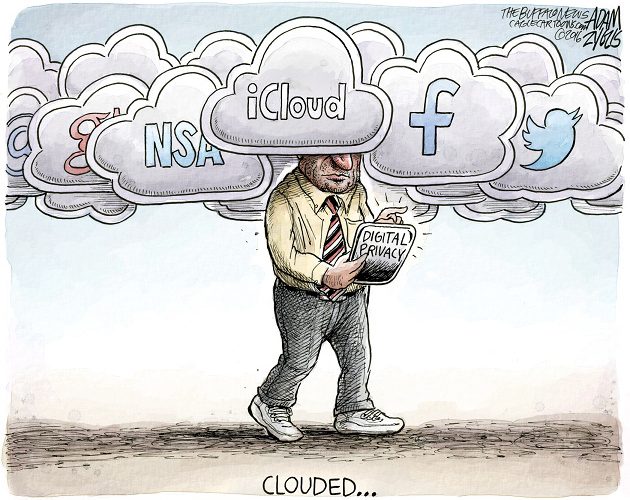
10. Privacy
If there ever was a concept that we can look back on nostalgically, it would be privacy. That's gone. It's been gone for a long time anyway. There are cameras on the street, in most of the buildings, and even built into your computer and cell phone. But you can be sure that 24/7, "They" know who you are and where you are, right down to the GPS coordinates, and the Google Street View. If you buy something, your habit is put into a zillion profiles, and your ads will change to reflect those habits. "They" will try to get you to buy something else. Again and again and again.
All we will have left that which can't be changed.......
are our "Memories".

Monday, August 11, 2014

Words Mean What The Administration Wants Them To Mean. They Make Words Cover Their Lies.

The Regime Uses Words And Phrases Designed To Bamboozle Us All

August 11, 2014 by  
 49 12
 
 4 142
The Regime Uses Words And Phrases Designed To Bamboozle Us All
THINKSTOCK

Most longtime readers know that I have often warned that our government has evolved into benevolent totalitarianism.
This is a gentle term for fascism. No, we don’t have the jack boots and the swastika. Our system is far advanced from that. Our fascism today is so advanced over Nazi Germany and fascist Italy of World War II that our system actually appears benevolent.
How could this happen? The answer is: reverse semantics. Every writer and every talking head in America refer to the U.S. as a democracy of free market capitalism and individual privacy and property rights. This is a big laugh to any sober, thinking person.
Well, the system and its paid politicians still repeat those high-sounding terms. They use the terms like “privacy” and “free market” as sedatives to the crowd. The terms “private” and “freedom” no longer mean what they once did. They are cruel deceptions that fool the mind yearning for human freedom.
The fact is that in America we have massive regulation and regimentation. But, of course, it’s “in the public interest.” It all spews forth out of “democracy” as if a biblical word and a holy sanction.
We live in a fiction of freedom perpetuated with semantic corruption that has evolved us into economic fascism and tyranny. Language and words that support a free society have been turned inside out.
With this propaganda of reverse semantics, opposition has been neutralized. True words, true meanings of patriotism and freedom have become the farce and illusion of fascism.
A “Patriot Act” is the cover for treason. “Free healthcare” is the cover for collectivism and forced medication. “Gay rights” is a cover for stolen liberty, increased State control and the creation of thought crimes. We have bought organized crime with a pretty face and twisted language.
And I say to you, millions of “educated” and vain intelligentsia, you bought the scam of American fascism too, the same as the millions of illiterates — if you weren’t busy perpetrating it.

Here are more examples of reverse semantics at work:

  • Free press: Six mega-corporations control 90 percent of all that you read, watch or hear. This is down from more than 50 companies 30 years ago. The so-called “journalists” from those organizations operate in an echo chamber founded by a left-wing activist, Billy Wimsatt.  More than 1,000 of these front-line “journalists” and editorialists from such organizations as CNN, The Huffington Post, The New York Times, The Washington Post, Thomson Reuters, The Nation, Al Jazeera America, U.S. News & World Report, among others, along with members of progressive (i.e., socialist) think tanks and activist organizations like Center for Media and Democracy and the American Legislative, Issue Campaign Exchange and American Sustainable Business Council, are members of a secretive and closed Google group called Gamechanger Salon in which they meet online to exchange information, ideas and strategy to promote progressive ideas, policies and candidates.
  • Immigration reform: Along the southern border an invasion is taking place perpetrated by Barack Obama policies and pronouncements and intentional lack of border security. The intentionally crafted crisis is designed to flood America with socialist-minded aliens seeking government handouts, an opportunity to bring more family members along and willing to work for slave wages. The process was conceived as a way to overwhelm the system in order to force acquiescence on a policy granting amnesty to millions of potential low-wage earners for businesses big and small, more union slaves and millions of potential Democrat voters. Worse, it’s allowing violent gang members, human traffickers, drug traffickers and violent criminals into the U.S. in large numbers, along with thousands of people infected with Third World diseases.
  • Ebola outbreak: A false crisis being overhyped as a catalyst for greater control and the creation of millions of new willing vaccination victims to hand over to big Pharma when the vaccine currently being “tested” is ready, no doubt just in the “nick of time” to avert “catastrophe.” As Jon Rappoport writes, “The ‘hot zone’ areas of Ebola, Sierra Leone, Guinea, and Liberia, have been decimated for a long time: war, extreme poverty, malnutrition, starvation, contaminated water supplies, exposure to toxic industrial chemicals, vast toxic overuse of antibiotics, pesticides (some of them banned in other countries), expired and unrefrigerated medicines, vaccines (which, when given to people whose immune systems are already hanging on by a thread, can be lethal).” There is no accurate test for Ebola and, aside from U.S. health workers intentionally brought to the U.S. for treatment, it has not been found outside of the African continent. Still, the Centers for Disease Control and Prevention has issued a Level 1 alert for only the third time in history, and the World Health Organization is prepared to declare an international health emergency over a mere 1,700 confirmed and suspected cases of the disease. There are 7.2 billion people in the world, yet the CDC and WHO tries to start a panic by over-hyping 1,700 Ebola cases and only 932 deaths. The terror group ISIS kills more than that in a slow afternoon.
  • Property rights: In addition to the possibility that one’s property will be expropriated from him over a minimal amount of arrears on tax payments, a host of alphabet soup agencies like the Department of Homeland Security, the Food and Drug Administration, the Department of Agriculture, the Environmental Protection Agency and the Internal Revenue Service are poised to seize land, vehicles, homes and other property if they deem you have not used it properly. State agencies are also in on the act. A public library in Mechanicsburg, Pa., was deemed to have violated the “Seed Act of 2004” by hosting a “seed library” which allowed participants to get free heirloom seeds which they would plant and replace at harvest. The library was forced to close it down amid charges of “agri-terrorism” over the seed swaps.
  • Federal Reserve: Though neither a Federal agency nor in possession of any “reserves,” the system controlling U.S. “money” is the final disenfranchisement of liberty and property. The evil and corrupt fiat money system and its money creators are transferring the wealth of the people to themselves through currency depreciation.
Fascism is fascism under any name or pretense. Will we ever wake up? Fascism operates the corporate state under the guise of democracy. (As I told you last week, the only difference between socialism, communism and fascism is semantics. All are top-down tyranny.) The modern American state is not one bit less tyrannical than any form of modern or ancient totalitarianism.
Once altruistic democracy separates the people from their belief system and reality, then all supreme power lies with the state. All allegiance is to the state and all knees bow to Baal.