Contact Form

Name

Email *

Message *

Showing posts with label 4th amendment. Show all posts

Monday, May 16, 2016

Want Privacy, Here Are Some Ways


Putting the privacy genie back in the bottle… sort of
The Founding Fathers recognized that an oppressive government could use its powers to intimidate, harass or steal the possessions of average citizens. In fact, British royal officers would use “writs of assistance” to conduct searches of the homes of colonists in an effort to detect violations of British customs laws.
So the 4th Amendment to the Constitution — as part of the Bill of Rights — was adopted which says, “The right of the people to be secure in their persons, houses, papers, and effects, against unreasonable search and seizures shall not be violated, and no Warrants shall issue, but upon probable cause, supported by Oath or affirmation, and particularly describing the place to be searched, and the persons or things to be seized.”
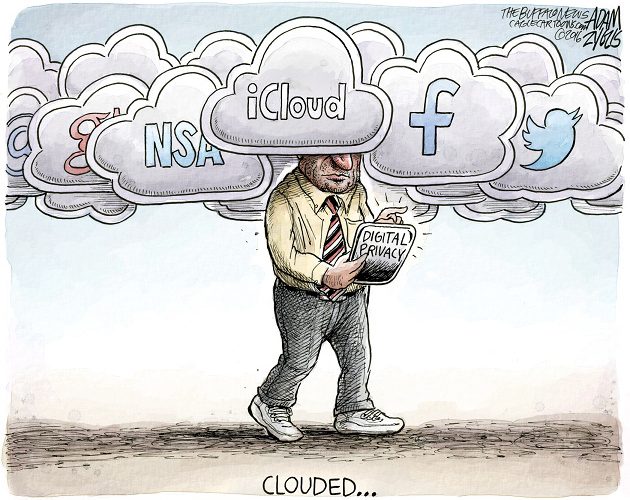
Yet today the Federal government tramples all over the spirit and the letter, of the 4th Amendment with its USA PATRIOT Act, FinCEN, SAR, CTR, TIA and ADVISE programs, and others. Bureaucrats, businesses and crooks alike are mining the data of millions of Americans looking at who you communicate with, what you read, what you buy, where you shop and what you eat, and they’re making a determination about you and your character based on the information a computer kicks out.
Government spooks are now pushing for – and in some cases have achieved — new, expanded police powers that include mandatory fingerprinting, iris scans and DNA sampling of all citizens, national biometric ID cards, transponder tracking of vehicles (some politicians are advocating a mileage tax) and even geographical tracking of citizens through microchip implants.
And even though it may not yet be happening, in the very near future you could see discrimination, profiling or harassment resulting from all the information stored in government computers. Don’t think it’s possible? Ask the Japanese, some of whom are experiencing “bura-hara,” which is blood type harassment.
Based on what many call sham science, many Japanese are being segregated based on their blood type, even though doing so is supposedly against Japanese law. The theory is that a person’s personality, work ethic and morals can be determined by blood type. It is affecting children in kindergarten, and the Japanese women’s softball team members had their training regiments personalized based on their blood type.
Any information in your electronic database could set off “flags” or could be pulled out and used against you at any time and for any reason. And if you have the courage or occasion to speak out against your government, some member of a vindictive politician’s or government functionary’s staff may very well be into your files looking at your records for a way to slime your reputation. That’s what the Obama campaign team and the mainstream media tried to do to Joe “the Plumber” Wurzelbacher, who saw his life exposed and his reputation sullied simply because he responded to a Presidential candidate during a chance encounter.
What can you do about it? Well, you can’t completely put the privacy genie back in the bottle. If you have been using credit cards, debit cards or loyalty cards; or you have rented movies — either through the old video stores or Red Box or Netflix; or if you’ve given out your Social Security number or if you have a cellular telephone or other wireless device; or if you are using any social media you are in the database.
The watchers in government have your information. Businesses have your information. Private investigators, vindictive spouses, greedy lawyers, jilted lovers (whether they really were or just imagined they were) or stalkers can learn all about you and possibly track you down.
However, that doesn’t mean they have to have your latest information. You can begin now to make it more difficult to be tracked or found.
Here are a few ways you can regain some semblance of privacy, taken from my book, “The Ultimate Privacy Guide”:
  • When making purchases, do so with cash. If you feel you must have a credit card for emergencies, or to make online purchases, use a prepaid card. Those accounts can be opened without having to provide personal details and the cards can be funded with cash payments. That way, no electronic trail is left that leads back to you.
  • In his book, Privacy Crisis, Grant Hall recommends using credit cards to pay large bills if the company agrees not to retain your name and credit card information in their database. The question is, can you trust them to do what they say they’ll do? He says that some large companies are willing to do this—if you speak with a company manager in advance —but smaller companies are usually reluctant.
  • Pay bills or make online purchases with online payment services like PayPal.
  • To bank anonymously, Hall recommends setting up a revocable trust and opening a non-interest bearing checking account in an American bank. He describes in detail in his book how to set up the trust account.
  • Two other entities you can establish are Family Limited Liability Companies and Family Limited Partnerships. These provide some semblance of personal privacy.
  • Never give out your Social Security number except when necessary on government forms like tax returns. Question every request you get to provide your number and try to negotiate an alternative such as a driver license, suggests David H. Holtzman in his book, Privacy Lost.
  • If you are concerned about being tracked, avoid using modern technology like cell phones, a global positioning system or similar items. If you have a cell phone, take out the battery when you’re not using the phone. Cell phones have essentially become tracking devices.
  • Become someone else. This requires some effort and time, but it’s possible. In other words, you can establish an alternate identity for yourself if you need to drop off the radar. Doing so requires thoughtful and intense planning. But the new “person” can enjoy all the privileges of the old person without the fear of someone tracking you down that you don’t want to find you.
  • Erase vestiges of the “old” you. Go to a popular search engine like Googleenter your name and click “search.” You might be very surprised — and a little concerned — at all the information about you that is easily obtained. It’s going to take some time, but you can begin to slowly, but surely, erase your personal information from most public databases.
This certainly doesn’t cover all aspects of the way your privacy is being and has been stolen from you. Nor does it provide detailed solutions for getting as much of it back as possible.
For more information on these steps to learn a host of others you can take to regain your lost privacy, just click here to receive my book, “The Ultimate Privacy Guide,” in e-book form. It’s completely free for you.
But remember, privacy is a process rather than a destination. As soon as you think you have covered all aspects of personal privacy, some new technology will come along or a new law will be passed that will undo your hard work.
Privacy requires you be ever-vigilant.

Monday, November 30, 2015

Would You Prevent Government From Spying On You If It Meant Less Security For You And Your Family? Trump Would Not


Trump is fine with trading liberty for security

If you’re not a fan of the sort of ever-present surveillance kicked off under the George W. Bush administration and continued by President Barack Obama, GOP presidential hopeful Donald Trump isn’t your man for 2016.
The real estate magnate, during an interview on MSNBC’s “Morning Joe” Monday, suggested that security would always trump privacy under his watch.
Saying he’d “err on the side of security” when deciding how much is too much government spying, Trump aligned himself with establishment Republican candidates Sen. Marco Rubio of Florida and former Florida Gov. Jeb Bush.
“Every time I pick up a phone, I assume people are listening to my conversations,” Trump said. “I don’t like it, but I have to make that assumption. I would really much err on the side of security. As a lot of people would agree with me on that.”
Trump’s remarks came a day after new NSA reforms designed to make it harder for the government to spy on Americans took effect.
Asked whether those reforms should be reversed due to new terror threats, Trump responded: “Well, I err on the side of security … You know, it’s a very interesting issue. But I happen to be — and I’ve been there from the beginning, I’ve been there from before the Paris attack. After every attack, everybody says exactly this. I err on the side of security. I err on the side of security.”
So far, Sens. Ted Cruz of Texas and Rand Paul of Kentucky are the only GOP presidential contenders to unequivocally support Americans’ 4th Amendment right to be free of government snooping in private communications.
That support has led to attacks from their establishment opponents.
“At least two of my colleagues in the Senate aspiring to the presidency — Sen. Cruz in particular — have voted to weaken the U.S. intelligence programs just in the last month and a half,” Rubio recently said of the two. “And the weakening of our intelligence gathering capabilities leaves America vulnerable.”

Thursday, January 2, 2014

Constitutional Protections Not In This Judge's Opinion. Boy, Is This Country Falling Apart!

Judge Upholds UnConstitutional Searches Within 100 Miles Of Borders

January 2, 2014 by  
 208 31
 
 1 753

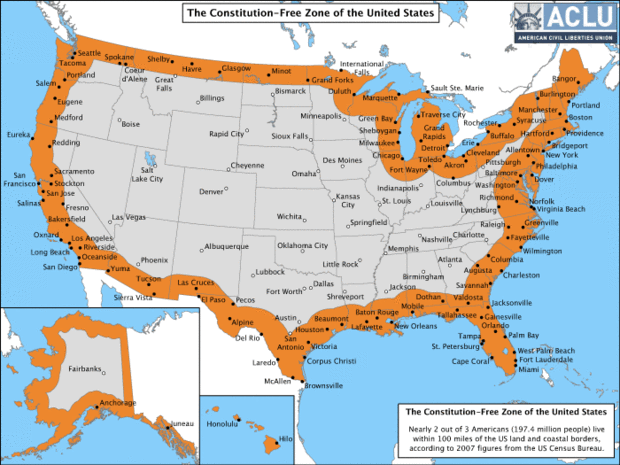
This week, U.S. District Judge Edward Korman in New York upheld an Obama Administration policy that allows the Federal government to deny 4th Amendment protections within 100 miles inland from the Nation’s border.
Ruling on a nearly 3-year-old challenge brought by the American Civil Liberties Union, Korman said that the so-called “border exemption” that allows officials to search individuals near the border without reasonable suspicion should continue to include searches of electronic devices and computers.
Saying that it would be “foolish, if not irresponsible” to have anything on a device that a person wouldn’t want seen by officials near the border, Korman ruled: “Laptops have only come into widespread use in the twenty-first century. Prior to that time, lawyers, photographers, and scholars managed to travel overseas and consult with clients, take photographs, and conduct scholarly research. No one ever suggested the possibility of a border search had a chilling effect on his or her First Amendment rights. While it is true that laptops may make overseas work more convenient, the precautions plaintiffs may choose to take to ‘mitigate’ the alleged harm associated with the remote possibility of a border search are simply among the many inconveniences associated with international travel.”
While the judge focused on the implications of the searches for people traveling back and forth across the border, the invasive and unConstitutional searches will actually be permitted a full 100 miles into U.S. territory.
The ACLU illustrates the so-called “Constitution Free” zone in the map below:
imagemap
The civil liberties organization says it is mulling an appeal to Korman’s ruling.
“We’re disappointed in today’s decision, which allows the government to conduct intrusive searches of Americans’ laptops and other electronics at the border without any suspicion that those devices contain evidence of wrongdoing,” said Catherine Crump, the American Civil Liberties Union attorney who argued part of the case. “Suspicionless searches of devices containing vast amounts of personal information cannot meet the standard set by the Fourth Amendment, which prohibits unreasonable searches and seizures. Unfortunately, these searches are part of a broader pattern of aggressive government surveillance that collects information on too many innocent people, under lax standards, and without adequate oversight.”

Tuesday, October 22, 2013

Plans To Counteract NSA Spying

Dianne Feinstein And The NSA Versus James Madison

October 22, 2013 by  
Dianne Feinstein And The NSA Versus James Madison
UPI FILE
A few weeks ago, Dianne Feinstein claimed that mass spying by the National Security Agency is “lawful, effective and Constitutional.”
Seriously.
I won’t waste my time refuting that nonsense. But I will give you some tools to resist these criminals, without relying on people like Dianne Feinstein to do the right thing — which, by the way, is unlikely to happen.
Ever.
More on that and some action items you can take today in a bit.
But first, a little more from Feinstein.

Up Is Down

Calling billions of 4th Amendment violations “Constitutional” wasn’t enough for Feinstein. She then  introduced a new NSA “reform bill” that does absolutely nothing to stop the NSA.
A few days later, she took to the pages of The Wall Street Journal for some nasty fearmongering. She wants you to believe that either the NSA must be allowed to continue the spying, or you could get hurt in a terrorist attack.
Her message was basically this: We spy, or you die.
George Orwell knew what this was all about when he wrote: “Politics itself is a mass of lies, evasions, folly, hatred and schizophrenia.”

The Truth — From James Madison

The truth, though, is that you don’t have to keep taking it from people like Feinstein. And you don’t have to sit around waiting for her or her friends to stop the NSA.
James Madison, known as the “Father of the Constitution,” had some advice for what to do; and it doesn’t include relying on the Federal government to stop the Federal government.
In Federalist No. 46, he gave us a four-step plan to successfully resist — in our States — Federal actions we consider either unConstitutional or “unpopular.”
  1. Disquietude of the people: Madison expected the people would throw a fit when the feds usurped power — even using the word “repugnance” to describe their displeasure.
  2. Refusal to co-operate with the officers of the Union: Noncompliance. The Feds rely on cooperation from State and local governments. When enough people refuse to comply, they simply can’t enforce their so-called laws, regulations or mandates.
  3. The frowns of the executive magistracy of the State: Here, Madison envisioned governors formally protesting Federal actions. This raises public awareness, and executive leadership will move things to the next step.
  4. Legislative devices, which would often be added on such occasions: An example of this is the use of State and local legislation — laws and resolutions — either protesting or resisting the Federal acts.

Impact

This is effective stuff.
Madison said that if a number of States followed this path, it would “present obstructions which the Federal government would hardly be willing to encounter.”
Judge Andrew Napolitano agreed recently. He said if an entire State refused to comply with a Federal law, this would make it “nearly impossible to enforce.”
Putting It In Practice Against NSA
Using this advice, the Tenth Amendment Center has put together a multi-phase plan to resist the NSA.
Phase 1 starts with passage of the 4th Amendment Protection Act in your State.
This is a “legislative device” that requires a “refusal to cooperate” with Federal spying programs in your State.
No matter what they tell you, the NSA absolutely does rely on help in virtually every State.
Here are just a few prominent examples, all of which would be banned with the passage of the 4th Amendment Protection Act in your State.
Providing vital resources: The NSA is resource-hungry. Back in 2006, they maxed out the Baltimore-area power grid. They were concerned that additional power needs could “cripple” their “mission.” The hunt for new data centers was on.
The one in Utah, for example, requires 1.7 million gallons of water every single day to operate. That water is being supplied by a political subdivision of the State of Utah.
Utah should turn the water off.
No water equals no NSA data center.
(See our ads on this here.)
In Texas, the new data center being built in San Antonio gets all its electricity from a State-owned power company.
They should turn it off and make the NSA fend for itself.
There are NSA locations in Colorado, Washington, Hawaii, Tennessee, West Virginia and Georgia, too.
Universities as research centers: There are currently 166 colleges around the countrythat the NSA has partnered with as “Centers of Academic Excellence.”
These are major research centers, advancing NSA spying capabilities. And they act as fertile recruiting grounds for future NSA “analysts.”
Many of these universities are State-run, and future partnership would be banned with passage of the 4th Amendment Protection Act.
It’s bad enough they’re spying on all of us, but recruiting our kids to do it? Shameless.
Big Brother in your local police: The NSA’s culture of suspicion is trickling down to local law enforcement. Information collected without a warrant is shared locally through two channels (that we’re already aware of). They share through the Special Operations Division(SOD) and fusion centers.
On top of it, local law enforcement is encouraged to share Suspicious Activity Reports (SAR) upstream with NSA and other Federal agencies. (Learn more about SAR here.)
It’s a very symbiotic relationship.
In short, your local police is being co-opted by Big Brother.

Turn It Off!

Every single State needs to turn it off.
Whether it’s resources like water, electricity or sewage treatment, or research partnerships and information “sharing,” there’s nothing in the Constitution, or any case law, that requires your State to help the Feds violate your rights.
Even the Supreme Court has repeatedly agreed with this “anti-commandeering doctrine.” Relevant court cases are 1842 Prigg, 1992 New York, 1997 Printz and 2012 Sebelius.
Working together, we will send a message to people like Feinstein and her creepy friends at the NSA.
“You don’t get to scare us into giving up the 4th Amendment.”
And how do we do that?
Deliver the message with resistance. They’ll hear us loud and clear.
It’s not going to be easy. And it’s not something that can be done with one bill, one lawsuit or one anything for that matter.
But if we want to live free, we have to take it, as Thomas Jefferson so wisely said: “A free people claim their rights, as derived from the laws of nature, and not as the gift of their chief magistrate”
Refuse to comply, and nullify.

Action items:

  • Learn more about the 4th Amendment Protection Act here.
  • Contact your State Representative and Senator by phone. Strongly, but respectfully, encourage them to introduce the act in your State. Contact info here.
  • Contact them again every two weeks until you get an answer. Report back whatever you learn here.
  • Contact your local politicians — county and city or town — and ask them to introduce a resolution in support of this action here.
  • Join the coalition to stop NSA spying here.
  • Sign the petition to turn the water off in Utah here.
  • Get updates on the effort nationally and in your State.

Thursday, May 16, 2013

Your Home As a Sanctuary Being Attacked By Police

Police have gone wild in the following video. There was no crime, there was no spousal abuse yet the broke down the door, tazed the wife first and then the man.  All of this is caught on video. Where did our fourth amendment rights go? We hope they sue the cops and their department into bankruptcy!

Conservative Tom  

TAZED: Police In California Caught On Video Brutalizing Cooperative Couple In Their Home

May 16, 2013 by  
TAZED: Police In California Caught On Video Brutalizing Cooperative Couple In Their Home
SCREENSHOT
When was the last time you heard a story about police who’d gone to the trouble of ganging up at someone’s front door simply walking away when their suspicions turned out to be unfounded?
Don’t add the story of this California couple to your short list.
Far, far better informed about the Constitutional relationship of the citizen to the state than most victims of police violence, these homeowners knew their rights, and they said so.
That makes what ensued all the more outrageous, because it’s obvious from the video that the cops’ knowledgeable quarry, who recited portions of the 4th Amendment, had the goon squad very frustrated.
On May 10, cops in Cotati, Calif., received a domestic violence call — an alleged complaint that evidently didn’t come from either of the people inside the home — and converged on the residence. There were four of them.
There was a child playing happily in the front yard. The homeowners informed police their other child was with them in the home.
The cops knocked on the door and announced they were there because they’d gotten a domestic violence call. The husband and wife both reply, without opening the door, that there hadn’t been any violence at all — simply an argument “with yelling.” That assertion would jibe with the circumstances: There was the happy child out front, who didn’t appear traumatized by whatever had recently transpired.
As the police persisted in their demand to be allowed access, the homeowners became alarmed and began recording everything, at first while speaking to police through the window, then later at much closer range. The homeowner reiterates that there hadn’t been any domestic violence, that there had simply been an argument.


On the video, what appears to be the alpha cop tells the family, still from outside the home, that they’re coming in if someone doesn’t open the door.
Another cop asks the couple why they won’t come out.
“Because we don’t live in a police state, sir — martial law has not been established in this country,” came the reply.
Agitated cops typically don’t walk away from someone’s front door once their blood is hot — whether they have a right to be there or not — without extracting a cathartic pound of flesh. What cop can be expected to abide a citizen who stands his legal ground, to perceive a citizen’s conscientious and well-informed acquittal of his own rights as anything but mockery and sass?
Not these ones.
Despite the fact that the police had no warrant and had no probable cause to enter, the police ordered the couple to go ahead and get down on the ground and put their hands in the “cuff me” position behind them, because “we’re gonna kick in the door.”
And that’s what they did. The couple hadn’t gotten on the ground and they didn’t have their hands behind their backs; nor did they offer any physical resistance — even though their home had just been illegally invaded by armed strangers hiding behind dark sunglasses and a badge. The cops used a Tazer on the wife first, then used a Tazer on the husband.
That’s when the video gets shaky, before ending abruptly.
Cotati Police Chief Michael Parish said a criminal investigation is ongoing, though he didn’t say whether his own thugs were the subjects of the investigation. He also said there would be an “administrative review” of the cops’ adherence to policy and procedure

Saturday, March 30, 2013

A Dogs Nose Doesn't Trump A Warrant

Finally some common sense at the Supreme Court! Even though the dog was right, you still need a warrant before breaking down the door or gathering evidence at the door!

It was a close decision which means that it probably will be overturned soon meaning as soon as a new Justice is appointed!  It is notable that the so called liberal justices voted to limit the rights of the citizen while the conservatives protected the rights of the average Joe.  Does that mean liberals do not think that we should have any rights?  Probably so.

If true, this is very scary due to the fact that the votes seem to come down 5-4 most of the time, except when Roberts bolts to the other side (we believe under pressure from the White House.)  How can any Jurist not want to protect our rights?

It is due to the liberal's belief that government never does anything wrong and is always right. It can manage our lives better than any of us can. When Mayor Bloomberg (who hates fat people and guns) limits the amount of pop that you can buy, he is telling you that you cannot control yourself so he must.

When the gun grabbers try to get rid of  our guns, they say that an inanimate object is immoral and should be confiscated due to its misuse by some. They know better. Instead of attacking the problem, they look at the symptoms. Instead of looking for ways to determine who might misuse the weapon, they want to impose their will on those of us who use them safely.

Suppose they decided that cars were unsafe. They pollute the air, annually create millions of pounds of waste and  KILL 40,000 people per year. Would we have the same outcry as we do when a few thousand victims are killed by insane idiots?  Doubtful because most of us know that a car is safe when operated in a safe manner, which is no different from a gun.

The Supreme Court will turn most of common sense on its head when they get a new Justice. Obama's choice will not be an "originalist" but rather a person who believes the document is flexible and that not only should we use precedent from this country but from the world. When that day comes, the US Constitution will no longer be what the Founders intended.  We fear that time is near.

Conservative Tom


SCOTUS rules Cops Can’t Just Show Up With A Dog And No Warrant
March 27, 2013 by  
A majority opinion of the U.S. Supreme Court this week frustrated the State of Florida (as well as the Federal government and 26 other States) by ruling that police who bring a sniff dog onto a homeowner’s property and turn up evidence related to the dog’s signaling are conducting a “search” as defined by the 4th Amendment.
That means cops can’t suspect you of growing marijuana in a house, turn up casually at your front door with a dog — you know, just to ask a few questions — and thereafter develop probable cause to search the house, as the dog sniffs around at the front door and begins indicating there’s something illegal inside.
That’s exactly what happened to one homeowner in the Miami area in 2006, when police acting on an unverified tip visited the home of Joelis Jardines, with Drug Enforcement Administration agents waiting in the wings. They didn’t have a warrant, and the tip alone wasn’t sufficient probable cause to obtain a search warrant. The cops let the dog sniff at the front door. The dog signaled that narcotics were somewhere nearby. And the cops then applied for and received a search warrant.
The police had initiated no contact with Jardines during this episode. That contact came only when they returned to the house with the search warrant, found the marijuana being grown inside and arrested Jardines.
The Florida Supreme Court had already sided with Jardines after he appealed a lower court’s ruling that dog searches aren’t covered under the 4th Amendment. Realizing the broad implications the decision could have to limit search powers, the State then appealed the decision to the U.S. Supreme Court.
And lost.
It’s worth culling the high points from Justice Antonin Scalia’s majority opinion:
Since the officers’ investigation took place in a constitutionally protected area, we turn to the question of whether it was accomplished through an unlicensed physical intrusion…
…As it is undisputed that the detectives had all four of their feet firmly planted on the constitutionally protected extension of Jardines’ home, the only question is whether he had given his leave (even implicitly) for them to do so. He had not.
…We have accordingly recognized that “the knocker on the front door is treated as an invitation or license to attempt an entry, justifying ingress to the home by solicitors, hawkers and peddlers of all kinds.” This implicit license typically permits the visitor to approach the home by the front path, knock promptly, wait briefly to be received, and then (absent invitation to linger longer) leave.
Complying with the terms of that traditional invitation does not require fine-grained legal knowledge; it is generally managed without incident by the Nation’s Girl Scouts and trick-or-treaters. Thus, a police officer not armed with a warrant may approach a home and knock, precisely because that is “no more than any private citizen might do.”
But introducing a trained police dog to explore the area around the home in hopes of discovering incriminating evidence is something else. There is no customary invitation to do that. An invitation to engage in canine forensic investigation assuredly does not inhere in the very act of hanging a knocker. To find a visitor knocking on the door is routine (even if sometimes unwelcome); to spot that same visitor exploring the front path with a metal detector, or marching his bloodhound into the garden before saying hello and asking permission, would inspire most of us to — well, call the police.
Well said.
Two disappointments, though, about Tuesday’s decision:
  • It was close. The majority decision came after a 5-4 vote.
  • Tuesday’s victory for 4th-Amendment freedom stands in contrast to a misstep the court made in January, when it held that police dogs’ training and certification is itself sufficient grounds for courts to admit evidence based on the accuracy of their signaling. That decision came in spite of evidence that “real-world data demonstrate that even trained or certified dogs have a high rate of false alerts” and can take their signaling cues from handlers or from other stimuli in their environments.