Contact Form

Name

Email *

Message *

Showing posts with label Patriot act. Show all posts

Monday, May 16, 2016

Want Privacy, Here Are Some Ways


Putting the privacy genie back in the bottle… sort of
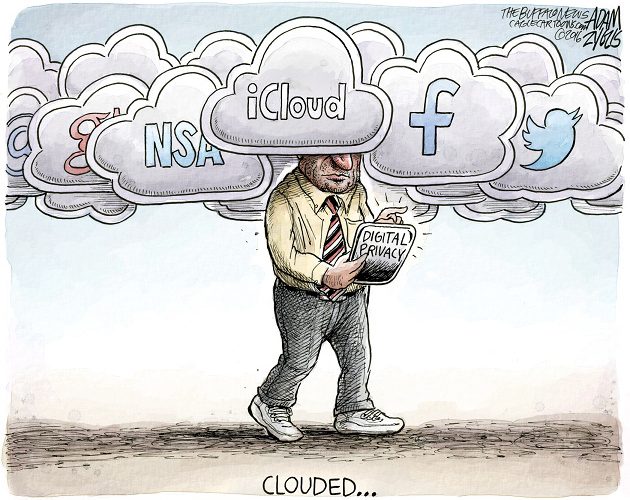
The Founding Fathers recognized that an oppressive government could use its powers to intimidate, harass or steal the possessions of average citizens. In fact, British royal officers would use “writs of assistance” to conduct searches of the homes of colonists in an effort to detect violations of British customs laws.
So the 4th Amendment to the Constitution — as part of the Bill of Rights — was adopted which says, “The right of the people to be secure in their persons, houses, papers, and effects, against unreasonable search and seizures shall not be violated, and no Warrants shall issue, but upon probable cause, supported by Oath or affirmation, and particularly describing the place to be searched, and the persons or things to be seized.”
Yet today the Federal government tramples all over the spirit and the letter, of the 4th Amendment with its USA PATRIOT Act, FinCEN, SAR, CTR, TIA and ADVISE programs, and others. Bureaucrats, businesses and crooks alike are mining the data of millions of Americans looking at who you communicate with, what you read, what you buy, where you shop and what you eat, and they’re making a determination about you and your character based on the information a computer kicks out.
Government spooks are now pushing for – and in some cases have achieved — new, expanded police powers that include mandatory fingerprinting, iris scans and DNA sampling of all citizens, national biometric ID cards, transponder tracking of vehicles (some politicians are advocating a mileage tax) and even geographical tracking of citizens through microchip implants.
And even though it may not yet be happening, in the very near future you could see discrimination, profiling or harassment resulting from all the information stored in government computers. Don’t think it’s possible? Ask the Japanese, some of whom are experiencing “bura-hara,” which is blood type harassment.
Based on what many call sham science, many Japanese are being segregated based on their blood type, even though doing so is supposedly against Japanese law. The theory is that a person’s personality, work ethic and morals can be determined by blood type. It is affecting children in kindergarten, and the Japanese women’s softball team members had their training regiments personalized based on their blood type.
Any information in your electronic database could set off “flags” or could be pulled out and used against you at any time and for any reason. And if you have the courage or occasion to speak out against your government, some member of a vindictive politician’s or government functionary’s staff may very well be into your files looking at your records for a way to slime your reputation. That’s what the Obama campaign team and the mainstream media tried to do to Joe “the Plumber” Wurzelbacher, who saw his life exposed and his reputation sullied simply because he responded to a Presidential candidate during a chance encounter.
What can you do about it? Well, you can’t completely put the privacy genie back in the bottle. If you have been using credit cards, debit cards or loyalty cards; or you have rented movies — either through the old video stores or Red Box or Netflix; or if you’ve given out your Social Security number or if you have a cellular telephone or other wireless device; or if you are using any social media you are in the database.
The watchers in government have your information. Businesses have your information. Private investigators, vindictive spouses, greedy lawyers, jilted lovers (whether they really were or just imagined they were) or stalkers can learn all about you and possibly track you down.
However, that doesn’t mean they have to have your latest information. You can begin now to make it more difficult to be tracked or found.
Here are a few ways you can regain some semblance of privacy, taken from my book, “The Ultimate Privacy Guide”:
  • When making purchases, do so with cash. If you feel you must have a credit card for emergencies, or to make online purchases, use a prepaid card. Those accounts can be opened without having to provide personal details and the cards can be funded with cash payments. That way, no electronic trail is left that leads back to you.
  • In his book, Privacy Crisis, Grant Hall recommends using credit cards to pay large bills if the company agrees not to retain your name and credit card information in their database. The question is, can you trust them to do what they say they’ll do? He says that some large companies are willing to do this—if you speak with a company manager in advance —but smaller companies are usually reluctant.
  • Pay bills or make online purchases with online payment services like PayPal.
  • To bank anonymously, Hall recommends setting up a revocable trust and opening a non-interest bearing checking account in an American bank. He describes in detail in his book how to set up the trust account.
  • Two other entities you can establish are Family Limited Liability Companies and Family Limited Partnerships. These provide some semblance of personal privacy.
  • Never give out your Social Security number except when necessary on government forms like tax returns. Question every request you get to provide your number and try to negotiate an alternative such as a driver license, suggests David H. Holtzman in his book, Privacy Lost.
  • If you are concerned about being tracked, avoid using modern technology like cell phones, a global positioning system or similar items. If you have a cell phone, take out the battery when you’re not using the phone. Cell phones have essentially become tracking devices.
  • Become someone else. This requires some effort and time, but it’s possible. In other words, you can establish an alternate identity for yourself if you need to drop off the radar. Doing so requires thoughtful and intense planning. But the new “person” can enjoy all the privileges of the old person without the fear of someone tracking you down that you don’t want to find you.
  • Erase vestiges of the “old” you. Go to a popular search engine like Google, enter your name and click “search.” You might be very surprised — and a little concerned — at all the information about you that is easily obtained. It’s going to take some time, but you can begin to slowly, but surely, erase your personal information from most public databases.
This certainly doesn’t cover all aspects of the way your privacy is being and has been stolen from you. Nor does it provide detailed solutions for getting as much of it back as possible.
For more information on these steps to learn a host of others you can take to regain your lost privacy, just click here to receive my book, “The Ultimate Privacy Guide,” in e-book form. It’s completely free for you.
But remember, privacy is a process rather than a destination. As soon as you think you have covered all aspects of personal privacy, some new technology will come along or a new law will be passed that will undo your hard work.
Privacy requires you be ever-vigilant.

Tuesday, April 5, 2016

Trump Spells Out "Mexico To Pay For The Wall" Details

Trump Memo: Mexico Pays or I Cut Off Remittances

Image: Trump Memo: Mexico Pays or I Cut Off Remittances
By Cathy Burke   |   Tuesday, 05 Apr 2016 08:01 AM
Donald Trump says he'll force Mexico to pay for a border wall by threatening to cut off  billions of dollars Mexican immigrants send home — a plan whose feasibility is unclear both legally and politically, and which would test the bounds of a president's executive powers to pressure another country, The Washington Post reports.

A two-page memo sent to the newspaper by the Republican presidential front-runner gives details of his key campaign promise to make Mexico pay for the 1,000-mile barrier between the United States and its key diplomatic ally to the south.

In his proposal, Trump threatens to change a rule under the Patriot Act anti-terrorism law to cut off money transfers sent to Mexico, and adds he'd withdraw the threat if Mexico makes "a one-time payment of $5 to $10 billion" to finance the wall, the Post reported.
Entitled "Compelling Mexico to Pay for the Wall," the memo is the latest attempt by the Republican presidential front-runner to offer more specifics about his proposal at a time when he faces tough head winds going into delegate rich states and the surging candidacy of rival Sen. Ted Cruz, along with the continued challenge from Ohio Gov. John Kasich.

It includes rationales for a number of potential intimidation tactics, including increased trade tariffs, the cancellation of visas, and higher fees for border-crossing cards.

But at the core of Trump's approach is a focus on the remittances of illegal immigrants, which he argues are crucial to Mexican economic stability and are a way of pressuring the country to disburse billions of dollars to the United States to fund construction of his wall.

Starting on "day 1," Trump writes, he would issue a warning to Mexico that unless it pays his desired amount, he will promulgate a new federal provision that would lead to a sweeping confiscation of funds sent by Mexicans in the United States who lack documentation of their "lawful presence."

On "day 2," Mexico "would immediately protest." But he would declare that Mexico must choose between the enforcement of his provision or acquiescing.
Latest News Update

To explain how he would have the standing to pursue his aggressive strategy, Trump cites a provision in the Code of Federal Regulations that sets the standards for financial institutions in identifying their customers.

That provision, Trump says, makes it possible for the executive branch to "issue detailed regulations on the subject." He predicts Mexico would react by initially balking, then doing what he wants.

Trump writes "if the Mexican government will contribute $__ billion to the United States to pay for the wall, the Trump administration will not promulgate the final rule, and the regulation will not go into effect."

Other aspects of Trump's plan include "trade tariffs, or enforcement of existing trade rules," "cancelling visas" and "visa fees."

"Our approvals of hundreds of thousands of visas every year is one of our greatest leverage points," Trump writes. "We also have leverage through business and tourist visas for important people in the Mexican economy."

Trump ends with a scathing critique of Mexico, claiming it has "taken advantage" of the United States for years through "gangs, drug traffickers and cartels" responsible for "the extraordinary daily cost of this criminal activity."

"We have the moral high ground here, and all the leverage," Trump concludes.

After reviewing Trump's proposal, one expert on immigration law tells the Post he's skeptical.

"Trump is giving an extremely broad definition of this section of the Patriot Act and what it allows, and it'd surely be litigated," Stuart Anderson, executive director of the National Foundation for American Policy, tells the Post.
"It would be a large expansion beyond what the text reads."

Anderson also said Trump's memo leaves unaddressed how normal financial transactions across borders would be affected and whether there would be an overly aggressive federal intrusion into the growing number of financial transactions that take place over the Internet.

Mexico's President Enrique Peña Nieto has said his country will not pay for any such wall.

The Associated Press and Reuters contributed to this report.
© 2016 Newsmax. All rights reserved.


Breaking News at Newsmax.com http://www.newsmax.com/Newsfront/US-GOP-2016-Trump-Border-Wall/2016/04/05/id/722281/#ixzz44z3fDwjW
Urgent: Rate Obama on His Job Performance. Vote Here Now!

Sunday, February 7, 2016

How Many Countries Are Allowed To Wiretap US Citizens

Global Patriot Act? UK Seeks Authority To Serve Warrants In America

Britain has been negotiating a plan with the United States which would allow the UK to directly serve wiretap warrants on American communications companies for national security and criminal proceedings.
Via USA Today:
The talks are aimed at allowing British authorities access to a range of data, from interceptions of live communications to archived emails involving British suspects, according to the officials, who are not authorized to comment publicly.

The claim is that everything has gone global and terror is no exception, so this is the only next logical step in combating it.
“Such an agreement would ensure U.S. access to data stored in the United Kingdom in support of law enforcement, terrorism, and other transnational threat investigations and support our partners’ ability to investigate serious crime, as well as terrorism and other transnational threats on a reciprocal basis,” that official said.
Considering how many threats they’ve known about and been able to actually thwart, this surely isn’t about further chipping away at everyone’s privacy along with American Constitutional protections as well as national sovereignty at all.
It’s amazing how fast our borders have disappeared in the technological age.
Congressional approval will still be required, but since this is a “you pat my back, I’ll pat yours” kind of deal, it’s not likely they’ll say no.
(H/T: Joe Joseph)

Thursday, February 6, 2014

Do You Love Your House? Would You Sell It If The Government Offered You Less Than Market Rate For It? The Slippery Slope Of Government Intervention.

When the Kelo Case was being heard by the Supreme Court, our belief,  before  it ruled, was that no way would the home owners lose. How, in America, could a government entity take land from private individuals to give to another private company? It was not for building a road, a dam or some other benefit for the public at large. It was for a mega new development which only would increase the money coming into the coffers of the city of New London.


Unfortunately, the Supreme's denied  the rights of the citizen over a city. Yes, they got some compensation but hardly replacing the damage done and the damage that continues. The development never happened, leaving the former residential area a barren wasteland. Talk about abuse of power and a total lack of understanding of the Constitution!  

This tragic event is just another chink in the armor of America, however, that seems small given the events of the past nine years. When citizen's rights are taken away by illegal government confiscation (Kelo case), we all lose. When the IRS can target certain groups (Tea Party), without any penalty paid by those in charge, we all lose. When the Administration and their Democratic supporters lie about the benefits of a program (ObamaCrapCare) they are promoting, we all lose. When an American Ambassador (Chris Stevens in Benghazi) dies and no one makes an attempt to rescue him and others, we all lose. When the government gets into gun running (Fast and Furious) and those guns end up killing Americans, we all lose. When the Patriot Act and legislators from both parties (Rogers, Feinstein) see no problem with monitoring every American's communication (NSA spying), we all lose. When private businesses (banks, GM, Chrysler) are saved from bankruptcy by the government because they "are too large to fail", we all lose.

America has lost its way. The Founders would be calling for a revolution if they came back and saw how the nation they founded was acting and we should be embarrassed and ashamed of how we have let our leaders take us down this path.  

If this nation is to survive as a Constitutionally restricted republic, we must change the direction. No longer can government take your home to give to someone; no longer should the IRS be able to target anyone or any group; no longer should our diplomatic personnel feel they will not be rescued; no longer should the government be involved in illegal and immoral activities in the hope of political gain; no longer should we fear the government is eavesdropping on us; and no longer should any private business be bailed out when they fall on hard times.

The 2014 elections are our chance to rectify the situation, to correct some of our ills, and to set us on a new path. Will we take the opportunity or will it be just another election that supports the status quo? Unfortunately, the latter most probably will be the result.

Conservative Tom


Kelo Forever

February 6, 2014 by  
 18 7
 
 4 70
<em>Kelo</em> Forever
PHOTOS.COM

In 2005, a property-rights case made its way to the U.S. Supreme Court. Entitled Kelo v. City of New London, the case represented the last-ditch attempt by a small group of middle-class Americans to save their middle-class homes from an eminent domain seizure. Led by a nurse and single mother named Suzette Kelo, none of the six plaintiffs was the sort to spend a lot of time in the highest court in the land. And their opponents made the case an almost blatant metaphor for David and Goliath. Standing opposite the everyman plaintiffs was the city of New London, Conn. And standing behind New London was the pharmaceutical giant Pfizer. Thanks to a sweetheart deal proffered by a city nearly desperate for incoming capital, Pfizer was the incoming tenant of a tract of land just across the water from the Kelo homestead.
In the eternally infamous decision, the court’s liberal wing ruled in favor of the government-industrial complex. At the time, the decision sparked a brushfire of outrage amongst the politically active segment of the population; but the blaze was unable to breach the walls of American indifference. Of course, the Kelo decision hardly marked the first time our government stepped on our fellow citizens’ necks. But Kelo represented a new low. Kelowasn’t a ruling extending freedom. Kelo was a ruling that specifically limited freedom. And it didn’t take place back in the days before 24-hour news channels and 24-second news cycles.Kelo happened against the backdrop of the Internet age. And we ignored it.
The court had not entertained an “eminent domain” case for more than 20 years. With Kelo, for the first time since the dawn of the digital age, the government blatantly abrogated the Bill of Rights — specifically the 5th Amendment’s Takings Clause — on behalf of the promise of corporate cash; and the people let them get away with it. Moreover, the government-industrial complex conclusively learned that outrage, even over the most egregious crimes the State might commit, has a definitive shelf life.
In the most recent edition of The Weekly Standard, writer Charlotte Allen presented “‘Kelo’ Revisited.” Allen reveals the postscript to the Kelo group’s heartbreaking saga is sadder than Justin Bieber in the county lockup’s general population. After years of legal warfare, crippling financial losses, endless hours of time and effort, the city of New London and its accomplices have turned Kelo, et al.’s homes into… nothing.
There’s nothing there. The land deemed so prime for a conference/condo/recreational/retail/riverwalk/tourist trap/airbrushed T-shirt mega-center remains little more than scrub pine and seagulls. Pfizer ended up canceling its expansion plans and left New London with nary a little blue pill as a parting gift. The construction company hired to develop the seized land failed to secure financing and hightailed it back to Boston. Government wanted Kelo’s land. Government got it. And then government left it sitting there. In the Kelo context, government is a spoiled baby — albeit a spoiled baby whose tantrums can involve drone strikes.
And we’re still paying for it in spades. Kelo was the go code for government to roll heavy across our Constitutional landscape. From Kelo came the unmitigated gall of every fraudulent, crony-capitalist, government abuse of power since. The bank and auto bailouts, the “green” energy scams, the gunrunning disasters, the terrorism cover-ups, the domestic spying, the Internal Revenue Service bullying and Obamacare all got their green lights fromKelo.
I might be overestimating Kelo’s import. Perhaps Allen caught me on a particularly impressionable day. But I can’t help but note the striking rise in unapologetic government intrusion into private life in just less than a decade since. Nine years after Kelo, a simple land-grab seems almost quaint.

Monday, December 9, 2013

You Know Information Security Is An Important Issue When Libraries (Government Entities) Are Concerned With Keeping Data Safe From The Government!

Libraries Are Fighting To Protect User Information From Government Spies

December 5, 2013 by 
 8 6

 1 50
Libraries Are Fighting To Protect User Information From Government Spies
PHOTOS.COM

A growing number of Americans are concerned about privacy following the National Security Agency whistle-blower Edward Snowden’s leaks over the summer — but it isn’t just individuals who are concerned. America’s libraries are urging lawmakers to produce legislation to curb the NSA’s spying authority in an effort to protect the freedom of citizens to read and research without concern for government scrutiny.
Government spying on library patrons is nothing new. In 2001, the American Library Association expressed vocal opposition to the passage of the Patriot Act, fearing that the government would use individual library activity logs to profile Americans. The anti-terror law indeed gave the FBI the ability to force libraries to hand over user data.
With Snowden’s revelations, the ALA renewed its efforts to curtail government spying on library patrons.
“The library community welcomes a renewed public debate on how to balance the need to fight terrorism and the need to protect personal privacy and civil liberties,” ALA President Maureen Sullivan said in June. “Millions of innocent customers, at least Verizon’s, have had their personal phone records released to the government without their knowledge and without allegations of specific facts supporting the relevance of their records to a federal terrorism investigation. We must demand more accountability and transparency in all of these surveillance issues. Our nation’s libraries are a tremendous information resource for those who want to better understand the issues and a place to begin debates about these issues.”
ALA director of government relations Lynne Bradley recently noted that the NSA’s practices go far beyond the privacy abuses green-lighted by the Patriot Act, revealing an “almost ravenous hunger” for information on Americans.
Especially appalling to the ALA are reports of heavy focus on collecting “metadata” because, as the organization’s director of the Office for Information Technology Policy Alan Inouye toldThe Hill, “[L]libraries are all about metadata.”
In June, the ALA called on the Senate to make legislative efforts to strengthen privacy protections for library patrons, including the following:
A requirement that information shared with the government as part of a cybersecurity information sharing program be directed only to civilian agencies – recent disclosures about the NSA’s misuse of the Patriot Act and the FISA Amendments Act to justify broad and intrusive surveillance programs make it clear that the NSA should not be the direct recipient of private sector cybersecurity information and that strong protections must be built into the law;
Strict limits to prevent information collected under cybersecurity programs to be used for general criminal prosecutions or national security purposes unrelated to cybersecurity;
A requirement that companies make reasonable efforts to remove personally identifiable information that is irrelevant to cyber threats before they share threat information;
Robust oversight and accountability provisions such as independent audits and reports
After receiving a $1 million grant from the Bill and Melinda Gates Foundation to increase its lobbying presence in Washington, ALA representatives say that the organization is heavily supporting Representative James Sensenbrenner’s (R-Wis.) anti-NSA legislation known as the USA Freedom Act. The bill, which already has the support of a number of privacy advocates, would curb much of the NSA’s power and lift the gag order that comes with information requests from the agency.
“We don’t want [library patrons] being surveilled because that will inhibit learning, and reading, and creativity,” Inouye told The Hill.