Contact Form

Name

Email *

Message *

Showing posts with label tom Price. Show all posts

Saturday, July 8, 2017

What A Mess If 9th Circuit Wins


9th Circuit Opens Door for Mass Release of Illegal Immigrant Minors


(LifeZette) The 9th Circuit Court of Appeals ruled on Wednesday that illegal immigrant minors must be granted a bond hearing – a hearing in which the burden of proof is on the government to show why the person should be held rather than released.
9th Circuit Opens Door for Mass Release of Illegal Immigrant Minors“The overall issue is that it releases people we know nothing about and can’t properly vet,” says Matthew O’Brien, a former trial attorney for Immigration and Customs Enforcement (ICE) who now works for the Federation for American Immigration Reform (FAIR).
The justices of the 9th Circuit ruled against Attorney General Jeff Sessions, Secretary of Health and Human Services Tom Price, Secretary of Homeland Security John Kelly, and the U.S. Department of Immigration and Customs Enforcement, writing that two federal laws did not invalidate a 1997 settlement in which the government had agreed to certain things regarding the detention and release of illegal immigrant juveniles. According to this settlement, referred to as the Flores settlement, minors cannot be held without being given a bond hearing at which they have the right to be represented by a lawyer, and at which the government has to make an argument for why they should be held.
In a bond hearing in a regular criminal case, O’Brien notes, the government would have to show that the person is a danger or is a flight risk in order for a judge to agree that they should be held pending a trial.
Under mandatory detention rules, all illegal immigrants have always been considered a flight risk, as they were unlikely to show up at a future court appearance.
“That puts this on its head,” says O’Brien of the 9th Circuit’s decision, and adds that it removes a lot of the discretion normally accorded to ICE and Customs and Border Protection (CBP).
The case, he says, represents a “further erosion” of those agencies’ power to determine who should not be released for national security reasons.
“The interests of alien children should not trump the security interests of the citizens of the United States,” he told LifeZette.
In the original Flores case, which dates to the 80s, a 15-year-old girl from El Salvador who’d entered the country illegally was handcuffed and detained in an area with minors of both sexes for two months.
But things have changed since the 80s, and the influx of thousands of unaccompanied minors from Mexico and Central America, most of them male, created a crisis at the border in 2014 and 2015 after President Barack Obama signed the executive order creating DACA – Deferred Action for Childhood Arrivals.


Tens of thousands of illegal immigrant minors from Mexico and Central America have been released in the last few years and placed around the country. Many have joined the ranks of criminal gangs like MS-13 in small, previously peaceful small towns like Central Islip on Long Island, where a teenage girl was murdered by young gang members last year. The Department of Homeland Security estimates that there are more than 1,000 MS-13 members in towns on Long Island, and that most came to the U.S. as unaccompanied minors.
And while those claiming to be minors are supposed to show documentation to verify their age, many don’t have anything, making it very easy for an illegal immigrant who is 18 or older to claim that he is a minor, and thus win release – and escape deportation.
But why would they be in a detention center in the first place?
A 2008 law meant to protect victims of human trafficking made it difficult for the U.S. government to deport unaccompanied minors. The law required the government to institute a legal process for unaccompanied minors from Central America, in particular, rather than quickly returning them to their countries. The legal process usually takes several years, and more often than not results in the minors remaining in the U.S.
Added to this is a special visa program that awards permanent residency status – “green cards” – to thousands of illegal immigrants who were detained as juveniles.
The 9th Circuit’s decision applies only to the western states – California, Washington, Oregon, Idaho, Montana, Nevada – and also Hawaii, Alaska, Guam, and the Mariana Islands.
But other federal appeals courts are likely to consider its decision in similar cases, and it throws yet another wrench into the Trump administration’s efforts to enforce immigration laws.
“I think all these things do is hobble the federal government and hobble ICE as they attempt to do their jobs,” says O’Brien. “We believe they should be challenging things like this. There’s no reason why, 20 years later, the government should be hewing to this agreement,” he said, referring to the Flores settlement.
After the 9th Circuit blocked the travel ban and the attempt to withhold funds from any city that refused to cooperate with enforcement of immigration laws, President Donald Trump said that he was “absolutely” considering proposals to break up the 9th Circuit, presumably into two or more smaller courts.
And now, he has a third reason to consider such a proposal.
Republished with permission from LifeZette via iCopyright license.

Wednesday, May 3, 2017

Will House Vote Crush ObamaCrapcare?

House will vote on GOP Obamacare replacement bill on Thursday

  • The vote will come almost two months after the aborted first vote on bill
  • The bill would repeal and replace key parts of the Affordable Care Act
  • Passage would send it to the Senate, where opposition may be stiff


The U.S. House of Representatives will vote Thursday on a controversial Republican bill that would repeal and replace key parts of Obamacare, the GOP's majority leader said.
"We're going tomorrow, yes we are," said Majority Leader Kevin McCarthy, R-Calif.
Asked he if had the votes to win passage of the bill, McCarthy told NBC News, "Yes we do."
"We will pass this bill," McCarthy said. "I feel great about the [vote] count."

Two senior GOP House sources confirm to NBC News the House will vote tomorrow on healthcare

House Speaker Paul Ryan, R-Wisc., said several days ago that he would not hold the vote without having those winning votes in hand. Thursday's scheduled vote will take place without the House having received an official projection of the costs of the revised bill, as well as estimates about how it will affect insurance premiums and the numbers of people with health coverage.
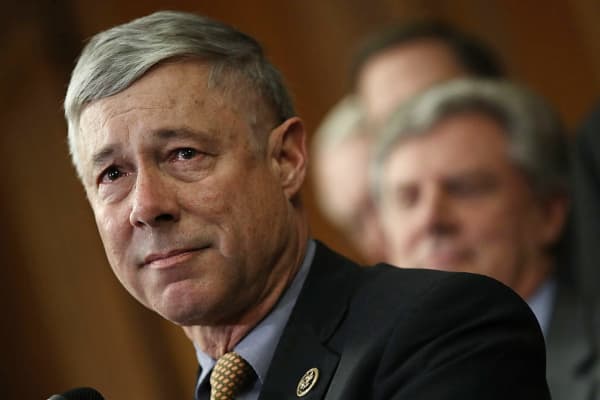
The expected vote will come a day after two leading Republicans, Reps. Billy Long and Fred Upton, agreed to switch their expected "no" votes on the bill to "yes" votes.
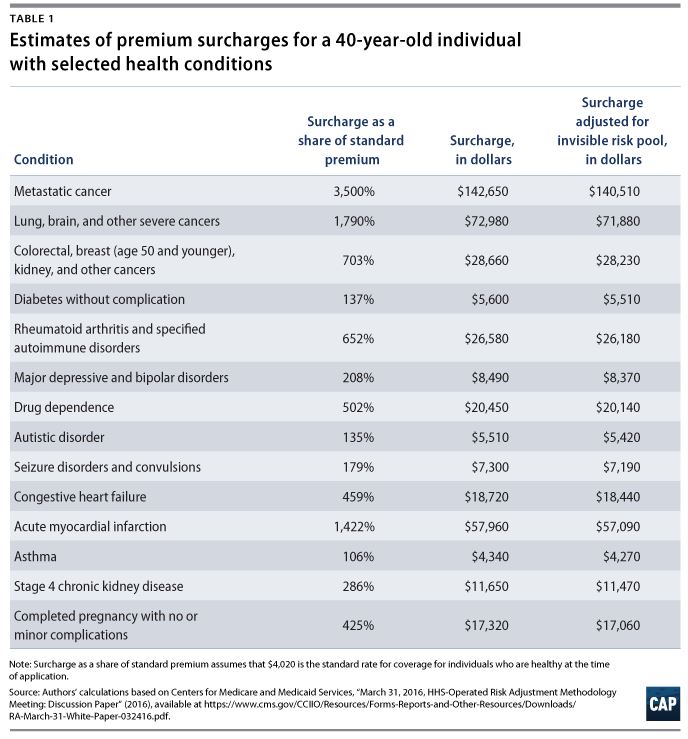
Long and Upton earlier this week had come out publicly against the bill because of a change made to it last week that would, in their view and in those of many others', weaken price protections for private individual plan insurance customers with pre-existing health conditions.
But on Wednesday, Long and Upton reversed their opinion after getting another amendment that would provide $8 billion in federal funding that would supposedly protect such customers from higher premiums.
Their reversal added momentum to the push for the vote. Another factor that may have played a role in the scheduling of the vote is a scheduled recess for the House at the end of this week.
Ryan and President Donald Trump were badly embarrassed in March when Ryan was forced to withdraw the bill from the House floor right before the first scheduled vote once it became clear it would fail.
On Wednesday evening, U.S. Secretary for Health and Human Services Tom Price wrote an op-ed for CNBC to make a plea for passage.
If the bill is passed Thursday, it would then go to the Senate, where it may face even more difficulty winning passage in its current form.
The bill would reform that way the federal government subsidizes purchases of individual health plans, and also how it funds Medicaid, the joint federal-state program that provides health coverage to primarily poor people.
Republicans hold majorities in both the House and Senate. But they have struggled for nearly two months to get enough GOP House members to support the bill, which will be uniformly opposed by Democrats.
Democrats are adamantly against making the kind of big changes to the Affordable Care Act that they GOP bill aims to accomplish.
And some Republican members have opposed the bill because they believe it would lead to higher premiums for many people, particularly older Americans and those with pre-existing health conditions, and also will lead to increases in the number of people without insurance.
A bloc of conservative GOP members opposed the bill because it did not go far enough in repealing Obamacare.
The vote, if it does take place Thursday, will occur without the House receiving a so-called "score" of the bill from the Congressional Budget Office.
The CBO, in analyzing an earlier version of the bill, projected that it would result in 24 million more Americans being uninsured by 2026 than would be the case if Obamacare remained in place as is. The CBO also estimated that premiums for individual health plans would spike by 15 to 20 percent higher in 2018 and 2019 than if Obamacare remained in effect in current form.

Is the party that ran on fiscal responsibility for a decade going to get a CBO score before voting on the health care bill?

The original version of the GOP was deeply unpopular among the public, garnering support from just 17 percent of Americans, according to one poll. It also has been opposed by a slew of patient advocates and health-care providers.
Announcement of Thursday's vote immediately sparked calls on Twitter by Obamacare supporters to rally allies to call members of Congress and urge them to vote against the bill.


Republicans have, ever since the Affordable Care Act became law in 2010, vowed to repeal it.
Since then, however, an estimated 20 million Americans have gained coverage through Obamacare, either under Medicaid, or individuals plans, or through their parents' plans if they are under age 26.
The law, in addition to funding coverage expansions, also barred insurers from charging customers more, or denying them insurance altogether, if they have pre-existing health problems.

Thursday, November 12, 2015

Changes Are Coming To House Under Ryan Leadership

Paul Ryan Cleaning House, To Dump Committee Chairs

Image: Paul Ryan Cleaning House, To Dump Committee Chairs
By Loren Gutentag   |   Thursday, 12 Nov 2015 08:06 AM
Paul Ryan took on the role of Speaker of the House last month promising to rework the House Republican Steering Committee before Thanksgiving and is doing just that taking steps to restructure the panel and dump committee chairs, Politico reports.

In what will be the biggest restructuring of internal GOP policy so far in his tenure, Ryan kick-started the changes by impaneling eight lawmakers. And although plans are not finalized, lawmakers have discussed a two-part plan to in an effort to change the membership of the committee.
Politico states that "during the current Congress, top committee chairmen would be removed from the panel and replaced with members elected by the House Republican Conference" and "in the next Congress, the GOP would add additional regional representatives to the committee."

Lawmakers involved in the talks declined to comment on the confidential plans, but the potential changes would help decentralized power in the house.
Latest News Update

According to Politico, under Ryan's new plan, several powerful chairmen would lose their slots. They include Appropriations Chairman Hal Rogers of Kentucky, Energy and Commerce Chairman Fred Upton of Michigan, Financial Services Chairman Jeb Hensarling and Ways and Means’ Brady, both of Texas, and Budget Chairman Tom Price of Georgia.


Those involved in the talks include Majority Leader Kevin McCarthy of California; Reps. Luke Messer of Indiana and Virginia Foxx of North Carolina, who both serve in the party’s leadership; Rep. Bill Flores of Texas, chairman of the conservative Republican Study Committee; House Judiciary Chairman Bob Goodlatte of Virginia; Rep. Richard Hudson of North Carolina, who serves on the Steering Committee; and Rep. Morgan Griffith of Virginia, a member of the House Freedom Caucus.
This plan is just one of the many repurposing plans that Ryan has calculated. According to Politico, he has said he plans a broad overhaul of how the House works by the end of this year.

© 2015 Newsmax. All rights reserved.