Contact Form

Name

Email *

Message *

Showing posts with label King Abdullah. Show all posts

Thursday, February 16, 2017

Israel's Need To Walk A Line As To Not Antagonize The US

Tread Carefully with the New US Administration
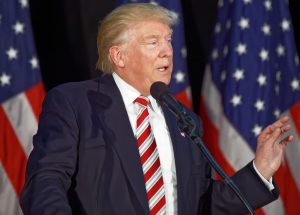
By February 16, 2017


BESA Center Perspectives Paper No. 414, February 16, 2017
EXECUTIVE SUMMARY: The new US administration is far more sympathetic to Israel than was its predecessor, but we must avoid taking steps from which there is no return. The Middle East is not Washington's sole focus and Israel must preserve the bipartisan support it enjoys.
In the run-up to Prime Minister Benjamin Netanyahu's February 15 meeting with President Donald Trump, the difference in worldview between the Israeli political Right and Left, especially with regard to the Palestinian issue, became more pointed.
The Left fears that under the new administration, which is more sympathetic to Israel and less wary of the Arab world's reactions than its predecessor, the Right will all but eliminate any chance of resuming the stalled Israeli-Palestinian peace process – something that is bound to happen if Israel accelerates construction across Judea and Samaria or pursues the odd annexation here and there.
The Right, for its part, hopes that now that it is free of the constraints imposed by the previous American administration, it will be able to realize its dream of integrating Judea and Samaria, or at least the main settlement blocs, into Israel.
In between is the majority of the Israeli public, the wide and mostly silent center, which for the most part just wants peace and quiet with no physical involvement with the Palestinians.
If Israel does decide to change direction and effectively close the door on future negotiations, it will be unable to avoid the question of the civilian-political future of the Palestinians.
This issue has to be dealt with, even if we accept the (probably correct) assumption that over the next few years, the Palestinian leadership will not seriously negotiate a reasonable solution to the conflict.
It is precisely now – when Israel is free of the Obama-era limitations – that it must shoulder even greater responsibility and explore what would be the best policies to pursue. The leeway the Trump administration might give Israel will let it operate more freely, but this freedom is not without risk. Marching solely to the beat of the Right's drum could lead to the point of no return of a binational state. Israel must search for an answer not only to avoid being summoned to The Hague, but because the issue is important to Israel itself.
With all due respect to the settlement enterprise, one must remember that Trump has a few other things to consider when it comes to the Middle East, and all of them matter to Israel as well.
Trump and Netanyahu are likely to discuss myriad regional issues, including how the US plans to deal with radical Sunni Islam, which has grown exponentially over the past few years.
Sunni Islam has both purely terrorist aspects, as seen in the rise of the Islamic State group (IS), and political aspects, as seen in the Muslim Brotherhood's fight against the regimes of Egyptian President Abdel-Fattah el-Sisi and Jordan's King Abdullah.
The US administration's controversial temporary ban on the entry of individuals from seven majority-Muslim countries – Iran, Iraq, Libya, Somalia, Sudan, Syria, and Yemen – aims to prevent infiltration by terrorist elements into the homeland. But President Trump has yet to shape an overall policy on dealing with terrorism or to address the political questions plaguing the Arab world.
Another major challenge is curtailing Iran's aspirations to regional domination. The Islamic Republic is trying to build a Shiite axis running through Iraq, Syria, Lebanon, and Yemen. This dynamic axis challenges the US's friends in the region. Those parties could, within a few years, acquire military nuclear capability in response to the bad agreement reached by the previous administration and Iran.
These moves already constitute a threat to the US, and the danger will only increase. The new administration has clearly stated that it plans to take a more active approach against Iran, and indeed reacted firmly to the ballistic missile test Iran conducted last week – but it is still unclear how far the new president wants to, or can, go. After all, this situation could lead to a complex military conflict.
These are two very important issues for Israel, and the Iranian issue is critical. We must ask ourselves how we can contribute to shaping US policy and how we may be of assistance in the region. That is what being a strategic ally means.
This is where the issues discussed here converge. It may turn out that Israel's moves in Judea and Samaria hinder the effort to build an anti-Iranian alliance in the region, led by the US and with Israel as a partner.
In other words, an ideological approach to the settlements might contradict a strategic need arising from the new situation in the Middle East at a time when dramatic regional changes are possible. It could transpire that the US will pursue new alliances in the region only if Israel is perceived as refraining from making the situation worse for the Palestinians, or even as promoting negotiations. Such a scenario would confront Israel with a significant intellectual and political challenge.
The US also seems to wish to pursue a rapprochement with Russia, but here too, things are not simple.
President Barack Obama also pursued dialogue with Moscow, but found out the hard way that President Vladimir Putin sees the world, and Russia's position in it, differently.
Moreover, by understanding the limitations of the US when it comes to exercising force, Putin succeeded in carving out positions of influence in areas far from home, such as Syria, and ruffling the feathers of the EU and NATO to the point of military friction, as in Ukraine.
It is hard to tell whether the Trump administration plans on acquiescing to Russia's moves or will side with the EU. Trump’s positions during the campaign, implying openness towards Russia, will have to stand the test of reality.
Naturally, any developments with Russia will contribute to the complexity of Middle East affairs. Russia is an important ally of Iran in Syria, and therefore indirectly contributes to the Islamic Republic's growing influence in the region.
These are all international, external challenges. The Trump administration will also have to deal with serious domestic challenges. Israel must not be perceived as taking sides on internal American issues.
American society, divided as it was by the rough election, is uneasy. Israel will work closely with the new administration to promote its own interests, but must do so in a way that elicits bipartisan support as much as possible.
This is an edited version of an article that appeared in Israel Hayom on February 10, 2017.
Maj. Gen. (res.) Yaakov Amidror is the Anne and Greg Rosshandler Senior Fellow at the Begin-Sadat Center for Strategic Studies. He is also a distinguished fellow at JINSA’s Gemunder Center for Defense and Strategy. 
BESA Center Perspectives Papers are published through the generosity of the Greg Rosshandler Family

Thursday, April 28, 2016

Turkey Is Playing A Game To Appear Intolerant To Terror While Supporting It


  • Last year, a Turkish pollster found that one in every five Turks thought that theCharlie Hebdo attack in Paris was the natural response to men who insulted Prophet Mohammed.
  • "Infidels who were enemies of Islam thought they buried Islam in the depths of history when they abolished the caliphate on March 3, 1924 ... Some 92 years after ... we are shouting out that we will re-establish the caliphate, here, right next to the parliament." — Mahmut Kar, media bureau chief for Hizb ut-Tahrir Turkey.
  • At a March meeting with top U.S. officials, King Abdullah of Jordan accused Turkey of exporting terrorists to Europe. He said: "The fact that terrorists are going to Europe is part of Turkish policy and Turkey keeps on getting a slap on the hand, but they are let off the hook."
  • And Turkey is the country its Western allies believe will help them fight jihadists? Lots of luck!
In theory, Turkey is part of the international coalition that fights the Islamic State (IS). Since it joined the fight last year, it has arrested scores of IS militants, made some efforts to seal its porous border with Syria and tagged IS as a terrorist organization. Turkish police have raided homes of suspected IS operatives. More recently, Turkey's Interior Ministry updated its list of "wanted terrorists" to include 23 IS militants, and offered rewards of more than 42 million Turkish liras (more than $14 million) for any information leading to the suspects' capture. But this is only part of the story.
On March 24, a Turkish court released seven members of IS, including the commander of the jihadists' operations on Turkish soil. A total of 96 suspects are on trial, including the seven men who were detained but released. All are free now, although the indictment against them claims that they
"engaged in the activities of the terrorist organization called DAESH [Arabic acronym of IS]. The suspects had sent persons to the conflict zones; they applied pressure, force, violence and threats by using the name of the terrorist organization, and they had provided members and logistic support for the group."
The release of terror suspects came in sharp contrast with another court decision that ruled for a trial, but while under detention, for four academics who had signed a petition calling for peace in Turkey's Kurdish dispute. Unlike the IS militants, the academics remain behind bars.
The Turkish government, which controls the judiciary almost in its entirety, relies on Islamist grassroots supporters of various flavors -- from Islamists and 'lite jihadists' to radicals.
Last year the Turkish pollster MetroPOLL found that one in every five Turks thought that theCharlie Hebdo attack in Paris was the natural response to people who insulted Prophet Mohammed [only 16.4% of Turks thought of the incident as an attack on freedom of expression]. Among the ruling Justice and Development Party's (AKP) voters, the rate of approval of the attack was 26.4%; and only 6.2% viewed it as an attack on free speech. Only 17.8% of AKP voters thought the attack was the work of radical Islamists. Three-quarters of AKP voters thought Muslims were aggrieved by the attack; while as few as 15.4% thought the victims were the cartoonists who were murdered. Two-thirds of AKP voters thought attacks on Islam by Christian Crusaders were continuing.
The fact that key IS suspects are now free because the government may fear looking mean to its Islamist supporters only partly explains the appalling judicial rulings on jihadists and academics. "The suspects may be holding the Turkish government hostage ... What if they threatened the authorities that they would reveal the government support for their organization in the past? You normally don't walk free over such serious legal allegations," observes one western diplomat in Ankara.
Russia has been claiming that Turkey keeps supporting the Islamic State through trading the jihadists' oil, their main source of income. A new report claims that total supplies to terrorists in Syria last year was 2,500 tons of ammonium nitrate; 456 tons of potassium nitrate; 75 tons of aluminum powder; sodium nitrate; glycerine; and nitric acid. The report stated:
"In order to pass through the border controls unimpeded, effectively with the complicity of the Turkish authorities, products are processed for companies that are purportedly registered in Jordan and Iraq ... Registration and processing of the cargo are organized at customs posts in the [Turkish] cities of Antalya, Gaziantep and Mersin. Once the necessary procedures have been carried out, the goods pass unhindered through the border crossings at Cilvegozu and Oncupinar."
Turkey keeps playing a fake war on jihadist terrorists. At a March meeting with top U.S. officials, King Abdullah of Jordan accused Turkey of exporting terrorists to Europe. He said: "The fact that terrorists are going to Europe is part of Turkish policy and Turkey keeps on getting a slap on the hand, but they are let off the hook."
In fact, the Turkish government's secret love affair with various Islamist groups is not always so secret. In March, thousands of supporters of Hizb ut-Tahrir, a global Islamist group, gathered at a public sports hall in Ankara -- courtesy of the Turkish government -- to discuss the re-establishment of the Islamic caliphate. In his speech, Mahmut Kar, the media bureau chief of Hizb-ut Tahrir Turkey said:
"Infidels who were enemies of Islam thought they buried Islam in the depths of history when they abolished the caliphate on March 3, 1924 ... We are hopeful, enthusiastic and happy. Some 92 years after ... we are shouting out that we will re-establish the caliphate, here, right next to the parliament."
(Hizb ut-Tahrir, viewed by Russia and Kazakhstan as a terrorist group, defines itself as a political organization aiming to "lead the ummah" to the re-establishment of the caliphate and rule with sharia law.)
Guess what else Turkey is doing while pretending to be fighting jihadists? Apparently, President Recep Tayyip Erdogan's declared political ambition to "raise devout generations" seems to have geared up. Turkey's Religious Affairs General Directorate (Diyanet), the ultimate official religious authority in the country, recently issued comic books to the nation's children telling them how marvelous it is to become an Islamic martyr.


Turkey's Religious Affairs General Directorate (Diyanet), the ultimate official religious authority in the country, recently issued comic books to the nation's children telling them how marvelous it is to become an Islamic martyr.

One comic strip is a dialogue between a father and his son. "How marvelous it is to become a martyr," the father says. Unconvinced, the son asks: "Would anyone want to become a martyr?" And the father replies: "Yes, one would. Who doesn't want to win heaven?"
And this is the country its Western allies believe will help them fight jihadists? Lots of luck!
Burak Bekdil, based in Ankara, is a Turkish columnist for the Hürriyet Daily and a Fellow at the Middle East Forum.

© 2016 Gatestone Institute. All rights reserved. No part of the Gatestone website or any of its contents may be reproduced, copied or modified, without the prior written consent of Gatestone Institute.

Monday, January 25, 2016

In This Upside Down World, Iran Becomes Our ALLY? Why Is Kerry Cozying Up To Them?


Our New Ally Iran

blogs.cfr.org, Elliott Abrams

USMC seized by Iran
This photo tells us a great deal about American foreign policy today.
Human Rights Watch, not known as a right-wing group, has noted that it appears to violate international agreements prohibiting the use of photos or videos of military detainees for propaganda purposes. Moreover, the entry into Iranian waters (if that happened) by a boat that had lost its engines is obviously “innocent passage” under international law.
Nevertheless, Secretary of State Kerry offered effusive praise of Iran.
The new relationship with Iran is at the top of his agenda. The old-think concept of “allies” is out.
Consider this from the AP:
Since the beginning of the year, Kerry and Zarif have spoken by phone at least 11 times, according to the State Department. They’ve focused on nuclear matters, Iran’s worsening rivalry with Saudi Arabia and peace efforts in Syria.
By contrast, America’s top diplomat has talked to Saudi Foreign Minister Adel al-Jubeir only twice. He has consulted once each with Saudi Deputy Crown Prince Mohammed bin Salman, Jordan’s King Abdullah and the foreign ministers of Britain, Egypt, France, Germany, Russia and the European Union.
Once upon a time, during the Clinton administration, the foreign visitor who was invited to the White House most often–13 times–was not Tony Blair or some other ally; it was Yasser Arafat. We know what Clinton got for all that courting: nothing, and the failure of his Camp David peace efforts.
Such treatment of enemies, by Clinton then or Kerry and Obama now, and such treatment of allies never ends well. When the United States appears unable to differentiate between enemies and allies, it gets fewer allies and its enemies grow stronger. Iran is an enemy of the United States, which has killed hundreds of Americans in terrorist attacks over the decades since 1979 and most recently in Iraq.
Throughout the Middle East and no doubt more widely, this photo is half of a moment that will deeply unsettle America’s friends. The other half is the Obama administration’s reaction to this humiliation: to welcome it and thank Iran for it. America’s friends are without doubt thinking “If this is how the Americans react to their own humiliation through an aggressive act, how will they react when we are in danger?”
There’s an old proverb that goes something like this: There are some people so foolish that when you spit in their face they think it’s raining. In the Persian Gulf today, it isn’t raining. Iran just spit in our face, and humiliated the United States; there is no other interpretation of the photo above. If the United States Government cannot even realize what happened, our own interests and those of our allies will be further compromised by Iran in the year ahead.

Tuesday, November 3, 2015

Of Course Palestinians Don't Want Cameras On The Temple Mount, It Would Expose Their Evil Work!

  • The Palestinian Authority (PA) will continue to work against having cameras in the hope of preventing the world from seeing what is really happening at the site and undermining Jordan's "custodianship" over Islamic holy sites in Jerusalem.
  • Another reason the Palestinians oppose King Abdullah's idea is their fear that cameras would expose that Palestinians have been smuggling stones, firebombs and pipe bombs into the Al-Aqsa Mosque for the past two years.
  • The cameras are also likely to refute the claim that Jews are "violently invading" Al-Aqsa Mosque and holding prayers on the Temple Mount. The cameras will show that Jews do not enter Al-Aqsa Mosque, as Palestinians have been claiming. Needless to say, no Jewish visitors have been caught trying to smuggle weapons into the holy site.
  • It remains to be seen how Secretary Kerry, who brokered the camera deal between Israel and Jordan, will react to the latest Palestinian Authority escalation of tensions. If Kerry fails to pressure the PA to stop its incitement and attempts to exclude the Jordanians from playing any positive role, the current wave of knife attacks against Jews will continue.
Why is the Palestinian Authority (PA) opposed to Jordan's proposal to install surveillance cameras at Jerusalem's Haram al-Sharif (Temple Mount), sacred to Christians, Muslims and Jews?
This is the question that many in Jordan have been asking in light of the recent agreement between Israel and Jordan that was reached under the auspices of US Secretary of State John Kerry. The idea was first raised by Jordan's King Abdullah in a bid to ease tensions at the holy site in the Old City of Jerusalem.
Shortly after Israel accepted the idea, the Palestinian Authority rushed to denounce it as a "new trap." PA Foreign Minister Riad al-Malki and other officials in Ramallah expressed concern that Israel would use the cameras to "arrest Palestinians under the pretext of incitement."
During the past two years, the Palestinian Authority and other parties, including Hamas and the Islamic Movement (Northern Branch) in Israel, have been waging a campaign of incitement against Jewish visits to the Haram al-Sharif. The campaign claimed that Jews were planning to destroy Al-Aqsa Mosque.
In an attempt to prevent Jews from entering the approximately 37-acre (150,000 m2) site, the Palestinian Authority and the Islamic Movement in Israel hired scores of Muslim men and women to harass the Jewish visitors and the police officers escorting them. The men are referred to as Murabitoun, while the women are called Murabitat (defenders or guardians of the faith).
These men and women have since been filmed shouting and trying to assault Jews and policemen at the Haram al-Sharif. This type of video evidence is something that the Palestinian Authority is trying to avoid. The PA, together with the Islamic Movement, wants the men and women to continue harassing the Jews under the pretext of "defending" the Al-Aqsa Mosque from "destruction" and "contamination."

Hundreds of Muslims on the Temple Mount, yelling and throwing objects, surround three Jewish men and their children, as about a dozen police officers try to hold back the angry crowd and evacuate the Jews.

The installation of surveillance cameras at the site will expose the aggressive behavior of theMurabitoun and Murabitat, and show the world who is really "desecrating" the Islamic holy sites and turning them into a base for assaulting and abusing Jewish visitors and policemen.
The cameras are also likely to refute the claim that Jews are "violently invading" Al-Aqsa Mosque and holding prayers at the Temple Mount. The Palestinian Authority, Hamas and the Islamic Movement have long been describing the Jewish visits as a "provocative and violent incursion" into Al-Aqsa Mosque. But now the cameras will show that Jews do not enter Al-Aqsa Mosque, as the Palestinians have been claiming.
Another reason the Palestinians are opposed to King Abdullah's idea is their fear that the cameras would expose that Palestinians have been smuggling stones, firebombs and pipe bombs into Al-Aqsa Mosque for the past two years. These are scenes at the PA, Hamas and the Islamic Movement do not want the world to see: they show who is really "contaminating" the Haram al-Sharif. Needless to say, no Jewish visitors have thus far been caught trying to smuggle such weapons into the holy site.

Palestinian Arab young men with masks, inside Al-Aqsa Mosque (some wearing shoes), stockpile rocks to use for throwing at Jews who visit the Temple Mount, September 27, 2015.

By rejecting the idea of setting up 24-hour surveillance cameras at the Haram al-Sharif, the Palestinian Authority has found itself on a course of collision with Jordan. Jordanian politicians and columnists have voiced outrage over the stance of the PA, and have dubbed it harmful to Palestinian and Islamic interests.
The Jordanian newspaper Al-Ghad, which is close to the government, quoted Jordanian politicians as denouncing the opposition of the Palestinian Authority to the cameras as "inappropriate, clumsy, tasteless and unfair."
Sources in Ramallah explained this week that the PA's opposition to cameras should also be seen in the context of the power struggle between the Palestinians and Jordan over control of the Islamic holy sites in Jerusalem. The Jordanians have long been seeking to preserve their status as "custodians" of Al-Aqsa Mosque and other Islamic holy sites in Jerusalem. This is a status that some Palestinians and the Islamic Movement in Israel have been trying to change during the past two decades, especially after the signing of the Oslo Accords between the PLO and Israel in 1993.
The Palestinian Authority's opposition to the installation of cameras is seen as an attempt to undermine Jordan's status at the Islamic holy sites. Many Palestinians argue that they, and not the Jordanians, should be in charge of the Haram al-Sharif. Members of the PA are opposed to the cameras because it is a Jordanian proposal and reinforces Jordan's role at the holy site.
As such, the Palestinian Authority's position could be seen as an attempt to change the status quo at the holy site by driving the Jordanians out of the area. King Abdullah is obviously aware of the Palestinian attempt to prevent him from playing any role at the holy site; that is why he was quick to reach a deal with Israel about the installation of cameras. The PA, meanwhile, will continue to work against having cameras in the hope of preventing the world from seeing what is really happening at the site and undermining Jordan's "custodianship" over Islamic holy sites in Jerusalem.
It now remains to be seen how Secretary Kerry, who brokered the camera deal between Israel and Jordan, will react, if at all, to the latest Palestinian Authority attempt to continue escalating tensions at the holy site. If Kerry fails to pressure the PA to stop its incitement and repeated attempts to exclude the Jordanians from playing any positive role at the Haram al-Sharif, the current wave of knife attacks against Jews will continue.
  • Follow Khaled Abu Toameh on Twitter
© 2015 Gatestone Institute. All rights reserved. No part of the Gatestone website or any of its contents may be reproduced, copied or modified, without the prior written consent of Gatestone Institute.

Sunday, October 25, 2015

The March To Jerusalem And Conquering Of Israel Detailed In New Video

ISIS Releases First Hebrew Video with Israel-Specific Threat

“And he shall say to them, “Hear, O Israel, today you are approaching the battle against your enemies. Let your hearts not be faint; you shall not be afraid, and you shall not be alarmed, and you shall not be terrified because of them.'” (Deuteronomy 20:3)
A new video showing an ISIS fighter speaking directly to Israelis in Hebrew was uploaded on Thursday to YouTube. This may be the first time that the Islamist organization has spoken directly to Israelis in Hebrew.
The clip shows a masked soldier wearing a uniform, with a rifle and a dagger, who speaks a fairly modern dialect, with an accent that shifts from heavily Arab, with an unusually soft R for an Arab speaker (which could suggest Israeli upbringing). Like most Arabs, he is unable to pronounce the P sound, and so he says Bashut instead of Pashut (simple), and Bachad’tem instead of Pachad’tem (you feared).
At the beginning of the video, he turns to the camera and says, “This is a serious and clear announcement to all the Jews, the first enemy of the Muslims. To all the Jews who conquered our country, the Muslims. The real war has not started yet, and everything you had before is simply called a child’s play compared to that which is going to happen to you in the near future, inshallah (God willing).”
Speaking of the current wave of terror, he expresses the hope that ISIS will arrive and destroy Israel. He promises the annulment of the Sykes-Picot borders, which, in 1916, divided the dying Ottoman between France and Great Britain. He boasts of having already eliminated the Syrian-Iraqi border, and foretells erasing the Syrian-Jordanian border, too—a direct threat against King Abdullah II of Jordan. He then promises removing the Syrian-Palestinian borders, too, which is a curious promise, because that could mean the end of the dream of Palestinian statehood (under Ottoman rule, Palestine was ruled by a governor who sat in Damascus).
He promises to eventually arrive in Israel to destroy it, to avenge its “crimes,” telling Israelis: “Do whatever you feel like in the meantime, until we get to you, and then we’ll destroy everything ten times over for the crimes your committed. And we promise you that soon there will not be a single Jew in Jerusalem and throughout the country. And we’ll continue on until we eradicate this disease worldwide.”
The above reference to Jews as a worldwide disease suggests the speaker is versed in 19th century anti-Semitic literature, probably in the texts published and distributed by the Saudi government, which rules over a publishing empire dedicated to Jew hatred.
He repeats a theme commonly used by Hamas culture, chiding Jews and Westerners for their love of life, as compared to the Arab Klingon-like infatuation with death and killing. “Look what happened to you,” he slams his Israeli viewers, “a few stabbings and running over by our brothers in Palestine, you fell over on your head and started to fear any driver traveling too fast. You’re even scared of any person who grabs something in his hand. Simply put, that is your level. Think about it even for a second, what will happen to you as soon as—inshallah—tens of thousands from all over the world will be coming to slaughter you and throw you in the trash without a return?”
The speaker is clearly an Israeli Arab, or an Arab from the territories who attended an Israeli educational institute or otherwise lived near Israeli Jews. He is likely the son of a middle class family, he appears poised and secure. His recitation is restrained, meaning that he knows and understands his target audience: excited Hamas videos in Hebrew are usually so over the top, and rife with humiliating pronunciation gaffes, they often go viral as comedy. This one is not for laughs.