Contact Form

Name

Email *

Message *

Showing posts with label military personnel. Show all posts

Monday, February 13, 2017

Cost Of Military Is Not Just The Payments To The Countries Receiving It

Dispelling the Myth that Israel Is the Largest Beneficiary of US Military Aid
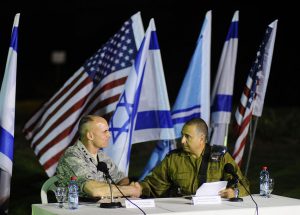
By February 10, 2017


BESA Center Perspectives Paper No. 410, February 10, 2017
EXECUTIVE SUMMARY: Many American detractors of Israel begin by citing that Israel receives the lion’s share of US military aid. The very suggestion conjures the demon of an all-powerful Israel lobby that has turned the US Congress into its pawn. But these figures, while reflecting official direct US military aid, are almost meaningless in comparison to the real costs and benefits of US military aid – above all, American boots on the ground. In reality, Israel receives only a small fraction of American military aid, and most of that was spent in the US to the benefit of the American economy.
Countless articles discrediting Israel (as well as many other better-intentioned articles) ask how it is that a country as small as Israel receives the bulk of US military aid. Israel receives 55%, or $US3.1 billion per year, followed by Egypt, which receives 23%. This largesse comes at the expense, so it is claimed, of other equal or more important allies, such as Germany, Japan, and South Korea. The complaint conjures the specter of an all-powerful Israel lobby that has turned the US Congress into its pawn.
The response to the charge is simple: Israel is not even a major beneficiary of American military aid. The numerical figure reflects official direct US military aid, but is almost meaningless compared to the real costs and benefits of US military aid – which include, above all, American boots on the ground in the host states.
There are 150,500 American troops stationed in seventy countries around the globe. This costs the American taxpayer an annual $US85-100 billion, according to David Vine, a professor at American University and author of a book on the subject. In other words, 800-1,000 American soldiers stationed abroad represent US$565-665 million of aid to the country in which they are located.
Once the real costs are calculated, the largest aid recipient is revealed to be Japan, where 48,828 US military personnel are stationed. This translates into a US military aid package of over US$27 billion (calculated according to Vine’s lower estimation). Germany, with 37,704 US troops on its soil, receives aid equivalent to around US$21 billion; South Korea, with 27,553 US troops, receives over US$15 billion; and Italy receives at least US$6 billion.
If Vine’s estimate is correct, Japan’s US military aid package is nine times larger than that of Israel, Germany’s is seven times larger, and Italy’s is twice as large. The multipliers are even greater for Egypt. Even the Lilliputian Gulf states, Kuwait and Bahrain, whose American bases are home to over 5,000 US military personnel apiece, receive military aid almost equal to what Israel receives.
Yet even these figures grossly underestimate the total costs of US aid to its allies. The cost of maintaining troops abroad does not reflect the considerable expense, deeply buried in classified US military expenditure figures, of numerous US air and sea patrols. Nor does it reflect the high cost of joint ground, air, and maritime exercises with host countries (events only grudgingly acknowledged on NATO’s official site).
US air and naval forces constantly patrol the Northern, Baltic, and China Seas to protect American allies in Europe and in the Pacific – at American expense. Glimpses of the scale of these operations are afforded by incidents like the shadowing of a Russian ship in the Baltics, near run-ins between Chinese Coast Guard ships and US Navy ships dispatched to challenge Chinese claims in the South China Sea, and near collisions between US Air Force planes and their Chinese counterparts in the same area.
In striking contrast, no US plane has ever flown to protect Israel’s airspace. No US Navy ship patrols to protect Israel’s coast. And most importantly, no US military personnel are put at risk to ensure Israel’s safety.
In Japan, South Korea, Germany, Kuwait, Qatar, the Baltic states, Poland, and elsewhere, US troops are a vulnerable trip-wire. It is hoped that their presence will deter attack, but there is never any assurance that an attack will not take place. Should such an attack occur, it will no doubt cost American lives.
This cannot happen in Israel, which defends its own turf with its own troops. There is no danger that in Israel, the US might find itself embroiled in wars like those it waged in Iraq and Afghanistan at a cost of US$4 trillion, according to Linda J. Bilmes, a public policy professor and Harvard University researcher.
Japan’s presence at the top of the list of US military aid recipients is both understandable and debatable. It is understandable because Japan is critical to US national security in terms of maintaining freedom of the seas and containing a rising China. It is debatable because Japan is a rich country that ought to pay for the US troops stationed within it – or in lieu of that, to significantly strengthen its own army. At present, the Japanese army numbers close to 250,000, but it is facing the rapidly expanding military power of its main adversary, China. A similar case can be made with regard to Germany, both in terms of its wealth and its contribution towards meeting the Russian threat.
What is incomprehensible is not why Israel receives so much US military aid, but why Japan has received nine times more aid than Israel does. This is a curious proportion given the relative power Israel possesses in the Middle East and its potential to advance vital US security interests in times of crisis, compared to the force maintained by Japan relative to China.
Ever since the Turkish parliament’s decision in March 2003 not to join the US-led coalition, and the Turkish government’s refusal to allow movement of American troops across its borders, Israel has been America’s sole ally between Cyprus and India with a strategic air force and (albeit small) rapid force deployment capabilities to counter major threats to vital US interests.
It takes little imagination to envision these potential threats. Iran might decide to occupy Bahrain, which has a Shiite majority seriously at odds with the ruling Sunni monarchy. It might take over the United Arab Emirates, which plays a major role in the air offensive against the Houthis, Iran’s proxies in the war in Yemen. There might be a combined Syrian and Iraqi bid to destabilize Sunni Jordan, in the event that both states subdue their Sunni rebels. Any of these moves would threaten vital energy supplies to the US and its allies. Only Israel can be depended upon completely to provide bases and utilities for a US response and to participate in the effort if needed.
The politicians, pundits, and IR scholars who attack Israel and the Israeli lobby for extracting the lion’s share of US military aid from a gullible Congress know full well that this is not true. Israel receives a small fraction of the real outlays of military aid the US indirectly gives its allies and other countries. These experts also know that 74% of military aid to Israel was spent on American arms, equipment, and services. Under the recently signed Memorandum of Understanding, that figure will be changed to 100%. The experts simply cite the wrong figures.
The US is now led by a businessman president who knows his dollars and cents. He has been adamant about the need to curb free-riding by the large recipients of real US aid. He will, one hopes, appreciate the security bargain the US has with Israel – a country that not only shares many common values with the US, but can make a meaningful contribution to American vital interests with no trip-wires attached.
Prof. Hillel Frisch is a professor of political studies and Middle East studies at Bar-Ilan University and a senior research associate at the Begin-Sadat Center for Strategic Studies.
BESA Center Perspectives Papers are published through the generosity of the Greg Rosshandler Family

Tuesday, October 25, 2016

Military Restrtictons On Military Personnel Regarding Political Activities

UCMJ And Politics

Army Times reports: A Colorado lawmaker wants the Defense Department to remind active-duty and reserve service members about the rules limiting participation in partisan political events. Rep. Mike Coffman, R-Colo., a member of the House Armed Services Committee who served in the Army and Marine Corps, said in a Thursday letter to Defense Secretary Leon Panetta that he thinks existing regulations are fine but that troops may need a reminder.
It is 2012, it is a presidential election year. That means there are potential problems for militarypersonnel (active, Guard, Reserve, or retired) who want to be involved in the political process beyond military voting. If you violate one or more of the rules, regulations, or statutes governing political participation and acts you can find yourself being in a disciplinary situation. Here are links to an example of how a military member can get in trouble over politics.
Here's a reminder, from Stars & Stripes, that politicking in uniform is not allowed.
Here is a piece by Bryant Jordan on Military.com with more on the recent "politicking" of a uniformed Reserve Soldier.
[UPDATE:] The Soldier referenced in the articles above was given a letter of reprimand with it filed in his official record in March 2012. The Army determined that Jesse D. Thorsen violated policies that bar soldiers from participating in political events in their official capacities or while in uniform. Experts say a reprimand may become a problem if Thorsen seeks a promotion or could be used to justify more serious punishment if he gets in trouble again.
[UPDATE] A Marine who appears to have started a Armed Forces Tea Party is also fallen afoul of these rules and is being processed for administrative discharge. In his case it appears he was warned and given opportunities to change, but declined to do so.
Nothing in the rules prohibits or restricts a military member registering to vote or voting, or donating to politicians or political parties; that is the personal choice of each member. What the rules do restrict or limit is how an individual may advocate on behalf of a political party, candidate, or elected official. The greatest restriction is that Active-duty service-members are strictly prohibited from military voting including campaigning for political office or actively taking part in a political campaign - even behind the scenes. This is generally known as partisan political activity: an "activity supporting or relating to candidates representing, or issues specifically identified with, national or State political parties and associated or ancillary organizations."
Overseas members of the military and their families are guaranteed the right to vote by the Uniformed and Overseas Citizens Absentee Voting Act. However, the difficulties of obtaining absentee ballots in remote and dangerous areas of the world and returning them in time have led to shockingly high rates of disenfranchisement. The Military and Overseas Voter Empowerment Act (MOVE Act) of 2009 required changes by 2010 intended to provide greater military voting opportunities.
Where can I find the military voting rules and how do they apply to me.
DoD Directive 1344.10, Subj: Political Activities by Members of the Armed Forces.
Air Force Instruction 51-902., Subj: Political Activities by Members of the US Air Force.
Army AR 600-200., Subj: Army Command Policy, Para. 5-3, Political Activity, and Appendix B.
Navy. SECNAVINST 5720.44, Subj: Public Affairs Policy and Navy Regulations. Here's more from the Naval Inspector General who would investigate complaints for the Department of the Navy.
Marine Corps Order 5370.7B., Subj: Political Activities.
Some general principles.
Rallies, Town Halls, and Meetings. You CAN attend a political rally or event as a spectator. You CANNOT wear your uniform to the rally. You CANNOT speak in front of the rally.
Letters-to-the-Editor. You CAN write a letter to the editor of a paper expressing your personal view calling for the repeal or passing of legislation and sign it as a service member.
Talking to or writing to your Member of Congress. You CAN express your personal opinion to Congress about legislation or personal issues. You CANNOT tell your Congressperson that you are speaking on behalf of your unit or the military when you tell him/her that DADT should be repealed. The right to communicate with Congress is found in Article 138, UCMJ, regarding complaints of wrongs. And you are protected from retaliation by statute, 10 U. S. Code 1034.
Talking on the radio/TV or at a program/group discussion. You CAN express your personal opinion when interviewed by the press, unless in uniform. You CANNOT tell the press that you represent the armed forces.
Petition. You CAN sign a petition. You CANNOT claim to represent the military when signing a petition.
Bumper Sticker. You CAN put a political oriented bumper sticker on your personal car. You CANNOT put bumper stickers on military vehicles.
Voting. You CAN vote for candidates who support your views. You can promote and encourage other military members to exercise their military voting rights, so long as such promotion does not constitute an attempt to influence or interfere with the outcome of an election; but you cannot encourage them to vote for a particular candidate or party. You CANNOT campaign for a particular candidate representing yourself as a military member. This includes participating fully in the Federal Voting Assistance Program.
Contributions. You CAN make monetary - not time - contributions to a political organization, party, or committee favoring a particular candidate or slate of candidates, subject to the limitations of law..
Fundraisers. You CAN attend a political dinner or similar fundraiser, but NOT in uniform. You CANNOT sell tickets for, or otherwise actively promote, the dinner or similar fundraising events.
Voting Day. You CANNOT conduct a political opinion survey under the auspices of a partisan political club or group or distribute partisan political literature. You CANNOT perform clerical or other duties for a partisan political committee or candidate during a campaign, on an election day, or after an election day during the process of closing out a campaign.
There are various criminal statutes that also affect what, when, where, and how.
2 U.S.C. § 441a. Federal election campaigns: limitation on contributions and expenditures.
10 U.S.C. § 973: duties of officers on active duty; performance of civil functions restricted.
18 U.S.C. Chapter 29, Elections and Political Activities; 18 U.S.C. § 1913.
Article 88, UCMJ.
Any commissioned officer who uses contemptuous words against the President, the Vice President, Congress, the Secretary of Defense, the Secretary of a military department, the Secretary of Transportation, or the Governor or legislature of any State, Territory, Commonwealth, or possession in which he is on duty or present shall be punished as a court-martial may direct.
Article 92, UCMJ. Violations of the various regulations and laws will likely be prosecuted under this article as an orders violation.

Monday, October 13, 2014

Ebola WILL Come To The US. There Is NO WAY Military Personnel Will Not Become Infected.


  • Text smaller
  • Text bigger
Back in the days of the Vietnam War, those of us who were on the wrong side – like John Kerry and Jane Fonda and Donald Sutherland – were eager to “bring the war home.”
That became the mantra of the political left – “bring the war home.”
The idea was to make ordinary American citizens feel the effects of the war so they would quickly demand an unconditional withdrawal, setting the stage of a Communist victory – which they ultimately got.
I was thinking about this in the context of Barack Obama’s war on Ebola. This war will be an easy one to bring home.
With at least 4,000 military personnel and hundreds of American civilian contractors being sent into the hot zone, it’s a near certainty some of them will contract the deadly disease. What then? Naturally, they will be brought home, with some risk of furthering the infection in the homeland.
Not only do American political leaders no longer no how to fight foreign wars to win, they are more inclined to improperly use military deployments for missions completely unsuitable for soldiers. The Ebola war is a perfect example.
Is this a purposeful effort to destroy the U.S. military?
Whether it is or not, that is the effect it will surely have.
Those who voluntarily enter into the U.S. armed services are citizens who are willing to sacrifice their lives for their country. But that means they are willing to fight to the death if necessary – not succumb to a dread disease that could threaten their loved ones at home, not to mention jeopardize the health and national security of their country.
That’s what U.S. military forces are being asked to do in West Africa – and it’s not right.
This is a military deployment Americans should protest vehemently and stridently. It’s a game-changer for the U.S. military, not to mention bad public health policy.
Think about it.
Barack Obama says he will not put any “boots on the ground” in Iraq to take on ISIS. But he is perfectly willing to put boots on the ground in West Africa for an ill-defined mission for which the U.S. military is not trained.
The U.S. military is trained to kill bad guys and break things. It is not a social service agency. It is not a medical team. It is not a force designed to build civilian health infrastructure. It is not a band of guinea pigs.
Apparently Obama hasn’t figured that out.

This Ebola mission doesn’t make Americans safer. It increases the danger of spreading the disease – and bringing it back home – exponentially.
At first Obama and the military commanders said soldiers wouldn’t be treating or coming into direct contact with Ebola victims. Then they reversed themselves, explaining that’s precisely what they will be doing.
Of course, health officials also told us how difficult it was to contract Ebola, only to later admit it can be spread just like the common cold – with a sneeze.
How could we be so foolish as to send our best and brightest into an Ebola hot zone to play nursemaid in the midst of an epidemic?
It’s irresponsible. It’s madness. It makes no sense.
But that’s what we’re doing.
Perhaps the only chance we’ll have as Americans to reverse this bad call is on Election Day.
Obama has told us his policies are on every ballot next month.
Remember this when you vote.
Obama wants you to vote for Democrats.
If you disapprove of his policies, you have only one meaningful alternative.
It’s time to stop Obama before he brings this war home – in the form of an Ebola plague in the U.S.
It’s time to control the Obama plague by tying his hands for his remaining two years in office.

Read more at http://www.wnd.com/2014/10/bringing-the-ebola-war-home/#sU5lksP8Apikuuk8.99

Saturday, October 11, 2014

Soldiers Warned Not To Wear Uniforms In Public For Their Own Safety. Muslims Threaten, Cowards Run And Hide. What Is Happening To The Free??? World?