Contact Form

Name

Email *

Message *

Showing posts with label snap. Show all posts

Friday, March 9, 2018

Work Should Be Required For Those Who Get Benefits--Unless They Physically Cannot!

Trump’s idea for tougher work requirements for food stamp recipients worries anti-hunger advocates

Trump’s idea for tougher work requirements for food stamp recipients worries anti-hunger advocates
The Trump administration is looking for ways to get more people off of food stamps. (Ljupco/Getty Images)

Anti-hunger advocates said they plan to resist the Trump administration’s latest announced efforts to get people off food stamps, The Hill reported. They have said President Donald Trump’s plans would boot thousands of unemployed people off the program.
In his 2018 budget, Trump proposed limiting the number of state waivers for the work requirement for receiving aid through the Supplemental Nutrition Assistance Program, or SNAP, the Hill reported. Limiting the number of waivers would force people back into the workforce, supporters of the move say.
“We can totally understand in a bad economy or in certain isolated cases someone might need an exception … however, today we have 6 million open jobs, we’re approaching all-time low unemployment and employers are having a hard time filling jobs,” Sam Adolphsen, a senior fellow at the Foundation for Government Accountability, told The Hill. “Now is not the time to be waiving the work requirement.”
Rep. Glenn Grothman (R-Wis.) introduced legislation last March that would eliminate work requirement waivers. He told The Hill that SNAP now discourages people from working.
“Particularly in today’s economy, the idea that you should have to work to get food stamps seems to be pretty much common sense,” he said.
Grothman said removing people from the program is not a funding issue.
“To me it’s more of a moral thing,” he said. “We don’t want to encourage people to behave improperly.”
Currently, adults ages 18 to 49 who are not disabled or raising minor children cannot receive aid through SNAP for more than three months over a three-year period. To keep their benefits, these adults must work at least 20 hours a week, participate in a state work-training program, or volunteer.

How many people receive SNAP?

According to the Department of Agriculture approximately 3.8 million of the 42 million people receiving SNAP benefits are able-bodied adults without dependents.
States can apply for a federal waiver for the work requirement, if jobs are lacking in the area. But some officials believe the waivers being abused. Agriculture Secretary Sonny Perdue has said too many states are seeking the waivers. As a result, they are “abdicating their responsibility to move participants to self-sufficiency.”
The USDA reportedly plans to change waiver eligibility requirements. In a statement last month, Perdue said: “Past decisions may have been the easy short-term choice, but USDA policies must change if they contribute to a long-term failure for many SNAP participants and their families.”
Twenty-eight states have waivers for certain areas, while the District of of Columbia, Guam and the U.S. Virgin Islands have full waivers now, according to the USDA website. To qualify, states must have an area with an average 12-month unemployment rate of more than 10 percent, or show there are not enough available jobs.

What do anti-hunger advocates say?

Anti-hunger advocates maintain that it’s a myth that adults capable of working are simply freeloading off of the government.
“No one is living comfortably on this,” Josh Protas, vice president of public policy at Mazon, told The Hill.
Most adults want to work but face employment barriers such as a lack of education or a criminal record, according to anti-hunger advocates. Others work at low-wage jobs but cannot get the minimum of 20 hours a week to qualify for assistance.
The average monthly benefit for an able-bodied adult without dependents is $163, according to the USDA.
Stacy Dean, vice president for food assistance policy at the Center for Budget and Policy Priorities, said states are not required to offer a job or training SNAP recipients. Also, many don’t receive enough funding to do so.
Last April, Rep. Alma Adams (D-N.C.) offered a bill to strengthen the food stamp program and exempt able-bodied adults without dependents from the work requirement if their state can’t provide them with a slot in a SNAP employment or training program. But the measure is unlikely to get enough support from Republicans to pass the House, since the GOP has made work requirements for SNAP a policy priority.
In a statement to The Hill, a USDA spokesperson said the agency’s goal is to move individuals from SNAP back to the workforce as the best long-term solution to poverty.
“[P]ublic input is an important part of finding the best approaches, and USDA will use the information gathered to consider options, including potential rule-making, to help able-bodied SNAP participants move out of poverty in a manner that is consistent with the structure and intent of the program,” the spokesperson said.

Thursday, July 20, 2017

A Great Budget Idea Unfortunately With The Weak Kneed Republicans, It Will Never Pass


FINALLY, A BUDGET WORTH LOOKING AT


0
151

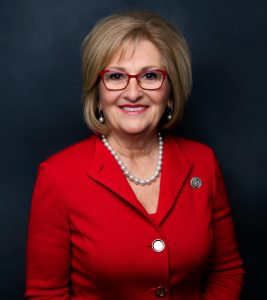
Image: Public Domain. House Budget Committee. Committee Chairwoman Diane Black (R-Tenn.)

While Congress has fumbled the Obamacare repeal, one promise seems to be on the road to being kept within the House Budget Committee. Committee Chairwoman Diane Black (R-Tenn.) has released a budget plan for FY 2018 that details major cuts to so-called mandatory spending, presents the tax plan President Donald Trump has boasted about, and reins in government waste. Finally, Republicans in Congress have the opportunity to show the American people comprehensive change is afoot, now they must simply act on it.
The budget is comprised of two types of spending. The mandatory spending that represents the vast majority of government spending and is nearly impossible to change from year to year — it operates automatically based on eligibility for programs — without an act of Congress. Social programs such as Medicaid, Medicare and Social Security are funded here, as well as income guarantees and tax credits.
In fiscal year 2016, this accounted for $2.7 trillion or 70 percent of total government expenditures.
Conversely, discretionary spending is government money budgeted for each executive department and government branch to execute their duties. Congress is supposed to determine the budgets each year through the appropriations process.
BLACK’S PLAN CHANGES LAW, CALLING FOR AN AMBITIOUS $203 BILLION CUT TO MANDATORY SPENDING OVER THE NEXT 10 YEARS, MAKING THIS BUDGET A HISTORICAL WITH CUTS THAT HAVE NOT BEEN SEEN SINCE THE 1990S.
The Budget Committee presents a number to other committees and those groups determine how money will be appropriated to their mandatory spending. For example, Black’s budget proposes $10 billion to be cut by the House Appropriations Agriculture Subcommittee over the next ten years, it recommends these cuts through the enforcement of work requirements for Supplemental Nutrition Assistance Program, formally known as food stamps, participants. If the budget passes, the Agricultural Committee would be bound to this budget, but ultimately, they would decide how to achieve it, keeping in mind Budget Committee recommendations.
As the budget explains, “Under current law, the Congressional Budget Office [CBO] estimates that the annual budget deficit will balloon to over $1.4 trillion by 2027… Without significant reforms, deficits will continue to rise beyond the 10-year budget window, driven mostly by automatic, mandatory spending programs. The debate about spending and fiscal restraint is not simply a mathematical one. It is a moral debate about the country and government we want. It is about the burden we are willing to leave to our children and grandchildren.”
Black also discusses significant reforms to welfare programs, refocusing the goal from serving as many people as possible to lifting people out of poverty. Black encourages states to take more authority over the design and implementation of these programs, and to shift the responsibility off the federal government.
The cuts coincide with a plan to simplify the tax code by lower tax rates for individuals and consolidating the current seven individual income tax brackets, reducing the corporate tax rate, and transition the tax code from a “worldwide” system to a “territorial” system.
The switch to a territorial system would allow U.S. companies to only pay taxes on income made in the U.S. and would exempt most or all foreign income; the territorial system creates an incentive for companies to reinvest their earnings into the U.S. without paying additional taxes.
Black also targets abuse in programs most susceptible, such as the Earned Income Tax Credit (EITC) and Child Tax Credit programs. With 24 percent of EITC payments being issued improperly in FY 2016, totaling $16.8 billion, this budget would suggest changing the requirements to receive the credit, such as the presentation of a social security number to claim a child.
AS BLACK ENCOURAGES A REVALUATION OF OUR TAX CODE, SHE IS ALSO TARGETING WASTE THROUGHOUT THE GOVERNMENT.
In FY 2016, the U.S. government made a total of $144.3 billion in “improper payments”; defined as any government payment made in an incorrect amount, mostly overpayment, to the wrong individual or entity, or for the wrong reason. This is a significant increase from $107.1 billion in 2012.
According to Government Accountability Office reports, more than 75 percent of the problem lies within Medicare, Medicaid, and the EITC.
Black demands reform in these areas. Her budget calls for, “An independent commission to find tangible solutions to reduce government-wide improper payments by the end of the year. This new commission would be charged with finding ways to tangibly reduce government-wide improper payments by 50 percent within the next five years. This timeframe recognizes that this problem is complex and there is not a silver-bullet solution that could be implemented overnight. Rather, the commission should methodically solicit input from experts within government, such as GAO, and the private sector to determine the best ways to tackle this problem.”
With mandatory spending programs like Medicare and Medicaid making billions of dollars in improper payments, it is clear reform must be achieved before increases in funding can be granted.
Black also encourages agencies to use the spending cuts suggested as a floor, rather than a ceiling. With the nation sitting $20 trillion dollars in debt, she concludes, “Our budget, Building A Better America, balances within 10 years. For too long, the federal government’s excessive spending has put future generations at risk. Massive tax increases or crippling austerity measures are the natural conclusion of our current rate of spending, and future generations will pay the price. Failure to take swift and decisive action is not only inexcusable, it is immoral.”
As a bonus, the more spending cuts the committees choose to make, the bigger tax cuts the budget will be able to propose. Part of Black’s budget relies on the funding cuts associated with the repeal of Obamacare, placing pressure on the Senate to pass a repeal and replace bill. Unfortunately, that legislation is now on the rocks.
Still, Black’s budget could be a historic reduction and restructuring of the country’s excessive, so-called mandatory spending, but only if Republicans in Congress are prepared to fulfill their promises. Black’s budget balances the budget in ten years, cuts spending, restructures the tax code, reigns in government spending and all while maintaining defense spending.
Fiscal security is quickly becoming a national emergency, Republicans have had years to prepare for a conservative plan like this one, now they simply must be willing to implement it.
This is a guest post by Natalia Castro a contributing editor at Americans for Limited Government.

Tuesday, January 17, 2017

SNAP Program Should Only Be Food That Meets Michelle Obama's School Lunch Program. No Junk Food, No Pop, No Snacks, Only Nutritious Food!


Tennessee Lawmaker Proposes Ban on Junk Food for Food Stamp Users


 Print
Advertisement - story continues below
Many have long argued that when someone subsists courtesy of the generosity of the state (think welfare and food stamps, for instance), then that individual should be gracious enough to at least spend the state’s money wisely.
One of those who has argued this was Tennessee Rep. Sheila Butt, who on Thursday finally acted on this belief by filing a monumental bill that would ban food stamp recipients from spending taxpayer funds on unhealthy food items.
“A recipient of public assistance benefits shall not knowingly use an electronic benefits transfer card to purchase food items that are high in calories, sugar and fat without any nutritional value, including, but not limited to, soda, ice cream, candy, cookies and cake, as recommended by the United States Department of Agriculture,” the Republican’s bill reads.

Some have countered that passing this bill would be both an affront to the poor and equivalent to telling the less fortunate that only the rich deserve to eat sweets and drink soda.
In a statement published to her website, however, Butt refuted this accusation.
“At the end of the day, if you’re on public assistance, you shouldn’t be using taxpayer dollars to consume junk food that leads to additional health problems and more taxpayer assistance to address those problems,” she wrote.


Please share this story on Facebook and Twitter and let us know what you think about this Tennessee lawmaker’s push to bar food stamp recipients from wasting their money on unhealthy food!
What do you think about this bill?

Monday, January 16, 2017

A Great Spot To Reduce The Budget!


Dead People Doled Out $2.6 Billion Worth of Food Stamps

Feds have 'little assurance that retailers are who they say they are'


AP
AP
BY: 
Dead retailers redeemed more than $2 billion worth of food stamps, according to a new audit.
The U.S. Department of Agriculture’s inspector general reviewed billions of transactions through the Supplemental Nutrition Assistance Program (SNAP), also known as food stamps. It found that thousands of stores authorized to accept food stamps were using the Social Security numbers of deceased persons.
An audit released Thursday found instances of potential fraud where the Food and Nutrition Service issued food stamps through stores that claimed to be owned by children or the dead.
“We found that 3,394 authorized SNAP retailers (retailers) used Social Security Numbers (SSN) that matched SSNs of deceased people,” the inspector general said. “Additionally, 193 retailers listed owners who were not at least 18 years of age. While FNS did have some controls to edit or verify SNAP retail owner information, these controls were not adequate to ensure owner information accuracy.”
Between October 2013 and June 2015, the inspector general identified 3,394 stores owned by 1,819 people who were using SSNs listed on the Social Security Administration’s Death Master File.
“These 3,394 retailers redeemed about $2.6 billion in SNAP benefits,” the inspector general said. The 193 businesses that reported child owners redeemed $41 million in food stamps.
“Without accurate retail owner data such as birth dates and SSNs, [the Food and Nutrition Service] FNS has little assurance that retailers are who they say they are,” the inspector general said. “This could leave the program open to abuse by disqualified individuals and others wishing to hide their identity for possible fraudulent purposes.”
“If indeed some of these retailers are wholly owned by deceased persons or persons under the age of 18, this situation could leave FNS with little recourse other than disqualification in the event that adverse action needs to be taken against a particular retailer,” the inspector general added.
An average of 46 million Americans receive food stamps every month through the food stamp program, which costs $70 billion per year.
For the audit, the inspector general reviewed roughly 280,000 retailers responsible for 1.56 billion food stamp transactions worth $23 billion.
The department said some of the businesses that reported minors as owners had mistakenly entered the date they applied to redeem food stamps as their date of birth.
The government admitted it “did not have formal procedures for what action, if any, should be taken to secure FNS interests” if a store owner was recorded as being under the age of 18.
The Food and Nutrition Service said it does have an edit check in one of its databases to “ensure owners were at least 5 years old.”
The government said it is reviewing the 1,819 owners using the SSNs of dead people.
So far the department has reviewed 147 owners and removed 122, or 83 percent, from the program.
Of the remaining stores, seven are no longer authorized to redeem food stamps for other violations. Eighteen cases were found to be valid; in some of these cases, the business owner had died but the business was still operated by the deceased owners’ spouse.

Monday, January 2, 2017

Welfare Should Be For Food, Not Candy And Liquor


Welfare Recipients Will Be TICKED When They Learn What These 2 States Just Moved to Ban


 Print

Welfare recipients might be able to buy only necessities with their government benefits in the near future if President-elect Donald Trump’s administration approves state requests to limit what items people can purchase with food stamps.
According to The Daily Signal, officials in both Maine and Arkansas planned to ask the Trump administration to prohibit the use of food stamps to buy unnecessary items such as candy.
President Barack Obama’s administration previously denied any requests of the sort, and welfare recipients have been able to purchase whatever junk food they desire instead of necessities.

In 25 states, the purchase of alcohol and tobacco is allowed using food stamps, another measure approved by the Obama administration.
But Mary Mayhew, commissioner of Maine’s  Department of Health and Human Services, told The Daily Signal that federal and state government should only provide what is necessary to those who claim they cannot afford food.
“What an individual with their own money that they earned chooses to buy is their prerogative. What a program known as Supplemental Nutrition Assistance — that is taxpayer funded — supports should be restricted and directed based upon the policy intent of the program,” Mayhew said.

In addition, the Arkansas legislature was considering a bill proposed by Republican state Rep. Mary Bentley. If passed, the bill will restrict food stamps to “food products and beverages that have sufficient nutritional value.”
There is also another more important reason as to why Bentley proposed the bill. She says it was for the health of state residents.
“Overconsumption of excessively sugared foods, food products and beverages increases the risk of obesity and other diseases,” the bill stated. “People living in poverty are more likely to consume nutrient-poor food.”
President-elect Trump addressed welfare in his book “Time To Get Tough,” and what he said about the food stamp program should give conservatives hope.

“The food stamp program was originally created as temporary assistance for families with momentary times of need. And it shouldn’t be needed often,” Trump said. “Thankfully, 96 percent of America’s poor parents say their children never suffer even a day of hunger. But when half of food stamp recipients have been on the dole for nearly a decade, something is clearly wrong, and some of it has to do with fraud.”
It will be nice to have a little common sense in the White House for a change.
Share this story on Facebook and Twitter and tell us if Trump will make changes to the food stamp program.
What do you think welfare recipients should be able to buy with their benefits?

Tuesday, November 29, 2016

If Soft Drinks Are So Bad For You, Why Does Welfare Pay For Them?


Shock Chart Reveals Number 1 Item Bought With Welfare Money Is Soft Drinks


 Print

Food stamp recipients aren’t buying necessities, and there’s government research to prove it.
CNS News reported that the No. 1 commodity bought by United States citizens using food stamps in 2011 was soft drinks. In addition, the amount spent on those soft drinks totaled $357,700,000 at only one “leading U.S. grocery retailer.”
On the other hand, citizens not receiving government assistance bought milk as their No. 1 commodity.

The study, based on food purchases at one unidentified food retailer in 2011 and released by the Food and Nutrition Service, revealed some other harrowing statistics.
“About 40 cents of every dollar of food expenditures by SNAP households was spent on basic items such as meat, fruits, vegetables, milk, eggs, and bread,” it said.
However, “another 20 cents out of every dollar was spent on sweetened beverages, desserts, salty snacks, candy and sugar,” items that are not necessary in daily life, or even unhealthy.

It’s no surprise that those who do not need to use food stamps sometimes spend money on needless or pleasure items, simply because they can afford to do so. However, the study shows that those who shop with other people’s money tend to buy the same unnecessary items as those who can afford them.
“Less healthy food items were common purchases for both SNAP and non-SNAP households,” the study explained. “Sweetened beverages, prepared desserts and salty snacks were among the … top 10 summary categories for both groups. Expenditures were greater for sweetened beverages compared to all milk for both groups, as well.”
welfare
This is the problem with the welfare system. Those who do not need food stamps use the system to buy unnecessary items that they otherwise wouldn’t have been able to afford.

If they are using this money — taxpayer money — to purchase things they don’t need, then they don’t need taxpayer money.
Share this story on Facebook and Twitter and let us know your solution to welfare abuse.
What do you think the government should do about welfare?

Wednesday, March 23, 2016

The False Obama Recovery


  • Text smaller
  • Text bigger
money
NEW YORK – The Federal Reserve Bank of St. Louis updates quarterly a set of nine easy-to-understand charts that demonstrate how Obamanomics, the economic policies of the Obama administration, have failed to produce real economic benefits for the American people.
The nine charts illustrate that Obamanomics has dramatically increased both consumer and government debt; driven U.S. workers out of the labor force in a manipulation of statistics designed to allow the Bureau of Labor Services to report an unemployment rate that is artificially low; increased health-care costs despite the passage of the Affordable Care Act; and produced a questionable economic recovery, with U.S. growth rates still hovering at near-recession levels of economic stagnation.
This article is an update of a report published by Rachel Stoltzfoos, “Obama’s Economy in 9 Charts,” in the Daily Caller on Oct. 30, 2015. In September 2015, ZeroHedge.com introduced the concept of selecting nine charts to describe the Obama economy from the dozens of charts produced and updated by the Federal Reserve Bank of St. Louis.

Student loans
The first chart tracks student loans, making it clear that as of the third quarter 1990, there were no outstanding student loans. At the beginning of the Obama administration, in the first quarter of 2009, student loans stood at $146.6 billion. From there, the graph rises steeply. By the fourth quarter 2015, the last quarter for which the Federal Reserve Bank of St. Louis charted the data, student loans had risen to $945.6 billion.
0321econ1
The origin of the student loan program can be traced to Bill Clinton signing the Omnibus Reconciliation Act of 1993, which set up a phase-in of a direct government lending for student loans that replaced the program of government guarantees of private student loans arranged largely through banks, beginning with the National Defense Education Act of 1958 and the Federal Family Education Loan Program in 1965.
In signing the Health Care and Education Reconciliation Act of 2010, President Obama engineered a government takeover of the student loan program, so that today all student loans are direct government loans.
Food stamps
Under President Obama, the Supplemental Nutrition Assistance Program, or SNAP, commonly known as the “Food Stamps” program, has grown from $54.8 billion in 2009 to $69.4 billion in 2014.
0321econ2
In January 2015, the number of beneficiaries receiving food stamps topped 46 million for 38 straight months, with 14.6 percent of the population and 19.7 percent of all households receiving food stamps. This represents an increase of 1516.96 percent over the 2.9 million Americans participating in the food stamp program in 1969.
Federal debt
The federal debt is projected to nearly double under President Obama, with the Federal Reserve Bank of St. Louis chart showing it has increased from $11.1 trillion in the first quarter 2009 to $18.9 trillion in the fourth quarter 2015.
0321econ3
At the end of the George W. Bush presidency in January 2009, the federal debt stood at $10.6 trillion. It is projected to exceed $20 trillion by the end of Obama’s presidency in January 2017.
Money printing
While Quantitative Easing, the Federal Reserve policy of printing money to buy U.S. Treasury Department-issued government debt, known among economists as QE, began under President George W. Bush, it took off under President Obama.
The Federal Reserve Bank of St. Louis chart shows the adjusted monetary base of the United States rose from $1.772 trillion on Jan. 14, 2009, to $3.996 trillion as of March 16, 2016.
0321econ4
As WND reported in April 2014, the Federal Reserve in the Obama administration pumped the Federal Reserve’s balance sheet with more than $4 trillion of purchases of U.S. Treasuries and other federal government bonds. QE grew to a level of $85 billion a month under the previous Federal Reserve chairman, Ben Bernanke.
Health insurance costs
Despite Obama’s promises that the implementation of Obamacare would lower health-care costs, the Federal Reserve Bank of St. Louis chart shows the Consumer Price Index, CPI, for medical care services has continued a straight-line increase since the passage of the Affordable Care Act.
0321econ5
The CPI for medical care services has increased from 149.952 in January 2009 to 186.961 in February 2016, rising from a base of 100 in December 1999.
Labor-force participation
The labor-force participation rate has fallen consistently under the Obama administration as an increasing percentage of those out of work and looking for work simply give up and quit looking. The labor-force participation rate has dropped from 65.7 percent in January 2009 to 62.9 percent in February 2016.
0321econ6
In May 2014, WND reported that the Bureau of Labor Administration in the Obama administration had implemented a policy of making unemployment percentages look artificially low by increasing the number of workers considered no longer in the work force.
In April 2014, nearly 93 million Americans were considered out of the labor force. According to John Williams, an economist known for arguing the government reports manipulate “shadow statistics” of economic data for political purposes, drops in the unemployment rate as reported by the BLS have become virtually meaningless.
“The broad economic outlook has not changed, despite the heavily-distorted numbers that continue to be published by the BLS,” Williams writes in his subscription newsletter on ShadowStats.com. “The unemployment rates have not dropped from peak levels due to a surge in hiring; instead, they generally have dropped because of discouraged workers being eliminated from headline labor-force accounting.”
Business workforce share of income
The Bureau of Labor statistics measures labor’s share of the income produced by nonfarm employment, roughly described as employment in the business sector of the economy. The measure is often used to interpret “the worker’s share of the economy,” with a declining index interpreted as a measure of growing economic discontent among middle class employees.
0321econ7
The index has dropped from a peak of 103.605 in the first quarter 2007, under President George W. Bush, to 99.350 in the fourth quarter 2015, under President Obama.
Median family income
Real median household income in the United States has declined from a height of $57,357 in 2007 under President George W. Bush to $53,657 in 2014 under President Obama.
0321econ8
The calculation takes into consideration the “Obama economic recovery,” in that real median household income in the United States by 2013 rose to $54,426 in 2013, from a low of $52,605 in 2012, only to fall back again in 2014.
Home-ownership rate
Home ownership under Obamanomics has continued a straight-line decline that began with the collapse of the substandard real estate market during George W. Bush’s second term in office.
0321econ9
The home-ownership rate has declined from 67.4 percent in 2009 to 63.7 in the second quarter 2015. On July 28, 2015, the Wall Street Journal reported that the rate of home ownership in the second quarter 2015 hit a 48-year low, reflecting the reality that fewer middle class Americans can afford to buy a home. Under Obama, an increasing number of Americans are living in rented homes, with the American dream of owning a home no longer an economic reality.
Copyright 2016 WND

Read more at http://www.wnd.com/2016/03/obamas-economic-recovery-in-just-9-charts/#6E2bzicfGEMSJbY5.99