Contact Form

Name

Email *

Message *

Tuesday, October 25, 2011

Surprise, Surprise Sharia Law Is the Law of the Land in New Libya


For those of you who are not living under a rock, the announcement by the new leaders of Libya that Sharia Law would be the rule of law and any law that violates Sharia would be null and void is not a surprise.  If you are surprised, you should be ashamed of your naivete.

The entire "Arab Spring" is nothing more than a Muslim uprising against anyone who has 


been a leader in the Middle East. In our opinion, it short order, those countries which 

experienced the "spring" will soon see how it is to live under not only totalitarian states but
religious totalitarian states.

Maybe this view is a bit extreme but so are the leaders of Iran who we believe is 

instrumental in the effort to remove all existing leadership in the Middle East. Of course,

time will tell, however, don't ever vote against the extremists as they always win.

Here is the article posted yesterday regarding Sharia law in the "new" Libya.


Sharia law declaration raises concerns in new Libya

The announcement that Islamic sharia law will be the basis of legislation in newly liberated Libya has raised concerns, especially among women, despite Islamists insisting moderation will prevail.
Interim leader Mustafa Abdel Jalil said on Sunday, during his speech to the nation in Benghazi to formally declare the country's liberation from the ousted regime of Moammer Kadhafi, that sharia would be Libya's principal law.
"Any law that violates sharia is null and void legally," he said, citing as an example the law on marriage passed during the slain dictator's 42-year tenure that imposed restrictions on polygamy, which is permitted in Islam.
"The law of divorce and marriage... This law is contrary to sharia and it is stopped," Abdel Jalil said.
His comments have provoked criticism and calls for restraint both in Libya and in Europe, amid fears that the Arab Spring may give rise to a potentially intolerant Islamist resurgence.
Many Libyans awaiting Sunday's historic speech expressed surprise at the decision by the National Transitional Council leader to mention the role of sharia law in the new country before addressing such important issues as security and education.
"It's shocking and insulting to state, after thousands of Libyans have paid for freedom with their lives, that the priority of the new leadership is to allow men to marry in secret," said Rim, 40, a Libyan feminist who requested anonymity.
"We did not slay Goliath so that we now live under the Inquisition," she told AFP.
In his speech, Abdel Jalil also announced the introduction of Islamic banking in Libya in keeping with sharia which prohibits the earning of interest, or riba in Arabic, that is considered a form of usury.
Adelrahman al-Shatr, one of the founders of the centre-right Party of National Solidarity, launched just last week, said it was premature for the NTC leader to speak about the policies of the new state.
"It is a subject that should be discussed with the different political groups and with the Libyan people," he said.
"These declarations create feelings of pain and bitterness among women who sacrificed so many martyrs," in the eight-month battle against Kadhafi loyalists, he added.
"By abolishing the marriage law, women lose the right to keep the family home if they divorce. It is a disaster for Libyan women."
Western leaders also responded swiftly to Abdel Jalil's comments, with EU foreign policy chief Catherine Ashton saying on Monday Libya's introduction of sharia law must respect human rights and democratic principles.
Abdel Jalil, a respected former justice minister of Kadhafi who distanced himself from the old regime, is seen as a pious man and a Sufi follower of Islam who is at odds with extremism.
He has already said that the new Libya would not adopt any extremist ideology, and sought to reassure the international community by stating on Monday that Libyans were moderate Muslims.
Nevertheless, Libya's Islamists are a rising force in the country's political arena, some of whom, such as Abdelhakim Belhaj, the founder of the Al-Qaeda linked but now-disbanded Libyan Islamic Fighting Group (LIFG), are expected to hold prominent positions.
After suffering decades of persecution by Kadhafi, they are also working hard to present themselves as proponents of tolerant, democratic values and policies.
"The rules and laws (in new Libya) should take Islam as a basic reference," Islamist leader Sheikh Ali Sallabi, a supporter of Belhaj, told AFP.
He insisted that freedom, justice, equality and respect for human dignity should be enshrined in the new constitution, along with the peaceful rotation of power.
"We believe in the rights of others to show their programmes to the people, and to let the people decide," said Sallabi, who was jailed for eight years during the 1980s in Tripoli's notorious Abu Salim prison.
"We also believe in the freedom of the press and the right to self expression. We believe that our religion accommodates these rights," he added

Monday, October 24, 2011

Challenges to Libya's Future


To think that Libya will suddenly become a democracy (or better yet a representative republic) overnight, is foolish and not founded in any reality. For 42 years, the Qaddafi regime ruled the country with an iron fist. There was no voting, no civil rights, no democratic institutions.  How many people living in the country even remember when a King governed Libya?


In addition to the challenges the country faces that are itemized in the following article,  we are starting to hear about mass murders of Qaddafi supporters. Will this country descend into the same genocidal killings that made the Cambodian killing fields famous or is this the retribution for those people who were accomplices to the regime?  Will the new administration bring charges against those who killed Qaddafi instead of having him face a trial? 

Check out the following article which we believe at least starts putting the issues facing the country now in perspective.


Libya's Five Biggest Challenges After Qaddafi

John Hudson - The Atlantic Wire,  October 21st, 2011

With Qaddafi gone and Sirte fallen, scholars and embedded reporters are surveying the wreckage left by 42 years of totalitarian rule. From sunny predictions to ominous premonitions, here's what experts are saying about the challenges in front of Libya's people and the National Transitional Council:
Democracy-building  
Views about the interim government's ability to create a law and order society with rights for individuals range from deeply pessimistic to cautiously optimistic. William MacLean at Reuters has a nice breakdown of the important dates for democratic initiatives. According to the rules agreed on by the NTC, the fall of Sirte triggers a move of the NTC's headquarters from Benghazi to Tripoli forming an interim government in 30 days. In 240 days, a 200-member national conference will be elected into office paving the way for a prime minister 30 days later. On the optimistic side, CNN's Isobel Coleman is encouraged by the fact that Libya has well over $160 billion in foreign assets to cover the costs of the new government and a well-educated population. “Public education was free and compulsory through secondary school under Gadhafi, and the country enjoys a literacy rate of nearly 90%. In the 2007-2008 school year, women enrolled in universities outnumbered men significantly.”
The Militia factor 
Both McClatchy and Foreign Policy have smart items on the challenges of incorporating the militias into the political system. McClatchy speaks with Diana Eltahway, an expert on Libya with Amnesty International. “There are an uncountable number of militias roaming the country, and these militias are really taking the law into their own hands. Among the biggest challenges will be trying to absorb them in whatever becomes the police force and national army or disarming them.” On this point, Vincent Cornell of Emory University is optimistic about militia integration stemming from the fact a number of the leaders are “Western-educated” and “know that they have to transcend old schisms if they are to make a new state,” she tells FP.  However, Manal Omar, of the United States Institute of Peace is more worried, noting that rebel commander Abdul Fatah Younes was assassinated in July and there still has been no investigation of the death, which is angering Younes allies.
Islamic extremism 
As USA Today emphasizes, “Gadhafi had been a check on Islamic extremists in the region, and now those extremists are collecting the weapons Gadhafi stashed across the country.” That's a point the Council on Foreign Relations's Ed Husain takes very seriously. “The head of the military council in Tripoli, Belhadj, for example, is a prominent figure of that Islamist trend. How will they respond to a secular government in Libya? Across the Middle East, the greatest political benefactors thus far have been Islamist groups. Qaddafi's killing will set in place a new beginning for Libya that will pose difficult policy challenges for Libyans and NATO.”
Oil
Libya sits on a mountain of oil wealth. As The Washington Post notes “One major issue is figuring out how to divide oil revenue among more than 100 tribes in the country.” A big point on that front is setting up relations with multinational corporations. “International companies will also have to be reassured that a new government won’t try to drastically change contracts that have already been signed. And they want to be assured that their oil-field engineers will be safe.” On the upside, there has already been success with at least one European company. Last week, an Italian company called Eni reopened the pipeline that runs natural gas from Libya to Italy for the first time in eight months.
Rooting out the loyalists According to Reuters and ABC News, Qaddafi's son Saif al-Islam is still at large. That's particularly worrisome, Ed Husain senior fellow for Middle Eastern studies at the Council on Foreign Relations, says. The fall of Sirte was one thing but keeping loyalists down is another. “Qaddafi's networks of loyalists still remain across the country,” he says. “Their sense of deep humiliation at the way in which their leader was killed will most likely prompt revenge attacks. At their helm is the British-educated, defiant, and media-savvy Saif al-Qaddafi, Qaddafi's son. Emotionally volatile, highly ambitious, and now an enemy of the West, he can become a rallying force for his late father's loyalists unless he is captured and put on trial soon.” But the Guardian's Moez Zelton stresses that many aspects of Libyan society are in utter disarray. “Water shortages, liquidity in the banks, mass availability of weapons, treatment of injured Libyan patients and the disaster that is the health and education sector as a whole are just a few of the worries Libyans face.”

Anti Semitism Dead--Hardly


One of England's newspapers, the Guardian, published this article last week.  If read with a casual eye, it would appear harmless. However, if one reads it for content and innuendo, you will see it is a vile anti-Semitic piece.  We have copied the story as it appeared and in the lower part of this blog, we have published an article that illustrates the anti-Jewish view of the author. 

Our question is, how many upon reading this would agree with the idea expressed by the author, Deborah Orr?  Unfortunately, we are concerned there are many! So we are taking the effort to show the light of day on this commentator with the hope that others who read the article will be as repulsed as we are.


Is an Israeli life really more important than a Palestinian's?

The transfer of prisoners tacitly acknowledges acceptance of that obscene idea
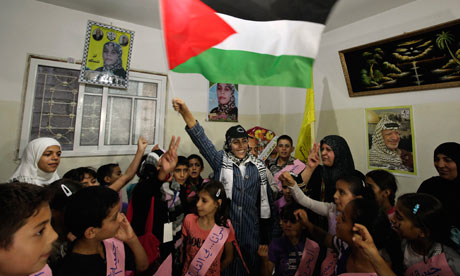
Wafa Al-Biss, a freed Palestinian prisoner
Wafa al-Biss, one of the freed Palestinian prisoners, on her return to her home in the northern Gaza Strip. Photograph: Mohammed Salem/Reuters
It's quite something, the prisoner swap between Hamas and the Israeli government that returns Gilad Shalit to his family, and more than 1,000 Palestinian prisoners to theirs. The deal is widely viewed as a victory for Hamas, the radical Islamist group that gained power in Gaza after years of frustration at the intractability of the "peace process". Conversely, it is being seen by some as a sign of weakness in Israel's rightwing prime minister Binyamin Netanyahu.
All this, I fear, is simply an indication of how inured the world has become to the obscene idea that Israeli lives are more important than Palestinian lives. Netanyahu argues that he acted because he values Shalit's life so greatly.
Yet who is surprised really, to learn that Netanyahu sees one Israeli's freedom as a fair exchange for the freedom of so many Palestinians? Likewise, Hamas wished to use their human bargaining chip to gain release for as many Palestinians as they could. They don't have much to bargain with.
At the same time, however, there is something abject in their eagerness to accept a transfer that tacitly acknowledges what so many Zionists believe – that the lives of the chosen are of hugely greater consequence than those of their unfortunate neighbours.


Now for the response:


The Guardian’s Anti-Semitic Explanation For Shalit Deal October 24, 2011  by 

Over the years, we’ve covered some vicious and despicable pieces in the media, many of them published in The Guardian. But amongst the many commentaries and analyses of the Gilad Shalit prisoner deal, one by Deborah Orr in The Guardian’s print edition really plumbs the depths.
Orr writes:
All this, I fear, is simply an indication of how inured the world has become to the obscene idea that Israeli lives are more important than Palestinian lives. Netanyahu argues that he acted because he values Shalit’s life so greatly.
Yet who is surprised really, to learn that Netanyahu sees one Israeli’s freedom as a fair exchange for the freedom of so many Palestinians? Likewise, Hamas wished to use their human bargaining chip to gain release for as many Palestinians as they could. They don’t have much to bargain with.
Is Orr really suggesting that Israel’s desire to get back one of its soldiers at such a high price is driven by some racist sense of valuing Israeli or Jewish life above all others? Apparently so:
At the same time, however, there is something abject in their eagerness to accept a transfer that tacitly acknowledges what so many Zionists believe – that the lives of the chosen are of hugely greater consequence than those of their unfortunate neighbours.
The abuse of the concept of the “chosen people” refers specifically to Jews and is commonly employed by anti-Semites to falsely assert that Jews claim to be superior to non-Jews not only in a theological sense but also in a racial one.
As Joseph Telushkin asks:
Does Judaism believe that chosenness endows Jews with special rights in the way racist ideologies endow those born into the “right race”? Not at all. The most famous verse in the Bible on the subject of chosenness says the precise opposite: “You alone have I singled out of all the families of the earth. That is why I call you to account for all your iniquities” (Amos 3:2). Chosenness is so unconnected to any notion of race that Jews believe that the Messiah himself will descend from Ruth, a non-­Jewish woman who converted to Judaism.
The fact that Israel values the life of a solitary individual so much that it is prepared to release hundreds of Palestinians responsible for some of the most appalling terrorist outrages instead tells us how much Israel values human life. This overwhelming desire to return one of its own people is a value to be proud of.
Deborah Orr
Orr appears to be distressed at the implication of a deal that sees one Jew as the equivalent of 1000 Arabs. If this is the case, then Orr would be better directing her ire at Hamas for demanding and setting such an unbalanced equivalance.
That Deborah Orr is prepared to descend to the depths of anti-Semitism to claim that Israel is motivated by racism says much about her own warped values. That The Guardian was prepared to publish such an obscene commentary merely confirms the publication’s vicious anti-Israel bent


Romney on Israel and Foreign Policy


Romney recently made a speech at the Citadel, a South Carolina Military academy.  In it he laid out his foreign policy. It was reported in the Jewish Press earlier this month.


Words are cheap and easily said, we must make sure that he follows up on the words that he uses and the support he pledges. As this was his first speech, we will wait to see what else comes out. At this point we are pleased but we hesitate to give a gushing evaluation. Time will tell.

Here is what Romney said as reported by the Jewish Press:


Mitt Romney vs. Barack Obama on Foreign Policy and Ties to Israel


 0
The Jewish Press
Oct 16 2011

In the first major foreign policy speech of his presidential campaign, Mitt Romney said he would increase defense assistance to Israel, raise the U.S. military profile near Iran and recognize Israel as a Jewish state. Romney, the former Massachusetts governor and frontrunner for the Republican nomination, delivered the speech last Friday at The Citadel, a military college in South Carolina – a key early primary state he initially was given little chance of winning.
Now, with Texas Governor Rick Perry’s campaign in the doldrums, Romney is making forays into the state. Another sign of Romney’s growing confidence is that he departed from his signature issue of economic competence to concentrate on foreign policy in his speech. Romney’s address demonstrated the extent to which Israel has become a consensus issue for the overwhelming majority of the Republican Party and nearly all its presidential candidates.
Romney promised his audience that as president he would restore the United States to its position as undisputed world leader by rebuilding the sources of American strength: “a strong economy, a strong defense, and the enduring strength of our values.”Obama, argued Romney, had permitted all three of these sources to atrophy. Despite America’s weakened economic position, he said, America under a President Romney would not heed the isolationist siren nor would it seek refuge in a balance of power system where the United States is merely one player. ”I will not surrender America’s role in the world. This is very simple: If you do not want America to be the strongest nation on Earth, I am not your president. You have that president today.”
Romney hammered Obama for appearing to accommodate America’s rivals while displaying coolness to allies. ”Our friends and allies must have no doubts about where we stand,” he said. “And neither should our rivals.” Romney returned to this theme later in his address:  ” I will bolster and repair our alliances. Our friends should never fear that we will not stand by them in an hour of need. I will reaffirm as a vital national interest Israel’s existence as a Jewish state. I will count as dear our special relationship with the United Kingdom.”
Administration spokesmen note that the Obama and Netanyahu governments have smoothed relations in recent months and that Israeli officials credit the administration with tightening defense ties and backing Israel at the United Nations. Obama also refers to Israel as a Jewish state, though he has not issued a formal declaration of such recognition.
Romney raised the subject of Israel repeatedly in his address, starting with the foreign policy hazards he saw facing the U.S. in the immediate future. The first problem he mentioned was the threat posed by a nuclear Iran, and he suggested Israel might be further isolated by 2015 if Obama remains in office. ”Will Iran be a fully activated nuclear weapons state, threatening its neighbors, dominating the world’s oil supply with a stranglehold on the Strait of Hormuz?” he asked.
“In the hands of the ayatollahs, a nuclear Iran is nothing less than an existential threat to Israel. Iran’s suicidal fanatics could blackmail the world. By 2015, will Israel be even more isolated by a hostile international community? Will those who seek Israel’s destruction feel emboldened by American ambivalence? Will Israel have been forced to fight yet another war to protect its citizens and its right to exist?”
Romney said that as president he would “enhance our deterrent against the Iranian regime by ordering the regular presence of aircraft carrier task forces, one in the Eastern Mediterranean and one in the Persian Gulf region. I will begin discussions with Israel to increase the level of our military assistance and coordination. And I will again reiterate that Iran obtaining a nuclear weapon is unacceptable.” Romney said those “who seek Israel’s destruction” feel emboldened by American ambivalence and this might force Israel into fighting another war for its existence.
Romney pledged to help transform the UN and other international bodies that have become “forums for the tantrums of tyrants and the airing of the world’s most ancient of prejudices: anti-Semitism.” He also said he would centralize U.S. Middle East policy to ensure “that the Arab Spring does not fade into a long winter.”
The speech came a day after Romney published a list of his foreign policy advisers, including many who have been active in or are close to the pro-Israel community. Nearly all of Romney’s 22 special advisers held senior defense, diplomacy or intelligence positions in the administration of George W. Bush, including former homeland security secretary Michael Chertoff and former undersecretaries of defense Eric Edelman and Dov Zakheim.

Sunday, October 23, 2011

A British View of The Schalit Exchange


Followers of this blog know that we were not in favor of the exchange even though we understand the emotional human reasons for the trade.  So when I read the following posting, I thought that it should be posted here as it brought forward some ideas that we had not considered.


Please let us know what you think.


No decent person can fail to be moved by the return of Gilad Shalit. Yet this deal ultimately represents a triumph of heart over head.

by Melanie Phillips
I have been watching on TV the drama unfold in Israel and Gaza as the kidnapped Israeli soldier Gilad Shalit was released after five years in Hamas captivity in exchange for the release from Israeli prisons of more than 1000 Arab terrorists.
The first pictures of him in a brief interview on Egyptian TV were unsettling, even if not surprising: painfully thin, pale and with deeply sunken eyes, he looked very different from the smiling 19 year-old that became the iconic image of the campaign to secure his release.
Relief that he appears to be physically unharmed - he says he was treated well - must be tempered by concern for the psychological damage he may have suffered.
One can only hope (doubtless fruitlessly) that he will now be shielded from intrusive media attention to afford him the privacy he undoubtedly needs in which to start the long process of adjustment and recovery.
Shalit told his Egyptian TV interviewer that he hoped his release would further the peace efforts and help end the conflict between Israel and the Palestinians.
What a burden this poor boy now carries from this deal with the devil that has been done to secure his release. But it will not bring about peace; indeed, one might even say that it marks the collapse of the ‘peace process’ and makes war even more likely.
For by making this deal with Hamas, Israel’s Prime Minister Netanyahu has effectively buried Fatah’s Mahmoud Abbas, already weakened by the failure of his UN ‘Palestine statehood’ stunt.
For Israel, that stunt marked the end of the illusion that Abbas was a genuine partner in any peace process. Now Hamas has been strengthened by this deal.
Jubilant Arabs are celebrating their released killers as returning heroes.
That is, to put it mildly, unfortunate; but now at least the illusion of a moderate Palestinian leadership is over. Israel has brought its hostage home; and now, with Hamas poised to relocate to an Egypt which is itself on the brink of descending into Islamic radicalism, Israel faces squarely the true face of genocidal Arab rejectionism.
Nothing illustrates this better than the obscene joy which has erupted in both Gaza and the West Bank, where jubilant Arabs are celebrating their released killers as returning heroes.
This was how the so-called ‘moderate’ Mahmoud Abbas addressed the murderers of Jewish innocents at a mass welcoming ceremony for the released prisoners:
‘Your sacrifice and hard work were not in vain... We thank God for your return and your safety...You are freedom fighters and holy warriors for the sake of God and the homeland.’
Hamas is also presenting as heroes to cheering Gazan crowds the terrorists in charge of guarding Shalit during his time in captivity:
‘Shalit's captors will take the stage alongside the freed prisoners during the Gaza celebrations to be held upon their return to the Strip.
The released prisoners will be first received by Hamas Prime Minister Ismail Haniyeh, government ministers, Legislative Council members and other figures. Next, the detainees would meet with relatives.
One of the freed prisoners is Muhammad Zufi, who assisted Shalit's abductors in videotaping the abduction operation.'
According to Israeli opinion polls, the deal has overwhelming Israeli public support.
But away from the mainstream media which has been gloating over its role in creating the public pressure for such a deal to be done, an anguished debate has nevertheless been under way for days now about the terrible price Israel has paid for the release of this one soldier and the incalculable consequences of such a deal.
It is not merely the grossly disproportionate numbers involved, which no other country in the world would even contemplate for one moment. It is the fact that the deal declares in effect that terrorism works.
It is the fact that trading one innocent life for more than 1000 guilty lives hands a sickening victory to terrorists, making it much more likely that they will kidnap more soldiers to trade for yet more jailed murderers.
This deal makes it almost inevitable that yet more Israeli families will end up mourning the loss of loved ones.
It is the fact that this deal makes it almost inevitable that yet more Israeli families will end up mourning the loss of loved ones who will be murdered as a result by Palestinian terrorism.
It is the fact that it underscores the shattering weakness of the Israel Defence Force in having failed to rescue Shalit during the five years he was held.
What has happened, many Israelis are asking themselves, to the country that produced the daring and heroic raiders of Entebbe who managed to defy all odds in rescuing Israeli hostages from a hijacked plane?
And at a deeper level still, it is the fact that an obscene moral equivalence has been established by this deal between the innocent and the guilty.
This equivalence is being played out in the coverage which describes the deal as a ‘prisoner swap’ or ‘prisoner exchange’ – more than 1000 Palestinian prisoners held in Israeli jails for one Israeli prisoner held by Hamas.
But Shalit
By contrast, the released Palestinians have not just been tried and punished according to due process of law, but include among their number not just those who have committed some of the worst terrorist atrocities in Israel’s history - such as the blowing up of Sbarro’s pizza restaurant in Jerusalem, where 16 people were murdered including five members of the Schijveschuurder family - but even worse, some of the masterminds behind such atrocities.
Some families who have lost loved ones in these terror attacks have welcomed the deal; they say they did not want the Shalit family to suffer as they themselves have suffered. But for other families bereaved by these murders, the anguish is unbearable.
Watching the murderers of their loved ones walk free to a rapturous reception in Gaza and the West Bank and listening to their gloating satisfaction at having taken the lives of Israeli innocents, these families feel as if they have been brutally abandoned by a society for which justice cannot be allowed to get in the way of emotion.
For these suffering relatives, it is almost as if today they are being forced to endure yet another bereavement.
But then, the equivalence being drawn in the coverage of this deal reflects in turn the morally bankrupt ‘tit-for-tat’ analysis of the Arab war against Israel employed by so many in Britain and the west.
For whenever Israel points out that any military action against the Palestinians is only in response to Palestinian attacks, many in Britain claim that those Palestinian attacks were only in response to previous Israeli attacks. Thus Israel is always painted as the ultimate aggressor.
This is entirely false. From the moment Israel was re-established in 1948, it has only ever launched military operations against the Arabs in response to actual or imminent Arab attacks. Yet many in Britain refuse to acknowledge the difference between murderous aggression and the defense against it.
They refuse to acknowledge that Hamas sets out to murder as many young Israelis as possible, whereas Israel goes to great lengths (not always successfully) to avoid civilian casualties.
They refuse to acknowledge that the aim of every single military operation by Israel in Gaza is to defend and protect itself against attack by a fanatically Jew-hating enemy pledged not only to destroy Israel but to wipe out every single Jew on earth.
The refusal to acknowledge this crucial moral difference has meant that many in Britain and the west view Israel as the aggressor in the conflict, and the victimization of Israelis is largely glossed over.
So just as the anguish of Israeli terror victims’ families over the Shalit deal has been minimized by the media coverage – particularly in Israel itself, which reflects the malign nature of its own left-wing media class -- so the anguish of Israel itself as a state under permanent existential siege is routinely ignored, and Israel instead grotesquely portrayed as the aggressor in the region.
What too many in Britain and west still don’t understand is that what Israel is up against is what Britain and the west are now up against – not a violent campaign by people fighting for a state of their own but an Islamist cult of death, in which the murder of innocents is a cause for exultation and mass killers are lionized as heroes and religious martyrs, not just by Hamas but by the Fatah leadership in the West Bank too.
The five-year Shalit drama and its disturbing resolution have therefore come to symbolize the toxic cocktail of ignorance, misunderstanding, naivety, malice, cowardice, cynicism, incompetence and moral muddle by the so-called civilized world - including Israel itself - that has actually served to perpetuate the Middle East impasse.
No decent person can fail to be moved by the return of Gilad Shalit to Israel. Few eyes will have been dry at his reunion with his family. Yet it has to be said that ultimately, this deal represents a triumph of heart over head and sentimentality over realism.
The Shalit family did what many of us hope we would have done in similar circumstances – fought a tenacious and brilliant campaign to sustain public pressure on the government to secure their son’s release.
It was, however, emotional blackmail – and the Israel government should have resisted it. Shalit came to be regarded as every Israeli’s son.
Tragically, however, in the years to come Israel may come to realize that it paid for the life of Gilad Shalit with the blood of further murdered Israelis and the lifelong torment of their families.
Yet no-one should underestimate the extreme difficulty of the decision Netanyahu was forced to take in this case.
However Netanyahu resolved the Shalit dilemma, it would have been a terrible decision.
As so often in Israel, he was between a rock and a very hard place. However he resolved the Shalit dilemma, it would have been a terrible decision.
For Jews, the diabolical nature of this kind of choice – weighing up the sacrifice of one of your own against the sacrifice of others of your own– has a terrible historical resonance.
For during the Holocaust, a particularly sadistic torment inflicted by the Nazis upon their Jewish victims was to force them to choose which of their children or loved ones to sacrifice in order to save others from gas or bullet.
The Holocaust happened because the world looked the other way until it was too late. It abandoned the Jews to meet their fate and be forced to make these infernal choices alone. And now the world is abandoning Israel to meet its fate and be forced to make these infernal choices alone.
Sure, America helps arm Israel in order that it may defend itself against otherwise insuperable odds. But at the same time, the west forces Israel to remain trapped in a permanent war that the west ensures Israel cannot win.
For Israel’s fate is to live cheek by jowl with people pledged to destroy it. Armed to the teeth, Israel will however never unleash its full military power against those people because it is constrained by Jewish ethics.
The result is that it deals more scrupulously and humanely with its mortal enemies - and takes more punishment as a result - than any other nation on earth.
The Arabs know this and take full advantage of it, launching attacks in order to present Israel with the choice between abandoning its own victims - as has effectively largely happened in the rocket-bombarded south of Israel - and taking military action, which will inevitably result in some civilian casualties and thus not only earn the opprobrium of the double-standard applying world but, more lethally, destroy Israel’s own belief in itself.
To their eternal shame, Britain and the west have allowed themselves to be manipulated by this cynical strategy in the cause of genocide.
These false friends leap to defame, demonize and delegitimize Israel by denouncing its military actions as illegal, aggressive or disproportionate – thus in effect trying to paralyze its attempts to defend itself against attack, while simultaneously forcing it to surrender to its enemies through the appeasement process.
The outcome is that Israel is now trapped between Hamas, Fatah, Hezbollah, Iran, Syria, Egypt and the Mediterranean Sea – and yet is blamed for preventing peace by building apartments in the suburbs of Jerusalem.
The infernal choice it was forced to make over Gilad Shalit was thus but the latest and most dramatic example of how the west has abandoned Israel to swing in the wind.
This article originally appeared in Melanie Phillips' blog at dailymail.co.uk

Federal Reserve Conflict of Interest


The Federal Reserve is a private  bank that regulates the money flow in the country and supplies money to the banks in this country. It reports to Congress but Congress has no oversight, it has never been audited and now we find out that bankers serve on its board. Is that not a conflict of interest?

The argument in favor would be, who knows better about banking than bankers.  On the other hand, when the Fed dictates the rate the banks will pay for interest, would a  banker want a high rate? Or what about the amount of reserves the bank should have?  It seems to us that although there should be some representation on the Fed Reserve, the Board should be independent.

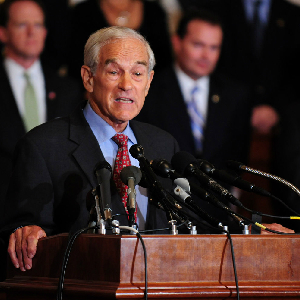
Additionally, we agree with Representative Ron Paul that the Federal Reserve must be audited.  No large organization goes without an audit, why should this very important financial "company" not be also?

Here is the article from The Atlantic:


Should Bankers Serve on Federal Reserve Bank Boards?

    , On Thursday October 20, 2011, 2:39 pm EDT

    A new GAO report finds conflicts-of-interest present. Does the system need reform?
    600 fed REUTERS Jason Reed.jpg
    Just what the Federal Reserve needs: more controversy. A new Government Accountability Office report to Congress that investigates the central bank has some not-so-flattering conclusions. Some regional Fed bank board members are also bankers, which creates a potential conflict-of-interest. Of course, anyone who follows the Fed already knew, so this news isn't all that shocking. Still, the finding raises a question: should such conflicts-of-interest trouble us, and if so, how should they be remedied?
    What the Report Says
    Persistent Fed critic Sen. Bernie Sanders (I-VT) seized on the report to cite these conflicts-of-interest. An amendment by Sanders to the Dodd-Frank financial regulation bill actually called for this investigation in the first place. Here are some of the points he makes in a statement he released on Wednesday:

    • The GAO identified 18 former and current members of the Federal Reserve's board affiliated with banks and companies that received emergency loans from the Federal Reserve during the financial crisis including General Electric, JP Morgan Chase, and Lehman Brothers.
    • Many of the Federal Reserve's board of directors own stock or work directly for banks that are supervised and regulated by the Federal Reserve. These board members oversee the Federal Reserve's operations including salary and personnel decisions.
    • Under current regulations, Fed directors who are employed by the banking industry or own stock in financial institutions can participate in decisions involving how much interest to charge to financial institutions receiving Fed loans; and the approval or disapproval of Federal Reserve credit to healthy banks and banks in "hazardous" condition.

    These points show that conflicted board members could benefit their firms through the power they wield at Fed banks. The thing is, the report also said that the firms these board members represented did not receive special treatment as a result of their presence at the Fed. For example, although their firms received emergency loans from the Fed during the crisis, so did dozens of other institutions.
    The Fed Is There to Protect the Financial Industry
    Worrying that Fed board members might be sympathetic to the problems that financial firms experience misunderstands an essential purpose of the central bank: to promote financial stability. The problem, however, is that the Fed also functions as a bank regulator. These two duties can conflict, and financial stability will likely always win out. To the extent that the Fed can assist banks to prevent a crisis, it must do so.
    Having actual bankers on hand to provide their perspectives on the market and what's actually happening on the ground can help the Fed achieve that end. For this reason, there's a strong rationale in favor of keeping bankers on Fed boards. One of Sanders' other points complains that "there are no restrictions on directors of the Federal Reserve Board from communicating concerns about their respective banks to the staff of the Federal Reserve." Indeed, there shouldn't be any such restrictions if their perspectives hope to help achieve better financial stability. To that end, such voicing concerns could be invaluable.
    Reform Is Necessary and Easy
    Still, the ability for these bankers to directly affect decision making does invite the abuse. Even though it can prove useful to have top bankers on Fed boards help to shape its policies, they should not be able to affect decisions that may affect their respective firms directly.
    Fortunately, a reform could be simple here, and the GAO report provides a discussion of some good models that other central banks use. Canada's model has some particularly sensible rules.
    The Bank of Canada Act requires that directors:

    1. Disclose any material interest in writing or in the minutes of board meetings,
    2. Disclose the conflict as quickly as possible after the conflict is discovered or realized, and
    3. Not vote in any resolution or action related to the conflict.

    Directors must also avoid or withdraw from participation in any activity or situation that places them in a real, potential, or apparent conflict of interest.
    So these banker-board members can still provide their perspectives and even assist in rule making -- they just shouldn't be able to affect decisions that would directly benefit or harm their firm.
    This arrangement would produce the best possible outcome. You would still have the expertise, market insight, and real world experience of these bankers benefit financial stability. But they would not have a voice in the ultimate decision process where conflicts-of-interest exist.
    Image Credit:REUTERS/Jason Reed

    Paul Proposes Major Cuts

    Today on NBC's Meet the Press reiterated  his statement that is reproduced below. Although we disagree with the candidate on some of his isolation-ship ideas, his fiscal ideas are the tough medicine that the country needs if we are not going to become another Greece.

    For all the anger against S&P by politicians and media commentaries, it appears as if the other major rating agencies (Moody's and Fitch) are ready to join in downgrading the creditworthiness of the country.  Is anyone in the Administration or in Congress listening?  Or is their tin ear ignoring the warning bells?

    It will take drastic cuts of the type Representative Paul is proposing if we are to right the ship of state. The changes will be short term painful, however, if we don't, the result will be unimaginable. If you want to know what it might look like, imagine the worst condition and multiply it by ten times.

    So if we are to do the right thing, major changes in government agencies and programs must be made. Will we demand that of our leadership or will we await the inevitable? It is your decision.

    Here is the article:


    Paul Will Eliminate $1 Trillion, Cut Presidential Salary By $360,664

    October 18, 2011 by  
    Paul Will Eliminate $1 Trillion, Cut Presidential Salary By $360,664
    UPI.COM
    President Ron Paul would drastically cut Federal spending in his first year, according to his “Restore America” plan.
    GOP Presidential candidate Ron Paul in a recent email to supporters said that he has been given only 18 minutes, 47 seconds to speak during the past three debates; mainstream ignorance of the candidate may end with his Monday release of a budget plan announcing about $1 trillion in specific Federal budget cuts.
    According to The Wall Street Journal, Paul’s plan calls for the massive cuts to be made during his first year in office along with the elimination of five cabinet-level  agencies and the lowering of corporate tax rates from 35 to 15 percent.
    The candidate’s “Restore America” plan is focused on drastically reducing government reach to spur American business growth. This will be accomplished in part by repealing Obamacare, last year’s Wall Street regulations law and the Sarbanes-Oxley Act.
    Paul also calls for a 10 percent reduction in the Federal workforce which may be achieved by eliminating the Departments of Education, Commerce, Energy, Interior and Housing and Urban Development.  He also calls for a 30 percent budget cut to the Environmental Protection Agency, a 40 percent cut to the Food and Drug Administration, slashed Pentagon funding for foreign wars and completely eliminating spending on foreign aid, according to POLITICO.
    The Congressman from Texas also wants to see programs like Medicaid, the Children’s Health Insurance Program, food stamps, family support programs and the children’s nutrition program block-granted to the States and removed from mandatory Federal expenditures. In regard to Social Security, his campaign says that the plan “honors our promise to our seniors and veterans, while allowing young workers to opt out.”
    In his plan, Paul also ensures voters that he is not going to make massive Federal budget cuts while living like a fat cat politician. He plans to reduce the Presidential salary from $400,000 yearly to $39,336 a year, which the plan says is “approximately equal to the median personal income of the American worker.”