Our goal is to have intelligent discussion of the topics of the day. We realize everyone has their opinion and they should be allowed to express it in a discussion forum without calling each other names. We learn from discussion and not from name calling or argument.We use cookies to personalise content and ads, to provide social media features and to analyse our traffic. We also share information about your use of our site with our social media, advertising and analytics partners. See details
Daniel Ellsberg, the man who leaked the Pentagon Papers in 1971, says the United States is on the verge of becoming a police state as evidenced by the National Security Agency's data collection programs and the treatment of secret document leakers Edward Snowden and Bradley Manning.
"We have not only the capability of a police state, but certain beginnings of it right now," Ellsberg told The Huffington Post Wednesday. "And I absolutely agree with Edward Snowden. It's worth a person's life, prospect of assassination, or life in prison or life in exile — it's worth that to try to restore our liberties and make this a democratic country."
He cited the NSA's phone- and Internet data collection programs as evidence that the nation has reached the "capability" of becoming a police state.
"When people understand that their every conversation of every kind on phones, email, chat logs whatever, is being recorded and can be retrieved, that will certainly curtail people's freedom of speech over any digital means," Ellsberg continued in an interview carried on HuffPost Live.
"It gives the government blackmail capability over the population at large . . . With the digital stuff alone, we have a surveillance capability that outmatches any police state in the history of humanity."
Ellsberg can claim many similarities to Snowden, the NSA contractor who leaked information on government phone and Internet data collection programs, and Manning, who provided government files to WikiLeaks.
In 1969, Ellsberg was working as a military analyst with the RAND Corp. when he copied thousands of Defense Department documents on Vietnam War decisions that would later become known as the Pentagon Papers. In 1971, he gave the files to The New York Times and other newspapers. President Richard Nixon tried to stop the Times from publishing them, but the newspaper continued after a court cleared the way, citing First Amendment rights.
Like Snowden and Manning, Ellsberg was charged under the Espionage Act for leaking the papers. But the 12 felony counts against were dismissed in 1973 on grounds of gross governmental misconduct in the case.
According to Slate.com, whistleblowers like Ellsberg are being punished more than ever under the Obama administration. While running as a candidate in 2008, Barack Obama said whistleblowers perform "acts of courage and patriotism." But according to Slate, his administration has gone on to charge eight people under the Espionage Act, more than double all previous presidents combined.
UPS and a growing list of other big companies will end health insurance coverage of employees' spouses this fall if they can get coverage elsewhere — an unwelcome result, at least in part, of Obamacare.
Increased medical costs, "combined with the costs associated with the Affordable Care Act (ACA), have made it increasingly difficult to continue providing the same level of health care benefits to our employees at an affordable cost," UPS said in a memo to employees.
A survey by consultant Towers Watson found that in 2013, 4 percent of large employers excluded spouses who also had coverage at their own workplace, and 8 percent planned to implement the restriction next year, Kaiser Health News and USA Today reported.
"When healthcare reform came on the scene a few years ago we definitely saw an uptick in companies wanting to explore a working-spouse provision," Steve Noury, national sales director for HMS Employer Solutions, told Kaiser. "We have seen [them] over the past two or three years putting those in place."
While Obamacare requires large employers to cover employees and dependent children, it does not require them to cover spouses or domestic partners.
The move by UPS will affect an estimated 15,000 working spouses at that company, which UPS estimated would save about $60 million annually.
Kaiser Health News and USA Today said UPS spouses may have difficulty finding similar coverage in their own workplaces because the UPS plan is more generous than the national average.
The UPS memo, obtained by Kaiser, attributed at least part of its decision to the ACA's research fee and a temporary fee per member. Other factors cited in the memo included the law's ban on annual and lifetime coverage limits and its requirement to cover dependent children up to age 26, Kaiser reported.
Executives at several staffing firms told Reuters that Obamacare, which requires employers with 50 or more full-time workers to provide healthcare coverage or incur penalties, was often cited in requests by their corporate customers for part-time workers. And the decision to delay the mandate until 2015 has made little difference in hiring decisions.
"Us and other people are hiring part-time because we don't know what the costs are going to be to hire full-time," said Steven Raz, founder of Cornerstone Search Group, an employment firm in Parsippany, N.J. "We are being cautious."
Three out of four of the nearly 1 million job hires in the United States this year have been part-time and many of the positions are low wage, Reuters reported.
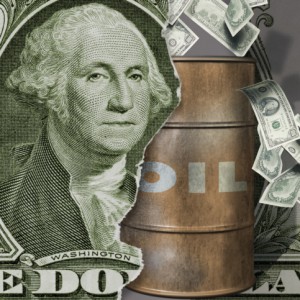
Could we be seeing the end of the dollar as the exchange currency for all petro-sales in the world? Could that mean the the dollar would no longer be the "gold-standard" and measure of other countries wealth? In the following post Brandon Smith makes some very scary observations.
Our lives as Americans would be changed significantly should the dollar lose its luster. No longer would we be able to print our way out of our financial problems, we would have to face a nasty reality. That being our country is not the #1 king of the world. How would you react?
Even after seven years of writing macroeconomic analysis for the liberty movement and bearing witness to astonishing displays of financial and political stupidity by more “skeptics” than I can count, it never ceases to amaze me the amount of blind faith average Americans place in the strength of the U.S. dollar. One could explain in vast categorical detail the history of fiat currencies, the inevitable destruction caused by inflationary printing and the conundrum caused when any country decides to monetize its own debt just to stay afloat — often, to no avail.
Bank bailouts, mortgage company bailouts, Treasury bond bailouts, stock market bailouts, bailouts of foreign institutions: None of this seems to phase the gibbering bobbleheaded followers of the Federal Reserve cult. Logic and reason and wisdom bounce like whiffle balls off their thick skulls. They simply parrot one of two painfully predictable arguments:
Argument No. 1: There is no way foreign countries will ever dump the U.S. dollar because they are so dependent on American consumers to buy their export goods.
Argument No. 2:There is no way the dollar’s value will ever collapse because it is the dominant petro-currency, and the entire world needs dollars to purchase oil.
I have written literally hundreds of articles over the years dismantling the first argument, pointing out undeniable signals that include:
China’s subtle dumping of the dollar — using bilateral trade agreements with other developing nations and, more recently, major economic powers like Germany and Japan
The massive gold-buying spree undertaken by China and Russia — even in the face of extreme market manipulation by JPMorgan Chase and Co. and CME Group Inc.
The dumping of long-term U.S. Treasuries by foreign creditors in exchange for short-term Treasuries that can be liquidated at a moment’s notice.
The fact that bonds now are supported almost entirely by Fed stimulus. When the stimulus ends, America’s ability to honor foreign debts will end and faith in the dollar will crumble.
Blatant statements by the International Monetary Fund calling for the end of the dollar’s world reserve status and the institution of special drawing rights (SDRs) as a replacement.
The second argument held weight for a short time, only because the political trends in the Mideast had not yet caught up to the financial reality already underway. Today, this is quickly changing. The petrodollar’s status is dependent on a great number of factors remaining in perfect alignment, socially, politically and economically. If a single element were to fall out of place, oil markets would explode with inflation in prices, influencing the rest of the world to abandon the greenback. Here are just a few of the primary catalysts and why they are an early warning of the inevitable death of the petrodollar.
Egyptian Civil War
I was recently contacted by a reader in reference to an article I wrote concerning the likelihood of civil war in Egypt, a civil war which erupted only weeks later.
She asked why I had waited until this year to make the prediction and why I had not called for such an event after the overthrow of Hosni Mubarak, as many mainstream pundits had. The question bears merit. Why didn’t Egypt ignite with violent internal conflict after Mubarak was deposed? It seemed perfectly plausible, yet the mainstream got the timing (and the reasons) horribly wrong.
My response was simple: The Mideast is being manipulated by elitist organizations towards instability, and this instability is a process. The engineered Arab Spring, I believe, is not so much about the Mideast as it is about the structure of the global economy. An energy crisis would be an effective tool in changing this structure. Collapse in the Mideast would provide perfect opportunity and cover for a grand shift in the global system. However, each political step requires aid from a correct economic atmosphere, and vice versa.
If you want to identify a possible trend within a society, you have to take outside manipulation into account. You have to look at how economic events work in tandem with political events and at how these events benefit globalization as a whole. The time was not right after Mubarak’s overthrow. The mainstream media jumped the gun. If the target is the U.S. dollar and Egypt is the distraction, this year presented perfect opportunity with the now obvious failure of the quantitative easing stimulus paradigm at hand.
As the situation stands, the Egyptian military regime that overthrew Mohammed Morsi has completely cut the Muslim Brotherhood out of the political process and murdered at least 450 protesters, including prisoners already in custody.
Morsi supporters have responded by torching government buildings. But the real fighting will likely begin soon, as the current government calls for a ban on the Muslim Brotherhood itself. Simultaneously, hatred for the United States and its continued support of the Egyptian power base — regardless of who sits on the throne — is growing to a fever pitch throughout the region.
It is important for Americans to understand that this is not about taking sides. The issue here is that circumstances are nearly perfect for war and that such a war will spread and will greatly damage oil markets. The Suez Canal accounts for nearly 8 percent of the world’s ocean trade, and 4.5 million barrels of oil per day travel the corridor. Already, oil prices have surged due to the mere threat of disruption of the Suez (as I predicted). And this time, the nation isnot going to recover. A drawn-out conflict is certain, given the nature of the military coup in place and the adamant opposition of the Muslim population.
Strangely, there are still some in the mainstream arguing that the Suez will “never close” because “it is too important to the Egyptian economy,” The importance of the Suez is irrelevant in the midst of all-out revolution. The Suez will close exactly because there will be no structure left to keep the canal open. In the meantime, oil prices will continue to rise and distrust of the United States will continue to fester.
Saudi Arabia Next?
The relationship between the United States and Saudi Arabia is at once symbiotic and parasitic, depending on how one looks at the situation. The very first oil exploration and extraction deal in Saudi Arabia was sought by the vast international oil cartels of Royal Dutch Shell, Near East Development Company, Anglo-Persian, etc., but eventually fell into the hands of none other than the Rockefeller’s Standard Oil Company. The dark history of Standard Oil aside, this meant that Saudi business would be handled primarily by American interests. And the Western thirst for oil, especially after World War I, would etch our relationship with the reigning monarchy in stone.
A founding member of OPEC, Saudi Arabia was one of the few primary oil-producing nations that maintained an oil pipeline that expedited processing and bypassed the Suez Canal. (The pipeline was shut down, however, in 1983). This allowed Standard Oil and the United States to tiptoe around the internal instability of Egypt, which had experienced ongoing conflict which finally culminated in the civil war of 1952. Considered puppets of the British Empire at the time, the ruling elites of Egypt were toppled by the Muslim Brotherhood, leading to the eventual demise of the British pound sterling as the top petro-currency and the world reserve. The British economy faltered and has never since returned to its former glory.
On the surface, Saudi Arabia seems to have avoided the effects of the Arab Spring climate, but all is not as it seems. The defection of Saudi Prince Khalid Bin Farhan Al-Saud has brought up startling questions as to the true state of the oil producing giant.
I believe this defection is only the beginning of Saudi Arabia’s troubles and that America largest oil partner is soon to witness domestic turmoil that will disrupt oil shipments around the world. America’s support for a monarchy that is so brutal to its population will only hasten the end of the dollar’s use in global oil trade.
For those who doubt that Saudi Arabia is in line for social breakdown, I would ask why the nation felt it necessary to pump billions of dollars into the new Egyptian military junta.
While the country is surely being used in some cases as a proxy by the West, the Saudi government itself is fearful that success of dissenting elements will spread to its own borders. Little do they understand that this is part of the globalist game plan. Without control over Saudi petroleum, the United States loses its last influential foothold in the oil market, and there is absolutely no doubt whatsoever that the dollar will fall as the petro-currency soon after. The desperation caused by such an energy crisis will make international markets beg for a solution, which global banking cartels led by the IMF are more than happy to give.
Iranian Wild Card
The U.S. government’s outright creation of the Syrian insurgency and its funding and armament of al-Qaida agents have understandably angered numerous Mideast nations, including Iran. Iran sits on the most vital oil shipping lane in the world: the Strait of Hormuz. About 20 percent of the world’s annual oil exports are shipped through Hormuz, and the narrow inlet is incredibly easy to block using nothing but deliberately sunken freighters. In fact, this tactic is exactly what Iran has been training for in order to frustrate a U.S./Israeli invasion.
A U.S. or NATO presence on the ground or in the air above Syria, Egypt or Iran will most likely result in the closure of the Strait of Hormuz, causing sharp rises in gasoline costs that Americans cannot afford.
Russia/China Oil Deal
Finally, just as most bilateral trade deals removing the dollar as world reserve have gone ignored by the mainstream media, so has the latest sizable oil deal between Russia and China. Russia has been contracted by the Chinese to supply 25 years of petroleum, and this deal follow previously established bilateral guidelines — meaning the dollar will not be used by the Chinese to purchase this oil.
I expect that this is just the beginning of a chain reaction of oil deals shunning the dollar as the primary trade mechanism. These deals will accelerate as the Mideast sees more internal strife and as the popular distaste for the United States becomes a liability for anyone in power.
The Dollar Is A Paper Tiger
The dollar is no more invincible than any other fiat currency in history. In some ways, it is actually far weaker than any that came before. The dollar is entirely reliant on its own world reserve status in order to hold its value on the global market. As is evident, countries like China are already dumping the greenback in trade with particular nations. It is utterly foolish to assume this trend is somehow “random” rather than deliberate. Foreign countries would not be initiating the process of a dollar dump today if they did not mean to follow through with it tomorrow. All that is left is for a cover crisis to be conjured, and existing tensions in the Mideast signal a pervasive crisis in the near term.
–Brandon Smith
Note from the Editor: Round two of the financial meltdown is predicted to reach global proportions, already adversely affecting Greece, Spain and most of Europe. It appears less severe in the states because our banks are printing useless fiat currency. I’ve arranged for readers to get two free books — Surviving a Global financial Crisis and Currency Collapse, plus How to Survive the Collapse of Civilization— to help you prepare for the worst. Click here for your free copies.
Will Oliver Stone, the consummate liberal,turn his back on Obama and demand that other liberals and progressive join with the Tea Party to boot the President? We wonder. Has the current resident of 1600 Pennsylvania turned off enough Americans that even his supporters in the Senate will wish him to go? We doubt, but dreams sometimes come true!
What do you think?
Conservative Tom
OBAMA IS A ‘SNAKE’ AND ‘WE HAVE TO TURN ON HIM’ SAYS…
Film director Oliver Stone—who has made no secret of his liberal political views—called President Barack Obama a “snake” for his role in National Security Agency spying programs that have become, he said, more about silencing protestors than finding terrorists.
“Obama is a snake,” Stone told an audience in Tokyo on Monday. “He’s a snake. And we have to turn on him.”
Film director Oliver Stone speaks before press in Tokyo on August 12, 2013. (Getty Images)
“The Boston Marathon, they were so busy tracking down potential protestors…that they missed the bombers,” Stone told the Foreign Correspondents’ Club of Japan. “It’s never about terrorists, it always becomes about the way J. Edgar Hoover did it; he brought all the weight of government to bear against protestors. He didn’t like protestors. He thought they were left-wing communists. He never could find the proof, but by the time the Vietnam War came around, as you know, 500,000 people were on the list, and they were being eavesdropped on. And where are we now? Same place.”
Stone said that admitted NSA leaker Edward Snowden “is a hero to me. He sacrificed his well-being for the good of us all” and that Russia’s Vladimir Putin did the right thing by granting Snowden asylum, according to PressTV.
“I’m proud of him for doing it,” Stone said of Putin and Russia. “We need more countries to stand up to the U.S.”
Stone also called Snowden a hero last month and said it’s “a disgrace that Obama is more concerned with hunting him down Snowden than reforming these George Bush-style eavesdropping techniques.”
Last summer in the lead up to the 2012 Republican National Convention, Stone said he’d vote for Ron Paul over Obama if Paul secured the GOP nomination. Stone suggested that Paul was the “only one” who’s “saying anything intelligent about the future of the world.”
Barack Obama's increasingly grandiose claims for presidential power are inversely proportional to his shriveling presidency.
Desperation fuels arrogance as, barely 200 days into the 1,462 days of his second term, his pantry of excuses for failure is bare, his domestic agenda is nonexistent and his foreign policy of empty rhetorical deadlines and redlines is floundering. And at last week's news conference he offered inconvenience as a justification for illegality.
Explaining his decision to unilaterally rewrite the Affordable Care Act, he said: "I didn't simply choose to" ignore the statutory requirement for beginning in 2014 the employer mandate to provide employees with healthcare. No, "this was in consultation with businesses."
He continued: "In a normal political environment, it would have been easier for me to simply call up the speaker and say, you know what, this is a tweak that doesn't go to the essence of the law . . . it looks like there may be some better ways to do this, let's make a technical change to the law. That would be the normal thing that I would prefer to do. But we're not in a normal atmosphere around here when it comes to Obamacare. We did have the executive authority to do so, and we did so."
Serving as props in the scripted charade of White House news conferences, journalists did not ask the pertinent question: "Where does the Constitution confer upon presidents the 'executive authority' to ignore the separation of powers by revising laws?" The question could have elicited an Obama rarity: Brevity. Because there is no such authority.
Obama's explanation began with an irrelevancy: He consulted with businesses before disregarding his constitutional duty to "take care that the laws be faithfully executed." That duty does not lapse when a president decides Washington's "political environment" is not "normal."
When was it "normal"? The 1850s? The 1950s? Washington has been the nation's capital for 213 years; Obama has been here less than nine years. Even if he understood "normal" political environments here, the Constitution is not suspended when a president decides the "environment" is abnormal.
Neither does the Constitution confer on presidents the power to rewrite laws if they decide the change is a "tweak" not involving the law's "essence." Anyway, the employer mandateis essential to the ACA.
Twenty-three days before his news conference, the House voted 264-161, with 35 Democrats in the majority, for the rule of law — for, that is, the Authority for Mandate Delay Act. It would have done lawfully what Obama did by ukase. He threatened to veto this use of legislation to alter a law. The White House called it "unnecessary," presumably because he has an uncircumscribed "executive authority" to alter laws.
In a 1977 interview with Richard Nixon, David Frost asked: "So, what in a sense you're saying is that there are certain situations . . . where the president can decide that it's in the best interests of the nation . . . and do something illegal?"
Nixon: "Well, when the president does it, that means that it is not illegal."
Frost: "By definition."
Nixon: "Exactly, exactly."
Nixon's claim, although constitutionally grotesque, was less so than the claim implicit in Obama's actions regarding the ACA. Nixon's claim was confined to matters of national security or (he said to Frost) "a threat to internal peace and order of significant magnitude." Obama's audacity is more spacious; it encompasses a right to disregard any portion of any law pertaining to any subject at any time when the political "environment" is difficult.
Obama should be embarrassed that, by ignoring the legal requirement concerning the employer mandate, he has validated critics who say the ACA cannot be implemented as written. What does not embarrass him is his complicity in effectively rewriting the ACA for the financial advantage of self-dealing members of Congress and their staffs.
The ACA says members of Congress (annual salaries: $174,000) and their staffs (thousands making more than $100,000) must participate in the law's insurance exchanges. It does not say that when this change goes into effect, the current federal subsidy for this affluent cohort — up to 75 percent of the premium's cost, perhaps $10,000 for families — should be unchanged.
When Congress awakened to what it enacted, it panicked: This could cause a flight of talent, making Congress less wonderful. So Obama directed the Office of Personnel Management, which has no power to do this, to authorize for the political class special subsidies unavailable for less privileged and less affluent citizens.
If the president does it, it's legal? "Exactly, exactly."
Our follower-David, will love this story! Unfortunately for us, we are being dragged into his camp. We are starting to believe that the big banks are a big part of the problem.
We do not like "too big to fail" companies of any description and the banks definitely fall into that category. When are we going to realize that these institutions are not helping the problems, they are causing them.
Not that Detroit is a star when it comes to financial stability and stewardship, however, we should not make things worse by misleading or deceiving city leadership. They just made things worse than they should have been.
We supported the banks in the mortgage meltdown, but do not like how they are treating their "clients" afterward nor do we like the special deals they keep getting from the government.
Is it time to break up the banks? You tell us.
Conservative Tom
NYT: Detroit Bankruptcy Shows How Wall Street Wins
Detroit's bankruptcy case is another example of how Wall Street wins, according to The New York Times.
Fixing Detroit's financial dilemma is supposed to be done by "shared sacrifice" between pensioners and municipal bond investors. Nice idea in theory, but the big banks — which helped cause the city's financial problems — don't seem to be sharing that sacrifice, according to The Times' editorial board.
Under its settlement in the works with creditors, the city will pay approximately $250 million to UBS and Bank of America to settle derivative deals, know as interest rate swaps.
In the swap deals, the banks would pay the city if rates rose, while the city would pay the banks if they fell. As it turned out, rates fell and the city had to pay the banks about $50 million a year and pledge $11 million a month in casino tax revenue as collateral.
Under the settlement, which still needs to be approved by a bankruptcy judge, the banks agreed to take a 25 percent haircut. That doesn't mean they'll suffer, The Times notes, as they've already made money of the swaps.
"The banks' 25 percent hit is nothing compared with the 90 percent cut to pensions suggested by the city — a cut that would be disastrous in both human and political terms and that the State of Michigan must prevent from happening," The Times argues.
"Municipal officials are prey for Wall Street," the paper asserts.
The Dodd-Frank Act law instructs regulators to improve protections for municipalities and other clients who deal with Wall Street. But the Securities and Exchange Commission has yet to complete rules, and the Commodity Futures Trading Commission's rules are so weak, the newspaper says, they practically invite banks to exploit municipalities.
"The special treatment banks receive when debtors are in or near bankruptcy," the editorial board states, "is unfair and economically destabilizing."
Banks' swap deals are inadequately regulated and typically not subject to court rulings. In Detroit's bankruptcy case, banks are paid before other secured creditors, which is destabilizing because it encourages recklessness, according to The Times.
Ironically, Detroit's swaps deals worsened its pension obligations, according to The Wall Street Journal. They were supposed to help alleviate its debt load, but ended up cutting off access for the casino revenue.
The bankruptcy case will probably set precedents for handling swaps counterparties, as well as bondholders and pensioners, Reuters predicts.