Mass Migration: Uninvited Guests
In our desire to insure an inclusive, humane, and tolerant society, we seem to have constructed a simplistic and inadequate picture of refugees and illegal immigrants.
Perhaps the majority of Americans and Canadians do not approach the question of refugees and immigrants with an open mind, but with a set of "progressive" assumptions:
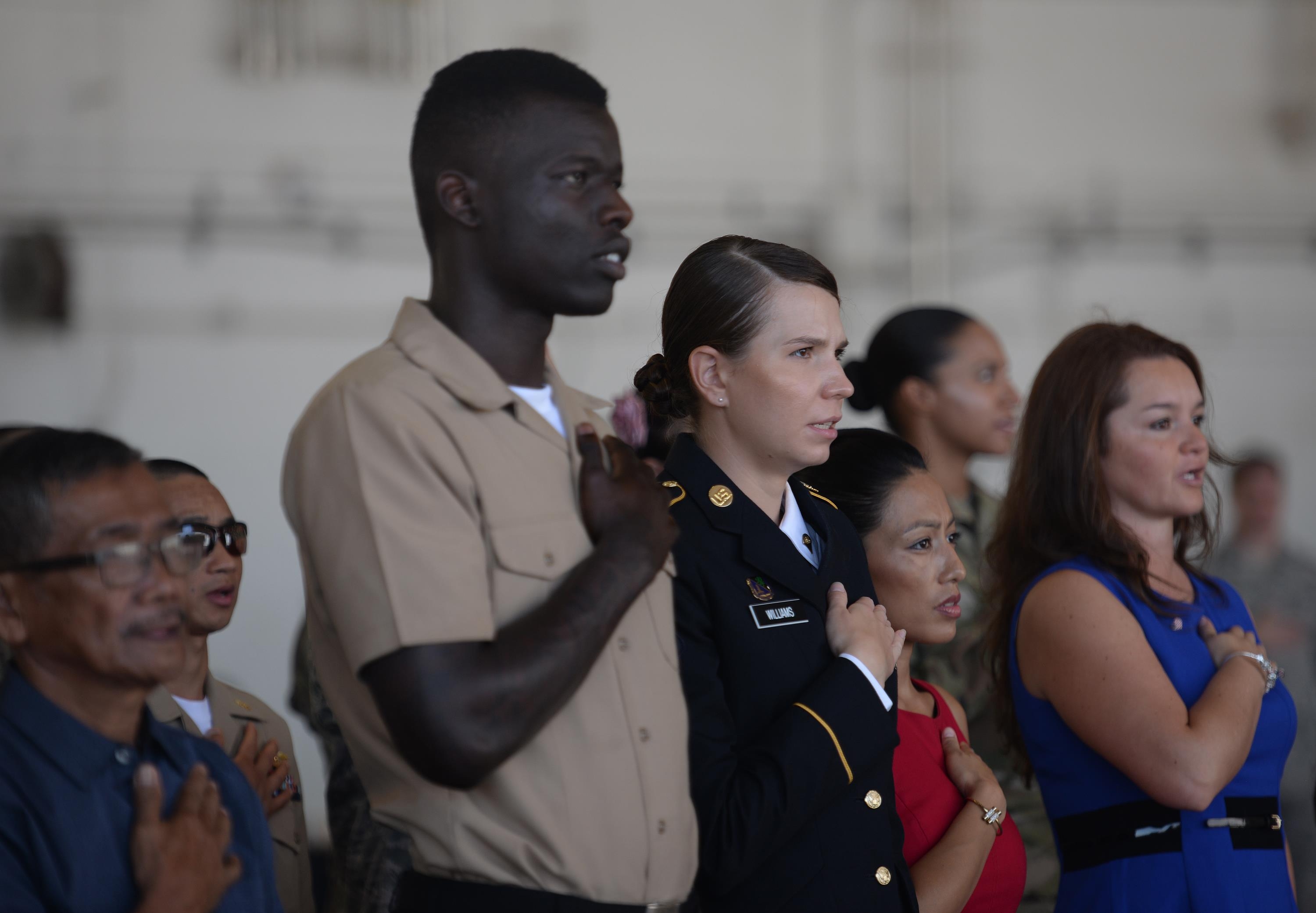
So while our inclusiveness, tolerance, and rejection of hate furthers multiculturalism, our society is rife with villains to be attacked and suppressed: whites, men, heterosexuals, the financially well off, Christians and Jews. We do not wish to hate, but we righteously hate oppressors. Gender, race, religion, and sexual preference have once again become reasons to reject whole categories of people, just different categories of people than before. Framed primarily by our humanitarian intentions, we reduce refugees and immigrants to no more than people in need for whom we should have sympathy. But perhaps we should hesitate to reduce people to such empty general categories, and dehumanize them by ignoring the culture that they carry with them. Refugees and immigrants bring their own cultures, their own assumptions, beliefs, values, fears and hopes from their homelands. One cannot just assume that they wish to integrate or assimilate into the Western culture. Willingness to assimilate might well vary from individual to individual, and from culture to culture. Immigrants from South Asia have grown up in a hierarchical caste society, in which higher castes are pure and lower castes polluted. Sharing food or marrying is forbidden between low castes and high castes. Violators of these rules may suffer penalties of beating, gang rape, and even execution. There are cases of Canadians from South Asia who have been convicted of murdering a young family member who grew up in Canada, and who married into a low caste. Immigrants from the Middle East have grown up in societies where men are in charge of women, and it is women's duty to obey and maintain modesty in demeanor and behaviour. There are cases of Americans or Canadians originating in the Middle East whose female family members become "too American" or "too Canadian," too immodest to protect family honour. Their family members, to defend family honour, commit murder, especially of their women. We call these as honor killings, because they are motivated by the desire to defend family and community honor, and are commonly approved of by many members of the ethnic community. Muslim immigrants have grown up in a tradition defined by sharia law, which forbids, on pain of death, a Muslim leaving Islam; criticism of religion, and homosexual acts. Women who have suffered rape are considered to have engaged in adultery, in some Muslim countries subject to death by stoning. Non-Muslim Christian or Jewish "infidels" must pay protection money, called a jizya, annually to be considered inferior dhimma, tolerated fourth-class citizens, with whom Muslims should not become friends. Other infidels, such as Yazidis, who are not "protected" are subject to murder, capture, gang rape, and sexual slavery, all legitimate under sharia law.[1] Many of these rules and penalties are totally inconsistent with Western law and with human rights as defined by the Canadian Charter of Rights and Freedoms, the US Bill of Rights, and the UN's Universal Charter of Human Rights. Canadians and Americans presumably do not wish to see their rights replaced by sharia law or caste law. Some immigrants, however, hold their caste and religious law above Western law, and would like to see caste and religious law replace Western law. In the meantime, they act as a fifth column, attempting to undermine Western law and custom, whether by electoral pressure or violent attack. Some Western legislators, in the face of immigrant and minority pressure, back pedal, in the name of multiculturalism and diversity, and withdraw support for free speech, for the right of criticism of religion, for freedom of sexual choice, and other individual liberties. There is, unfortunately, no simple policy solution. Policies directed at categories of people based on origin or religion are prejudicial and illiberal. You cannot know someone's beliefs, values, and propensities from labels indicating their origin, ethnicity, or religion. Immigration policy needs to be directed toward individuals, welcoming those whose values and attitudes are consistent with Western culture. Close scrutiny of applicants is in our collective interest. We should accept those immigrants who are willing and able to respect American and Canadian law and Western culture, and who wish to join other Americans and Canadians in building a society based on human rights. Are all cultures around the world equally good and equally valuable? The evidence indicates that cultures are often very different and have very different results for those living under them. While North American, Western Europe, and many English-speaking countries are all, for example, highly democratic, elsewhere in the world, such as the Middle East, all countries (but Israel) are despotic. While there is political freedom in the West, all Arab countries are regarded as "unfree," with the exception of Morocco, which is "partially free." In the non-Arab Middle East, all are "unfree," except Turkey, which, at least for now, is "partially free." Some countries, such as Saudi Arabia and Iran, have rejected the United Nations Universal Declaration of Human Rights on the grounds that it is inconsistent with their culture and religion, and instead wrote the Cairo Declaration Human Rights, ratified by the Organization of Islamic Conference (now the 57 member Organization of Islamic Cooperation) on August 5, 1990. In it, human rights are subordinated to Islamic law, Sharia If something is permitted in Sharia, such as stoning a woman to death for adultery or rape, it is a human right; if it is not permitted in Sharia, it is not a human right. Development, measured by a wide variety of indices, varies greatly among the regions of the world. The UN Development Program Arab Human Development Reports places the Arab world at the bottom or second to the bottom in most indices of human development, while Europe and North America are at the top. If all countries are equally good and valuable, why should a vast number of people be trying to escape the Middle East and Africa to come to North America and Europe? Is that not testimony to which countries and cultures they judge as "better" and which they judge as "worse"? Is "the more the merrier" in multiculturalism sensible? Can all cultures, all ways of life, coexist happily? A society can only function smoothly if there is a large degree of agreement and commonality regarding to what language people shall speak, what rules they should follow in dealing with one another, and how government is to be established. Where is it written that all cultures are necessarily compatible with one another? The success of immigrants in North America is a result of immigrants assimilating to Western culture and society, not due to immigrants clinging to the laws and practices of the lands they have left behind. Finally, the culturally empty category of "oppressed" is also not necessarily helpful in deciding which potential immigrants would make a positive contribution to the receiving society. Societies are built on common sentiment, not on sentimental sympathy for alleged "victims." Immigrants built Canada and the United States, but not by flying the flags of their old country and lobbying for the ancient laws. Immigrants joined in with others to build a common culture, a unified government and legal system, and a vibrant economy. We are multicultural in the sense that we welcome people from all over the world, but we welcome them to share our rights and freedoms, our challenges and opportunities, and to benefit with us. We welcome them to become Americans and Canadians; we welcome to them to the West.
Philip Carl Salzman is professor of anthropology at McGill University, Middle East Forum Fellow, and Frontier Centre Senior Fellow. [1] Bat Ye'or, Islam and Dhimmitude: Where Civilizations Collide, Madison, NJ: Associated University Presses, 2001.
© 2018 Gatestone Institute. All rights reserved. The articles printed here do not necessarily reflect the views of the Editors or of Gatestone Institute. No part of the Gatestone website or any of its contents may be reproduced, copied or modified, without the prior written consent of Gatestone Institute.
|
Our goal is to have intelligent discussion of the topics of the day. We realize everyone has their opinion and they should be allowed to express it in a discussion forum without calling each other names. We learn from discussion and not from name calling or argument.We use cookies to personalise content and ads, to provide social media features and to analyse our traffic. We also share information about your use of our site with our social media, advertising and analytics partners. See details
Contact Form
Showing posts with label Canadians. Show all posts
Monday, January 1, 2018
Migrants Bring Along With Them Unacceptable Cultural Attitudes
Thursday, August 21, 2014
FATCA Is Starting To Effect Canadians, Americans
![]() |
URL and to post comments: http://dollarvigilante.com/blog/2014/8/21/snowbirds-flying-into-fatca-trap.html
Thursday,August 21, 2014
![]()
[Editor’s Note: The following post is by TDV contributor, Chris Horlacher]
Many Canadians, referred to as snowbirds, spend 3 to 6 months each year in the United States. If they think to consult a tax adviser at all they're usually told that so long as they spend less than 183 days per year in the USA, they can rest assured that they will not be triggering any tax consequences. A brief reading of the US tax code would appear to verify this statement; however there is a nuance that threatens to trap snowbirds in the IRS's web.
It's called the substantial presence test and it's a second layer of the standard test performed by the IRS in order to determine residency. Not only can you not exceed 183 days in USA for the current year, but after adding in one-third of the prior year's days, and one-sixth of the second preceding year's days that total is not allowed to exceed 183 either. What this means is that your annual day allowance is not 183, but 122.
![]()
Many snowbirds thinking they're safe and not triggering any US tax liabilities could be in for a rude awakening come March 2015 when Canadian banks send their first FATCA reports to the CRA for them to forward along to the IRS. Because of FATCA, Canadian banks will now report anyone with ties to the USA and the likelihood of being deemed a US taxpayer rises substantially.
Being deemed a US taxpayer can quickly become a nightmare. Penalties, interest and professional fees come at a substantial cost and the IRS is far more aggressive and unforgiving than the Canada Revenue Agency. Furthermore, differences in how the two tax systems treat your RRSP's, TFSA's and other tax-sheltered accounts in Canada can rob you of the advantages of using them. Foreign tax credits can be claimed to keep your overall tax liability close to what it has always been but they're typically a clumsy way to do this and don't relieve you of the obligation and costs associated with filing.
How easily can you attract the evil gaze of the IRS? It's getting quite easy with FATCA. If you have a US address, phone number or any other US-based information on your Canadian accounts it could likely trigger a report and put you under greater scrutiny. A large number of transactions in the US could also trigger a report. Once the IRS has you in their sights your ability to enter and exit the USA can be complicated significantly. Through the Treasury Enforcement Communications System IRS agents can put you on a DHS watch list. For the time being you won't be arrested at the border but you will likely have an uninvited guest from the IRS show up during your stay in the US.
Luckily there's a way to establish your ties to Canada (or any other country) and avoid being deemed a US resident even if you breach the substantial presence test. You won't have to file a return to the IRS and will get to stay relatively free of the US-tax farm. For that to happen you have to file an annual form establishing a closer connectionto another country.
![]()
But what about all the past years where this was not done? Unfortunately there is no clearly correct approach for all circumstances. You could choose to begin filing the form on a go-forward basis, or do nothing and hope you're too small for the IRS to bother with. In the event that you do get caught up there are still things you can do to avoid having to file but these are very technical and legally complicated.
The best solution may be to simply stop going to the USA. With all that's happening there, why go at all? The excise taxes you pay while there help subsidize the most evil and expansive criminal syndicate known to humanity. It's a big world and perhaps you should explore it more. This may be the easiest and most enjoyable solution of them all.
[Editor's Note: In the TDV Newsletter we teach how to get out of dodge with "ass and assets" intact]
Chris Horlacher is a contributor to The Dollar Vigilante and a Chartered Accountant practicing in the Greater Toronto Area. Formerly an auditor to Fortune 500 companies with Deloitte & Touche, he now provides project management and consulting services to mid to large enterprises, specializing in financial institutions. His work has included helping launch a successful stock brokerage, insurance and tech company. Chris is also the Vice-Chair of the Mises Institute of Canada and an advisor to the Bitcoin Alliance of Canada. |
Monday, December 9, 2013
If You Are A Canadian And Want To Come To Us--Don't Go To The Hospital Or Call An Ambulance. DHS Will Not Allow You Entry Into The US
|
[Editor’s Note: The following post is by TDV contributor, Wendy McElroy]
The Department of Homeland Security (DHS) is sending Canadians a message: calling 911 or seeking help for a mental health or substance problem may result in being targeted. In short, Canadians may be denied entry into the US due to their medical records. A recent incident makes it clear that Canada is sharing private medical information with the DHS. Once entered into a DHS computer, of course, the information can spread to every other US government database.
The prescreening performed by DHS on American fliers includes intimate details. That's not surprising. The screening involves access to American police files, tax information including property taxes, employment records, travel history, car registration and a raft of other data. But, until now, it has been unclear how much intimate information was being shared with the DHS by foreign nations.
Now Canada has landed in an embarrassing spotlight.
RAMPING UP FORTRESS AMERICA
In early 2011, the US and Canada signed an agreement entitled "Beyond the Border: A Shared Vision for Perimeter Security and Competitiveness" which expanded their cooperation on border security. Canada pledged to share more relevant information with the US. For example, if a Canadian had an arrest record, then US customs and immigration were able to access it. Since then, however, law-abiding people who used to travel freely into the States have been turned back at the border.
Indeed, denial of entry seems to have started in the months preceding the agreement, with the final document acting more as an official stamp on already active policies. In September 2010, for example, Lois Kamenitz was turned away from the border because of a 911 medical emergency call made on her behalf. In 2006, Kamenitz overdosed on pills in a suicide attempt and her partner called for assistance. The police responded and wrote up a report on the non-violent medical emergency. Many police records deal with or include non-criminal matters such as missing people, people “of interest,” outstanding warrants, and victim reports. (Suicide is not a criminal offense in either Canada or the US) Police records can also contain mental health information.
Kamenitz had flown into the States three times since 2006. But in 2010, the Transportation Security Agency (TSA) was able to access the police records based on her 911 call. The 64 year-old woman was fingerprinted and photographed because she had done “violence to herself.” She was told to get medical clearance from a “State Department physician” in Toronto; a report from her own doctor was inadequate. She filled out several Homeland Security forms that further inquired after her medical history including substance abuse and diseases.
After paying a $250 fee to a designated doctor and $400 for additional airline tickets, she was finally cleared to fly. Kamenitz has no idea if the same scenario will play out again if she travels. In fact, since the doctor's evaluation is good for one year only, a repetition is probable.
According to lawyer Ryan Fritsch of the Psychiatric Patient Advocate Office, other people have been turned away because of contact with the police due to mental health issues. Fritsch commented, “I don’t know what the chain of information being passed was here. But I can’t imagine that it happened in such a way that it didn’t involve a Canadian government agency, so it’s very troubling.”
KAFKA, MEET ORWELL. BUREAUCRACY, MEET DYSTOPIA
The case of paraplegic Ellen Richardson is even more troubling because she had no contact with the police; a 911 call in 2012 summoned an ambulance only. Richardson was hospitalized for clinical depression in the wake of a relationship breakup and a threatened suicide. When Richardson went to the airport to catch a flight to NYC, the US agent claimed that a “systems check” revealed her June 2012 hospital stay for “a mental illness.” She was denied entry.
Richardson was told she needed a $500 medical clearance from a State Department approved doctor; a call to her psychiatrist was not adequate. She forfeited a pre-paid $6,000 Caribbean cruise that had been arranged in collaboration with a March of Dimes group. Like Kaminetz, Richardson had previously traveled into the States several times. This was the first time there was a problem.
The question arises: if there was no police involvement and so no police file, how did DHS and TSA know the specifics of Richardson's hospitalization? The Canadian government denies sharing medical data. But Member of Parliament Frances Gélinas is pursuing the question, especially since she has learned of other people who were turned away at the border for health reasons unrelated to mental problems. In one case, the border agent also cited a recent hospital stay.
CONCLUSION
The DHS believes it has a 'right' to the personal information of every person in the world. The only barrier to the DHS is the extent to which foreign governments refuse to provide data. Are other nations saying “no” to the DHS? The secrecy with which data is transferred makes a definite answer difficult. An educated guess must substitute.
Canada is one of the Five Eyes. That is, it is one of the five English-speaking nations that have signed an agreement to share intelligence operations. The other signatories are the UK, US, Australia, and New Zealand. Of the Five Eyes, Canada arguably has the best reputation for privacy with the Privacy Act of 1983 establishing the office of the Privacy Commissioner of Canada. And, yet, Ellen Richardson was confronted by American agents about her hospital stay. It is highly unlikely that Canada is alone in granting the DHS carte blanche on data.
Why is the data sharing so important an issue? Glenn Greenwald, the journalist who facilitated the information leaked by Edward Snowden, explained, “[T]he reason privacy is so critical is because it’s only when we know we’re not being watched that we can engage in creativity, or dissent, or pushing the boundaries of what’s deemed acceptable. A society in which people feel like they’re always being watched is one that breeds conformity....This is a crucial part of why a surveillance state is so damaging— it’s why all tyrannies know that watching people is the key to keeping them in line. Because only when you’re not being watched can you really be a free individual.”
[Editor's Note: These are disturbing but expected developments. As we've said before, it's best to avoid having to go through the thug-controlled borders of the lawless USSA. It's even better to have another passport from a saner, freer country and skip the USSA forever. One passport in particular offered by TDV Passports is an excellent travel document to have and such an economical choice that it is very popolar with TDV clients around the world. Click hereto learn more.]
|
Wendy McElroy is a regular contributor to the Dollar Vigilante, and a renowned individualist anarchist and individualist feminist. She was a co-founder along with Carl Watner and George H. Smith of The Voluntaryist in 1982, and is the author/editor of twelve books, the latest of which is "The Art of Being Free".
|
Subscribe to:
Posts (Atom)


Chris Horlacher is a contributor to