| ||
|
Showing posts with label JP Morgan. Show all posts
Showing posts with label JP Morgan. Show all posts
Thursday, July 2, 2015
FATCA, A Time Bomb That Has Yet To Explode But Most Definitely Will.



Tuesday, May 20, 2014
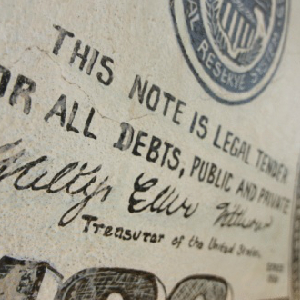
Could The End Be Near For The US Dollar Being The Reserve Currency Of The World. How Will That Effect You?
Who Is The New Secret Buyer Of U.S. Debt?

PHOTOS.COM
On the surface, the economic atmosphere of the U.S. has appeared rather calm and uneventful. Stocks are up, employment isn’t great but jobs aren’t collapsing into the void (at least not openly), and the U.S. dollar seems to be going strong. Peel away the thin veneer, however, and a different financial horror show is revealed.
U.S. stocks have enjoyed unprecedented crash protection due to a steady infusion of fiat money from the Federal Reserve known as quantitative easing. With the advent of the “taper”, QE is now swiftly coming to a close (as is evident in the overall reduction in treasury market purchases), and is slated to end by this fall, if not sooner.
Employment has been boosted only in statistical presentation, and not in reality. The Labor Department’s creative accounting of job numbers omits numerous factors, the most important being the issue of long term unemployed. Millions of people who have been jobless for so long they no longer qualify for benefits are being removed from the rolls. This quiet catastrophe has the side bonus of making it appear as though unemployment is going down.
U.S. Treasury bonds, and by extension the dollar, have also stayed afloat due to the river of stimulus being introduced by the Federal Reserve. That same river, through QE, is now drying up.
In my article The Final Swindle Of Private American Wealth Has Begun, I outline the data which leads me to believe that the Fed taper is a deliberate action in preparation for an impending market collapse. The effectiveness of QE stimulus has a shelf-life, and that shelf life has come to an end. With debt monetization no longer a useful tool in propping up the ailing U.S. economy, central bankers are publicly stepping back. Why? If a collapse occurs while stimulus is in full swing, the Fed immediately takes full blame for the calamity, while being forced to admit that central banking as a concept serves absolutely no meaningful purpose.
My research over many years has led me to conclude that a collapse of the American system is not only expected by international financiers, but is in fact being engineered by them. The Fed is an entity created by globalists for globalists. These people have no loyalties to any one country or culture. Their only loyalties are to themselves and their private organizations.
While many people assume that the stimulus measures of the Fed are driven by a desire to save our economy and currency, I see instead a concerted program of destabilization which ismeant to bring about the eventual demise of our nation’s fiscal infrastructure. What some might call “kicking the can down the road,” I call deliberately stretching the country thin over time, so that any indirect crisis can be used as a trigger event to bring the ceiling crashing down.
In the past several months, the Fed taper of QE and subsequently U.S. bond buying has coincided with steep declines in purchases by China, a dump of one-fifth of holdings by Russia, and an overall decline in new purchases of U.S. dollars for FOREX reserves.
With the Ukraine crisis now escalating to fever pitch, BRIC nations are openly discussing the probability of “de-dollarization” in international summits, and the ultimate dumping of the dollaras the world reserve currency.
The U.S. is in desperate need of a benefactor to purchase its ever rising debt and keep the system running. Strangely, a buyer with apparently bottomless pockets has arrived to pick up the slack that the Fed and the BRICS are leaving behind. But, who is this buyer?
At first glance, it appears to be the tiny nation of Belgium.
While foreign investment in the U.S. has sharply declined since March, Belgium has quickly become the third largest buyer of Treasury bonds, just behind China and Japan, purchasing more than $200 billion in securities in the past five months, adding to a total stash of around $340 billion. This development is rather bewildering, primarily because Belgium’s GDP as of 2012 was a miniscule $483 billion, meaning, Belgium has spent nearly the entirety of its yearly GDP on our debt.
Clearly, this is impossible, and someone, somewhere, is using Belgium as a proxy in order to prop up the U.S. But who?
Recently, a company based in Belgium called Euroclear has come forward claiming to be the culprit behind the massive purchases of American debt. Euroclear, though, is not a direct buyer. Instead, the bank is a facilitator, using what it calls a “collateral highway” to allow central banks and international banks to move vast amounts of securities around the worldfaster than ever before.
Euroclear claims to be an administrator for more than $24 trillion in worldwide assets and transactions, but these transactions are not initiated by the company itself. Euroclear is a middleman used by our secret buyer to quickly move U.S. Treasuries into various accounts without ever being identified. So the question remains, who is the true buyer?
My investigation into Euroclear found some interesting facts. Euroclear has financial relationships with more than 90 percent of the world’s central banks and was once partly owned and run by 120 of the largest financial institutions back when it was called the “Euroclear System”. The organization was consolidated and operated by none other than JP Morgan Bank in 1972. In 2000, Euroclear was officially incorporated and became its own entity. However, one must remember, once a JP Morgan bank, always a JP Morgan bank.
Another interesting fact – Euroclear also has a strong relationship with the Russian government and is a primary broker for Russian debt to foreign investors. This once again proves my ongoing point that Russia is tied to the global banking cabal as much as the United States. The East vs. West paradigm is a sham of the highest order.
Euroclear’s ties to the banking elite are obvious; however, we are still no closer to discovering the specific groups or institution responsible for buying up U.S. debt. I think that the use of Euroclear and Belgium may be a key in understanding this mystery.
Belgium is the political center of the EU, with more politicians, diplomats and lobbyists than Washington D.C. It is also, despite its size and economic weakness, a member of an exclusive economic club called the “Group Of Ten” (G10).
The G10 nations have all agreed to participate in a “General Arrangement to Borrow” (GAB) launched in 1962 by the International Monetary Fund (IMF). The GAB is designed as an ever cycling fund which members pay into. In times of emergency, members then ask the IMF’s permission for a release of funds. If the IMF agrees, it then injects capital through Treasury purchases and SDR allocations. Essentially, the IMF takes our money, then gives it back to us in times of desperation (with strings attached). It should be noted the Bank of International Settlements is also an overseer of the G10. If you want to learn more about the darker nature of globalist groups like the IMF and the BIS, read my articles, Russia Is Dominated By Global Banks, Too, and False East/West Paradigm Hides The Rise Of Global Currency.
The following article from Harpers titled “Ruling The World Of Money,” was published in 1983 and boasts about the secrecy and “ingenuity” of the Bank Of International Settlements, an unaccountable body of financiers that dominates the very course of economic life around the world.
It is my belief that Belgium, as a member of the G10 and the GAB agreements, is being used as a proxy by the BIS and the IMF to purchase U.S. debt, but at a high price. I believe that the banking elite are hiding behind their middleman, Euroclear, because they do not want their purchases of Treasuries revealed too soon. I believe that the IMF in particular is accumulating U.S. debt to be used later as leverage to unseat the dollar and finalize the rise of their SDR currency basket as the world reserve standard.
The Bretton Woods System, established in 1944, was used by the United Nations and participating governments to form international rules of economic conduct, including fixed rates for currencies. The IMF was created during this shift towards globalization as the BIS slithered into the background after its business dealings with the Nazis were exposed. It was the G10, backed by the IMF, that then signed the Smithsonian Agreement in 1971 which ended the Bretton Woods system of fixed currencies, as well as any remnants of the gold standard. This led to the floated currency system we have today, as well as the slow poison of monetary inflation which has now destroyed more than 98 percent of the dollar’s purchasing power.
I believe the next and final step in the banker program is to reestablish a new Bretton Woods style system in the wake of an engineered catastrophe. That is to say, we are about to go full circle. Perhaps Ukraine will be the cover event, or tensions in the South China Sea. Just as Bretton Woods was unveiled during World War II, Bretton Woods redux may be unveiled during World War III. In either case, the false East/West paradigm is the most useful ploy the elites have to bring about a controlled decline of the dollar.
The new system will reintroduce the concept of fixed currencies, but this time, all currencies will be fixed or “pegged” to the value of the SDR global basket. The IMF holds a global SDR summit every five years, and the next meeting is set for the beginning of 2015.
If the Chinese yuan is brought into the SDR basket next year, and the dollar is toppled as the world reserve, there will be nothing left in terms of economic structure in the way of a global currency system. If the public does not remove the globalist edifice by force, the IMF and the BIS will then achieve their dream – the complete dissolution of economic sovereignty, and the acceptance by the masses of global financial governance. The elites don’t want to hide behind the curtain anymore. They want recognition. They want to be worshiped. And, it all begins with the secret buyout of America, the implosion of our debt markets and the annihilation of our way of life.
Thursday, December 12, 2013
Dirty Harry Reid Runs Senate Like His Own Empire And Manipulates Government Agencies For His Own Benefit.
Report: Harry Reid Personally Intervened To Reverse Visa Denials For Asian Finanicers Of Vegas Development Project – A Project Retaining The Services Of Son Rory’s Law Firm
“This one is going to be a major headache for us all because Sen. Reid’s office/staff is pushing hard and I just had a long yelling match on the phone.”
U.S. Citizenship and Immigration Services (USCIS) legislative affairs official Miguel Rodriguez wrote those words one year ago, steadying himself against the corrupt favor call-in he’d allegedly just been handed down from on high.
Senate Majority Leader Harry Reid (D-Nev.) had suddenly become interested in the visa status of several Asian investors in the SLS Hotel, an in-process Las Vegas casino redevelopment known, in its Rat-Pack heyday, as the Sahara.
The urban redevelopment project centering on the SLS Hotel is served by the law firm of Lionel, Sawyer & Collins. One of that firm’s shareholders – and a key part of the SLS redevelopment project – is lawyer, former Clark County Commissioner and failed Nevada gubernatorial aspirant Rory Reid.
Rory Reid is also the son of Senator Harry Reid.
The Asian investors attached to the SLS project had applied for visas, but SLS’ efforts at swiftly expediting their applications instead ended in an unequivocal rejection, with the U.S. Department of Homeland Security declaring the case did not meet criteria for an expedited decision.
According to The Washington Times, which first reported Tuesday on the political connections behind Senator Reid’s intervention with the visa process, “The decision, dated Dec. 17, 2012, stated flatly that ‘there is no appeal or reconsideration of this decision.’”
The Times’ riveting story, which did not mention Rory Reid or his law firm by name, opened a floodgate of fresh diligence from news outlets eager to take their own peek into the political background of the SLS project.
What Nevada journalist Jon Ralston quickly found was Rory Reid.
From Ralston|Reports Thursday:
The SLS hotel/casino, which Senate Majority Leader Harry Reid went out of his way to help, is represented by his son, Rory Reid.One day after The Washington Times reported that the majority leader had pushed Homeland Security officials to overrule a decision not to award visas to Asian investors in the SLS (where The Sahara once stood), I discovered that Reid’s son was representing the owners at the same time this was occurring in 2012. The majority leader’s office portrayed his intervention, as expected, as Reid just doing his job to help create jobs. But did his son push him to intervene?Reid’s office says no. “The SLS project creates nearly 9,000 badly needed jobs and has the support of Republican Gov. Brian Sandoval,” the majority leader’s spokeswoman, Kristen Orthman, told me. “That is the calculus in Sen. Reid’s support of the project. We have a long-standing office policy that strictly bars any member of the staff’s family or the Senator’s family from lobbying our office on behalf of their clients. That policy applies in this case.”
How does it apply in this case? More to the point, how is that particular standing policy even the one in question? Sure, Rory Reid doesn’t have to pick up his smart phone and txt his dad abt his prblmz wit SLS prjct, but why on Earth would he have to? Orthman said nothing in theRalston story about Senator Reid’s office having a standing policy that prohibits the Senator from meddling in the affairs of cabinet-level offices on behalf of his son.
If the Times’ email sources tell the whole story, Senator Reid expressly intervened to get a DHS decision reversed:
But that [flat visa rejection] simply prompted Mr. Reid to personally reach out to the top official at USCIS, Alejandro “Ali” Mayorkas, setting into motion a process that consumed top political officials inside the Homeland Security and Commerce departments and ultimately resulted in a ruling that granted expedited status to the hotel over the objections of career officials.“Ali had a call with Sen. Reid on these I-526 cases on Tuesday of this week,” Mr. Rodriguez wrote top officials on Jan. 11. “While no guarantees were made on the call, Ali did promise the Senator that USCIS would take a ‘fresh look’ at the expedited request.”Government officials did a lot more than give a fresh look — forwarding from Mr. Reid’s office the names of people involved with the hotel project that could help the federal agency change its mind on the expedited status request. Mr. Reid’s staff repeatedly made the case that the hotel would lose its potential funding for its renovation if Homeland Security’s USCIS didn’t expedite the visas.
Orthman cited 9,000 reasons – “badly needed jobs” – as well as the prior support of Nevada’s Republican Governor to suggest a justification for Senator Reid’s sudden involvement. There are, perhaps, at least 300 million more reasons she didn’t cite: the $300 million financial instrument Rory Reid’s firm helped SLS secure, either in part or in whole, through the Asian investors – financial backers whose visa status dictated whether their money “could be brought into the country and paired with the JP Morgan financing to underwrite the renovation of the hotel,” according to the emails obtained by The Washington Times.
Sunday, November 3, 2013
When Survivors Are Punished For Saving The Weak Ones, Will They Volunteer Again?
In 2008, the government asked large banks to save small banks. However, Bank of America, for example, was found liable for frauds committed at Countrywide Mortgage that occurred before Bank of America took over Countrywide. In addition, JPMorgan Chase has faced billions of dollars in penalties for offenses that were standard business practices before the government changed their mind.
In all, banks have paid about $100 billion in fines and penalties over the past five year, and additional payments are likely. While wrongdoing should be punished, the large fines might serve as a disincentive to cooperate with authorities next time the financial system stands at the brink of collapse.
Next time, bankers will remember the investigations and costs and have less incentive to save the system. The truth is Bank of America could have developed a mortgage business without Countrywide and enjoyed only profits rather than liabilities. In that case, the regulators would have been forced to clean up the mess without the resources and expertise Bank of America had.
Regulators have taken a number of steps to avoid a repeat of 2008. They might not be worried about that possibility anymore and are now trying to satisfy a populist outrage against Wall Street.
Unfortunately, the next crisis will not be like the last one. If regulators could anticipate what would cause the next crisis, they could avoid it. Each crisis takes its own form and beating up the survivors from the last crisis is unlikely to make them eager to help next time.
© 2013 Moneynews. All rights reserved.
In all, banks have paid about $100 billion in fines and penalties over the past five year, and additional payments are likely. While wrongdoing should be punished, the large fines might serve as a disincentive to cooperate with authorities next time the financial system stands at the brink of collapse.
Next time, bankers will remember the investigations and costs and have less incentive to save the system. The truth is Bank of America could have developed a mortgage business without Countrywide and enjoyed only profits rather than liabilities. In that case, the regulators would have been forced to clean up the mess without the resources and expertise Bank of America had.
Regulators have taken a number of steps to avoid a repeat of 2008. They might not be worried about that possibility anymore and are now trying to satisfy a populist outrage against Wall Street.
Unfortunately, the next crisis will not be like the last one. If regulators could anticipate what would cause the next crisis, they could avoid it. Each crisis takes its own form and beating up the survivors from the last crisis is unlikely to make them eager to help next time.
© 2013 Moneynews. All rights reserved.
Sunday, October 20, 2013
Wire Transfer Prelude. Justice Department Gets Large Settlement From JPMorgan Chase But Is This The End Or The Beginning? Individual Executives Could Be Next
JPMorgan to Pay $13 Billion for Mortgage Claims
Saturday, 19 Oct 2013 05:43 PM

The tentative deal does not release the bank from criminal liability, a factor that had been a major sticking point in the discussions, the source said.
As part of the deal, the bank will continue to cooperate in criminal inquiries into certain individuals involved in the conduct at issue, the source, who declined to be identified.
Officials at JPMorgan and the Justice Department declined to comment.
A breakthrough in the weeks-long talks came Friday night, after Attorney General Eric Holder and JPMorgan Chief Executive Jamie Dimon spoke on the phone and the bank agreed to leave criminal liability out of the settlement, the source said.
The bank and the Justice Department have been discussing a broad deal that would resolve not only a civil investigation into mortgage securities that the bank sold in the runup to the financial crisis, but also similar lawsuits from the Federal Housing Finance Agency, the National Credit Union Administration, the state of New York and others.
Reuters reported late Friday that JPMorgan and FHFA had reached a tentative $4 billion deal. That agreement is expected to be part of the larger $13 billion settlement.
JPMorgan is seeking a single settlement to resolve all claims from federal and state agencies over its mortgage-related liabilities stemming from the bust in house prices.© 2013 Thomson/Reuters. All rights reserved.
Monday, December 5, 2011
Bank Bailouts Worse Than Thought
In the following post from the New York Times, we learn how big the bailout really was.
What a travesty. These banks should have been allowed to go bankrupt however, they got trillions! This is what happens when businesses get so large that they are "too big to fail"!
Your comments are welcome
Conservative Tom
Secrets of the Bailout, Now Told
By GRETCHEN MORGENSON
New York Times
A FRESH account emerged last week about the magnitude of financial aid that the Federal Reserve bestowed on big banks during the 2008-09 credit crisis. The report came from Bloomberg News, which had to mount a lengthy legal fight to wrest documents from the Fed that detailed its rescue efforts.
It is dispiriting, of course, that we are still learning about the billions provided to various financial firms during the crisis. Another sad element to this mess is that getting the truth requires the legal firepower of an organization as rich as Bloomberg.
But that’s the way our world works. Billions are secretly showered on troubled financial institutions to stave off disaster. Individuals get little or no help.
Here are some of the new figures:
Among all the rescue programs set up by the Fed, $7.77 trillion in commitments were outstanding as of March 2009, Bloomberg said. The nation’s six largest banks — JPMorgan Chase, Bank of America, Citigroup, Wells Fargo, Goldman Sachs and Morgan Stanley — borrowed almost half a trillion dollars from the Fed at peak periods, Bloomberg calculated, using the central bank’s data.
Those six institutions accounted for 63 percent of the average daily borrowings from the Fed by all publicly traded United States banks, money management and investment firms, Bloomberg said.
Numbers for individual companies were equally astonishing. For example, the Fed provided Bear Stearns with $30 billion to see it through its 2008 shotgun marriage with JPMorgan. This was in addition to the $29.5 billion in assets purchased by the Fed from Bear to assist in the buyout by JPMorgan. Citigroup, meanwhile, tapped the Fed for almost $100 billion in January 2009 — its peak during the crisis — and Morgan Stanley received $107 billion in Fed loans in September 2008.
Some may see all this as ancient history or as ho-hum disclosures that confirm what everybody already knew — that our banks were on the precipice and that only hundreds of billions of dollars could save them. The Fed says that the money it lent in these programs was paid back without generating any losses.
But the information is revealing nonetheless. The fact is, investors didn’t know how dire the situation was at these institutions. At the same time that these banks were privately thronging the teller windows at the Fed, some of their executives were publicly espousing their firms’ financial solidity.
During the first three months of 2009, for example, when Citigroup’s Fed borrowing apparently peaked, Vikram Pandit, its chief executive, hailed the company’s performance. Calling that first quarter the best over all since 2007, Mr. Pandit said the results showed “the strength of Citi’s franchise.”
Citi’s earnings release didn’t detail its large Fed borrowings; neither did its filing for the first quarter of 2009 with the Securities and Exchange Commission. Other banks kept silent on these activities or mentioned them in passing with few specifics.
These disclosure lapses are disturbing to Lynn E. Turner, a former chief accountant at the S.E.C. Since 1989, he said, commission rules have required public companies to disclose details about material federal assistance they receive. The rules grew out of the savings and loan crisis, during which hundreds of banks failed and others received government help.
The rules are found in a section of the S.E.C.’s Codification of Financial Reporting Policies titled “Effects of Federal Financial Assistance Upon Operations.” They state that if any types of federal financial assistance have “materially affected or are reasonably likely to have a future material effect upon financial condition or results of operations, the management discussion and analysis should provide disclosure of the nature, amounts and effects of such assistance.”
Given these rules, Mr. Turner said: “I would have expected some discussion in the management discussion and analysis of how this has had a positive impact on these banks’ operating results. The borrowings had to have an impact on their liquidity and earnings, but I don’t ever recall anybody saying ‘we borrowed a bunch of money from the Fed at zero percent interest.’ ”
I asked officials at Citigroup and Morgan Stanley about these disclosures. Jon Diat, a spokesman for Citigroup, said the bank’s disclosures in its quarterly filings with the S.E.C. “were entirely appropriate.” He added that Citi and other financial services firms “utilized numerous government programs that provided significant funding capacity and liquidity support which helped increase the flow of credit into the economy.”
Morgan Stanley pointed to its annual report for 2008, which mentioned the various Fed programs and the bank’s ability to tap them. The filing noted that the Fed was authorized to extend credit to Morgan Stanley’s broker-dealer units in both the United States and Britain but contained no dollar amounts used.
Of course, there is stigma associated with a company tapping into federal assistance programs. This is the Fed’s main argument for keeping its operations under wraps. And companies want to avoid frightening investors by disclosing their reliance on this type of emergency cash, even if it is only temporary.
But keeping this information from shareholders is no way to engender their trust. And a lack of investor confidence often translates to depressed valuations among companies’ shares. If investors doubt that a company is coming clean about its financial standing — the current worry is how exposed our banks are to European debt woes — its stock price will suffer. This is very likely one of the reasons that big bank stocks trade at such low price-to-earnings multiples today.
It will be interesting to see whether the S.E.C. does anything to enforce its rules that companies disclose federal assistance in financial filings, either in the recent past or in the future. You could certainly argue that requiring such disclosures is even more important nowadays, given that so many banks are considered too big to fail and that the taxpayer will undoubtedly be asked once again to rescue them from their mistakes.
“These banks and the Fed have never believed in transparency,” Mr. Turner said. “I actually think their thought process is sorely flawed. If the banks knew this stuff was going to be made public they’d behave differently. Instead of runs on the bank you’d have bankers doing things intelligently to avoid getting into trouble.”
What an idea!
What a travesty. These banks should have been allowed to go bankrupt however, they got trillions! This is what happens when businesses get so large that they are "too big to fail"!
Your comments are welcome
Conservative Tom
Secrets of the Bailout, Now Told
By GRETCHEN MORGENSON
New York Times
A FRESH account emerged last week about the magnitude of financial aid that the Federal Reserve bestowed on big banks during the 2008-09 credit crisis. The report came from Bloomberg News, which had to mount a lengthy legal fight to wrest documents from the Fed that detailed its rescue efforts.
It is dispiriting, of course, that we are still learning about the billions provided to various financial firms during the crisis. Another sad element to this mess is that getting the truth requires the legal firepower of an organization as rich as Bloomberg.
But that’s the way our world works. Billions are secretly showered on troubled financial institutions to stave off disaster. Individuals get little or no help.
Here are some of the new figures:
Among all the rescue programs set up by the Fed, $7.77 trillion in commitments were outstanding as of March 2009, Bloomberg said. The nation’s six largest banks — JPMorgan Chase, Bank of America, Citigroup, Wells Fargo, Goldman Sachs and Morgan Stanley — borrowed almost half a trillion dollars from the Fed at peak periods, Bloomberg calculated, using the central bank’s data.
Those six institutions accounted for 63 percent of the average daily borrowings from the Fed by all publicly traded United States banks, money management and investment firms, Bloomberg said.
Numbers for individual companies were equally astonishing. For example, the Fed provided Bear Stearns with $30 billion to see it through its 2008 shotgun marriage with JPMorgan. This was in addition to the $29.5 billion in assets purchased by the Fed from Bear to assist in the buyout by JPMorgan. Citigroup, meanwhile, tapped the Fed for almost $100 billion in January 2009 — its peak during the crisis — and Morgan Stanley received $107 billion in Fed loans in September 2008.
Some may see all this as ancient history or as ho-hum disclosures that confirm what everybody already knew — that our banks were on the precipice and that only hundreds of billions of dollars could save them. The Fed says that the money it lent in these programs was paid back without generating any losses.
But the information is revealing nonetheless. The fact is, investors didn’t know how dire the situation was at these institutions. At the same time that these banks were privately thronging the teller windows at the Fed, some of their executives were publicly espousing their firms’ financial solidity.
During the first three months of 2009, for example, when Citigroup’s Fed borrowing apparently peaked, Vikram Pandit, its chief executive, hailed the company’s performance. Calling that first quarter the best over all since 2007, Mr. Pandit said the results showed “the strength of Citi’s franchise.”
Citi’s earnings release didn’t detail its large Fed borrowings; neither did its filing for the first quarter of 2009 with the Securities and Exchange Commission. Other banks kept silent on these activities or mentioned them in passing with few specifics.
These disclosure lapses are disturbing to Lynn E. Turner, a former chief accountant at the S.E.C. Since 1989, he said, commission rules have required public companies to disclose details about material federal assistance they receive. The rules grew out of the savings and loan crisis, during which hundreds of banks failed and others received government help.
The rules are found in a section of the S.E.C.’s Codification of Financial Reporting Policies titled “Effects of Federal Financial Assistance Upon Operations.” They state that if any types of federal financial assistance have “materially affected or are reasonably likely to have a future material effect upon financial condition or results of operations, the management discussion and analysis should provide disclosure of the nature, amounts and effects of such assistance.”
Given these rules, Mr. Turner said: “I would have expected some discussion in the management discussion and analysis of how this has had a positive impact on these banks’ operating results. The borrowings had to have an impact on their liquidity and earnings, but I don’t ever recall anybody saying ‘we borrowed a bunch of money from the Fed at zero percent interest.’ ”
I asked officials at Citigroup and Morgan Stanley about these disclosures. Jon Diat, a spokesman for Citigroup, said the bank’s disclosures in its quarterly filings with the S.E.C. “were entirely appropriate.” He added that Citi and other financial services firms “utilized numerous government programs that provided significant funding capacity and liquidity support which helped increase the flow of credit into the economy.”
Morgan Stanley pointed to its annual report for 2008, which mentioned the various Fed programs and the bank’s ability to tap them. The filing noted that the Fed was authorized to extend credit to Morgan Stanley’s broker-dealer units in both the United States and Britain but contained no dollar amounts used.
Of course, there is stigma associated with a company tapping into federal assistance programs. This is the Fed’s main argument for keeping its operations under wraps. And companies want to avoid frightening investors by disclosing their reliance on this type of emergency cash, even if it is only temporary.
But keeping this information from shareholders is no way to engender their trust. And a lack of investor confidence often translates to depressed valuations among companies’ shares. If investors doubt that a company is coming clean about its financial standing — the current worry is how exposed our banks are to European debt woes — its stock price will suffer. This is very likely one of the reasons that big bank stocks trade at such low price-to-earnings multiples today.
It will be interesting to see whether the S.E.C. does anything to enforce its rules that companies disclose federal assistance in financial filings, either in the recent past or in the future. You could certainly argue that requiring such disclosures is even more important nowadays, given that so many banks are considered too big to fail and that the taxpayer will undoubtedly be asked once again to rescue them from their mistakes.
“These banks and the Fed have never believed in transparency,” Mr. Turner said. “I actually think their thought process is sorely flawed. If the banks knew this stuff was going to be made public they’d behave differently. Instead of runs on the bank you’d have bankers doing things intelligently to avoid getting into trouble.”
What an idea!
Subscribe to:
Posts (Atom)