Contact Form

Name

Email *

Message *

Showing posts with label London School of Economics. Show all posts

Tuesday, April 14, 2015

When Free Speech Is No Longer Free, All Freedoms Disappear! Universities Lead The Way!

The universities were ranked using a traffic-light system: red for universities that ban and actively censor certain ideas on campus; amber for universities that chill free speech, and green for universities that have a hands-off approach to free speech.
The results of the Free Speech University Rankings were staggering. Forty-seven universities were marked red, including Oxford and the London School of Economics; 45 were marked amber, including Cambridge, and a mere 25 were marked green. Results indicate that 80% of British universities censor free speech.
Stifling free speech on campus is no longer restricted to Britain; it can be seen all over the world, including in the U.S.
"Campus censorship is something which can no longer be laughed off. Free thought itself is under attack." — Tom Slater, assistant editor at Spiked Online, Daily Telegraph.
"Supporting Israel is now labeled an act of 'racism' by some professors and certain campus organizations." — Daniel Mael, Senior, Brandeis University, U.S.
Freedom of speech is one of the fundamental values of our Judeo-Christian civilization. The day we give away free speech -- or Israel, which embodies it -- is the day we cease to exist.
At Manchester University in April of 2010, Israel's deputy ambassador to the UK, Talya Lador-Fresher, was violently attacked. Demonstrators climbed the hood of her car and attempted to smash the windscreen before the police were able to escort her to safety.
Again, in February of 2013, this time at the University of Essex in Colchester, Britain, during a debate on the situation in the Middle East, authorities ordered the evacuation from campus of her successor, Israel's deputy ambassador to the UK, Alon Roth-Snir. A group of hostile students disrupted the debate; university authorities said they could not protect his safety.
The British website Spiked Online, known for its staunch defense of freedom of speech, recently published its first "Free Speech University Rankings" (FSUR). Spiked surveyed 115 British universities and examined the policies, regarding freedom of speech, of both the university administrations and the students' unions. The universities were then ranked using a traffic-light system. The color red was given to universities that ban and actively censor certain ideas on campus; amber was given to universities that chill free speech through intervention; and green for universities with a hands-off approach to free speech.
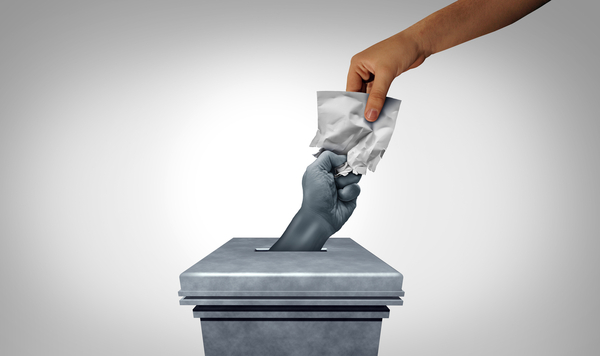
Image source: Spiked Online

Spiked did not negatively assess university policies or actions aimed at restricting unlawful speech. America has a First Amendment, but Europe does not. There are countless restrictions on speech under UK law, including harassment, incitement to violence or discrimination. However, if a university or students' union expands legal definitions of speech offenses in order to limit legitimate, lawful speech, this was taken into account.
The results of the FSUR were staggering. Forty-seven universities were marked red, including renowned institutions such as Oxford University and the London School of Economics; 45 universities were marked amber, including Cambridge University; and a mere 23 universities were marked green. The results indicate that 80% of British universities censor speech.
Essex University, from where Israeli diplomat Roth-Snir was evacuated, was marked red, both for its official policies and for those of its students' union. The university guidelines state that it is forbidden to "cause needless offence, concern or annoyance to others." Essex Professor Thomas Scotto complained to the media that he asked the university to re-invite an Israeli spokesman, but he was told to "let it go."
The University of Manchester was marked amber. The university itself received a green ranking, because it places no limits on speech and expression. However, the Manchesterstudent's union forbids what it calls the "promotion of extremist causes." Defending the policies of Israel seems to be one of these "extremist causes."
Spiked's FSUR shows that censoring pro-Israeli views belongs to the five most popular bans at British universities. "Campus censorship is something which no longer can be laughed off. Free thought itself is under attack," Tom Slater, assistant editor at Spiked, wrote in the Daily Telegraph. "Pro-life groups have been banned at four universities. Pro-Israel students are lucky if they can even get events approved."
Last month, students and staff at the School of Oriental and African Studies in London voted toboycott Israel and sever all links with Israeli academic institutions. 75% of the students, 60% of the academic staff and 90% of the non-teaching staff, such as cleaners, favored the Israeli boycott.
The spectacle of stifling free speech on campus is not restricted to Britain; it can be seen all over the world, including in the U.S.
In America, the Foundation for Individual Rights in Education (FIRE) has published a guide-to-free-speech-on-campus, which rates colleges and universities in a similar fashion as Spiked. The case of Daniel Mael springs to mind, a 22-year old student who is being lambasted at Brandeis University for expressing pro-Israeli views. "Supporting Israel is now labeled an act of 'racism' by some professors and certain campus organizations," Mael writes.
It is no coincidence that the fight to preserve freedom of speech coincides with the right to defend Israel. Freedom of speech is one of the fundamental values of our Judeo-Christian civilization. The day we give away free speech -- or Israel, which embodies it -- is the day we cease to exist.

Tuesday, May 6, 2014

The Back Story On Monica Lewinsky-Bill Clinton

Exclusive: Monica Lewinsky Writes About Her Affair with President Clinton


PHOTOGRAPH BY MARK SELIGER.

Monica Lewinsky writes in Vanity Fair for the first time about her affair with President Clinton: “It’s time to burn the beret and bury the blue dress.” She also says: “I, myself, deeply regret what happened between me and President Clinton. Let me say it again: I. Myself. Deeply. Regret. What. Happened.”
After 10 years of virtual silence (“So silent, in fact,” she writes, “that the buzz in some circles has been that the Clintons must have paid me off; why else would I have refrained from speaking out? I can assure you that nothing could be further from the truth”), Lewinsky, 40, says it is time to stop “tiptoeing around my past—and other people’s futures. I am determined to have a different ending to my story. I’ve decided, finally, to stick my head above the parapet so that I can take back my narrative and give a purpose to my past. (What this will cost me, I will soon find out.)”
The full story is available May 8 in the digital edition; subscribe now for access. The magazine will be on national newsstands and available in an audio edition on May 13.
Clearing the Air
Maintaining that her affair with Clinton was one between two consenting adults, Lewinsky writes that it was the public humiliation she suffered in the wake of the scandal that permanently altered the direction of her life: “Sure, my boss took advantage of me, but I will always remain firm on this point: it was a consensual relationship. Any ‘abuse’ came in the aftermath, when I was made a scapegoat in order to protect his powerful position. . . . The Clinton administration, the special prosecutor’s minions, the political operatives on both sides of the aisle, and the media were able to brand me. And that brand stuck, in part because it was imbued with power.”
Job Hunting
After the scandal, writes Lewinsky, “I turned down offers that would have earned me more than $10 million, because they didn’t feel like the right thing to do.” After moving between London (where she got her master’s degree in social psychology at the London School of Economics), Los Angeles, New York, and Portland, Oregon, she interviewed for numerous jobs in communications and branding with an emphasis on charity campaigns, but, “because of what potential employers so tactfully referred to as my ‘history,’” she writes, “I was never ‘quite right’ for the position. In some cases, I was right for all the wrong reasons, as in ‘Of course, your job would require you to attend our events.’ And, of course, these would be events at which press would be in attendance.”
Correcting the Record
Lewinsky writes that she is still recognized every day, and her name shows up daily in press clips and pop-culture references. She admits that she used to refer to Maureen Dowd as “Moremean Dowdy,” but “today, I’d meet her for a drink.” And she requests one correction of BeyoncĂ©, regarding the lyrics to her recent hit “Partition”: “Thanks, BeyoncĂ©, but if we’re verbing, I think you meant ‘Bill Clinton’d all on my gown,’ not ‘Monica Lewinsky’d.’”
Lewinsky responds to reports made public in February that Hillary Clinton, during the 1990s, had characterized her as a “narcissistic loony toon” in correspondence with close friend Diane Blair. “My first thought,” Lewinsky writes, “as I was getting up to speed: If that’s the worst thing she said, I should be so lucky. Mrs. Clinton, I read, had supposedly confided to Blair that, in part, she blamed herself for her husband’s affair (by being emotionally neglectful) and seemed to forgive him. Although she regarded Bill as having engaged in ‘gross inappropriate behavior,’ the affair was, nonetheless, ‘consensual (was not a power relationship).’”
Why She’s Going Public
When Tyler Clementi, the 18-year-old Rutgers freshman who was secretly streamed via Webcam kissing another man, committed suicide in September 2010, Lewinsky writes, she was brought to tears, but her mother was especially distraught: “She was reliving 1998, when she wouldn’t let me out of her sight. She was replaying those weeks when she stayed by my bed, night after night, because I, too, was suicidal. The shame, the scorn, and the fear that had been thrown at her daughter left her afraid that I would take my own life—a fear that I would be literally humiliated to death.” Lewinsky clarifies that she has never actually attempted suicide, but had strong suicidal temptations several times during the investigations and during one or two periods after.
Lewinsky writes that following Clementi’s tragedy “my own suffering took on a different meaning. Perhaps by sharing my story, I reasoned, I might be able to help others in their darkest moments of humiliation. The question became: How do I find and give a purpose to my past?” She also says that, when news of her affair with Clinton broke in 1998, not only was she arguably the most humiliated person in the world, but, “thanks to the Drudge Report, I was also possibly the first person whose global humiliation was driven by the Internet.” Her current goal, she says, “is to get involved with efforts on behalf of victims of online humiliation and harassment and to start speaking on this topic in public forums.”