Contact Form

Name

Email *

Message *

Showing posts with label earned income tax credit. Show all posts

Thursday, July 20, 2017

A Great Budget Idea Unfortunately With The Weak Kneed Republicans, It Will Never Pass


FINALLY, A BUDGET WORTH LOOKING AT

0
151

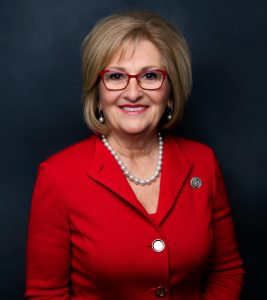
Image: Public Domain. House Budget Committee. Committee Chairwoman Diane Black (R-Tenn.)

While Congress has fumbled the Obamacare repeal, one promise seems to be on the road to being kept within the House Budget Committee. Committee Chairwoman Diane Black (R-Tenn.) has released a budget plan for FY 2018 that details major cuts to so-called mandatory spending, presents the tax plan President Donald Trump has boasted about, and reins in government waste. Finally, Republicans in Congress have the opportunity to show the American people comprehensive change is afoot, now they must simply act on it.
The budget is comprised of two types of spending. The mandatory spending that represents the vast majority of government spending and is nearly impossible to change from year to year — it operates automatically based on eligibility for programs — without an act of Congress. Social programs such as Medicaid, Medicare and Social Security are funded here, as well as income guarantees and tax credits.
In fiscal year 2016, this accounted for $2.7 trillion or 70 percent of total government expenditures.
Conversely, discretionary spending is government money budgeted for each executive department and government branch to execute their duties. Congress is supposed to determine the budgets each year through the appropriations process.
BLACK’S PLAN CHANGES LAW, CALLING FOR AN AMBITIOUS $203 BILLION CUT TO MANDATORY SPENDING OVER THE NEXT 10 YEARS, MAKING THIS BUDGET A HISTORICAL WITH CUTS THAT HAVE NOT BEEN SEEN SINCE THE 1990S.
The Budget Committee presents a number to other committees and those groups determine how money will be appropriated to their mandatory spending. For example, Black’s budget proposes $10 billion to be cut by the House Appropriations Agriculture Subcommittee over the next ten years, it recommends these cuts through the enforcement of work requirements for Supplemental Nutrition Assistance Program, formally known as food stamps, participants. If the budget passes, the Agricultural Committee would be bound to this budget, but ultimately, they would decide how to achieve it, keeping in mind Budget Committee recommendations.
As the budget explains, “Under current law, the Congressional Budget Office [CBO] estimates that the annual budget deficit will balloon to over $1.4 trillion by 2027… Without significant reforms, deficits will continue to rise beyond the 10-year budget window, driven mostly by automatic, mandatory spending programs. The debate about spending and fiscal restraint is not simply a mathematical one. It is a moral debate about the country and government we want. It is about the burden we are willing to leave to our children and grandchildren.”
Black also discusses significant reforms to welfare programs, refocusing the goal from serving as many people as possible to lifting people out of poverty. Black encourages states to take more authority over the design and implementation of these programs, and to shift the responsibility off the federal government.
The cuts coincide with a plan to simplify the tax code by lower tax rates for individuals and consolidating the current seven individual income tax brackets, reducing the corporate tax rate, and transition the tax code from a “worldwide” system to a “territorial” system.
The switch to a territorial system would allow U.S. companies to only pay taxes on income made in the U.S. and would exempt most or all foreign income; the territorial system creates an incentive for companies to reinvest their earnings into the U.S. without paying additional taxes.
Black also targets abuse in programs most susceptible, such as the Earned Income Tax Credit (EITC) and Child Tax Credit programs. With 24 percent of EITC payments being issued improperly in FY 2016, totaling $16.8 billion, this budget would suggest changing the requirements to receive the credit, such as the presentation of a social security number to claim a child.
AS BLACK ENCOURAGES A REVALUATION OF OUR TAX CODE, SHE IS ALSO TARGETING WASTE THROUGHOUT THE GOVERNMENT.
In FY 2016, the U.S. government made a total of $144.3 billion in “improper payments”; defined as any government payment made in an incorrect amount, mostly overpayment, to the wrong individual or entity, or for the wrong reason. This is a significant increase from $107.1 billion in 2012.
According to Government Accountability Office reports, more than 75 percent of the problem lies within Medicare, Medicaid, and the EITC.
Black demands reform in these areas. Her budget calls for, “An independent commission to find tangible solutions to reduce government-wide improper payments by the end of the year. This new commission would be charged with finding ways to tangibly reduce government-wide improper payments by 50 percent within the next five years. This timeframe recognizes that this problem is complex and there is not a silver-bullet solution that could be implemented overnight. Rather, the commission should methodically solicit input from experts within government, such as GAO, and the private sector to determine the best ways to tackle this problem.”
With mandatory spending programs like Medicare and Medicaid making billions of dollars in improper payments, it is clear reform must be achieved before increases in funding can be granted.
Black also encourages agencies to use the spending cuts suggested as a floor, rather than a ceiling. With the nation sitting $20 trillion dollars in debt, she concludes, “Our budget, Building A Better America, balances within 10 years. For too long, the federal government’s excessive spending has put future generations at risk. Massive tax increases or crippling austerity measures are the natural conclusion of our current rate of spending, and future generations will pay the price. Failure to take swift and decisive action is not only inexcusable, it is immoral.”
As a bonus, the more spending cuts the committees choose to make, the bigger tax cuts the budget will be able to propose. Part of Black’s budget relies on the funding cuts associated with the repeal of Obamacare, placing pressure on the Senate to pass a repeal and replace bill. Unfortunately, that legislation is now on the rocks.
Still, Black’s budget could be a historic reduction and restructuring of the country’s excessive, so-called mandatory spending, but only if Republicans in Congress are prepared to fulfill their promises. Black’s budget balances the budget in ten years, cuts spending, restructures the tax code, reigns in government spending and all while maintaining defense spending.
Fiscal security is quickly becoming a national emergency, Republicans have had years to prepare for a conservative plan like this one, now they simply must be willing to implement it.
This is a guest post by Natalia Castro a contributing editor at Americans for Limited Government.

Friday, February 27, 2015

We Now Understand Where These "Illegal Aliens" Will Get The Money To Pay Their Fine To Become Americans! We Are Giving It To Them! Is This Government So Corrupt That They Think We Wouldn't Figure It Out? We Guess So!

Breitbart: Amnesty Could Bring $35,500 Tax Windfall to Illegals

Thursday, 26 Feb 2015 07:21 AM
By Elliot Jager

Obama's orders give the immigrants the right to obtain Social Security numbers. This enables them to file current and back tax returns for the years 2011-14 and attain years worth of tax benefits, such as the Earned Income Tax Credit and the Child Tax Credit.

Congressional Research Service memo dated Feb. 25 reports that as a result of the administration's policies, these immigrants could, depending on family circumstances, be eligible for as much as $35,560 under those tax credits, Breitbart reported.

Republicans point to the IRS policy as proving that the president's "executive amnesty" rewards illegal behavior, according to Breitbart.
Latest News Update

"This is basic economics: if you want more of something, you subsidize it. By subsidizing illegal entry with four years' worth of new tax credits, the IRS would promote lawlessness," said Sen. Ben Sasse, R-Nebraska, in a statement.

"This program severely undermines the White House's lip-service to enforcing the law and would increase the burden on law-abiding taxpayers," he said.

Sasse and Sen. Ron Johnson, R-Wisconsin, denounced the projected refunds as "amnesty bonuses," Breitbart reported.

The payments will not be automatically given to all immigrants. However, those with three or four children who paid no income tax could receive thousands of dollars in IRS tax credits if they file tax returns for this year and amended returns for past years, according to Factcheck.org.

Related Stories:
© 2015 Newsmax. All rights reserved.


Sunday, April 27, 2014

Higher Minimum Wage Will Result In Lower Employment Numbers

Buffett: Raising Minimum Wage Could Mean Job Losses

Friday, 25 Apr 2014 07:28 AM
By John Morgan
Share:
  Comment  |
   Contact Us  |
  Print  
|  A   A  
Whether or not the federal minimum wage should be raised is such a thorny question that even billionaire businessman Warren Buffett says he is unsure what to do.

In an interview with CNN, Buffett noted the current minimum wage of $7.25 an hour is not a living wage, but that the tradeoff for raising it could be job losses.

"You do lose some employment as you increase the minimum wage. If you didn't, I would be for having it $15 an hour."

In Buffett's view, increasing the earned income tax credit (EITC) might be a better way to address low-income issues.

The EITC is aimed at encouraging people to work by providing a credit on wages earned.


"I know that if you raise the earned income tax credit significantly, that would definitely help people who've gotten the short stick in life," Buffett noted.

"I'm not rich because somebody is poor. But some people are poor because the system does not reward particular skills," he added. "Some of them have very limited skills in terms of what it brings them in a market system."

The Congressional Budget Office estimated that a Senate Democratic bill to gradually raise the federal minimum wage to $10.10 hourly would force private businesses to spend $15 billion more in salaries in 2017 if the bill is passed.

According to CBS News, the increased pay would raise employers' wage costs by 0.003 percent, or about one-third of a penny for every dollar spent on salaries.

The Center for Economic and Policy Research estimated that at the state minimum level, the states that have both boosted their minimum wages and also posted better jobs numbers are: Rhode Island, Colorado, Montana, Vermont, Arizona, Oregon, Florida, Washington, Ohio and New York.

In contrast, West Virginia, New Jersey and Connecticut, which have higher baseline wages, saw either no change or a slight dip, the Center said.

The National Review estimated that because the cost of living varies so widely across the United States, it makes little sense for minimum wages requirements to be set at a uniform federal level.


Related Stories:

© 2014 Moneynews. All rights reserved.


Saturday, December 14, 2013

43% Of Americans Pay NO Federal Income Tax!

  • Text smaller
  • Text bigger
NEW YORK – A new Congressional Budget Office study has torn in hole in yet another one of President Obama’s insistent claims about the way things are.
The Congressional Budget Office study, “The Distribution of Household Income and Federal Taxes, 2010, ” shows that the top 40 percent of households, based on pre-tax income, paid a remarkable 106.2 percent of the nation’s income tax in 2010. Meanwhile, households in the bottom 40 percent paid “negative income tax,” receiving an average of $18,950 in government transfer payments while paying no federal income tax.
That fact contradicts the Saul Alinsky-like theme central to President Obama’s 2012 re-election campaign in which he claimed “the rich are not paying their fair share of income taxes.”
The poor in America not only pay no income tax, they receive various government payments drawn from income tax revenues paid by the so-called “rich”

The CBO determined that in 2010, the lowest income quintile of taxpayers in America paid an individual income tax rate of -9.2 percent, while the second lowest income quintile paid -2.3 percent.
Why the poor pay ‘negative income tax’
The CBO explained that a group of U.S. taxpayers was considered to have a “negative income tax rate” when refundable tax credits, in terms of government transfer-payments to the group, exceeded the income tax the group would otherwise earn.
This produces the disparity in which the higher-income groups of taxpayers end up paying more than 100 percent of all income tax paid, as a result of needing to generate from income tax revenues the tax credit transfer payments the government “owes” lower income Americans.
“Because the federal tax system is progressive – average rates rise with income – shares of taxes paid exceed shares of income for the highest income group, and the opposite holds true for the bottom four quintiles,” the CBO explained.
Included in the government transfer payments paid disproportionately to lower income groups are the following: Social Security and Medicare payments, as well as other government benefits paid from the Supplemental Nutrition Assistance Program, or SNAP, generally known as “food stamps”; benefits from the Children’s Health Insurance Program; and various “earned income tax credits” calculated for lower-income wage earners.
“Social Security and Medicare go predominately to elderly households, many of which have low market income,” the CBO explained.
43 percent pay no federal income tax
In a separate study, the Tax Policy Center has reported 43.3 percent of all U.S. households are expected to pay no federal income tax in 2013. The figure is down slightly from the Tax Policy Center’s 2009 estimate of 47 percent paying no federal income tax, an estimate that went viral to the detriment of the Romney presidential campaign.
Of the 43 percent that will owe no federal income tax in 2013, the Tax Policy Center estimated nearly half will be off the rolls because their incomes are too low. The other half will be off the rolls because federal government income redistribution in the form of transfer-payments such as the Earned Income Tax Credit and the Child Tax Credit exceed the amount the taxpayer would otherwise have owed in income tax.
Fully 14 percent of all U.S. households this year can be expected to pay no income tax and no payroll taxes simply because they are not working, either because they are unemployed and looking for work or because they have dropped out of the labor force.
Poverty in USA rises under Obama
WND reported recently that poverty has increased under President Obama, with Census Bureau statistics showing more Americans on welfare than working full time.
Despite the trillions of dollars spent in anti-poverty programs since President Lyndon Johnson launched “The Great Society” in 1964, the U.S. under President Obama has just seen the highest spike in poverty since the 1960s, leaving 50 million Americans living below the poverty line, defined as a family of four earning less than $23,021 a year.
As measured by the Census Bureau, median U.S. household income fell for the fifth straight year in 2012, to $51,017, the lowest annual income adjusted for inflation since 1995. Income inequality has intensified, with the top 5 percent of all households earning 22.3 percent of all the nation’s income in 2012.
Nearly one out of five U.S. households were enrolled in the federal government’s Supplemental Nutrition Assistance Program, or SNAP, commonly known as food stamps. There were 22,993,709 American households enrolled in the program in August, totaling 47,665,069 persons, approximately one in every seven Americans, as compared to the 1970s when about one out of every 50 Americans was on food stamps.
Since President Obama took office, the federal government has spent a total of $3.7 trillion on approximately 80 different means-tested poverty and welfare programs, excluding Social Security and Medicare. The sum is nearly five times greater than the federal government spent on NASA, education and all federal transportation projects over that time.
As WND has also reported, the problem of child poverty in the United States today is alarming.
Michael Synder, the creator of the website TheEconomicCollapse.com, points out that about one of every four U.S. children is enrolled in the food stamp program, while 50 percent of all U.S. children will be on food stamps before they reach the age of 18.
Some 17 million children in the U.S. are facing food insecurity, with “one in four children in the country is living without consistent access to enough nutritious food to live a healthy life.”
According to an October report published by the Southern Education, 60 percent of the public school children in American cities were in low-income households, with Mississippi leading the list (83 percent), followed by New Jersey (78 percent) and New York (73 percent).
While the problem of poverty in the public schools is most intense in the cities, it is by no means limited to the cities. Fully 50 percent of the public school children in America across all classifications – urban, suburban and rural – were in low-income households in 2011. It was the first time ever that half the nation’s public school student population could be considered to be living in or near poverty levels.
The crisis in public school poverty is not only a crisis for today, it is also a crisis for tomorrow. Low-income public school students face major disadvantages and hardships in gaining the educational skills required to emerge from poverty as adults seeking meaningful employment in an increasingly competitive global economy.
Remarkably, the National Center for Homeless Education, a group affiliated with the University of North Carolina at Greensboro, funded by the Department of Education, reported in October that there were 1.2 million homeless students in U.S. public schools during the 2011-2012 academic year, from preschool through high school – a record number up 10 percent from the year before and up 72 percent from the start of the recession.
long list of “warning signs” listed by the National Center for Homeless Education has been presented to public school officials to help them discern if a child may be homeless. They include chronic hunger, including hording food; poor self-esteem and unwillingness to risk forming relationships with peers and with teachers; fear of abandonment, a need for immediate gratification; and what is designated as “school phobia,” an unusual need to be with the parent.
The New York Post reported last month that even in the Big Apple, one of America’s wealthiest cities, the subways are being “overrun with homeless.”

Read more at http://www.wnd.com/2013/12/cbo-stuns-rich-pay-106-of-income-taxes/#M51fC2PolwYyhyf8.99