Contact Form

Name

Email *

Message *

Showing posts with label terror attacks. Show all posts

Friday, December 22, 2017

2017 Was An Interesting Year. Editors Pick Sex Above Trump

View photos
This combination of photos shows, top row from left, broadcaster Bill O'Reilly, U.S. Senate candidate Roy Moore, U.S. Sen. Al Franken, D-Minn., and broadcaster Matt Lauer. Bottom row from left are actor Kevin Spacey, conductor James Levine, broadcaster Charlie Rose and film producer Harvey Weinstein. The wave of sexual misconduct allegations that toppled Hollywood power brokers, politicians, media icons and many others was the top news story of 2017, according to The Associated Press' annual poll of U.S. editors and news directors. (AP Photo)
NEW YORK (AP) — The wave of sexual misconduct allegations that toppled Hollywood power brokers, politicians, media icons and many others was the top news story of 2017, according to The Associated Press' annual poll of U.S. editors and news directors.
The No. 2 story was Donald Trump's tumultuous first year as president. A year ago, Trump's unexpected victory over Hillary Clinton in the presidential election was a near-unanimous pick for the top news story of 2016.
The first AP top-stories poll was conducted in 1936, when editors chose the abdication of Britain's King Edward VIII as the top story.
Here are 2017's top 10 stories, in order:
1. Sexual misconduct: Scandals involving sexual misdeeds by prominent men are nothing new in America, but there's never been anything remotely like the deluge of allegations unleashed this year by women who were emboldened to speak out by the accusers who preceded them. Luminaries toppled from their perches included movie magnate Harvey Weinstein, media stars Bill O'Reilly, Matt Lauer and Charlie Rose, and several celebrity chefs and members of Congress.
2. Trump-First Year: The controversies started on Inauguration Day, with the new president challenged over his claims on the size of the crowd, and persisted throughout the year. Trump's approval ratings hovered around record-low territory, his base remained fiercely loyal, and his relentless tweeting — often in the early morning hours — provoked a striking mix of outrage, mockery and grateful enthusiasm.
3. Las Vegas mass shooting: A 64-year-old high-stakes video poker player, after amassing an arsenal of weapons, unleashed a barrage of gunfire from a high-rise casino-hotel that killed 58 people and injured hundreds among a crowd attending an open-air concert along the Las Vegas Strip. Weeks after the massacre, questions about the gunman's motives remained unanswered.
4. Hurricane onslaught: In a four-week span, hurricanes Harvey, Irma and Maria ravaged Texas, Florida, Puerto Rico and other Caribbean islands. Harvey killed more than 80 people in Texas and caused an estimated $150 billion in damage. Irma killed scores of people in the Caribbean and U.S., including 12 residents of a Florida nursing home that lost its air conditioning. Maria damaged more than 200,000 homes in Puerto Rico, caused lengthy power outages, and prompted an investigation into whether the official death toll of 64 was vastly undercounted.
5. North Korea: At times the taunts had a schoolyard flavor to them — a "dotard" versus "Little Rocket Man." But they came from two world leaders with nuclear arms at their disposal — Trump and North Korean leader Kim Jong Un. Fueling the tensions were North Korea's latest tests of a hydrogen bomb and of ballistic missiles that potentially could reach the U.S. mainland.
6. Trump-Russia probe: Trump fired FBI director James Comey, but a former FBI chief, Robert Mueller, was soon appointed to investigate potential coordination between Russia and Trump's election campaign. By mid-December, Mueller's team had brought federal charges against four people, including former Trump campaign chairman Paul Manafort and former national security adviser Michael Flynn. Flynn pleaded guilty to lying to the FBI.
7. Obamacare: Despite repeated efforts, majority Republicans in Congress failed to repeal Barack Obama's health care law and replace it with new plan. At one point, a deciding vote against a GOP replacement bill was cast by Republican Sen. John McCain. But questions remained as to how Obama's plan would fare going forward without substantive help from the Trump administration.
8. Tax overhaul: Without a single Democratic vote, Republicans in Congress pushed through a sweeping $1.5 trillion tax overhaul that would cut corporate taxes while producing mixed results for individuals. GOP lawmakers, backed by Trump, said the bill would have broad benefits by accelerating economic growth. Critics said consequences would include higher budget deficits and the potential loss of health care coverage for millions of Americans.
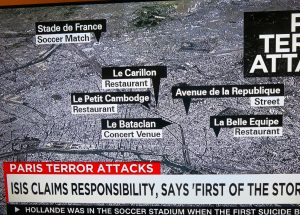
9. Worldwide terror attacks: The first big terror attack of 2017 came on New Year's Day — a gunman killing 39 at a nightclub in Istanbul. Subsequent targets of global terror included an Ariana Grande concert in England, a bike path in New York City and the historic La Rambla promenade in Barcelona. In October, a truck bombing in Somalia killed more than 500 people; in November, an attack on a crowded mosque in Egypt killed more than 300.
10. Islamic State: After lengthy assaults, an array of forces drove the Islamic State from its two main strongholds — the city of Mosul in Iraq, and its self-styled capital, Raqqa, in Syria. The defeats left the Islamic State without significant territory in either country, but affiliates elsewhere in the region, particularly in Egypt and Afghanistan, continued to operate.

Friday, June 30, 2017

Seems There Is A Correlation Between Preventing Migrant Immigration And Terror Attacks

See, can we connect the dots? 

It’s been in the news recently that the rest of the EU is very upset with Poland complaining that Poland is not taking in its fair share of Muslim migrants. Poland is refusing to take them in. So now the EU is proposing strict sanctions to punish Poland. Poland responded in saying that they’ll take the sanctions over the migrants. Ha! Kudos to Poland! 

cid:5E9D73F3141B45B2A38967C4624C218D@TouchPC

Monday, May 1, 2017

Until EU Countries Unite Against ISIS, Terror Will Reign

The Impact of the ISIS Terror Attacks on Europe

By April 30, 2017


BESA Center Perspectives Paper No. 456, April 30, 2017
EXECUTIVE SUMMARY: The appalling terrorist assaults perpetrated by ISIS in Europe have led to significant changes in the European state of mind. By exposing the vulnerability of EU state borders, they have prompted rudimentary initiatives to secure those borders and increase counter-terror cooperation among EU member states, while also boosting the popularity of far-right parties. The attacks have given rise to a discreet cooperation between EU member states and Israel in dealing with the terrorist threat, but have not prompted the EU to change its critical position regarding Israel’s defensive measures against Palestinian terror. The moral double standard of the EU on this issue might undermine its own fight against Islamist terrorism.
The terrorist assaults perpetrated by ISIS in France, Belgium, Germany, Great Britain, and Sweden did not surprise the EU security authorities. They have often noted the threat that at least some of the thousands of Muslim youngsters who left Europe to fight for ISIS might perform acts of terror upon their return. They are also well aware that military intervention against ISIS increases the risk of terror attacks on European soil. The torrent of uncontrolled numbers of refugees from the Middle East has sharpened the warnings issued by the security authorities as well as by the media. The terror attacks have had significant repercussions, and have had an impact on EU-Israel relations.
The wave of terror has produced changes in the state of mind of many Europeans. In the past, though there were occasional terror attacks (such as in London in July 2005), Europeans felt relatively safe – so much so that they did not introduce basic security measures, such as checking bags and suitcases at train stations. The recent wave of attacks, however, has produced feelings of insecurity. Citizens of EU member states are now less hostile to security measures that had been perceived in the past as breaching their civil liberties.
The attacks exposed the vulnerability of EU state borders resulting from the Schengen Agreement, which opened borders among member states. In Brussels and Paris, the perpetrators of the November 2015 attacks crossed borders with impunity.
The EU did, in fact, take a major decision in November 2015 to strengthen control over its external borders in order to protect them from smugglers of firearms and illegal immigrants. It increased cooperation and coordination among EU member states, taking measures such as a Passengers Name Record (PNR) – not only for air travel, but for sea and train travel as well as hotel room and car rentals.
In addition, EU member state authorities took measures like decreeing a state of emergency (in France) and increasing security forces.
Another significant step was the launch in January 2016 of a new European counter-terrorism center, the ECTC, following the November 2015 decision of the Justice and Home Affairs ministers. The ECTC was designated as an enhanced central information hub through which member states can increase information sharing, bolster operational coordination, track terror financing, and detect online radicalization.
In October 2016, the EU also launched a New European Border and Coast Guard Agency (built on the EU Frontex) with extended staff, means, and regulation in order to better secure Europe’s external borders.
The creation of the ECTC engendered some skepticism regarding the ability of EU member states to implement effective counter-terrorism cooperation. Critics cited the differences in organizational culture among the various security agencies as well as their traditional reluctance to exchange valuable operational data for fear of leaks. They also noted the problem of differing laws regarding civil liberties. For instance, Belgian security forces admitted that they had missed Salah Abdeslam, one of the main perpetrators of the Paris Black Friday attack of November 2015, because of a law that forbids raids on private houses from 9:00 pm to 5:00 am.
Another significant impact of the terrorist attacks has been the rise in popularity of far-right parties leading anti-Muslim and anti-migrant campaigns. For instance, Marine Le Pen, leader of the National Front party in France, was chosen during the first tour as one of the two leading candidates in the current presidential elections. (She stepped down from the NF’s presidency immediately following the first tour, but remains leader of the party.) Le Pen calls, inter alia, for the abolishing of the Schengen Agreement and even recommends that France follow the British “Brexit” and leave the EU. Other far-right parties in Europe, such as The Alternative for Germany (AFD) and the Party for Freedom in the Netherlands, have exploited growing anti-Muslim and anti-immigration sentiments to increase their influence. Far-right parties have also increased their representation in the EU parliament, forming a unified faction of 37 parliament members of seven state members.
The terror assaults in Europe have been followed by calls by the political authorities as well as by the media to learn from the Israeli model of counter-terrorism. They have stressed Israel’s experience, methods, and technical means in its continuous fight against radical Islamist terrorists.
Indeed, there exists a discreet defense cooperation between Israel and EU member states in the field of dealing with terrorist threats, including the procurement of Israeli counter-terrorism technological innovations. For instance, Israel cooperates with EU member states in securing their airports. Several EU states have procured from an Israeli company a technology that swiftly filters a large amount of camera footage, enabling investigators to focus on suspicious persons and activities. In addition, Europe is interested in Israeli experience in field medicine and in civil emergency systems designed to handle terror attacks.
The EU has also expressed interest in Israeli cyber technologies that spot online communications of organized terrorists, as well as potential “lone wolf” terrorists who have no organizational contacts. The latter represents a complex challenge, as internet companies often refuse to cooperate in the monitoring of their platforms’ content.
The things Europe can learn from Israel are not limited to military and technological know-how in the fight against terror. Europe can also learn from the resilient way Israel’s citizens cope with terror, as well as from Israel’s experience of maintaining democratic core values despite the incessant terror threat and chaotic, unstable neighborhood.
The discreet cooperation in the counter-terrorism field has unfortunately not yet matured into a more balanced position on the part of EU member states regarding the security measures Israel takes to deal with Palestinian terrorism and incitement. The moral double standard of the EU regarding this issue might undermine its own fight against Islamist terrorism.
Dr. Tsilla Hershco, a research associate at the Begin-Sadat Center for Strategic Studies, specializes in Franco-Israeli and EU-Israeli relations.

Friday, March 24, 2017

We Can Expect More Terror Attacks In Europe


U.S. General: More ‘Terror Streams’ in Europe than Anywhere Else Except War Zones

6

SIGN UP FOR OUR NEWSLETTER

WASHINGTON, D.C. – The top U.S. military commander in Europe said Thursday at a Senate hearing that the terrorist threat is higher in Europe than anywhere on the globe, with the exception of current war zones.

“The number of threat streams that we have of this type within Europe, it’s probably higher in Europe than in any other part of the globe with the exception of the places where we’re actually physically fighting in, like Syria and Afghanistan and Iraq,” said U.S. Army Gen. Curtis Scaparrotti.
The four-star Army general told senators on the Senate Armed Services Committee that a terrorist attack in London the day before underscores “the dynamic environment in Europe.”
“Europe is challenged by both the flow of terrorists returning from Syria and other places. They’re challenged by an internal threat by those inspired by ISIS or directed by ISIS and this is another, an example of the attacks that we’ve seen in Europe in the past year. It’s a difficult challenge.”
Scaparotti, who is dual-hatted as NATO Supreme Allied Commander, said the U.S. would remain “solid and stand shoulder-to-shoulder with our allies in NATO to defeat this threat.”
When asked by committee Chairman John McCain (R-AZ) whether there is a “connection” between the increased threat stream and refugees, Scaparotti responded:
The flow of refugees and those who move them, particularly criminal activities that will help move them, they also are more than willing to move both equipment, personnel, weapons, and people.
So far, eight have been arrested in connection with the London terror attack, the deadliest there in 12 years.
The attack underscores the difficulties Europe is facing from homegrown Islamic terrorism, while it handles an influx of refugees from war-torn countries.
Prime Minister Theresa May said the attacker was British-born and once linked to violent extremism. She said he had been investigated by security services but was regarded as a “peripheral figure.”
An ISIS-affiliated news agency has claimed the attacker was a “soldier” of ISIS inspired by its message, though direct evidence has not yet emerged.
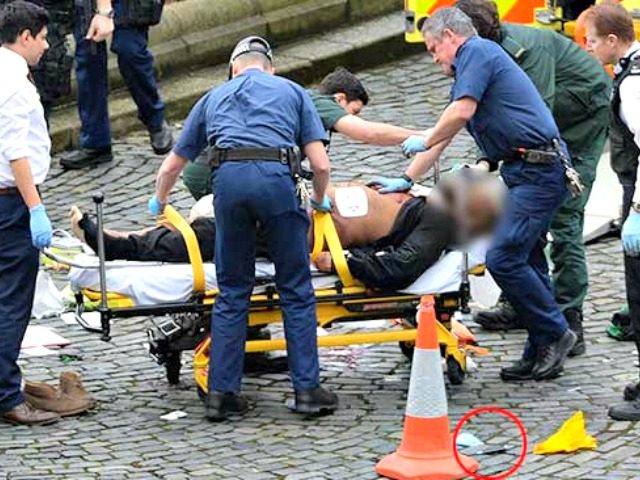
Four people have died in the attack so far, including the attacker, who plowed a car into crowds of people, injuring over 40 and killing two people. He then stabbed a police officer dead at the gates of the UK Parliament.
“The likelihood of further actions like this, particularly by some that are self-indoctrinated, are very hard to stop,” McCain said.

Sunday, November 20, 2016

Will We Have Attacks On Thanksgiving?


FBI Warns of Potential Terror Threat on Thanksgiving


SIGN UP FOR OUR NEWSLETTER

The FBI is alerting police departments around the country about a potential terror attack planned for Thanksgiving, CBS News reports.

The alert specifically warned about homegrown terrorists, with potential targets such as shopping malls, special events, and crowded venues. Locations in Washington, D.C. and Virginia were described as “target-rich zones.”
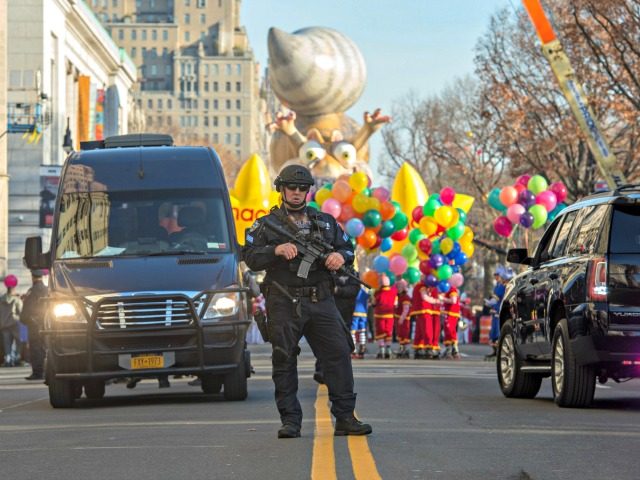
ISIS’s magazine described New York City’s Macy’s parade as an “excellent target,” according to the NYPD earlier this week.
Potential tactics that they could use include guns, IEDs, or drones equipped with IEDs.
The FBI also warned of any indicators of lone-wolf activity, such as isolation from family and friends, lifestyle changes, increased use of encrypted forms of communication, among others.
Department of Homeland Security also issued a warning Tuesday in response to the threat of terrorism at the Macy’s parade.
“Though we know of no intelligence that is both specific and credible at this time of a plot by terrorist organizations to attack the homeland, the reality is terrorist-inspired individuals have conducted, or attempted to conduct, attacks in the United States,” a bulletin posted online at the Department of Homeland Security said.

Tuesday, April 5, 2016

Gun Sales Going Through The Roof

Gun Sales in America Reach New High for March

Image: Gun Sales in America Reach New High for March(Getty Images)
Tuesday, 05 Apr 2016 10:03 AM
Americans are buying more guns than ever before.

A new FBI study released this week shows the number of firearms sold across the country in March was the highest ever, The Washington Free Beacon reports.
The agency said it performed some 2,523,265 background checks last month — about 35,000 more than in March 2014.

The Beacon says the March record is the "eleventh straight monthly record for background checks."

And with 7,682,141 checks done already this year, 2016 is expected to break another annual sales record.
Latest News Update

The statistics come as more and more Americans worry about their personal safety in the wake of the mass shootings and terror-related attacks that have occurred across the country.

Gun control and Second Amendment rights also remain a political hot-button topic.

Last month, a Change.org petition with 43,000 signatures demanded firearms be allowed to be carried by those attending the Republican National Convention this summer. The Secret Service rejected the request.
© 2016 Newsmax. All rights reserved.


Breaking News at Newsmax.com http://www.newsmax.com/Newsfront/Guns-Gun-groups-Gun-rights-Firearms/2016/04/05/id/722314/#ixzz44z6i67SE