Germany: Infectious Diseases Spreading as Migrants Settle In
A failed asylum seeker from Yemen who was given sanctuary at a church in northern Germany to prevent him from being deported has potentially infected more than 50 German children with a highly contagious strain of tuberculosis.
The man, who was sheltered at a church in Bünsdorf between January and May 2017, was in frequent contact with the children, some as young as three, who were attending a day care center at the facility. He was admitted to a hospital in Rendsburg in June and subsequently diagnosed with tuberculosis — a disease which only recently has reentered the German consciousness. Local health authorities say that in addition to the children, parents and teachers as well as parishioners are also being tested for the disease, which can develop months or even years after exposure. It remains unclear if the man received the required medical exams when he first arrived in Germany, or if he is one of the hundreds of thousands of migrants who have slipped through the cracks. The tuberculosis scare has cast a renewed spotlight on the increased risk of infectious diseases in Germany since Chancellor Angela Merkel allowed in around two million migrants from Africa, Asia and the Middle East. A new report by the Robert Koch Institute (RKI), the federal government's central institution for monitoring and preventing diseases, confirms an across-the-board increase in disease since 2015, when Germany took in an unprecedented number of migrants. The Infectious Disease Epidemiology Annual Report — which was published on July 12, 2017 and provides data on the status of more than 50 infectious diseases in Germany during 2016 — offers the first glimpse into the public health consequences of the massive influx of migrants in late 2015. The report shows increased incidences in Germany of adenoviral conjunctivitis, botulism, chicken pox, cholera, cryptosporidiosis, dengue fever, echinococcosis, enterohemorrhagic E. coli, giardiasis, haemophilus influenza, Hantavirus, hepatitis, hemorrhagic fever, HIV/AIDS, leprosy, louse-borne relapsing fever, malaria, measles, meningococcal disease, meningoencephalitis, mumps, paratyphoid, rubella, shigellosis, syphilis, toxoplasmosis, trichinellosis, tuberculosis, tularemia, typhus and whooping cough. Germany has — so far at least — escaped the worst-case scenario: most of the tropical and exotic diseases brought into the country by migrants have been contained; there have no mass outbreaks among the general population. More common diseases, however, many of which are directly or indirectly linked to mass migration, are on the rise, according to the report. The incidence of Hepatitis B, for example, has increased by 300% during the last three years, according to the RKI. The number of reported cases in Germany was 3,006 in 2016, up from 755 cases in 2014. Most of the cases are said to involve unvaccinated migrants from Afghanistan, Iraq and Syria. The incidence of measles in Germany jumped by more than 450% between 2014 and 2015, while the number of cases of chicken pox, meningitis, mumps, rubella and whooping cough were also up. Migrants also accounted for at least 40% of the new cases of HIV/AIDS identified in Germany since 2015, according to a separate RKI report. The RKI statistics may be just the tip of the iceberg. The number of reported cases of tuberculosis, for example, was 5,915 in 2016, up from 4,488 cases in 2014, an increase of more than 30% during that period. Some doctors, however, believe that the actual number of cases of tuberculosis is far higher and have accused the RKI of downplaying the threat in an effort to avoid fueling anti-immigration sentiments. In an interview with Focus, Carsten Boos, an orthopedic surgeon, warned that German authorities have lost track of hundreds of thousands of migrants who may be infected. He added that 40% of all tuberculosis pathogens are multidrug-resistant and therefore inherently dangerous to the general population: "When asylum seekers come from countries with a high risk for tuberculosis infections, the RKI, as the highest German body for infection protection, should not downplay the danger. Is a federal institute using political correctness to conceal the unpleasant reality?
German newspapers have published a flurry of articles about the public health dimension of the migrant crisis. The articles often quote medical professionals with first-hand experience of treating migrants. Many admit that mass migration has increased the risk of infectious diseases in Germany. Headlines include: "Refugees Often Bring Unknown Diseases to the Host Country"; "Refugees Bring Rare Diseases to Berlin"; Refugees in Hesse: Return of Rare Diseases"; "Refugees Often Bring Unknown Diseases to Germany"; "Experts: Refugees Bring 'Forgotten' Diseases"; "Three Times More Hepatitis-B Cases in Bavaria"; "Cases of Tapeworm in Germany Increased by More than 30%"; "Infectious Disease: Refugees Bring Tuberculosis"; "Tuberculosis in Germany is on the Rise Again, Especially in the Big Cities: Caused by Migration and Poverty"; "Refugees Are Bringing Tuberculosis"; More Diseases in Germany: Tuberculosis is Back"; "Medical Practitioner Fears Tuberculosis Risk due to Refugee Wave"; "Significantly More Tuberculosis in Baden-Württemberg: Migrants often Affected"; "Expert: Refugee Policy to Blame for Measles Outbreak"; "Scabies on the Rise in North Rhine-Westphalia"; "Almost Forgotten Diseases Like Scabies Return to Bielefeld"; "Do You Come into Contact with Refugees? You Should Pay Attention"; and "Refugees: A Wide Range of Disorders." At the height of the migrant crisis in October 2015, Michael Melter, the chief physician at the University Hospital Regensburg, reported that migrants were arriving at his hospital with illnesses that are hardly ever seen in Germany. "Some of the ailments I have not seen for 20 or 25 years," he said, "and many of my younger colleagues have actually never seen them." Marc Schreiner, director of international relations for the German Hospital Federation (Deutschen Krankenhausgesellschaft), echoed Melter's concerns: "In the clinics, it is becoming increasingly common to see patients with diseases that were considered to have been eradicated in Germany, such as scabies. These diseases must reliably be diagnosed, which is a challenge."Christoph Lange, a tuberculosis expert at the Research Center Borstel, said that German doctors were unfamiliar with many of the diseases imported by migrants: "It would be useful if tropical diseases and other diseases that are rare in our lives played a bigger role in the training of physicians." The German Society for Gastroenterology, Digestive and Metabolic Diseases recently held a five-day symposium in Hamburg to help medical practitioners diagnose diseases which are rarely seen in Germany. Those include:
The epicenter of the measles crisis is in North Rhine-Westphalia (NRW), Germany's most populous state and also the state with the highest number of migrants. Nearly 500 people have been diagnosed with measles in NRW during the first six months of 2017; most of the cases have been reported in Duisburg and Essen, where a 37-year-old mother of three children died from the disease in May. Outbreaks of measles have also been reported in Berlin, Cologne, Dresden, Hamburg, Leipzig, Munich and Frankfurt, where a nine-month-old baby was diagnosed with the disease. On June 1, 2017, the German Parliament approved a controversial new law that requires kindergartens to inform German authorities if parents fail to provide evidence that they have consulted a doctor about vaccinating their children. Parents who refuse to comply face a fine of €2,500 ($2,850). "We cannot be indifferent to the fact that people are still dying of measles," saidGerman Health Minister Hermann Gröhe. "That's why we are tightening up regulations on vaccination." Some say the new law does not go far enough; they are calling for vaccinations to be made compulsory for everyone in Germany. Others say the law goes too far and infringes on privacy protections guaranteed by the German constitution; they add that parents, not the government, should decide what is best for their children. The fallout from Chancellor Merkel's open-door migration policy continues. Soeren Kern is a Senior Fellow at the New York-based Gatestone Institute. Follow him on Facebook and on Twitter.
© 2017 Gatestone Institute. All rights reserved. The articles printed here do not necessarily reflect the views of the Editors or of Gatestone Institute. No part of the Gatestone website or any of its contents may be reproduced, copied or modified, without the prior written consent of Gatestone Institute.
|
Our goal is to have intelligent discussion of the topics of the day. We realize everyone has their opinion and they should be allowed to express it in a discussion forum without calling each other names. We learn from discussion and not from name calling or argument.We use cookies to personalise content and ads, to provide social media features and to analyse our traffic. We also share information about your use of our site with our social media, advertising and analytics partners. See details
Contact Form
Showing posts with label tuberculosis. Show all posts
Friday, July 14, 2017
The Added Benefit Of Having Millions Of Migrants--Is This What Americans Want?
Sunday, November 8, 2015
Germany Is Getting More Than It Bargained For!
Germany: Migration Crisis Becomes Public Health Crisis
The influx of more than one million asylum seekers from Africa, Asia and the Middle East is placing unprecedented strain on Germany's healthcare system.
Hospitals, clinics and emergency rooms across Germany are being filled to capacity with migrants suffering maladies of all kinds, and medical personnel, including thousands of volunteers, are increasingly complaining of burnout. Diseases are also reappearing that have not been seen in Germany for years. German public health officials are now on the lookout for Crimean Congo hemorrhagic fever, diphtheria, Ebola, hepatitis, HIV/AIDS, malaria, measles, meningitis, mumps, polio, scabies, tetanus, tuberculosis, typhus and whooping cough. As refugee shelters fill to overflowing, doctors are also on high alert for mass outbreaks of influenza and Norovirus. Compounding the challenge, tens of thousands of migrants arriving in Germany — particularly migrant children — have not been immunized, and German doctors are finding that needed vaccines are not readily available due to a lack of supply. Some German parents are panicking that there are not enough vaccines to immunize their own children. Many migrants are also suffering from a host of traumas and mental illnesses. According to the Chamber of German Psychotherapists (Bundespsychotherapeutenkammer), at least half of all migrants arriving in Germany have psychological problems, including post-traumatic stress disorder and depression, and roughly 40% have contemplated suicide. German hospitals are also being forced to hire a virtual army of interpreters so that doctors can communicate with asylum seekers, who speak dozens of languages, dialects and variants. At the same time, German hospitals are increasing security to protect doctors and nurses from violent attacks by migrants who are unhappy with the medical treatment they are receiving. Critics are warning that German taxpayers will end up paying billions of euros to provide healthcare for a never-ending wave of asylum seekers. This is in addition to the billions of euros already being spent to provide newcomers with food, clothing and shelter. Many say the German government failed fully to consider the unforeseen consequences of opening the door to so many migrants. In addition to the massive economic and social costs, as well as the burden of increased crime, including a rape epidemic, Germans are now facing the risk of being exposed to exotic diseases. German media outlets are downplaying the extent of the healthcare problem, apparently to avoid spreading fear or provoking anti-immigrant sentiments. But a growing number of German healthcare professionals are sounding the alarm. In an interview with Die Welt, Dr. Michael Melter, the chief physician at the University Hospital Regensburg, said that migrants are arriving at his hospital with illnesses that are hardly ever seen in Germany anymore. "Some of the ailments I have not seen for 20 or 25 years," he said, "and many of my younger colleagues have actually never seen them." Marc Schreiner, director of international relations for the German Hospital Federation (Deutschen Krankenhausgesellschaft), has echoed Melter's concerns: "In the clinics, it is becoming increasingly common to see patients with diseases that were considered to have been eradicated in Germany, such as scabies. These diseases must be reliably diagnosed, which is a challenge."Schreiner said that in cases of highly contagious diseases, including tuberculosis, patients must be quarantined, an expensive procedure, the costs of which are paid for by German taxpayers. According to Schreiner, about 15% of the newly arriving migrants require immediate medical treatment. With 1.5 million asylum seekers expected to arrive in Germany in 2015, this means that 225,000 migrants will have an urgent need for medical attention. Siegfried Hasenbein, director of the Bavarian Hospital Association (Bayerische Krankenhausgesellschaft), estimates that in 2015, between 25,000 and 30,000 migrants will be treated in Bavarian hospitals alone. In addition, this year between 75,000 and 90,000 migrants will receive ambulatory or outpatient care. According to Hasenbein, these numbers appear insignificant when compared to the three million hospital visits that normally occur in Bavaria every year. The problem arises in that the migration crisis is straining the Bavarian healthcare system unevenly, with hospitals in migrant "hotspots" such as Deggendorf, Ingolstadt and Passau bearing the brunt of medical care. Markus Beier, director of the Bavarian Association of Family Physicians (Bayerischer Hausärzteverband), says that doctors in areas with large concentrations of asylum seekers are being called upon all hours of the night and day, making it impossible for them to provide anyone with superior levels of care. Max Kaplan, director of the Bavarian Medical Board (Bayerische Landesärztekammer), saysthat the challenges associated with medical treatment for migrants are exacerbated by language and cultural barriers, which are "tiresome, time consuming and sometimes impossible to overcome." Adding insult to injury, he says, many Muslim women refuse to be treated by male doctors, and many Muslim men refuse to be treated by females. In an effort to prevent diseases from spreading, Kaplan has called on German public health officials to order medical exams for all asylum seekers at the initial point of entry into Germany, before they are sent to different parts of the country. "This is in the best interest of the refugees, and also of the native population," he said. In a November 2 interview with Spiegel TV, Dr. Ralf Mütterlein, director of the Pulmonary Clinic (Klinik für Lungen- und Bronchialheilkunde) in Parsberg, estimated that between 8,000 and 10,000 asylum seekers in Germany have tuberculosis, but only a small fraction these are currently in quarantine. Migrants who are taken to Mütterlein's clinic are held in quarantine for up to 18 months at a time to prevent the disease from spreading to the population at large. The costs to German taxpayers are astronomical: Between 10,000 and 12,000 euros per migrant per month. Over 18 months, the total cost often exceeds 200,000 euros per migrant.
Meanwhile, a report by Die Welt describes efforts by German health officials to contain the spread of so-called resistant germs: "Physicians are currently on high alert, because with the arrival of hundreds of thousands of refugees, infectious diseases could enter the country. This is not hysteria. It is simply a challenge our healthcare system has not faced for many decades.Dr. Jan-Thorsten Gräsner, director of the Institute for Rescue and Emergency Medicine (Institut für Rettungs- und Notfallmedizin), estimates that roughly 5% of asylum seekers are carrying resistant germs. In real numbers, this works out to around 75,000 newcomers with highly infectious diseases. The Berlin-based Robert Koch Institute, a key governmental agency for the safeguarding of public health in Germany, has advised healthcare professionals, as well as those who are working as volunteers in refugee shelters, to update their immunizations. But the Federal Institute for Vaccines and Biomedicines (Paul-Ehrlich-Institut), an agency of the Federal Ministry of Health, has warned that 20 types of vaccines are now in short supply, and 16 others are no longer available at all. Because of production bottlenecks, some vaccines will not become available until 2017. Stefan Derix, director of the Chamber of Pharmacists North Rhine (Apothekerkammer Nordrhein), said the shortage of vaccines is due to the massive influx of asylum seekers. He said the Ministry of Health normally orders vaccine supplies one year in advance, and that no one in the government had anticipated that Germany would be taking in so many migrants this year. Dr. Wolfram Hartmann, president of the Cologne-based Professional Association of Pediatricians (Berufsverband der Kinder- und Jugendärzte), has warned that many of the vaccines needed to immunize both native German children and migrant children for diphtheria, polio, tetanus and whooping cough are not available, neither in Germany nor in any other European country. He also said that basic vaccines against measles, mumps, rubella and varicella are in short supply. In a statement, Hartmann wrote: "We cannot provide native German children and refugees alike with the basic vaccines. The vaccine shortage, which is the responsibility of the pharmaceutical companies, must urgently be made a top priority of the Health Minister! Children have a right to vaccinations, especially for chronically ill children who need timely vaccinations against flu, especially if they are housed in communal accommodations.Kordula Schulz-Asche, a politician with the Greens Party, warned against holding migrants responsible for the vaccine shortage. "The current tense vaccine situation must not be misused to stir up public opinion against refugees," she said. In North Rhine-Westphalia, hospitals are requiring their personnel to attend courses on how to treat patients with exotic illnesses hardly ever seen in Germany. Hospital workers in Bielefeld and Siegburg are said to be groaning under the strain of having to examine up to 80 migrants a day for tuberculosis. "The workload has increased tremendously," a worker told Westdeutscher Rundfunk, a public broadcaster. Other hospitals in the state lack sufficient personnel and equipment, including the x-ray machines needed to examine patients with tuberculosis. In Lower Saxony, public health officials, fearful of a mass outbreak of influenza, are strugglingwith the logistics of vaccinating tens of thousands of asylum seekers housed in refugee shelters across the state. With more than 1,000 new migrants arriving in Lower Saxony every day, initial medical exams of newcomers are backlogged by weeks, a period during which undetected diseases can spread. In Berlin, police were forced to apologize for recommending that asylum seekers suffering from scabies, a highly contagious skin disease, be required to wear armbands to distinguish them from migrants who are healthy. The plan was for them to wear armbands with the capital letter 'K' for Krätze (German for scabies); their immediate family were to have worn armbands with the capital letter 'A' for Angehörigen (German for next of kin). Meanwhile, reports of health-related scares, especially those involving tuberculosis, have become a daily occurrence in Germany. In Krefeld, a city in North Rhine-Westphalia, a 27-year-old migrant was diagnosed withtuberculosis. He was being held in quarantine at a local pulmonary clinic. In Lünen, also in North Rhine-Westphalia, four migrants were diagnosed with tuberculosis. In Nattheim, a town in Baden-Württemberg, asylum seekers at a refugee shelter underwent mass immunization after a child at the shelter fell ill with chickenpox. In Ellwangen, also in Baden-Württemberg, an asylum seeker diagnosed with tuberculosis escaped from a hospital. He remains at large. In Gransee, a town in the eastern state of Brandenburg, a migrant was diagnosed withtuberculosis. In Würzburg, more than 400 asylum seekers were mass immunized for chicken pox, diphtheria, measles, mumps, polio and tetanus. In Heidenheim, a town in Baden-Württemberg, public health officials are preparing for potential outbreaks of influenza and Norovirus at local refugee shelters this winter. In Cologne, police cordoned off a refugee shelter housing more than 1,000 migrants in the Chorweiler district after a male refugee from Africa showed symptoms of Ebola. The man, who was coughing up blood for more than three days before anyone called a doctor, was rushed to a local hospital, where he was diagnosed with a gastrointestinal illness. Earlier, the same refugee shelter was the scene of an E. coli scare potentially affecting 800 migrants. In Bochum, a 16-year-old migrant from Guinea showing symptoms of Ebola was placed in quarantine. In Saxony, public health officials are now testing all incoming asylum seekers forEbola. In Düsseldorf, a 30-year-old migrant from Algeria was diagnosed with tuberculosis and was being held in quarantine at a local hospital. Municipal health officials say that in 2014, there were 50 confirmed cases of tuberculosis in the city. In 2015, that number was surpassed in August, before migrants began arriving en masse in September and October. In Tegernsee, a town in Bavaria, a 23-year-old migrant from Eritrea who was diagnosed withtuberculosis escaped from a refugee shelter. Local officials failed to inform the public about the incident for nearly one month, until they were confronted by a local newspaper, theMünchner Merkur. Wolfgang Rzehak, a local politician with the Greens Party, justified the media blackout: "We have to find a middle road between informing the public and not becoming a panic machine." In Frankfurt, a 33-year-old migrant from Bulgaria who was diagnosed with tuberculosisescaped from a hospital and remains at large. Again, local officials kept quiet about the incident, until someone leaked information about it to the German newspaper, Bild. In Berlin, a schoolteacher in the Steglitz-Zehlendorf district was diagnosed with tuberculosis; doctors say he was probably infected by one of his students. Also in Berlin, security guards at a refugee shelter in the Lichterfelde-Süd district locked nearly a dozen migrants in a bathroom after they were suspected of having tuberculosis. They were later transferred to a local hospital. In Hamburg, public health officials quarantined a refugee shelter in the Jenfeld district after an outbreak of scabies. Also in Hamburg, a 17-year-old migrant from Sierra Leone was rushed to a local hospital and quarantined on suspicion that he had Ebola — just three days after arriving in Germany. Separately, at a refugee shelter in the Bahrenfeld district of Hamburg, firefighters wearing head-to-toe Ebola protection suits escorted migrants suspected of having Ebola to a local hospital. In Bremen, after an asylum seeker was diagnosed with tuberculosis and doctors warned of the risk of contagion, all 200 migrants housed at refugee shelter on Steinsetzer Straße underwent chest x-rays to test for the disease. In Munich, health officials are expecting more than 350 new cases of tuberculosis in 2015. The increase is being attributed to the large number of asylum seekers arriving in the city. In Stuttgart, an average of 145 asylum seekers housed at the city's convention center seekmedical attention every day. Common maladies include measles, chickenpox, flu infections, dysentery and scabies caused by mites. In Rheingau-Taunus, a district in the state of Hesse, public health officials say they need more money and medical personnel to deal with the influx of migrants at 60 local refugee shelters. The health department expects to treat more than 1,500 newcomers this year, including a large number of children who lack proper immunization. The department has reported 60 cases of scabies and tuberculosis. According to Monika Merkert, a local health inspector: "The newly arriving asylum seekers bring diseases that occur only rarely in Germany." Soeren Kern is a Senior Fellow at the New York-based Gatestone Institute. He is also Senior Fellow for European Politics at the Madrid-based Grupo de Estudios Estratégicos / Strategic Studies Group. Follow him on Facebook and on Twitter. His first book, Global Fire, will be out in early 2016.
© 2015 Gatestone Institute. All rights reserved. No part of the Gatestone website or any of its contents may be reproduced, copied or modified, without the prior written consent of Gatestone Institute.
|
Labels:
Africa,
Asis,
Bavarian Hospitals,
conservative blogs,
conservative musings,
Conservative Tom,
ebola,
german hospitals,
Germany,
Max Kaplan,
middle east,
migrants,
refugees,
tuberculosis
Thursday, March 19, 2015
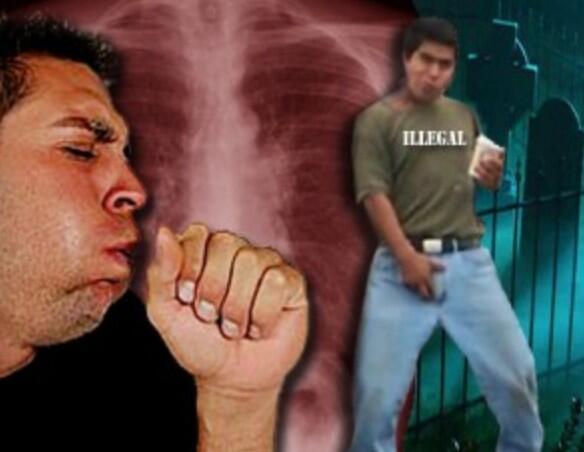
Are Illegals Causing More Problems Than They Are Worth? TB Effects 10% Of High School!
Diseased illegals spread tuberculosis at Kansas high school
Posted by admin on March 18, 2015 Diseased illegals spread tuberculosis at Kansas high school2015-03-18T12:56:11+00:00under Amnesty, Illegal Immigration Comment now!
Diseased illegals are still spreading tuberculosis and other third world diseases to Americans, you just don’t hear about it anymore. At an east Kansas high school, diseased illegals, which have been shuttled by the Obama regime is the latest area to see a break out in tuberculosis.
![]() |
|---|
| Diseased illegals spread tuberculosis at Kansas high school |
Twenty-seven more people have tested positive for tuberculosis at an easternKansas high school.State andcounty health officials made theannouncement Wednesday after tests were conducted on more than 300 Olathe Northwest High Schoolstudents and staff members who came into contact with an infected student.The Kansas City Star reports that officials begancalling people who test positive on Monday. People with no sign of infection will receive letters.
Subscribe to:
Posts (Atom)