Contact Form

Name

Email *

Message *

Showing posts with label Oman. Show all posts

Thursday, June 7, 2018

Over And Over Obama Administration Told Lies!

The Obama Administration LIED To The American People. Repeatedly. Here's The Proof.

Getty Images
The Obama administration lied to the American people.
A lot.
The latest proof of their dishonesty: according to the Associated Press, the Obama administration attempted to end-around its own sanctions in order to give cash to the worst terror sponsor on the planet. Here’s the report:
The report by the Senate Permanent Subcommittee on Investigations revealed that under President Barack Obama, the Treasury Department issued a license in February 2016, never previously disclosed, that would have allowed Iran to convert $5.7 billion it held at a bank in Oman from Omani rials into euros by exchanging them first into U.S. dollars. If the Omani bank had allowed the exchange without such a license, it would have violated sanctions that bar Iran from transactions that touch the U.S. financial system.
Only the fact that U.S. banks didn’t want to violate American law prevented Iran from getting its hands on $5.7 billion more in U.S. dollars. As Senator Rob Portman (R-OH) explained, “The Obama administration misled the American people and Congress because they were desperate to get a deal with Iran.” The Obama administration repeatedly lied — over and over again — about their supposed unwillingness to allow Iran “access to the US financial system.” Obama’s Treasury Secretary Jack Lew even testified to that effect.
So, what did Team Obama have to say about all of this? Unnamed Obama officials told the AP that they were acting “in line with the spirit of the deal,” and that the lies were justified because they were attempting to debunk arguments that Team Obama wanted to give even more concessions to the Iranians. Which is somewhat like arguing that Bill Clinton didn’t lie about Monica Lewinsky, he just wanted to debunk rumors that he had sex with an intern.
The Obama administration activity on behalf of Iran went even further, the AP reports. In March 2016, Obama officials including execrable Secretary of State John Kerry “fanned out across Europe, Asia and the Middle East trying to convince banks and businesses they could do business with Iran without violating sanctions and facing steep fines.” In other words, the Obama administration became the foreign ministry for the mullahs in Iran. The AP continues:
That same week, the AP reported that the Treasury had prepared a draft of a license that would have given Iran much broader permission to convert its assets from foreign currencies into easier-to-spend currencies like euros, yen or rupees, by first exchanging them for dollars at offshore financial institutions.
The draft involved a general license, a blanket go-ahead that allows all transactions of a certain type, rather than a specific license like the one given to Oman’s Bank Muscat, which only covers specific transactions and institutions. The proposal would have allowed dollars to be used in currency exchanges provided that no Iranian banks, no Iranian rials and no sanctioned Iranian individuals or businesses were involved, and that the transaction did not begin or end in U.S. dollars.
Obama administration officials at the time assured concerned lawmakers that a general license wouldn’t be coming. But the report from the Republican members of the Senate panel showed that a draft of the license was indeed prepared, though it was never published.
And when questioned by lawmakers about the possibility of granting Iran any kind of access to the U.S. financial system, Obama-era officials never volunteered that the specific license for Bank Muscat in Oman had been issued two months earlier.
This is the second story this week demonstrating that Team Obama lied to Americans about the Iran deal, which Obama treasured so dearly.
On Tuesday, the Iranian government announced that they had completed a new centrifuge assembly at their Natanz facility — just a month after President Trump killed the Iran nuclear deal. This is deeply suspicious, given their supposed acquiescence to disarmament under that deal. Here's how Obama fanboys at The New York Times reported that odd development:
While Iran said it would keep enrichment within limits set by the 2015 nuclear accord, the center’s opening seemed to signal that it could swing to industrial-level enrichment if that agreement, which the United States withdrew from last month, should further unravel. ... Under the 2015 nuclear deal, Iran stopped enriching uranium to the 20 percent level that would allow for rapid development of a nuclear weapon and agreed to a limit of under 5 percent. It will adhere to that limit, Iran’s supreme leader, Ayatollah Ali Khamenei, said in a speech on Monday.
Yes, surely the mullahs who lied about their nuclear program for well over a decade would never have lied to us, facilitated by the obsequious Obama administration.
And, of course, the Obama administration lied constantly during the Iran negotiations about the supposedly "moderate" Iranian regime that had opened the door to those negotiations, with serial confabulator Ben Rhodes taking the lead. Rhodes later bragged about his "echo chamber" strategy to anyone who would listen.
We keep hearing that the Trump administration is historically dishonest. But the same press saying so largely overlooked and in many cases actively covered for Team Obama’s dishonesty on the Iran deal, beyond even covering for Team Obama’s rampant dishonesty on issues ranging from Libya to Obamacare. Obama goes around bragging that his administration was scandal-free. That’s factually untrue. But his administration was largely criticism-free thanks to a media replete with his supporters.

Thursday, December 24, 2015

Islam's Inner Fight Has Been Going On For 1400 Years And It Is Worse Than Ever


Tracing the current conflict in Syria back to the year 632, when the Prophet Mohamed died
5K
The war in Syria began much earlier than is generally recognised. The conflict actually began in the year 632 with the death of the Prophet Mohamed. The same is true of the violence, tension or oppression currently gripping the Muslim world from Iraq and Iran, though Egypt, Bahrain and Saudi Arabia to Yemen, Pakistan and Afghanistan.
A single problem lies behind all that friction and hostility. On Tuesday, Britain's leading Muslim politician, the Foreign Office minister Baroness Warsi, obliquely addressed it in a speech she made in Oman, the Arab state at the south-east corner of the Arabian Peninsula strategically positioned at the mouth of the Persian Gulf. The religious tolerance of the Sultanate, she suggested, offered a model for the whole of the Islamic world. It certainly needs such an exemplar of openness and acceptance.
What most of the crucibles of conflict in the Middle East have in common is that Sunni Muslims are on one side of the disagreement and Shia Muslims on the other. Oman is unusual because its Sunni and Shia residents are outnumbered by a third sect, the Ibadis, who constitute more than half the population. In many countries, the Sunni and the Shia are today head-to-head.
The rift between the two great Islamic denominations runs like a tectonic fault-line along what is known as the Shia Crescent, starting in Lebanon in the north and curving through Syria and Iraq to the Gulf and to Iran and further east.
The division between Sunni and Shia Muslims is the oldest in the Middle East - and yet it is one which seems increasingly to be shaping the destiny of this troubled region as thousands of devotees from both sides pour into Syria. Jihadist al-Qa'ida volunteers on the Sunni side and Hezbollah militants on the Shia, are joining what is fast becoming a transnational civil war between the two factions.
There are around one and a half billion Muslims in the world. Of these, somewhere between 10 and 20 per cent - estimates vary considerably - are Shia. In most countries these Shia are minorities in a Sunni homeland. But in Iraq, Iran, Bahrain and Azerbaijan they outnumber their co-religionists.

35-Karbala-Corbis.jpg
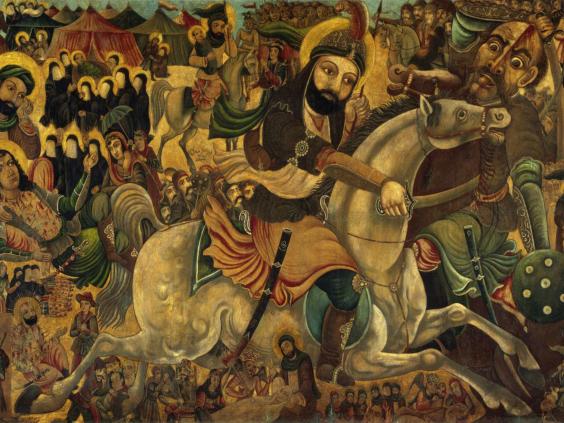
A painting of the Battle of Karbala in 680AD, in present day Iraq, which is remembered by both Sunnis and Shias (Corbis)
What makes Syria different is that there a Sunni majority is ruled by a Shia minority. The Alawites, the sect to which President Bashar al-Assad and much of his army officer elite belong, are Shia. That situation is the mirror opposite of Iraq under Saddam, where a Sunni strongman lorded it over a Shia majority - until the invasion of Iraq, when elections put the Shia in charge, insofar as anyone can be said to be running that chaotic country.
The division between the two factions is older and deeper even than the tensions between Protestants and Catholics which bedevilled Europe for centuries. The two Christian denominations had a shared history for 1500 years. By contrast the rift between the two biggest Muslim factions goes right back to the beginning - and a row over who should succeed the Prophet Mohamed as leader of the emerging Islamic community when he died in the early 7th century.
In the last 10 years of his life Mohamed inflicted total defeat on the pagan tribes of Mecca and by doing so united the entire Arabian peninsula. Around 100,000 people had submitted to the rule of Mohamed and of Allah. Tribal alliances in Arabia in those days usually disintegrated on the death of the leader, or after the short-term military objectives had been met and the spoils divided. Often succession would pass to the leader' s son. But Mohamed had no son, only a daughter. And his inheritance was spiritual as well as political.
The majority of his followers thought his closest associate, Abu Bakr, should take over. They became the Sunnis. But a minority thought the Prophet's closest relative, his son-in-law and nephew Ali, should succeed.
Shia is an abbreviation of Shiat Ali "the party of Ali". Intrigues and violence followed, with Mohamed's widow Aisha (who was also the daughter of Abu Bakr) leading troops against Ali. Eventually Ali was killed, as was his son Hussein, and persecution and martyrdom became ingrained in the Shia psyche. As the years passed rift hardened into schism. The seeds of civil war had been sown.
The two sides agreed on the Quran but had different views on hadith, the traditions recorded by Mohamed's followers about what he had said and done in his life. Diverging traditions of ritual, law and practice soon emerged. A clerical hierarchy, topped by imams and ayatollahs, became crucial in Shi'ism. By contrast, Sunni Muslims felt no need of intermediaries in their relationship with God - an approach which has abetted the rise of extremist zealots like al-Qa'ida. The Sunnis became happy to depend upon the state, which their adherents mostly controlled.
The chief Shia religious festival became Ashura when devotees would beat themselves to commemorate the death of the Prophet's grandson Hussein at the Battle of Karbala in 680. Various Shia sub-sects formed, including the fanatical Assassins, the Alawites in Syria and the Ismailis, whose leader is the Aga Khan. Some mystical sufi movements created a bridge between Sunni and Shia but hardline Sunnis regard the Shia practice of venerating saints and visiting shrines as heretical - which is why Sunni extremists bomb Shias on pilgrimage in places like Karbala in Iraq today.
Yet for much of the 1,400 years since the death of the Prophet the majority of Sunni and Shia Muslims have not routinely allowed their theological differences to create hostility. Some Sunnis included ritual denunciations of Ali in their prayers, but in many times and places the two sects have co-existed peacefully.
From time to time, however, violence has flared in which the Shia, in the main, have been brutally and even genocidally persecuted. In 1514 an Ottoman sultan ordered the massacre of 40,000 Shia. Mughal emperors in India between the 15th and 19th centuries routinely executed Shia scholars, burned their libraries and desecrated their sacred sites. Inter-communal violence has recurred in Pakistan.
There have been periods and places of concord. In 1959 the most influential centre of Sunni scholarship, al-Azhar University in Cairo, admitted Shia jurisprudence to its curriculum. In Azerbaijan, where the Shias are in the majority, there are mixed mosques where both sects pray together. But early in the 20th century the Saudi royal family made discrimination against the Shia official and destroyed most of the Shia holy places. With the rise there of the Sunni fundamentalism known as Wahhabism, severe restrictions have been placed on Shia practice and its leaders jailed. Some Saudi scholars brand Shi'ism as a heresy "worse than Christianity or Judaism".
The fanatics of al-Qa'ida have been nurtured in this Wahhabi ideology. Some of them consider the Shia to be not merely heretics but apostates - and the punishment for apostasy, they say, is death.
Over the years the division has been exploited by outsiders. British colonialists in Iraq in the 1920s used an elite of Sunni army officers to suppress a Shia rebellion, paving the way for Saddam's Sunni minority rule, in which Shia clerics were regularly executed. The legacy has been that most of the 6,000 killings over the past year in Baghdad are Sunni on Shia and vice-versa. Now this ruthless sectarianism has spread to Syria.
Two major developments have triggered the escalation of tension between Sunni and Shia in recent years. The first was the Islamic revolution in Iran in 1979 when the rule of the pro-Western Shah was overthrown and replaced with a Shia theocracy with Ayatollah Khomeini at the head. Khomeini did his best to build good relations between Shia and Sunni inside Iran but other leaders, religious and secular, have since been more divisive. And Khomeini was from the outset adversarial to the Sunni aristocrats who led Saudi Arabia - calling them American lackeys as well as "unpopular and corrupt" dictators.

36-Syrian-Reuters.jpg
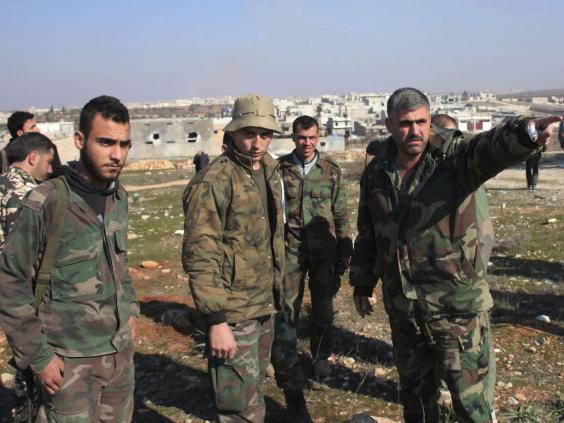
Division: Forces of Syria's Alawite (Shia) regime (Reuters)
The Iranians and Saudis have been fighting a proxy war in the Middle East ever since.
Today in Iran, though Christian churches are tolerated, the million Sunnis in Tehran have no mosque of their own. There are no Sunnis in top government. Sunni businessmen have difficulty getting import and export licences. Huge numbers of ordinary Sunnis are unemployed. The situation in Saudi Arabia is the exact reverse, with Shia on the receiving end of the discrimination.
From time to time there are attempts to insist that the tensions between Iran and Saudi Arabia are not religious. In 2007 King Abdullah of the House of Saud met the Iranian President Mahmoud Ahmadinejad and, with public hugs, spoke of a thaw in relations between the two regional powers - and condemned those who were trying to fuel the fire of strife between Sunni and Shia.
But it changed nothing in the realpolitik. Each oil-producing giant sees the other as a huge obstacle to its national interests. Geopolitics is the reality but religious vision is the tribal badge it wears.
The invasion of Iraq instigated by George Bush and Tony Blair in 2003 was the second big factor in the deterioration of Sunni-Shia relations. Saddam Hussein led a Sunni elite which governed Iraq's Shia majority with a reign of state terror. The US had backed Saddam in Iraq's war with Iran throughout the 1980s, in which half a million troops died.
But after 9/11 the US changed its mind about Saddam, overthrew him and brought democracy to Iraq. The resulting election placed in power leaders from the Shia majority who have excluded the Sunni minority - who have responded with the car bombs which are killing thousands in Baghdad and elsewhere. Al-Qa'ida jihadists have flooded into the country to join Sunni terrorists in attacking the Shia government. And now the polarised sectarian conflict has spilled over into Syria.
When the Arab Spring reached Syria in 2011 it began as a protest against the corruption, nepotism and human rights abuses of the Assad government. But within two years the armed uprising against the regime was transformed.
Rebels motivated by political indignation, who received limited backing from Western governments, slowly became outnumbered by rebel groups with extreme Islamist motivation fighting to create what they call the Islamic State of Iraq and Syria (ISIS).
These jihadists have come from across the Islamic world but they are backed by Saudi cash. More recently Shia militants from the Lebanese paramilitary group Hezbollah have arrived to support the Alawite-led army of the Assad regime. Full-blown civil war is the result.
What all this means is that Sunni and Shia are locked in conflict all across the Shia Crescent. As each side steps up its activities, the other feels more threatened and hardens its response in turn.
Sunni-Shia tensions are increasing across the world as a result. They are on the rise in Afghanistan, Pakistan, Turkey, Kuwait, Lebanon, Bahrain, Libya, Tunisia, Malaysia, Egypt, and even in London as issues of identity, rights, interests and enfranchisement find sectarian expression.
The tensions are deep-rooted in wider economic and geopolitical concerns. But the risk - given the long history of division and tension - is that predictions of a transnational civil war between Sunni and Shia could become a self-fulfilling prophecy.

Thursday, December 17, 2015

Can Hillary Say Anything That Does Not Contain A Lie

Hillary's Latest Big Lie: She Never Took Money From The Oil And Gas Industry
By DICK MORRIS & EILEEN MCGANN
Published on TheHillaryDaily.com on December 17, 2015
There she goes again. Another BIG Hillary lie.
When asked by an Iowa voter whether she would pledge to refuse campaign contributions from energy interests, Hillary Clinton said she didn't think she ever took money from the oil and gas industry.

That's a lie and she knows it.

The fact is that she's benefited from almost $400 MILLION that came from the energy industry.

The total of her payments from oil, gas, and mining interests to her Senate and Presidential campaigns, along with the speaking fees paid to her and Bill, and donations to the Clinton Foundation have netted the Clintons over $325 MILLION. If you add on speaking fees and donations by oil-producing Middle Eastern countries, the total is between $368 - $398 MILLION. (Those countries include Saudi Arabia, the United Arab Emirates, Qatar, Brunei, Oman, and Kuwait) That's almost $400 million.

She says that if she did get money from the energy industry, she doesn't remember.

That's a lot to forget. Especially since at least $20 million of it went directly into Bill and Hillary's joint bank accounts and was reported as joint income. But who's counting?

Hillary received almost $2 million in direct campaign contributions from individuals who work for oil and gas companies. And, of course, as she knows, corporations are not permitted to make campaign contributions. That's why they get their employees to do it.

She says she won't take money from oil and gas companies, but she knows she can't -- that's illegal. But she sanctimoniously promises not to do it. She says she'll take money from individuals who work for energy companies.

EARTH TO HILLARY: That's how corporations make campaign contributions.

She says she's not a favorite of the energy companies. That's not true, wither.

In her current presidential campaign, she's already received about $365,000 from the oil and gas folks. That makes her the third top recipient of all 22 presidential candidates. Only Ted Cruz and Jeb Bush -- both with ties to Texas oil companies, raked in more than she did.

And energy industry lobbyists have jumped on the Hillary Bandwagon. Her own campaign released the names of 159 registered lobbyists who are bundlers for Hillary.  Forty of them have worked against climate control, supported offshore drilling or promoted the Keystone Pipeline and other energy issues. Bundlers raise over $100,000 each for her campaign.

She says that if she did get money from the energy industry, she doesn't remember.

Either she's dumber than we think, or she thinks we're really dumb.

The Keystone pipeline was a windfall for Bill and Hillary. The Clintons cleaned up on Pipeline investors. Hillary was personally paid $1.5 million by two Canadian banks that are investors in the Keystone Pipeline -- right after she left the State Department, where she subtly endorsed the Pipeline that she now opposes.

And Bill Clinton was paid over $10 million by TD Bank, a major Pipeline investor.  He also received another $1 million in speaking fees from other energy sources.

It didn't stop there. The Clinton Foundation benefitted from the kindness of energy companies.  Duke Energy, Cheniere Energy, Entergy. ExxonMobil, and NRG Energy all gave from $1 to $5 million.

Chevron and Energy Development gave between $500,000 - $1 million and Hess, Noble Energy, and Inter-Energy gave between $250,000 to $500,000.

Chevron and ExxonMobil also chipped in $5 million each for one of Hillary's pet projects: the U.S. Pavilion at the China Expo. After that, both companies were featured at the Clinton Global Initiative.

Hillary must have been out of the room -- or she certainly would have remembered.

And, finally, mega-donor Canadian mining billionaire Frank Giustra -- who has investments in the Keystone Pipeline, has pledged over $300 million. Giustra also owns the Colombian oil company Pacific Rubiales and other international energy companies.

So, Hillary's latest $400 million lie is easy to see through.  It's staring her right in the face.

Tuesday, June 3, 2014

Camels Give MERS To Their Handlers Who Pass It Along. Should We Be Killing Camels?


From Science Daily:

MERS coronavirus can be transmitted from camel to humans

Date:
May 2, 2014
Source:
Veterinärmedizinische Universität Wien
Summary:
The so-called Middle East respiratory syndrome (MERS) coronavirus was first found in June 2012 in a patient from Saudi Arabia, who suffered from severe pneumonia. Since this time, more than 300 persons have developed an infection, of whom about a third died. The fact that the Arabian camel is the origin of the infectious disease has been confirmed recently. The transmission pathways of the viruses, however, have not been clear until now.


MERS coronavirus is transmitted not only between animals but also from camels to humans.
Credit: Norbert Nowotny / Vetmeduni Vienna
The so-called Middle East respiratory syndrome (MERS) coronavirus was first found in June 2012 in a patient from Saudi Arabia, who suffered from severe pneumonia. Since this time more than 300 persons have developed an infection, of whom about a third died. The fact that the Arabian camel is the origin of the infectious disease has been confirmed recently. The transmission pathways of the viruses, however, have not been clear until now.
Viruses in humans and camels from one region are identical
Virologists Norbert Nowotny and Jolanta Kolodziejek from the Institute of Virology are investigating the transmission pathways of the MERS coronavirus. They found that viruses from infected humans and Arabian camels from the same geographical region have nearly identical RNA sequences. "This indicates transmission between animals and man. The process is referred to as zoonosis. With this knowledge we can specifically react to the spread of the virus. Vaccinations of camels are currently being discussed. We will thus be able to halt the spread of the virus," said Nowotny.
Virus RNA differs from region to region
The scientists investigated nasal and conjunctival swabs, taken from 76 camels in Oman. In five camels they found the MERS coronavirus and compared its RNA with those of MERS coronavirus from Qatar and Egypt. The analysis showed that the viruses differ from region to region. "This means that there is no specific 'camel MERS coronavirus strain', but that one virus infects both, camels and humans," says study coordinator Norbert Nowotny.
Transmission pathway through nose and eyes
Virus levels were surprisingly high in the nasal mucosa and conjunctiva of camels. Therefore the scientists presume that the transmission pathway from animals to humans most likely occurs through these contact sites, especially through nasal discharge.
In man the virus causes severe pneumonia and renal failure while camels show no or very little symptoms (in some cases nasal discharge). So far all infections in humans have occurred in the Arabian Peninsula. However, some developed the disease after they returned to their native country, of whom eleven were from Europe. MERS coronavirus is also transmitted from one human to another, for instance in families, in the community, or through contact between patients and medical staff.
MERS and SARS coronaviruses are relatives
MERS coronavirus is closely related to SARS coronavirus. SARS originated in China and claimed 800 lives worldwide in 2002 and 2003. "While the SARS coronavirus probably crossed the species barrier only once by passing from bats to humans, we may presume that the MERS coronavirus is being constantly transmitted from camels to humans," explains Nowotny.
The fact that MERS coronaviruses infect camels was shown by Nowotny and his colleagues in an earlier study, in which the scientists detected antibodies against the virus in the animals. The current genetic analysis of MERS coronarviruses permits more exact conclusions.

Story Source:
The above story is based on materials provided by Veterinärmedizinische Universität WienNote: Materials may be edited for content and length.

Journal Reference:
  1. Chantal BEM Reusken, Bart L Haagmans, Marcel A Müller, Carlos Gutierrez, Gert-Jan Godeke, Benjamin Meyer, Doreen Muth, V Stalin Raj, Laura Smits-De Vries, Victor M Corman, Jan-Felix Drexler, Saskia L Smits, Yasmin E El Tahir, Rita De Sousa, Janko van Beek, Norbert Nowotny, Kees van Maanen, Ezequiel Hidalgo-Hermoso, Berend-Jan Bosch, Peter Rottier, Albert Osterhaus, Christian Gortázar-Schmidt, Christian Drosten, Marion PG Koopmans. Middle East respiratory syndrome coronavirus neutralising serum antibodies in dromedary camels: a comparative serological studyThe Lancet Infectious Diseases, 2013; 13 (10): 859 DOI: 10.1016/S1473-3099(13)70164-6

Cite This Page:
Veterinärmedizinische Universität Wien. "MERS coronavirus can be transmitted from camel to humans." ScienceDaily. ScienceDaily, 2 May 2014. .