Americans fear religion is losing influence, survey finds
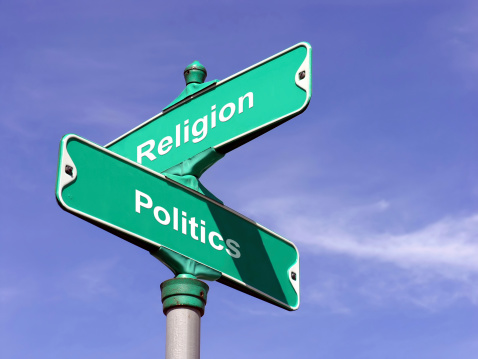
WASHINGTON (MCT) — Six years into a Democratic administration widely seen as pushing a secular agenda, nearly three-quarters of Americans say religion is losing influence in American life and about half say churches and other religious institutions should express their views on political issues.
The findings, from a new Pew survey, underscore a persistent pattern in American politics: During conservative administrations, the public tends to become more liberal; and during liberal ones, more conservative.
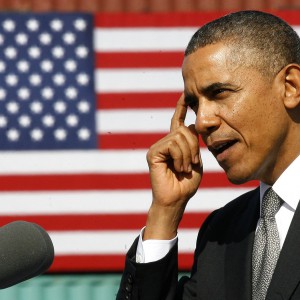
In this case, only about 3 in 10 Americans see the Obama administration as “friendly to religion.” About 4 in 10 rate the administration as neutral and another 3 in 10 call it unfriendly.
The percentage seeing the administration as unfriendly to religion has nearly doubled since the start of Obama’s tenure in 2009, with white evangelical Protestants and white Catholics in particular becoming more likely to voice that view.
The shift probably stems in part from the long-running fight between the administration and conservative religious groups over health insurance coverage for contraception as well as a concerted effort by Republican leaders in recent years to portray President Barack Obama as waging a war on religious belief.
The share of Americans who believe religion has lost influence, 72 percent, has risen at a fairly steady rate since 2002, when just over half of Americans felt that way. A majority of those who see religion’s influence fading see that development as a bad thing.
A growing number of Americans consider themselves secular, but they remain a minority. The religious majority appears to have reacted against what they see as a hostile administration and a reduced role for religious belief and have become more supportive of an active role for religion in public life.
During George W. Bush’s tenure, the percentage of Americans saying religious groups should “keep out of political matters” rose, while the share saying that churches should “express their views” on political questions dropped.
Since 2010, by contrast, that pattern has reversed. About half of Americans now say churches and other religious institutions should express their views, and the other half say they should keep out.
By about 2 to 1, however, a large majority of Americans still oppose churches endorsing specific candidates, although support for that idea has grown in recent years.
The shift in attitudes has come mostly from those who have a religious affiliation and see religion as a positive force in American life. Between 2010 and now, support for churches taking an active role in public life has risen nearly 10 percentage points in those groups.
Attitudes have not changed significantly among the religiously unaffiliated and those who see religion’s influence as mostly negative: They have always thought churches should stay out of politics.
Those sorts of views can have a big effect on elections because religious belief forms one of the country’s biggest partisan divisions — at least among whites.
Republicans get strong and growing support from the most religious, particularly white, evangelical Protestants, while Democrats dominate among the non-religious, as well as minority groups, including black Protestants, Latino Catholics and Jews.
Republicans tend to think that political leaders should talk more about “their faith and prayer,” with 53 percent of Republicans and Republican-leaning independents taking that view.
Among Democrats and Democratic-leaning independents, 40 percent say political leaders already talk “too much” about those subjects. On both sides, about one-quarter say politicians talk the right amount about their faith.
Members of religious groups also tend to be more likely than the general public to see their group as being the target of discrimination.
Half of white evangelicals, for example, say that their group faces “a lot of discrimination.” But fewer than one-third of the public at large concurs.
Similarly, 33 percent of Catholics, but only 19 percent of the public at large, sees “a lot” of anti-Catholic discrimination. A similar pattern occurs with racial minorities.
A majority of the public, 59 percent, believes that Muslims face a lot of discrimination. Because Muslims remain a very small minority of the U.S. population, the survey did not include enough of them to analyze.
The Pew survey, conducted Sept. 2-9 among a sample of 2,002 U.S. adults, has a margin of error of plus or minus 2.5 percentage points.
–David Lauter
Tribune Washington Bureau
Tribune Washington Bureau
___
(c)2014 Tribune Co.