Contact Form

Name

Email *

Message *

Showing posts with label Ron Dermer. Show all posts

Monday, January 9, 2017

Netanahu's Man In Washington Has A Great Relationship With Trump


Trump restores power of Israeli ambassador

After years in the Obama wilderness, Ron Dermer is reveling in the embrace of the president-elect.


170105_ron_dermer_AP_1160.jpg
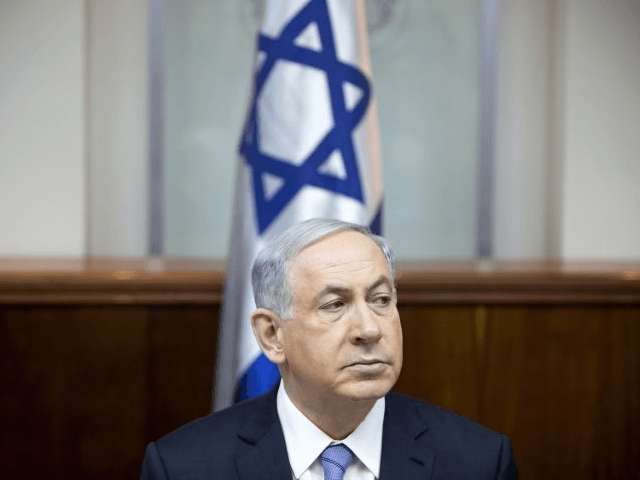
Ron Dermer is poised to become a VIP in President-elect Donald Trump’s West Wing. | AP Photo
In November 2014, Israel’s ambassador to the U.S., Ron Dermer, was a featured guest at a dinner for graduates of the University of Pennsylvania’s Wharton school of business. The other honoree that night: Donald J. Trump.
For Dermer, it was an extra-special occasion. As the Israeli envoy explained to the crowd at a Washington hotel, according to the text of his prepared remarks, the mogul had been an inspiration for the diplomat.
When Trump’s "The Art of the Deal" was published in 1987, a teenage Dermer read the cutthroat manifesto and resolved to become an entrepreneur like Trump. The book even convinced him to attend Trump’s alma mater of Wharton.
“Mr. Trump,” Dermer said, “the truth is, I wanted to be your apprentice.”
Dermer quickly indicated that his quip about Trump’s hit reality show of the same name was lighthearted: “But seriously …,” he continued. An Israeli official confirmed the accuracy of the speech text.


But the basic story is true. And it illustrates a remarkable reversal of fortune for Dermer. Since his September 2013 arrival in Washington, Dermer has been distrusted and even personally disliked by Obama administration officials. “Acerbic,” one senior administration official called him, describing his tenure as “an abject failure.” “Openly partisan,” growled another. During one particularly tense stretch two years ago, Obama aides half-seriously mused about revoking Dermer’s diplomatic credentials and sending him home.
Now, Dermer is poised to become a VIP in Trump’s West Wing — giving his boss and confidant, Israeli Prime Minister Benjamin Netanyahu, powerful access to the new White House regime. Dermer has already met with Trump, coordinated with his team and given the incoming president valuable political cover: He has defended Trump’s chief strategist, Steve Bannon, against charges of anti-Semitism. He has parried criticism of Trump’s controversial choice for ambassador to Israel, and applauded his vow to move the U.S. embassy to Jerusalem. And during the late December United Nations debate over Israeli settlements, Dermer advised Trump’s team and tweeted that Israel “deeply appreciate[d]” Trump’s opposition to a U.N. resolution critical of Israel that President Barack Obama allowed to pass.
That cozy relationship reflects more than Dermer's longtime admiration for Trump — it also illustrates what Dermer has predicted will be a policy of "no daylight" between the U.S. and Israel under Trump. Gone will be Obama’s pressure on Israel to halt its settlement-building in Palestinian areas. Gone will be talk of a diplomatic thaw between Washington and Tehran. Trump has even threatened to tear up America's commitment to the July 2015 nuclear deal with Tehran, which Netanyahu strongly opposed.
After three years of sometimes-messy public disputes with Obama officials about U.S. policy toward Israel, Iran and the wider Middle East, Dermer can now practice the art of the deal with the man who taught it to him.
“It is in the best interests of the U.S. to have a close working relationship with Israel, which we will undoubtedly have with President Trump and Ambassador Dermer,” said Matt Brooks, executive director of the Republican Jewish Coalition, in a statement. “Ambassador Dermer is a smart, thoughtful, passionate diplomat whose advice and counsel will be respected by the new Administration.”


Dermer, who declined to comment, remained quietly neutral during the campaign. But he communicated with Trump’s team through the candidate’s son-in-law, Jared Kushner, an Orthodox Jew sympathetic to Netanyahu’s conservative Likud government — which has infuriated Obama by undermining his nuclear deal and continuing its settlement-building.
Dermer also has a previous relationship with Trump’s running mate, Indiana Gov. Mike Pence, whom Israeli officials consider among America’s most “pro-Israel” politicians. In 2014, Dermer traveled to Indianapolis to support legislation, backed by Pence, banning state dealings with entities that boycott Israel or its settlements. During the trip, Pence joined Dermer for an Indiana Pacers-Miami Heat NBA game. (As the loser of a bet with his host, Dermer wore a Pacers yarmulke the next day.)
Since the election, Dermer has proved a political shield for Trump. When Trump tapped Bannon to be his senior White House counselor in mid-November, for instance, some Jewish activists opposed the appointment — citing instances of what they called anti-Semitism in Breitbart News, the media organization Bannon chaired until joining Trump’s team in August.
As the charges swelled to politically dangerous levels, Dermer paid a symbolically crucial Nov. 17 visit to Trump Tower, where, after meeting with the president-elect, he told reporters that Trump was a “true friend of Israel.”
Dermer also added, unprompted, that Israel’s government looked forward to working “with all of the members of the Trump administration, including Steve Bannon.”
Dermer has since boosted Trump in other ways: He has pronounced Trump’s choice for U.S. ambassador to Israel, David Friedman, “an excellent choice” amid criticism over Friedman’s hard-line views and lack of diplomatic experience.


At a Hannukah reception at the Israeli embassy in Washington last month, Dermer endorsed Friedman’s call for moving the U.S. embassy to Jerusalem — calling the controversial diplomatic position (also endorsed by past presidential candidates who later backpedaled in the face of Arab opposition) “a great step forward to peace.”
The change in power can’t come soon enough for the 45-year-old Dermer, who was born and raised in Miami Beach, where his father was a conservative Democratic mayor. After college, Dermer worked for the Soviet dissident-turned-politician Natan Sharansky in Israel, where he met Netanyahu. After serving as an adviser to Netanyahu there, Dermer moved to Washington, where he officially assumed the job of ambassador in October 2013.
The Obama White House was wary of Dermer from the start, mindful that Netanyahu had been a thinly veiled supporter of Mitt Romney during the 2012 campaign, and even considered denying him diplomatic credentials. But Obama officials decided that Dermer’s close bond with Netanyahu — he has been dubbed “Bibi’s brain” — made him a valuable intermediary with the prime minister.
Tensions between Obama and Netanyahu over the Iran nuclear negotiations further strained the relationship, which devolved into outright acrimony in early 2015. That’s when Dermer, working in secret with then-House Speaker John Boehner, arranged for Netanyahu to deliver a speech to Congress criticizing the Iran nuclear talks. Obama officials called Dermer’s failure to notify the White House about the planned speech an outrageous violation of protocol.
Furious Obama officials suggested to reporters that Dermer’s diplomatic credentials might be at risk. And White House logs show that Dermer became a relatively infrequent visitor to the West Wing. Dermer’s last recorded visit to the White House as of September, the most recent date for which data is publicly available, was a meeting last Jan. 12 with White House chief of staff Denis McDonough.
An Israeli official disputed the idea that Dermer ever felt unwelcome at the White House.


“The ambassador didn't feel that on a personal level,” the official said. “And when he reached out to the White House with something, he would always get a call back and they dealt with things professionally. He never felt like persona non grata.”
Now Dermer is parting ways with Obama’s team in a blaze of acrimony. In a flurry of media interviews last month, he blasted as “outrageous” and “shameful” Obama’s decision not to veto last month’s U.N. resolution condemning Israeli settlement-building, and accused Obama of secretly orchestrating the vote, which the White House has denied.
Prior to the U.N. vote, Dermer had contacted Trump advisers, asking that Trump try and stall such a resolution, which Egypt had initially proposed. In an unusual intervention in world diplomacy for a president-elect, Trump called Egyptian President Abdel Fattah el-Sisi and asked that he pull the resolution. Trump also issued a public statement calling Obama to veto any such move, which Dermer followed with a public thank-you on Twitter.
“Israel deeply appreciates the clear and unequivocal call of President-elect @realDonaldTrump to veto anti-Israel resolution at the UN,” Dermer tweeted.
Meanwhile, Dermer is lashing out at his old foes in Obama’s West Wing. When asked recently by one interviewer about Obama’s deputy national security adviser, Ben Rhodes, Dermer pronounced the trusted Obama aide, who has a background in creative writing, “an expert in fiction.”
Obama officials respond with withering assessments of Dermer’s tenure. “The job of any ambassador is to advance his or her country’s agenda with the host government, and if you take that as a core task, then by any measure Ron Dermer failed,” said one official. “His style and his tactics neither served the Israeli government or the Israeli people.”


“Ron has been widely recognized as perhaps the most openly partisan ambassador from Israel in recent times,” added another official, who warned that partisanship in the Washington debate over Israel poses a threat to the country’s security.
But Dermer’s admirers from Trump Tower to downtown Washington see things very differently.
“He likely is to become much more influential,” said Mark Dubowitz, executive director of the conservative Foundation for Defense of Democracies, “now that he will be interacting with a more friendly White House, which doesn't spend its waking moments wondering how to undermine him and his government.”
Obama officials would dispute that language. But there’s little doubt that Dermer’s job is about to get easier.
“I think that you’re going to have a policy of no daylight between the new administration and [Israel],” Dermer said in a Dec. 28 interview on MSNBC, “which will be very different from the policy that you’ve had over the last eight years.”

Sunday, October 18, 2015

Palestinian Lies Believed By World's Leaders


Israel's Ambassador to US Calls Out Kerry: "Very Smart People Believe Very Foolish Things"

Israel’s Ambassador to the US Ron Dermer called out US Secretary of State John Kerry for blaming Israel for the current wave of terror striking the country.
Speaking at the Israeli American Council’s annual conference, Dermer laid the blame of the conflict on Palestinian incitement, explaining world leaders are becoming more and more gullible to Palestinian lies.
“When it comes to the Middle East, you find very smart people believing in very foolish things,” Dermer stated in a veiled swipe at Kerry. “There are some people who believe that these attacks are happening because of the territories that Israel captured in the Six Day War of because of the peace process.”
Last week, while speaking at a Harvard sponsored event, Kerry blamed Israel for increasing Palestinian “frustration” over construction in Jerusalem, Judea and Samaria, thereby forcing Palestinians to vent their anger via violence and terror.
The secretary of state called on both sides to return to peace negotiations, with Kerry vowing the Obama administration will focus its attentions back on the volatile region to bring about a permanent peace agreement.
However, Dermer made clear that terror against Israel will not stop, even if any future government should decide one day to withdraw from all disputed territories.
“Israel should embrace peace for its own sake because Israel doesn’t want to become a binational state, but the idea that renewing the peace process or withdrawing from the territories will somehow stop terror is a fiction,” the ambassador stated. “Terror attacks like the ones that we have seen in the past few weeks have been happening for 100 years.”
“The match was not the settlements or the lack of a peace process, the match was the lie that Israel was trying to harm the al-Aqsa mosque,” lies perpetrated by the Palestinian Authority and Hamas.

image: https://www.breakingisraelnews.com/wp-content/uploads/2015/10/terror-attack-old-city-body-blood-police-10-12-2015.jpg
Israeli police standing near the body of a Palestinian terrorist at the scene where he attempted to stab a police officer took place near the Lion Gate in the Old City of Jerusalem on October 12, 2015. (Photo: Yonatan Sindel/Flash90)

“The powder keg that this match ignited is decades of incitement by Palestinian leaders against Israel,” he added. “Since Oslo, the Palestinian leadership has been poisoning an entire generation to hate Israel and hate Jews… A generation of Palestinians have grown up in a society that glorifies the murder of Jews.”
The US State Department backtracked on Kerry’s comments, but was quick to point out that Israel too could be accused of acts of terror in the conflict. Pushing back, Dermer said that while “every society can produce individuals who do terrible things,” the difference between Israel and the Palestinian’s is that Israel does not encourage violence or terror.
“Palestinian terror is met by a very different response by Palestinian leaders and wider society,” he said. “Killers are glorified, candies are passed out in the streets, and they spend millions to support the killers’ families.”
“There is no moral equivalency between Israel and the Palestinian Authority whatsoever. The leaders of the Palestinian Authority have not condemned any terror attack that we have seen over the past few weeks…Only when Palestinian children are educated for peace will Israel and the Palestinians be on the road to peace.”

Read more at https://www.breakingisraelnews.com/51498/israels-ambassador-us-veiled-jab-kerry-very-smart-people-believe-very-foolish-things-jerusalem/#2vcJhQSutVm1SPtQ.99

Wednesday, March 18, 2015

The Road Map For Future Conservative Victories Has Been Laid Out By Israeli Elections. Will American Conservative Understand The Lessons Or...?

5 LESSONS US CONSERVATIVES SHOULD LEARN FROM NETANYAHU

On Tuesday, Israeli Prime Minister Benjamin Netanyahu won re-election according to the latest vote counts, defeating not just his domestic leftist opposition, but the President of the United States in a public stand-off that had the President sending emissaries to Israel to try and oust Netanyahu. The victory represented a stunning turnaround for Netanyahu, whose Likud Party trailed significantly in the polls in the days leading up to the election.
How Netanyahu shifted the narrative in Israel makes for a compelling political case study in principle over prevarication. Netanyahu overcame a highly-publicized domestic scandal involving allegedly ordering some $2,700 worth of ice cream to the official residence, and exceeding his household budget by approximately a million shekel. He overcame inflation against the dollar that jacked up prices of goods in the weeks leading up to the election, and inflated real estate prices over the course of the last six years. He overcame foreign money injected into the campaign.
How? He employed five key tactics — tactics from which American conservatives could learn:
Build Around a Personality. Netanyahu’s speech before Congress was the latest indicator that he was a world leader ready to face down the most powerful people in the world, including Iran and its new friends in the Obama administration. While many Israelis said they didn’t want Netanyahu as prime minister, they preferred him over his rivals in every poll for months before the election by a wide margin. In the late days of the campaign, Netanyahu campaigned openly on the idea that conservatives ought to vote for his party in order to elevate him personally. By positioning himself as a major international presence, Netanyahu placed himself in admirable political position. There is danger to this strategy: it allows the opposition to focus on you personally. But voters vote for people, not for ideas.
Don’t Back Down From A Fight. Netanyahu’s U.S. ambassador, Ron Dermer, knew that Netanyahu was dramatically at odds with President Obama over Obama’s pending nuclear arms deal with Iran. When Dermer negotiated an appearance by Netanyahu before a joint session of Congress with Speaker of the House John Boehner, and Obama retaliated by refusing to see Netanyahu, Netanyahu did not apologize or back down. Instead, he silently embraced the face-off with President Obama, who foolishly elevated Netanyahu by using the media to slam Netanyahu repeatedly. Netanyahu, meanwhile, steadfastly stated that he would use any opportunity, particularly one before the most powerful legislature in the world, to lay out the case against a “bad deal” with Iran. The American media went berserk; the Israeli left media went insane, suggesting that Netanyahu had permanently damaged Israeli-American relations. The polls stated that the speech could actually hurt Netanyahu domestically. Netanyahu went anyway. The result: aboost in the polls and a decline for Zionist Union leader Isaac Herzog.
Energize The Grassroots. The day before the election, Netanyahu stated that he would never support the establishment of a Palestinian state. This has long been Likud’s platform, but Netanyahu, after taking the prime ministership, had made noises about embracing the possibility of a Palestinian state. Many suspected that he embraced the possibility knowing that it was practically impossible, given the character of Israel’s enemies. But now, Netanyahu left nothing to chance: he wanted his supporters to know precisely where he stood. “I think that anyone who is going to establish a Palestinian state today and evacuate lands is giving attack grounds to radical Islam against the state of Israel,” he stated. “There is a real threat here that a left-wing government will join the international community and follow its orders.”
Call Out The Opposition. On election day, Netanyahu let loose with a video explaining that “The right-wing government is in danger. Arab voters are going en masse to the polls. Left-wing NGOs are bringing them on buses.” The Joint Arab List made a similar announcement earlier in the day, stating that by 11 a.m., a full 10 percent of eligible Arabs had voted, as opposed to 3 percent in the last election cycle. The left media went totally crazy over this statement, with the Huffington Post labeling Netanyahu a racist. Of course, the left media also totally neglected to mention that the parties that comprise the Joint Arab List, which carries nearly all of the Arab votes in the elections, openly condemn the existence of the Jewish State, side with Hamas, and support the abolition of Israel entirely.Just days ago, the head of the campaign team said that Hamas was not a terrorist group and suggested that ISIS had taken a page from “the Zionist movement.” Imagine if America had a party dedicated to its destruction and openly allied with Osama Bin Laden in that goal. That is the Joint Arab List, and the Labor party and its allies relied heavily on it to get out the vote for the left. All three major Arab parties comprising the Joint Arab List have been banned from elections in the past. Netanyahu drove out his base to stop the rise of the Joint Arab List, and he was justified in doing so.
Stick To Your Issue. Netanyahu doggedly stuck to national security in this election cycle. While his opposition complained about rent and living expenses, Netanyahu pointed out again and again that his opponents were simply incapable of leading the nation through a time of security crisis. In one of his campaign commercials, Netanyahu posed as a babysitter — the only babysitter you’d trust with your children. Shocked parents asked him why he was there. “It’s either me,” Netanyahu said, “or Tzipi and Buji.” One of the parents responded, “Buji? Our children will have to take care of him! By the time we get home, we won’t have a house left!” As for Livni, Netanyahu stated, “By the time you get back, she’ll have moved on to the neighbors.” Netanyahu concluded, “This election, you will choose who will care for our children. This election, Likud is the only choice!”
Now, there are lessons in Netanyahu’s actions in the months leading up to the elections that lean the opposite direction. Netanyahu blew his personal popularity in large part battling internal enemies. As Michael Medved writes, “the right has indulged in a near Hobbesian internal war of personalities and policies that currently shows as many as seven different parties crossing the electoral threshold to win seats in Knesset. Some of these right-leaning parties are led by close associates and former Cabinet ministers previously linked to Netanyahu.” But overall, Netayahu’s stunning victory demonstrates that the strategy of alienating no one, talking about everything the left wants you to talk about, and running to the center may not spell victory. It may simply spell lack of principle.
Ben Shapiro is Senior Editor-At-Large of Breitbart News and author of the new book,The People vs. Barack Obama: The Criminal Case Against The Obama Administration (Threshold Editions, June 10, 2014). He is also Editor-in-Chief of TruthRevolt.orgFollow Ben Shapiro on Twitter @benshapiro.

Monday, July 14, 2014

If Dropping Leaflets And Phoning The House About To Be Bombed Is Not Enough, What Can Any Reasonable Nation Do To Prevent Deaths Of Civilians?

Can Israel avoid civilian deaths in Gaza offensive?

Author(s):   cbsnews.com, Rebecca Kaplan
Source:  Unity Coalition For Israel.     Article date: July 14th, 2014


With the recent flare up in violence between Israel and Palestinians in the Gaza strip showing few signs of abating, leaders and spokesman from both sides traded accusations about who is responsible for the deaths of more than 150 Palestinians as a result of Israeli air strikes.
“The difference between us is that we're using missile defense to protect our civilians and they're using their civilians to protect their missiles,” Israeli Prime Minister Benjamin Netanyahu said on CBS' “Face the Nation” Sunday. “Naturally, they're responsible for all the civilian deaths that occur accidentally. We're sorry for any accidental civilian deaths, but it's the Hamas that bears complete responsibility for such civilian causalities.”
In a separate interview on “Face the Nation,” Maen Rashid Areikat, the Palestinian Liberation Organization's chief representative to the U.S., cited Amnesty International to argue that targeting a building with civilians inside is a war crime, even if there is suspicion that a militant was there.
“There may be instances there have been rockets fired from within buildings but does this justify that you kill 170 people?” he said. “I don't think so.”
Israel has argued that Hamas has intentionally places missile batteries next to mosques, schools and hospitals, which has turned them into legitimate targets because of terrorist activity there.
“It makes it very difficult for our military to fight this war in a surgical way but we'll do it and we'll continue to uphold the highest standards,” Ron Dermer, the Israeli ambassador to the U.S., said on “Face the Nation.”
“We haven't targeted many of [the sites] because what we're trying to surgically get at the missile batteries and I think we're doing a pretty good job of it,” Dermer said.
He argued that Hamas has deliberately targeted Israeli civilians, but that Israel has tried to minimize civilian casualties.
Despite growing international pressure on both sides to end the conflict, Netanyahu argued that Israel is behaving exactly as any other country would in trying to target the source of rocket fire on its civilians.
“This is an unconscionable terrorist attack on civilian populations. And of course, we have to act to defend ourselves,” Netanyahu said.
He would not lay out a timeline for how long the conflict might continue, but both he and Dermer said that Israel's response would only end when there is sustainable calm and quiet for the Israeli people. Netanyahu said a long-term peace would only be possible by rolling back Hamas, which is “seeking to extinguish the Jewish state completely.”
“We need to defeat those people, roll them back or peace is not going to be possible. Because as far as Hamas is concerned, they couldn't care less if you come with a two-state solution, a three-state solution or a four-state solution; they want a no-state solution, no Jewish state,” Netanyahu said.
Areikat said he would like to see “an immediate cease fire, an engagement, and then moving to deal with the root cause of the issue which is ending the Israeli military occupation of the Palestinian people.” He said that is the reason for the ongoing violence, rather than the kidnapping and killing of three Israeli and one Palestinian teen that preceded the rocket fire.
While Dermer agreed there will have to be political talks to advance the peace process, he disagreed with Areikat's assessment of the situation.
“This has nothing to do with the occupation,” he said. “These talking points are nine years old. Israel left Gaza. We withdrew all our settlements from Gaza. We withdrew all our military forces from Gaza and since that time we've had 9,000 rockets fired from Gaza.”

Palestinian mourners pray over the bodies of 18 people of the Batsh family, after their house was targeted by an Israeli air strike, during their funeral on July 13, 2014. The deadliest strike was in Gaza City just before midnight local time in the eastern Tuffah district in strikes that hit the house of Hamas police chief Tayseer al-Batsh and a mosque, medics said.