Contact Form

Name

Email *

Message *

Showing posts with label UNRWA. Show all posts

Thursday, August 10, 2017

If Arab Nations Want To Fund UNRWA So Be It But Other Nations Should NOT Contribute To The Terror Supporting UN Agency

Don’t Dismantle UNRWA; Reform Its Policies
By August 9, 2017


BESA Center Perspectives Paper No. 556, August 9, 2017
EXECUTIVE SUMMARY: The desire of Prime Minister Netanyahu to dismantle UNRWA, while understandable in light of the agency’s egregious history of collusion with Hamas, is not a practical proposition. Israel can, however, demand that funding to UNRWA be conditioned on the agency’s reform in multiple areas.
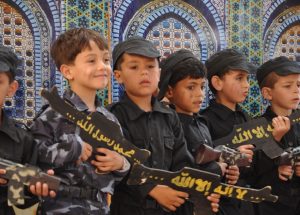
Virtually every media outlet ​took UNRWA’s condemnation of the Hamas tunnels found under an UNRWA school at its word. Yet none of them reminded the world that both the ​UNRWA school teachers’ union and the UNRWA workers’ union of Gaza have been under the tight control of Hamas since 1999, without a word of disapproval from the agency​. Nor does UNRWA appear to object to the use of its facilities by Hamas to teach violence and war. This summer, for example, Hamas will conduct its annual summer military training camp to train upwards of 50,000 UNRWA students, aged 9-15, in the ​use of live weaponry.
The statement by the Prime Minister of Israel that UNRWA should be ​”​dismantled​”​ indicates that the Israeli government ​​hold​s UNRWA responsible for the existence of the Hamas terror tunnels under its school. Adi Schwartz, in his piece “Dismantle UNRWA” (BESA Perspectives Paper #528), concurs with the PM that UNRWA should cease to exist.
Unfortunately, however, it is not within Israel’s power to ​”dismantle” UNRWA. The agency operates under the mandate of the UN General Assembly, and only that organ can shut it down. Even if 30 or 40 nations vote to change the UN mandate, the Arab League and the automatic majority of “non-aligned nations” would vote down any decision perceived as pro-Israel.
If Israel​ ​and the ​Western democratic nations were to cut funds to UNRWA, two scenarios ​would likely​ occur​:
  1. ​The radical Islamic state of ​Qatar, which has established a ​​presence in Gaza and in the West Bank​, would ​likely step in to replace any lost income​.
  2. Saudi Arabia, which recently increased its funding of UNRWA to become its number three donor, would ​likely ​increase its contribution.
If these two Gulf states ​were to become the largest donors to ​UNRWA, no leverage could be brought against the agency to cease connections with Hamas or other terror groups.
What, then, ​can the ​Israeli government do about UNRWA?
Jerusalem can ​demand that the 68 donor nations to UNRWA condition the release of funds on reforms of the agency in six areas:
  1. Ask for an audit of donor funds given to UNRWA. This would address widespread documented reports of wasted resources, duplication of services, and undesired flow of cash to the Gaza-based terror groups that have controlled UNRWA operations there for the past 18 years.
  2. Introduce UNHCR standards to UNRWA to advance the resettlement of Arab refugees. Palestinian refugees have spent 6​8 years​ relegated to refugee status. Current UNRWA policy is that any refugee resettlement would interfere with the “right of return” to pre-1948 Arab localities. By adopting a political stance in favor of Palestinian maximalists, UNRWA flouts its own commitment to the welfare and future of Palestinian refugees.
  3. Cancel the UNRWA curriculum, which is based on jihad, martyrdom, and the “right of return” by force of arms.
  4. Cease paramilitary training in all UNRWA schools.  ​​It is an absurdity that UNRWA, a UN agency with a purported commitment to “peace education,” allows such training on its premises.
  5. Insist that UNRWA dismiss employees affiliated with Hamas, in accordance with laws on the books in western nations that forbid aid to any agency that employs members of a terrorist organization.
  6. UNRWA recently hired a “youth ambassador”, Muhammad Assaf, to travel the world and encourage insurrection and violence. This would be an appropriate time to demand that UNRWA cancel its contract with a promoter of war.
​Now that the Israeli government has finally come to the conclusion that UNRWA is an impediment to peace, it should act within the bounds of reality to curb the agency’s misconduct. It is possible to reform UNRWA, not dismantle it.
​​David Bedein, MSW, who founded and has directed Israel Resource News Agency since 1987, administers the Center for Near East Policy Research in Jerusalem. He is the author of Roadblock to Peace – How the UN Perpetuates the Arab-Israeli Conflict: UNRWA Policies Reconsidered and The Genesis of the Palestinian Authority. His website can be found at: www.israelbehindthenews.com

Friday, July 14, 2017

It Is Time To Be Rid Of Organizations Which Do Nothing Positive

Dismantle UNRWA

By July 14, 2017


BESA Center Perspectives Paper No. 528, July 14, 2017
EXECUTIVE SUMMARY: In a surprising change of policy, Israeli Prime Minister Netanyahu has called for the dismantling of UNRWA. Such a move could benefit both Israel and the peace process. The new US administration might change its decades-old policy as well.
Last month, Israeli Prime Minister Benjamin Netanyahu stunned many by declaring that the United Nations Relief and Works Agency (UNRWA) should be dismantled.
Speaking at a weekly cabinet meeting, Netanyahu charged that “in various UNRWA institutions, there is a lot of incitement against Israel, and therefore the existence of UNRWA – and unfortunately its work from time to time – perpetuates the Palestinian refugee problem rather than solves it. … Therefore, the time has come to dismantle UNRWA and merge its components with the United Nations High Commissioner for Refugees [UNHCR].”
This long overdue step was rejected for years by the Israeli establishment. Up to now, Jerusalem has prevented attempts to change UNRWA’s mandate or close it down because it perceived the agency as a stabilizing factor. Israel focused instead on anti-Israeli incitement in UNRWA’s education system and on its collaboration with Hamas. That collaboration implied an international imprimatur on egregious Hamas behavior.
Instead of fighting UNRWA’s very existence, Israel focused on its actions. This time, the prime minister is talking about a bigger shift in policy.
UNRWA’s initial role was to distribute humanitarian assistance to Palestinian Arabs displaced during the 1948 war. However, over the years, instead of being a tool to solve the refugee problem, UNRWA has become a tool for its eternal perpetuation. Without UNRWA, the Palestinian refugees, and certainly their children, grandchildren, and great-grandchildren, would have resettled in their Arab host countries or elsewhere in the world, as many millions of other refugees have done. They would have done so reluctantly, of course, but would have had no other choice, as no organization would have taken care of them for so many years.
Because UNRWA did nothing to reduce the number of Palestinian refugees, their numbers have swollen from 750,000 in 1949 to more than 5 million today. This was a surrender to the Arab wish to perpetuate the problem. From its earliest stages, UNRWA was a politicized agency, more interested in appeasing the Arab world’s wish to destroy Israel than in the humanitarian cause for whose sake it was established.
Without UNRWA, the Arabs could not have come to the negotiations table with international support – as embodied by UNRWA – for their ridiculous demand that 5 million refugees and their descendants be allowed to resettle in Israel, thus subverting its Jewish nature. Without UNRWA, only a small fraction of its “registered refugees” would be considered real refugees in the first place. Many of UNRWA’s refugees should never have been granted that status, and the vast majority of them are descendants who would not be granted automatic refugee status elsewhere in the world. The Arabs would likely have attempted these demands, but would not have had the backing of a special UN agency.
As the years have worn on, UNRWA has maintained a system expressly meant to perpetuate the refugee problem rather than solve it. Unlike the UNHCR, which provides six options for the cessation of the status of refugee, UNRWA offers zero. Whereas the primary concern of UNHCR is to resettle refugees and help them build new lives, UNRWA promotes only one future: repatriation to Israel. That prospect is contrary to worldwide historical practice and anathema to Israel. It is also toxic to both the prospects for a peace agreement and Palestinian national development.
In effect, UNRWA has become a spokesman – and patron – for the call to destroy the Jewish homeland by flooding it with millions of refugees and their descendants. Without UNRWA, it is hard to see how the belligerent Palestinian/Arab call for return could have survived for seven decades. Because Israel is not going to commit national suicide via demographic subversion, this UNRWA-induced intransigence is an assured recipe for the conflict’s prolongation.
Merging UNRWA into UNHCR would mean an immediate drop in the number of Palestinian refugees from more than 5 million today to a few hundred thousand, perhaps even fewer. Most of UNRWA’s refugees either never left their country (Mandatory Palestine) or became citizens of another country (Jordan) and would thus simply be omitted from the list. Moreover, this merger would mean repatriation is not the sole option for solving the Palestinian refugee problem. Both these outcomes are clearly in the interests of both Israelis and Palestinians.
The Trump administration seems open to fresh ideas. For years, the US – the biggest donor to UNRWA – did not want to deal with the agency because it feared an Arab backlash. This time, it appears Washington and the Sunni world have enough in common – from fighting Iran to signing major arm deals – that Washington should not fear making major changes to UNRWA, or even abolishing it altogether. A push from Jerusalem may well wield results this time around.
Adi Schwartz is co-author of a forthcoming book on the perpetuation of the Palestinian refugee problem (together with Dr. Einat Wilf). He is writing his PhD thesis on the subject in Bar-Ilan University.

Wednesday, January 4, 2017

The Big Task Trump Has To Fix The Israeli Relationship

Share This Post
 16K
www.israel-commentary.org
BY JONATHAN SCHANZER, CONTRIBUTOR
Israeli Prime Minister Benjamin Netanyahu is counting the days until Barack Obama leaves office. So are many supporters of Israel here in the United States, including members of Congress on both sides of the aisle.
It’s not just last week’s abstention on an anti-Israel measure at the United Nations Security Council. Nor was it the long-winded speech about Israeli settlements by President Obama’s secretary of State, John Kerry, earlier this week.
It’s the sum total of Obama’s harmful Middle East policies that have imperiled Israel: a deeply-flawed Iran deal that gifted Iran $150 billion in sanctions relief; the failure to stabilize the war in Syria, which has put Hezbollah, ISIS and other bad actors on Israel’s northern border; and the mishandling of the Arab Spring, which has brought chronic instability throughout Israel’s already-nasty neighborhood.
Will the next administration fix all of that? It’s a tall order.
The Iran deal can certainly be undone. ISIS can be defeated. Iran and Hezbollah can be driven from Syria. And some of the region’s nasty internecine conflicts can be mediated. The problem is that this can’t all be accomplished at once. Untangling Obama’s mess will require prioritization, patience and, above all, thoughtful policies.
But other things can be fixed more quickly. On Jan. 20, the relationship between the new president and Israel’s prime minister seems set to improve immeasurably. Based on statements from both leaders, the “special relationship” will be special again. Donald Trump appears poised to rhetorically defend Israel against its many enemies and to do nothing to prevent Israel from defending itself. He also appears ready to veto any new anti-Israel measures at the U.N. Security Council.
Last week’s U.N. vote is not likely to be overturned, however. This was almost certainly part of Obama’s calculus. Obama understood full well that the measure would pave the way for the delegitimization of Israel by some countries, and even put wind in the sails of the propaganda and economic warfare campaign against Israel known as Boycott, Divestment and Sanctions.
True, the outgoing president signed a generous Memorandum of Understanding in September granting $3.8 billion per year in U.S. aid to Israel for a decade. But his eleventh-hour move at the U.N. now promises to subtract from this assistance.
Since the U.N. vote, pro-Israel lawmakers and policy wonks have been considering moves that the new administration might make to mitigate the damage and perhaps even try to inoculate Israel in the future.
Some, notably Sens. Lindsey Graham (R-S.C.) and Ted Cruz (R-Texas), have called for steep cuts in U.S. funding to the U.N. Such a move would put the U.N. on notice for its pathological fixation on Israel, but also its irredeemable ineffectuality and incalculable corruption.
There are other ways of sending a tough message short of a full funding cut. This could include working to abolish the U.N. Human Rights Council, through which the worst dictatorships and nastiest regimes regularly accuse Israel of alleged crimes, but stand by uselessly while Bashar Assad, Iran, Hezbollah and Russia have carried out unspeakable atrocities in Syria.
Another step could be to either cut funding to or demand the reform of the U.N. Relief and Works Agency, which is a U.N. body dedicated entirely to supporting the Palestinian refugee population. UNRWA recognizes some 6.5 million Palestinians as refugees today.
Except this population is overwhelmingly made up of the children, grandchildren and great-grandchildren of the original refugee populations from the 1948 and 1967 wars. Indeed, the original refugee population has dwindled over the years to an estimated 30,000-50,000. In other words, UNRWA has been perpetuating the Palestinian-Israel conflict through heredity, and by not insisting that this population be resettled, as the UN has done with every single other refugee population.
Other legislators, including Rep. Ileana Ros-Lehtinin (R-Fla.), have repeatedly called for cuts in U.S. assistance to the Palestinian Authority. These calls will almost certainly increase as Congress seeks to reassure Israel in the wake of Obama’s lame-duck maneuvers. Legislators in the past have pointed to incitement, the paying of salaries to convicted terrorists in Israeli prisons, and corruption as justification. They will now point to the Palestinian Authority’s complicity in the recent U.N. vote.
Others have talked about shutting down or downgrading the Palestine Liberation Organization (PLO) diplomatic representation here in the United States. It’s certainly fair to ask why the United States continues to recognize the PLO as the sole Palestinian representative for diplomatic negotiations when it has refused to negotiate with Israel for years.
But none of this would necessarily protect Israel from the boycotts and assaults on its legitimacy that may stem from the U.N. vote. That’s why some within the incoming administration are reportedly mulling reprisals for European nations that wage economic warfare against Israel. There is also talk of injecting new funds, leadership and urgency into the bureaucracy to fight politically motivated boycotts against America or any of its allies.
Finally, there is talk of moving the U.S. embassy from Tel Aviv to Jerusalem. The move is, of course, enshrined in law, even though Obama and his predecessors have wielded their waiver authorities to block it. Moving the embassy is, by now, a well-known objective of Trump’s incoming ambassador, David Friedman. Should it come to pass, it will be seen as a sign of unequivocal friendship and a full-throated recognition of Israel’s struggle for security and international legitimacy. That is something Israelis haven’t seen for eight years.
Jonathan Schanzer is vice president for research at Foundation for Defense of Democracies.

Wednesday, December 28, 2016

Netanyahu Lightens The Tone

Israel Moves to Ease

 Tension Ahead of

 Kerry’s Mideast 

Speech


  • Speech follows U.S. absention on UN Security Council Vote
  • Netanyahu blocks discussion of new building in Jerusalem
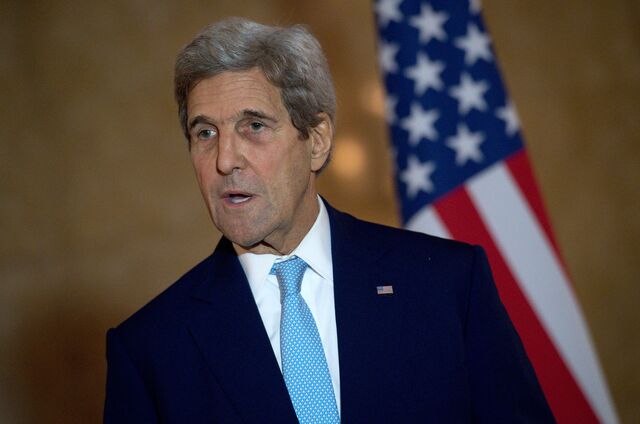
Secretary of State John Kerry.
 
Photographer: WPA Pool/Getty Images
U.S. Secretary of State John Kerry will offer a “comprehensive vision” for
 how Middle East peace can be achieved, as Israeli Prime Minister Benjamin 
Netanyahu blocked a discussion of new construction in Jerusalem in an
 effort to reduce tensions with Washington.
With barely three weeks left in U.S. President Barack Obama’s term, Kerry
 will lay out his plan Wednesday as friction over Netanyahu’s policies 
threatens to leave Israel more isolated internationally. Along with the
 Kerry speech, scheduled for 11 a.m. EST, France is gathering dozens of 
foreign ministers in Paris on Jan. 15 to discuss the conflict. Israeli officials
 say that may result in a proposal they view as unfavorable, which could
 then be taken to the UN for a seal of approval.
The U.S. last week broke with tradition and didn’t veto UN Security Council 
Resolution 2334, which demands that Israel halt all building in areas it won
 in the 1967 Middle East war and brands construction there illegal. Describing
 himself as a “lifelong friend of Israel,” Kerry defended the U.S. abstention in
 a Dec. 23 statement, saying it couldn’t “stand in the way of a resolution at
 the United Nations that makes clear that both sides must act now to 
preserve the possibility of peace.”
Netanyahu lashed out at Obama after the vote, saying the U.S. pushed the 
resolution behind the scenes and broke a commitment to shield Israel from
 conditions imposed by the UN. Obama has been highly critical of Israel’s 
settlements from the moment he entered office, and clashed with Israel over 
a nuclear accord with Iran last year, but his administration denies it was
 behind the UN resolution. The U.S. decision to abstain rather than veto
 the resolution allowed it to pass.

Trump Response

President-elect Donald Trump weighed in on the speech beforehand, saying
 in a pair of tweets that “We cannot continue to let Israel be treated with 
such total disdain and disrespect. They used to have a great friend in the

 U.S., but.......not anymore. The beginning of the end was the horrible
 Iran deal, and now this (U.N.)! Stay strong Israel, January 20th is fast 
approaching!”
Netanyahu moved Wednesday to limit friction with the U.S., intervening
 to get a Jerusalem municipal committee to postpone a review of plans for
 hundreds of new apartments in east Jerusalem, which would have 
contradicted Resolution 2334. The committee “will continue to develop
 Jerusalem for the benefit of all residents, without prejudice and without
 political considerations,” the municipality said in a statement. Committee 
member Hanan Rubin said the plans could be reviewed at a later date. 
Shmuel Sandler, a political scientist at Bar-Ilan University’s Begin-Sadat
 Center for Strategic Studies, said Netanyahu remains under pressure to
 respond to the UN vote with a wave of new building. Education Minister 
Naftali Bennett, whose Jewish Home party opposes a Palestinian state, has 
called for Israel to annex large swathes of the West Bank, though Netanyahu 
has ordered Cabinet members to cease all talk of annexation for now.
“No matter what, he has to wait for the Trump administration before doing
anything substantial in the settlements,” Sandler said. “He’s aware that 
Kerry’s speech is coming up, the Paris conference is coming up and Obama 
still has ways to hurt him.”
Netanyahu is hoping for better relations with Trump. The incoming president
 has pledged to move the U.S. embassy from Tel Aviv to Jerusalem, and his
 choice of ambassador to Israel, attorney David Friedman, is a strong
 supporter of the settlements. On Tuesday Trump appointed Thomas 
Bossert, a campaign adviser on Israeli issues, to be his assistant for 
homeland security and counter terrorism.
Minister of Regional Cooperation Tzachi Hanegbi said on a conference
 call Wednesday that Kerry’s decision to give a speech on the Middle East
 was legitimate and the government would wait to hear the content before
 commenting.

Egyptian Report

On Tuesday, the Egyptian newspaper Youm7 reported that Kerry and U.S.
 National Security Adviser Susan Rice met with Palestinian officials in
 mid-December and agreed to cooperate on the UN resolution, asking 
that the discussions be kept secret. Kerry also said he would propose a plan
 for resolving the Israeli-Palestinian conflict provided the Palestinians
 supported it, the paper said. Israel Radio said PLO Secretary General
 Saeb Erekat denied the report.
In a posting on his Facebook page, Netanyahu said the UN had no legal
 justification for its resolution against Israeli settlements, and was motivated 
instead by “ignorance and malice.” The British Mandate that governed the
 area before the State of Israel was established anchors Jewish legal rights
 in the West Bank and elsewhere, he said.

A senior Israeli official said the government is
 weighing fresh steps against UN agencies it 

considers particularly hostile, including the UN
 Relief and Works Agency serving Palestinian
 refugees; the UN Office for the Coordination of Humanitarian Affairs; 
and the UN observer force on the Golan Heights. Israel could restrict new 
recruits to the agencies, delay visas for their officials and halt or delay visits
 of experts to those agencies, said the official, who spoke on condition of 
anonymity because the issue is sensitive.
Christopher Gunness, a spokesman for UNRWA, said such steps against
 the agency would be unprecedented.