Contact Form

Name

Email *

Message *

Showing posts with label priebus. Show all posts

Monday, April 24, 2017

If Trump Does Not Win Big this Week, It Will Effect His Entire Presidency


View photos

FILE - In this March 16, 2017, file photo, White House budget director Mick Mulvaney speaks at the White House, in Washington. Mulvaney says that Democratic negotiators on a massive spending bill need to agree to funding top priorities of President Donald Trump, such as a down payment on a border wall and hiring of additional immigration agents. Mulvaney told The Associated Press on April 20, that “elections have consequences” and that “we want wall funding” as part of the catchall spending bill, which lawmakers hope to unveil next week. (AP Photo/Andrew Harnik, file)

WASHINGTON (AP) — President Donald Trump is heading into one of the most challenging weeks of his presidency, juggling a renewed health care push and a looming budget deadline. It's all complicated by a potential showdown with Democrats over paying for a border wall.
The symbolic 100-day mark for the administration is Saturday. That's the same day government could shut down without a budget deal. Trump has announced a rally in Pennsylvania that day.
Despite Trump's dismissal that the 100-day marker is "artificial," the White House is planning a packed week of activities leading up to Saturday. Trump will sign executive orders on energy and rural policies, meet with the president of Argentina and travel to Atlanta for a National Rifle Association event. Top aides will also fan out around the country to promote the administration.
Aides stressed on Sunday talk shows that funding a wall along the U.S.-Mexican border and a vote on an effort to repeal and replace President Barack Obama's health care law were priorities. But they also suggested a shutdown could be avoided.
"I don't think anyone foresees or expects or would want a shutdown," said budget director Mick Mulvaney on "Fox News Sunday."
Trump would like to revive a failed effort by House Republicans to replace the Affordable Care Act, or "Obamacare." He also hopes to use a $1 trillion catchall spending bill to salvage victories on his promised border wall, a multibillion-dollar down payment on a Pentagon buildup, and perhaps a crackdown on cities that refuse to cooperate with immigration enforcement by federal authorities.
But so far, negotiations have proven difficult, with disputes over the border wall and health law subsidies to help low-income people afford health insurance. House members received little information from leaders on a conference call Saturday.
White House chief of staff Reince Priebus said on NBC's "Meet the Press" that he believes the spending bill will include "something satisfactory" to reflect Trump's desire to build a wall. The legislation would keep the government running through Sept. 30, the end of the budget year.
"We expect the priorities of the president to be reflected," Priebus said, citing ongoing talks with the House and the Senate. He added that "it'll be enough in the negotiation to move forward either with construction or the planning ... to get going on the border wall and border security."
House Democratic leader Nancy Pelosi of California described a border wall as "immoral" and "expensive" when asked if there was any scenario in which Democrats will agree to money for a wall to avoid a shutdown.
"Democrats do not support the wall," she said, speaking also on NBC. "Republicans on the border states do not support the wall."
"The Republicans have the votes in the House and the Senate and the White House to keep government open. The burden to keep it open is on the Republicans," Pelosi said. She noted that when Trump promised to build a wall during his campaign, he never indicated he would "pass billions of dollars of cost of the wall onto the taxpayer."
Trump weighed in on his proposed border wall Sunday on Twitter, saying "Eventually, but at a later date so we can get started early, Mexico will be paying, in some form, for the badly needed border wall."
Trump has repeatedly asserted that Mexico would pay for the wall, which he says is necessary to stop the flow of immigrants crossing the border illegally as well as drug smugglers.
On Obama's health law, Priebus said he'd like to have a vote on the GOP repeal-and-replace bill in the House this coming week. But he insisted it didn't make too much difference to the White House whether the vote came next "Friday or Saturday or Monday."
"It's a marathon, not a sprint," he said.
Trump tweeted a warning at Democrats on Sunday, saying: "ObamaCare is in serious trouble. The Dems need big money to keep it going - otherwise it dies far sooner than anyone would have thought."
Trump is also planning to outline a tax cut plan on Wednesday. He told The Associated Press on Friday that it would include a "massive" tax cut for both individuals and corporations.
On Fox, Mulvaney said to expect "some specific governing principles, some guidance, also some indication on what the rates are going to be." He added: "I don't think anybody expects us to roll out bill language on Wednesday."
The White House is eager to tout progress on the litany of agenda items Trump promised to fulfill in his first 100 days, despite setbacks including court bans on his proposed immigration limits and the high-profile failure in repealing and replacing Obamacare.
The president said Friday he spent his first 100 days laying the "foundation" for progress later in his administration, including by building relationships with foreign leaders.

Tuesday, March 28, 2017

Trump Was Trying To Get A Deal. Made A Mistake Not Pressing For The Right Bill!


SPICER: Trump Thought House Health Bill Was ‘Bad Deal’


(WND.com) Despite his support for the failed House health-care bill, President Trump knew when to walk away from a “bad deal,” according to White House spokesman Sean Spicer.
Spicer's Epic Defense of Wire Tapping Evidence to White House Press CorpAt the daily briefing Monday, Spicer was asked if the president could still work with the conservative House Freedom Caucus, which led the opposition to the American Health Care Act.

On Sunday, Trump pinned blame on the Freedom Caucus for the bill’s failure, tweeting: “Democrats are smiling in D.C. that the Freedom Caucus, with the help of Club For Growth and Heritage, have saved Planned Parenthood & Ocare!”
But Spicer said Monday that working with the caucus in the future depends on the legislation, then offered new insight into the president’s thinking about the bill House Speaker Paul Ryan promoted as a repeal of Obamacare.
“The president also recognizes that when there’s not a deal to be made, when to walk away,” Spicer told reporters. “It’s not just about making deals. It’s knowing when to walk away from deals and knowing [that] when there’s a bad deal, that’s the only solution.”
While Trump praised the bill after it was withdrawn Friday, though acknowledging it could be improved, Spicer seemed to suggest passing it would not be consistent with the president’s “vision.”
“I think the president understood that where we were, that while you can get a deal at the time, that sometimes a bad deal is worse than getting a deal,” Spicer said. “And I think he smartly recognized that what was on the table was not going to be keeping with the vision that he had, and so he decided that this was not the time and that a deal was not at hand.”
Asked if repealing Obamacare was dead, Spicer said he believed the failure of President Obama’s signature legislation will bring some Democrats to the negotiating table, and the administration is willing to consider working with them.
“It is an abysmal failure,” he said of Obamacare. “If they [Democrats] want to come back to the table and recognize how we can do it in a more responsible way, we are willing to have that discussion. We have to figure out how we get to 216, 218 that day. That doesn’t mean we need the entire Democratic Caucus, and I think there may be a few of them who are willing to do that. Based on the calls that have come in, I think there might be some room to have a conversation. Let’s see how that evolves.
“I don’t think we’ve seen the end of health care.”
White House Chief of Staff Reince Priebus, in an interview with “Fox News Sunday,” criticized Republicans who opposed the Ryan bill of allowing the “perfect” to be the enemy of the “good.”
Reacting to Priebus, Freedom Caucus member Rep. Jim Jordan, R-Ohio, told MSNBC’s “Morning Joe” the bill “wasn’t even good.”
“When no one likes the legislation, you have to do it different,” he said.
Jordan said the Ryan bill would not bring down premiums and had “a host of problems.”
“And frankly, the key promise we made the American people in the 2010, 2014, and 2016 election was we would repeal Obamacare,” he said. “This legislation didn’t do that. And that was the fundamental flaw in this entire process. So let’s get back to work and let’s do what we said we would do.”
He added: “Remember, the lesson here is don’t try to pass a bill that only 17 percent of the country approves of. That’s a problem.”
Priebus told “Fox News Sunday” host Chris Wallace the president’s tweet about the Freedom Caucus “is 100 percent correct.”
“At the end of the day, I believe that it’s time for the party to start governing. And I think that’s important,” he said.
Some White House staffers blamed Trump’s politically moderate son-in-law and senior adviser, Jared Kushner, Politico reported.
Suspicious that Kushner was working to defeat the repeal effort, their concerns only increased when he invited Obamacare architect Ezekiel Emanuel to address staffers. Then, with the legislation in jeopardy, Kushner left town for a two-day ski trip to Aspen.
GOP: ‘Are we capable of governing?’
A new Gallup Poll released Monday after the bill’s failure showed President Trump’s job approval rating fell five points to 36 percent for the three-day period of March 24-26.
White House Budget Director Mick Mulvaney said the Trump White House wondered how a Republican Congress and president could not come together.
“We’re asking the same questions. We really are,” Mulvaney said on NBC’s “Meet the Press.” ”Is the Republican Party capable of governing?”
Rep. Chris Collins, R-N.Y., who supported Trump’s 2016 campaign, criticized opponents of the bill in his party.
“I can tell you right now there’s bitterness within our conference, it’s going to take time to heal that,” Collins said.
Rep. Ted Poe, R-Texas, who supported the bill, announced his resignation Sunday from the Freedom Caucus.
“Saying no is easy, leading is hard but that is what we were elected to do,” said Poe in a statement.
The House Freedom Caucus, chaired by Rep. Mark Meadows, R-N.C., criticized the Ryan bill as “Obamacare Lite” because it was not a full repeal of the Affordable Health Care Act. They contended it would continue to drive up costs by maintaining a penalty for not purchasing health care, a tax-credit “entitlement,” regulations that dampen competition and other restrictive measures. Joined by Sens. Rand Paul, R-Ky.; Mike Lee, R-Utah; and others in the Senate, they argued for a “clean repeal” through the reissuing of a 2015 bill that passed Congress but was vetoed by President Obama.
Rep. Steve King, R-Iowa, tweeted support for 2015 bill after the failure of the House leadership’s bill: “Now then bring to the House floor HR 175, the FULL ObamaCare repeal. Rip it ALL out by the roots!”
Rep. Mo Brooks, R-Ala., filed a one-sentence bill Friday he’s calling the “Obamacare Repeal Act.”
It reads: “Effective as of Dec. 31, 2017, the Patient Protection and Affordable Care Act is repealed, and the provisions of law amended or repealed by such Act are restored or revived as if such Act had not been enacted,”
Rep. Adam Kinzinger, R-Ill., charged Monday on MSNBC’s “Live with Stephanie Ruhle” that the House Freedom Caucus is torpedoing the GOP’s ability to govern. He urged the party to work with Democrats to get things done on Capitol Hill.
Kinzinger said the Freedom Caucus members typically are “never, ever, ever going to get to ‘yes.’”
However, Reihan Salam, a columnist for the left-leaning news site Slate, wrote that despite the criticism, the House Freedom Caucus “has actually acted quite reasonably.”
He said that when Meadows told reporters Thursday night that he was “desperately trying to get to ‘yes,’” he was “telling the truth.”
Salam said Freedom Caucus members were willing to allow the bill’s new refundable tax credits, which they described as a “a new entitlement program,” in exchange for lifting regulations that curb competition.
“Ryan has steadfastly refused to budge on making big regulatory changes, on the grounds that you couldn’t get that done under the rules of budget reconciliation,” Salam wrote.
“Well, lo and behold, the Senate parliamentarian has made it clear that there really is scope to make sweeping regulatory changes under reconciliation rules. That news infuriated HFC members, and it sent Ryan scrambling to see if he could push through some last-minute changes to his bill, which got uglier and uglier by the hour.”
Meadows received a hero’s welcome upon his return to his western North Carolina district, Politico reported
“This is the face of leadership!” declared a flier posted by the local tea party urging supporters to turn out for a rally celebrating Meadows.
“What’s happening now is no longer the Trump plan. It is the Obama plan,” Ralph Slaughter, the GOP chairman in North Carolina’s Jackson County, said of House Republican leaders’ three-step proposal to replace Obamacare. “They thought perhaps that they could just force it through, and I really think to a certain point President Trump was sold a bill of goods that it would carry. That all they would have to do is present it.”
Columnist and former Republican presidential candidate Patrick Buchanan wrote that a case can be made that the Freedom Caucus just pulled the Republican Party “back off the ledge, before it jumped to its death.”
He argued that with the support of only 17 percent of Americans, the bill probably would have faced defeat in the Senate. Had it survived there, to be signed by President Trump, it would have meant 14 million Americans losing their health insurance in 2018.
Foremost among the losers, he said would have been “white working-class folks who delivered the Rust Belt states to President Trump.”
Politically, the biggest losers, Buchanan said, are Speaker Paul Ryan and House Republicans “who, having voted 50 times over seven years to repeal Obamacare, we learned, had no consensus plan ready to replace it.”
Republished with permission from WND.com via iCopyright license.

Friday, November 25, 2016

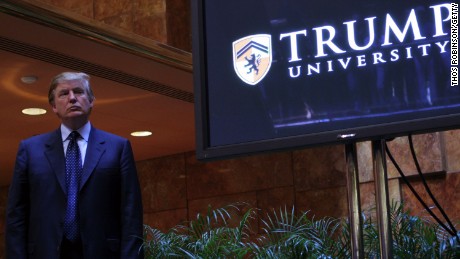
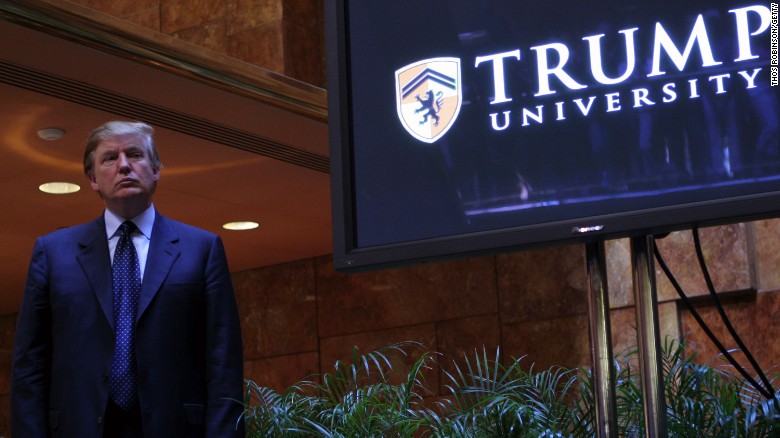
Trump's Decision To Settle Trump University Makes Perfect Sense. Remove The Distractions!

Priebus on $25M settlement: Trump wanted no 'distraction' taking office


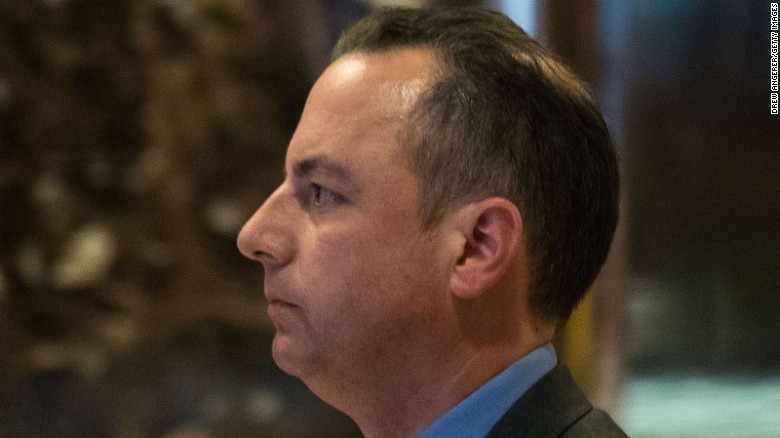
Washington (CNN)Donald Trump's
incoming chief of staff defended his new boss' decision to pay $25 million to settle Trump University lawsuits, saying the
President-elect simply wanted to put that litigation to rest before taking
the oath of office.
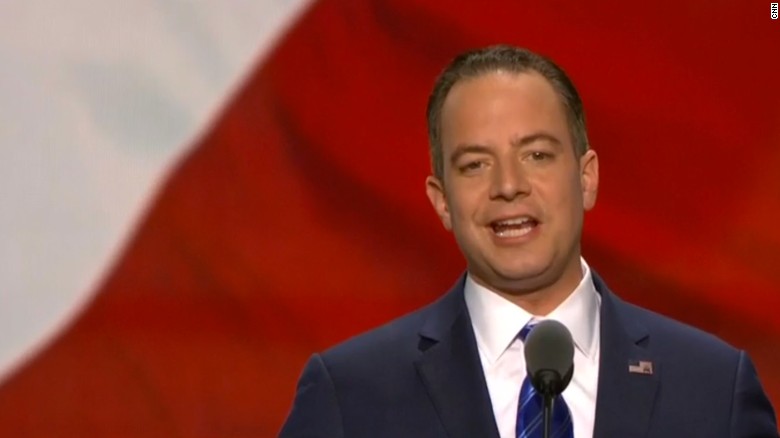
In an interview Sunday with CNN's Jake Tapper, Reince Priebus, currently
 the Republican National Committee chairman, noted that Trump did not
 admit wrongdoing in the settlement announced Friday.
    "When the presidency hits you, and it's at your front door and you realize
    that you are president of the United States for all Americans, there are
    some things that are important to you and some things that you decide,
    " Priebus said. "Look, let's move on, we're not admitting wrongdoing, and
     let's just start leading this country without distraction.
    "That's what you're seeing, and I think Americans should look at this as a
    real positive sign about what kind of great president he is going to be and
     how he wants to lead this country."
    The settlement ended a suit brought by the New York attorney general as
     well as two class-action suits in California over Trump University. The
    cases alleged Trump defrauded people who enrolled in real estate seminars
     he started in 2005.
    Trump University lawsuits settled for $25M
    Trump University lawsuits settled for $25M 01:19

    'Potential conflicts of interest?'

    In Sunday's interview, Priebus said Americans shouldn't be concerned with potential pay-to-play schemes in a Trump administration despite reports that Trump's daughter, Ivanka, who helms part of the family's business portfolio, has sat in on some of Trump's early meetings with foreign leaders.
    "We've been at this for a few days. I mean, this is ridiculous. Let's just kind of take a deep breath. The point is, what Americans should see from President-elect Trump is someone who, by being in action from the moment he was declared the winner, he was on a mission to bring everyone together," Priebus said.
    "That, to me, is what we should be celebrating. I think people should be encouraged by what they see. And I think it's a real positive sign for the future of our country."
    Tapper pressed Priebus on the topic, asking: "As White House chief of staff, you're supposed to look out for any political or ethical minefields. Is it seriously the position of the Trump transition team that this is not a huge cauldron of potential conflicts of interest?"
    And Priebus said: "Obviously we will comply with all of those laws, and we will have our White House counsel review all of these things. We will have every 'i' dotted and every 't' crossed, and I can assure the American people that there wouldn't be any wrongdoing or any sort of undue influence over any decision-making."
    And he defended Trump's pick for attorney general, Sen. Jeff Sessions of Alabama, against accusations of racist conduct early in his career. Allegations of racially charged comments cost Sessions a job as a federal judge in 1986.
    Priebus said Sessions "started his career fighting George Wallace."
    "He voted for (former Attorney General) Eric Holder. He fought for a congressional gold medal for Rosa Parks," Priebus said. "This is an honorable, decent, good human being that we're talking about."
    Priebus: Trump AG will stop 'intrusive' probes
    Priebus: Trump AG will stop 'intrusive' probes 02:46

    'Sanctuary cities,' immigration

    Priebus also suggested the Trump White House could seek to block federal dollars from flowing to "sanctuary cities" that don't enforce immigration laws.
    In recent years, local governments across the country fought back against federal immigration enforcement by calling themselves sanctuary cities. Trump made them a focus on the campaign trail, pledging to block funding for cities that take that tack.
    Trump to negotiate on sanctuary city funds
    Trump to negotiate on sanctuary city funds 01:26
    "The idea that a city would decide to ignore federal law and then would want the federal government to help them anyway is an inconsistent position for those local governments to continue to engage in," Priebus said.
    "And so, I think this is a matter of negotiation ... but certainly I can't imagine that too many Americans are watching this and thinking that it's a good idea for a city to allow for blanket amnesty, ignoring federal law, and then say, 'Now give me $500 million,' " he said. "No, that's not the way life works. And I think that a Trump administration is going to explore this issue and, I think, resolve some of these major problems that are happening all across the country."
    Trump has also pledged to reverse President Barack Obama's executive actions on immigration -- throwing into question the legal status of so-called Dreamers who were brought into the United States as children.
    Priebus: Trump focused on wall, not 'dreamers'
    Priebus: Trump focused on wall, not 'dreamers' 01:52
    Priebus deflected a question on the status of those people, saying Trump would focus on border security and the deportation of those who have committed crimes first. Further immigration policy decisions are "a subject that's going to come up after those first two things are taken care of," he said.