Facebook's War on Freedom of Speech
It was only a few weeks ago that Facebook was forced to back down when caught permitting anti-Israel postings, but censoring equivalent anti-Palestinian postings.
Now one of the most sinister stories of the past year was hardly even reported. In September, German Chancellor Angela Merkel met Mark Zuckerberg of Facebook at a UN development summit in New York. As they sat down, Chancellor Merkel's microphone, still on, recorded Merkel asking Zuckerberg what could be done to stop anti-immigration postings being written on Facebook. She asked if it was something he was working on, and he assured her it was. At the time, perhaps the most revealing aspect of this exchange was that the German Chancellor -- at the very moment that her country was going through one of the most significant events in its post-war history -- should have been spending any time worrying about how to stop public dislike of her policies being vented on social media. But now it appears that the discussion yielded consequential results. Last month, Facebook launched what it called an "Initiative for civil courage online," the aim of which, it claims, is to remove "hate speech" from Facebook -- specifically by removing comments that "promote xenophobia." Facebook is working with a unit of the publisher Bertelsmann, which aims to identify and then erase "racist" posts from the site. The work is intended particularly to focus on Facebook users in Germany. At the launch of the new initiative, Facebook's chief operating officer, Sheryl Sandberg, explained that, "Hate speech has no place in our society -- not even on the internet." She went to say that, "Facebook is not a place for the dissemination of hate speech or incitement to violence." Of course, Facebook can do what it likes on its own website. What is troubling is what this organization of effort and muddled thinking reveals about what is going on in Europe. 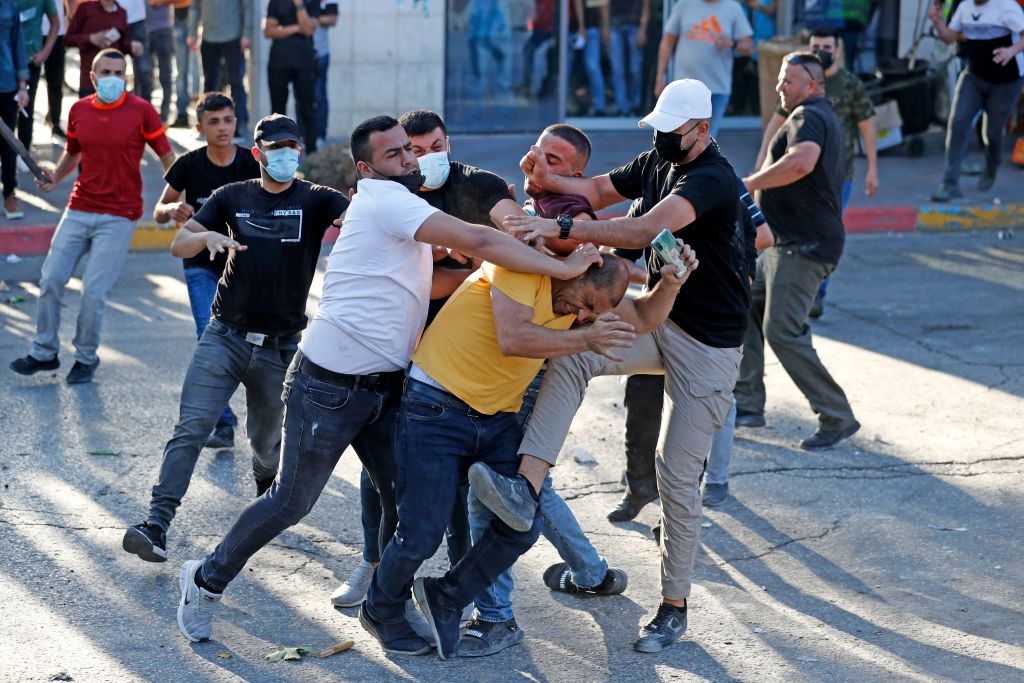 The mass movement of millions of people -- from across Africa, the Middle East and further afield -- into Europe has happened in record time and is a huge event in its history. As events in Paris, Cologne and Sweden have shown, it is also by no means a series of events only with positive connotations. As well as being fearful of the security implications of allowing in millions of people whose identities, beliefs and intentions are unknown and -- in such large numbers -- unknowable, many Europeans are deeply concerned that this movement heralds an irreversible alteration in the fabric of their society. Many Europeans do not want to become a melting pot for the Middle East and Africa, but want to retain something of their own identities and traditions. Apparently, it is not just a minority who feel concern about this. Poll after poll shows a significant majority of the public in each and every European country opposed to immigration at anything like the current rate. The sinister thing about what Facebook is doing is that it is now removing speech that presumably almost everybody might consider racist -- along with speech that only someone at Facebook decides is "racist." And it just so happens to turn out that, lo and behold, this idea of "racist" speech appears to include anything critical of the EU's current catastrophic immigration policy. By deciding that "xenophobic" comment in reaction to the crisis is also "racist," Facebook has made the view of the majority of the European people (who, it must be stressed, are opposed to Chancellor Merkel's policies) into "racist" views, and so is condemning the majority of Europeans as "racist." This is a policy that will do its part in pushing Europe into a disastrous future. Because even if some of the speech Facebook is so scared of is in some way "xenophobic," there are deep questions as to why such speech should be banned. In lieu of violence, speech is one of the best ways for people to vent their feelings and frustrations. Remove the right to speak about your frustrations, and only violence is left. Weimar Germany -- to give just one example -- was replete with hate-speech laws intended to limit speech the state did not like. These laws did nothing whatsoever to limit the rise of extremism; it only made martyrs out of those it pursued, and persuaded an even larger number of people that the time for talking was over. The sinister reality of a society in which the expression of majority opinion is being turned into a crime has already been seen across Europe. Just last week, reports from the Netherlands told of Dutch citizens being visited by the police and warned about posting anti-mass-immigration sentiments on Twitter and other social media. In this toxic mix, Facebook has now -- knowingly or unknowingly -- played its part. The lid is being put on the pressure cooker at precisely the moment that the heat is being turned up. A true "initiative for civil courage" would explain to both Merkel and Zuckerberg that their policy can have only one possible result. Douglas Murray, a British writer, journalist and commentator, is based in London, England.
© 2016 Gatestone Institute. All rights reserved. No part of the Gatestone website or any of its contents may be reproduced, copied or modified, without the prior written consent of Gatestone Institute.
|
Showing posts with label xenophobia. Show all posts
Showing posts with label xenophobia. Show all posts
Friday, February 5, 2016
As Facebook Censors Freedom Of Speech, Will Violence Spike? Will People Go From Words To Weapons?


Thursday, December 10, 2015
Has The Country Has Turned Nasty, Hateful And Xenophobic? Is That The Reason For Trump's Success


It’s understandable that the media give wall-to-wall coverage to Donald Trump: he gives them great ratings. But at this point, it is not Trump himself we should be focusing on.
By now, we’ve gotten a good look at what Trump is up to, and the spirit he is serving. When even Republicans are using the word “fascist” to describe Trump’s message, the picture has surely become clear enough.
This newly more widespread awareness creates a kind of "teachable moment" to get to a deeper truth about our times. For the only reason that Trump’s fascistic posture is important is that it has the support of enough of the Republican base to make him the runaway Republican front-runner.
If we’re seeing ugly things we’ve never seen before in a presidential election, it’s because something ugly has arisen in the American electorate with a power we’ve never seen.
It has not been the American way to value the hater, the arrogant, the bully, the boaster, the reckless. But at this point in history, as Donald Trump has demonstrated, it is possible to become politically prominent – even dominant – by being all those things. And that’s because such a posture now expresses the passions of so large a segment of the base of one of
America’s two major parties.
America’s two major parties.
We know that it comes naturally to Trump to act the bully. After all, he’s the guy who set up a
whole TV program to create the recurrent climactic moment of his dashing the hopes of one of
his fellow human beings with the line, “You’re fired!” Most people feel a revulsion about having
to fire people, but Trump went out of his way to be able to play that role.
whole TV program to create the recurrent climactic moment of his dashing the hopes of one of
his fellow human beings with the line, “You’re fired!” Most people feel a revulsion about having
to fire people, but Trump went out of his way to be able to play that role.
But even if a brutal role is appealing to Trump, what he has ridden to power is his ability to read
and exploit the dark passions of others.
and exploit the dark passions of others.
Trump’s campaign took off from the outset with his attack on Mexican immigrants—whom he
characterized as criminal monsters, “rapists.” If there’s any evidence that Trump himself cares
about the immigration issue – he who has hired undocumented workers in his construction
projects – I am unaware of it. But he has shown himself adept at harnessing the power of the
hatreds and fears of millions of other people.
characterized as criminal monsters, “rapists.” If there’s any evidence that Trump himself cares
about the immigration issue – he who has hired undocumented workers in his construction
projects – I am unaware of it. But he has shown himself adept at harnessing the power of the
hatreds and fears of millions of other people.
It is not Trump himself that is the main story here. It is the darkness, rising for years in the
Republican electorate, he is succeeding by mirroring.
Republican electorate, he is succeeding by mirroring.
The impulse he is harnessing is clearly deeper than any single issue. For Trump’s rise has been
accomplished by expressing hostility not only to Mexican immigrants, but also toward blacks
(hence the enthusiasm for Trump from white supremacists), and now of course especially
toward Muslims.
accomplished by expressing hostility not only to Mexican immigrants, but also toward blacks
(hence the enthusiasm for Trump from white supremacists), and now of course especially
toward Muslims.
What this pattern shows is a general inclination to hate the other. An impulse of hostility toward
those who are different from “Us” is one of the most fundamental forms of human brokenness.
It manifests in most of history’s nightmares (including, of course, the barbarism of ISIS).
those who are different from “Us” is one of the most fundamental forms of human brokenness.
It manifests in most of history’s nightmares (including, of course, the barbarism of ISIS).
In an earlier essay, I wrote: “In every society, both constructive and destructive forces are
always at work. But the balance of power between those forces is not constant.”
always at work. But the balance of power between those forces is not constant.”
And that connects with what is most important – most newsworthy – in the Trump phenomenon.
Something in America has changed for the worse.
Something in America has changed for the worse.
Racism and xenophobia are nothing new in American politics, of course. But what IS new is
that the “hate the other” impulse has now become more powerful than we’ve seen before.
Twenty years ago, or thirty, no one could have ridden a starkly dark message like Trump’s,
delivered in a manner that transgresses our long-established norms for political leadership, to
the front-runner position he now occupies.
that the “hate the other” impulse has now become more powerful than we’ve seen before.
Twenty years ago, or thirty, no one could have ridden a starkly dark message like Trump’s,
delivered in a manner that transgresses our long-established norms for political leadership, to
the front-runner position he now occupies.
So now that so many people can perceive the face of fascism that is arising powerfully out of
the Republican base, the important questions that need to be asked in order to expand this
newly awakened awareness, are:
the Republican base, the important questions that need to be asked in order to expand this
newly awakened awareness, are:
1) How did so many people in the Republican base get led deeper into this dark space?
(Here, we can look at the pernicious influences -- of people like Rush Limbaugh, Newt
Gingrich, Karl Rove, Fox News and elected Republican leaders generally – that have fed
people’s hatreds and fears.) And
(Here, we can look at the pernicious influences -- of people like Rush Limbaugh, Newt
Gingrich, Karl Rove, Fox News and elected Republican leaders generally – that have fed
people’s hatreds and fears.) And
2) What, if anything, can be done to diminish these dark passions among those who are
embracing Donald Trump as their champion?
embracing Donald Trump as their champion?
Monday, November 16, 2015
Is History About To Repeat Itself In Germany?

Christof Stache/AFP/Getty





INSIDE-OUT
11.03.151:00 AM ET
Germany's Far Right Wants Muslim Concentration Camps
About two weeks ago in Dresden, a speaker at a rally for the new far right movement PEGIDA lamented, with regard to Germany’s growing Muslim population, that “the concentration camps are unfortunately out of action at the moment.” I would love to say I was shocked to find that this was met with applause by an audience of 20,000 Germans in the year 2015, but I wasn’t.
I toured Germany last month with my band Azar Swan, the lead singer of which is a female Afghan Muslim, and in Dresden I caught a glimpse of Europe’s new xenophobic awakening, what I sometimes call the “Not A Nazi, But…” movement. At the same time I was reading headlines from the U.S., where Donald Trump was describing supporters who had attacked a homeless Mexican man as “passionate.” After several weeks of seeing firsthand how the refugee crisis was being handled by some in Germany and seeing how Republicans in the U.S. were stoking anti-immigrant and anti-Muslim sentiments, a picture emerged of a new kind of bigotry that I think is worth trying to sketch out. It’s a uniquely postmodern form of prejudice, one which lacks self-awareness, which plays fast and loose with language, and which thrives in a climate of cherry-picked history and facts.
On the day I left for Germany, the Ahmed Mohamed clock incident was in full viral bloom. I had spent a large part of that afternoon arguing with someone on Facebook who was explaining to me that “they” want to destroy secularism and turn everyone in Europe into a sharia-abiding Muslim. I am a strident secularist, one who has criticized the term “Islamophobia” and who stood in solidarity with the slaughtered cartoonists of Charlie Hebdo while many in the West were calling them “racists,” but nevertheless I found this kind of talk troubling. I believe that Islamism is a real threat, but what lurked beneath that appeal to my secular values was a recurrent “they” which referenced all Muslims, not specifically Islamists or jihadists. A reference to a people, not an ideology; one which was designed to associate any Muslims with violent terrorism.
That conversation served as the perfect preface to what I was to encounter in Dresden days later, not just because of the “Fear Of A Muslim Nation” ranting, but because of how eager this person was to window-dress these “arguments” in adamant claims that they were in no way prejudiced or racist. This is the first and perhaps most important and common feature of the new bigotry. It either does not believe it is what it is, or it purposefully obfuscates its true intentions.
There’s no need to decide which it actually is because it is both. Some of these people are genuine old-school hate-mongers, but many more are deluded about the implications of the policies they’re supporting—whether the thousands who demonstrated in Dresden or the Americans who find it unproblematic that the leading Republican candidate is open to shutting down mosques. Like an alcoholic who doesn’t believe he’s an alcoholic because he doesn’t wake up and brush his teeth with vodka, a great many on the new right downplay the shades of bigotry which infect their politics by referencing a more overt, more demonic iteration from the past with which we’re familiar.
PEGIDA members are not openly advocating for a Final Solution, therefore they are not Nazis, merely citizens concerned with the preservation of German culture. The American far right is not hanging blacks from trees, therefore its activists are not racists, merely defenders of the Constitution. There is truth in these claims that these are not like the organized hate movements of the 20th century, but it is truth which is used to perpetuate self-deceit and misrepresentation. Twenty-first-century bigotry is still bigotry. A prejudiced claim can be objectively prejudiced while the person making it remains unaware of its prejudice.
It would take a separate article to explore the reasons this kind of delusional lack of self-awareness has taken hold on a global scale. It was a popular on the left in the ’80s and ’90s to decry the manufacture of consent by the corporate media, and the Internet has definitely played a role in making it harder to control the boundaries of conversation. But nobody should have expected only progressive forces to find new life in online space. Reactionary ideas have benefited both from the new platforms for information but also from the way people now treat information.
Plenty of books have been written about the filtering out of conflicting viewpoints (Democracy 2.0 by Cass Sustein) and the disappearance of intellectual and factual rigor in the bloggified world of Internet politicking (Cult of the Amateur by Andrew Keen, True Enough by Farhad Manjoo). Even David Frum’s short book Why Romney Lost had much to say about a conservative media bubble which had created its own reality and its own facts. This is the fertile soil from which the new far right has sprung. PEGIDA has revived the Nazi-era term Leugenpresse (German for “liar press”) which is barely distinguishable from the distrust that radical American conservatives harbor towards “the mainstream media.”
In the ’80s and ’90s, postmodern and poststructuralist philosophers chiseled away at the notion that objective truth was possible or desirable. In the 2000s, technology picked up where academia left off. There is a long list of issues which have grown popular despite facts to the contrary; from vaccine skepticism to the denial of human-caused climate change. Each of these are now presented in the language of counterculture. People who believe vaccines cause autism believe they are “thinking outside the box” and “aren’t fooled by scientists who are all in the pockets of corporations.” Replace “vaccines cause autism” with “humans don’t cause climate change” and you’ve got yet another.


Something similar is true of the PEGIDAs and American Freedom Defense Initiatives of the world. In Germany, where the new right claims that refugees will be a drain on the welfare system and that Muslims are “taking over,” statistics are available regarding the amount of money that immigrants pump into the German welfare system yearly, as well as what percentage of Germans are Muslim. Muslims account for roughly 5 percent of the German population, and about 4.7 million foreigners pay into the German pension fund yearly as they contribute $20 billion to the German GDP.
A worthwhile analogy is what has been rather brilliantly illustrated by Peter Pomerantsev as Russia’s “postmodern dictatorship.” The appearances of Russia submitting to a democratic process are highly stage-managed. The Kremlin runs propaganda targeted to the West via media sites like Russia Today (RT), which believes any story will do so long as it undermines the case for the legitimacy of the West and especially the United States. Putinism doesn’t look like Stalinism, and there are no 21st century Gulags. But these are precisely the “improvements” which uphold the new authoritarian system.
Likewise, with the rising far right in America and Europe, the fact that it’s not as bad as it used to be allows it to be as bad as it is.
The rise of identity politics into the mainstream has also served these new movements well. The increasing tendency to judge the legitimacy of a statement according to the racial, sexual, gender, or cultural identity of the person making it has provided the new right with an unexpected weapon. For instance, the person who made the remark about concentration camps in Dresden was Turkish-born writer Akif Pirincci. In neighboring Leipzig, at a demonstration for LEGIDA (the Leipzig offshoot of PEGIDA), a black African man from Cameroon named Ferdinand gave a speech explaining that he’s fine with immigration, just not the immigration of murderers, the criminals, the stupid, and the lazy.
One is reminded of Bobby Jindal’s comments about how immigrants to America should be “high-skilled” and “embrace American values.” Ben Carson’s comments also come to mind about Jews not fighting back, and about how abortion is like slavery. Certainly Carson and Jindal have both met with criticism for those remarks, but they made them in an atmosphere where broad portions of the population now believe that the perspective of a person from a minority or historically oppressed background grants that perspective an automatic weight. Put bluntly, you can get away with more public bigotry if you are yourself a minority or an immigrant, and this fact is being exploited to its fullest by those who are fomenting hostility towards immigrants and minorities.
Subscribe to:
Posts (Atom)