If We Erase Our History, Who Are We?
Tuesday - August 15, 2017 at 12:48 am
This post was viewed 6,971 times.

 Votes: 4.54 Stars!
Share Pat's Columns!
By Patrick J. Buchanan
When the Dodge Charger of 20-year-old Nazi sympathizer James Alex Fields Jr., plunged into that crowd of protesters Saturday, killing 32-year-old Heather Heyer, Fields put Charlottesville on the map of modernity alongside Ferguson.
Before Fields ran down the protesters, and then backed up, running down more, what was happening seemed but a bloody brawl between extremists on both sides of the issue of whether Robert E. Lee’s statue should be removed from Emancipation Park, formerly Lee Park.
With Heyer’s death, the brawl was elevated to a moral issue. And President Donald Trump’s initial failure to denounce the neo-Nazi and Klan presence was declared a moral failure.
How did we get here, and where are we going?
In June of 2015, 21-year-old Dylann Roof gunned down nine Christians at an evening Bible study in Charleston’s Emanuel AME Church. A review of Roof’s selfies and website showed him posing with the Confederate battle flag.
Gov. Nikki Haley, five years in office, instantly pivoted and called for removal of the battle flag from the Confederate war memorial on the State House grounds, as a “deeply offensive symbol of a brutally offensive past.”
This ignited a national clamor to purge all statues that lionize Confederate soldiers and statesmen.
In Maryland, demands have come for removing statues and busts of Chief Justice Roger Taney, the author of the Dred Scott decision. Statues of Gen. “Stonewall” Jackson, President Jefferson Davis and Robert E. Lee have been pulled down in New Orleans.
After Charlottesville, pressure is building for removal of the statues of Lee, Jackson, Davis and Gen. “Jeb” Stuart from historic Monument Avenue in Richmond, capital of the Confederacy.
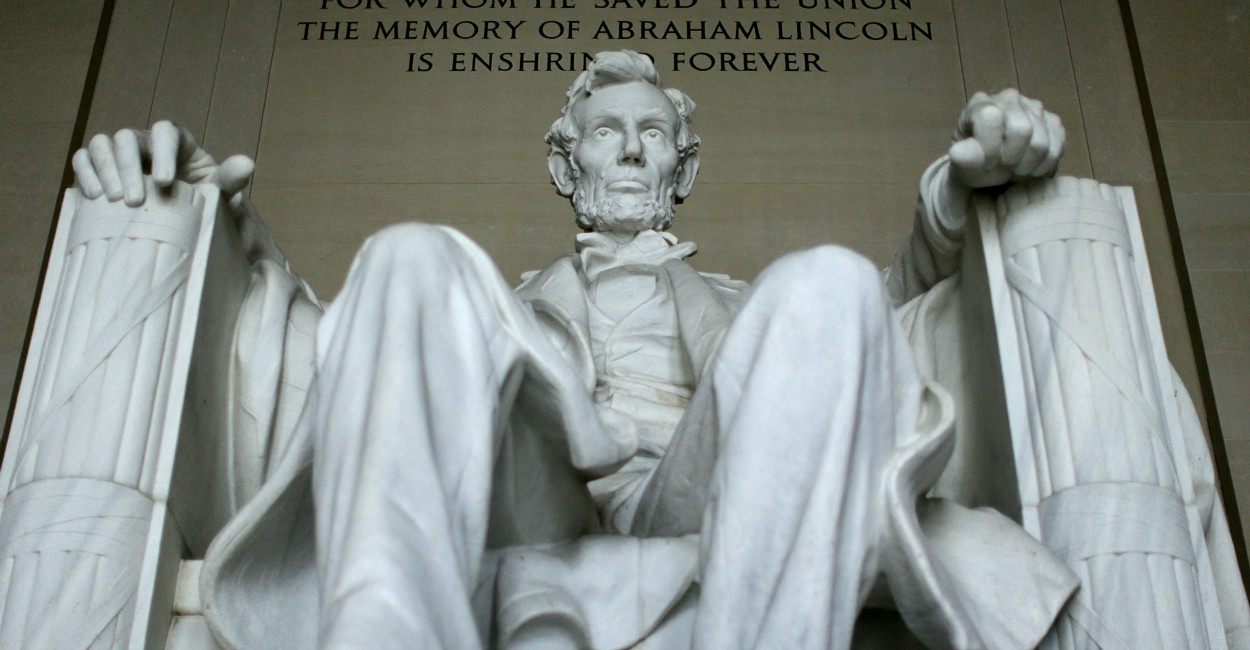
Many Southern towns, including Alexandria, Virginia, have statues of Confederate soldiers looking to the South. Shall we pull them all down? And once all the Southern Civil War monuments are gone, should we go after the statues of the slave owners whom we Americans have heroized?
Gen. George Washington and his subordinate, “Light Horse Harry” Lee, father of Robert E. Lee, were slave owners, as was Jefferson, James Madison, James Monroe and Andrew Jackson. Five of our first seven presidents owned slaves, as did James K. Polk, who invaded and annexed the northern half of Mexico, including California.
Jefferson, with his exploitation of Sally Hemings and neglect of their children, presents a particular problem. While he wrote in the Declaration of Independence of his belief that “all men are created equal,” his life and his depiction of Indians in that document belie this.
Have something to say about this column?
Visit Pat's FaceBook page and post your comments….
Visit Pat's FaceBook page and post your comments….
And Jefferson is both on the face of Mount Rushmore and has a memorial in the U.S. capital.
Another term applied to the “Unite the Right” gathering in Charlottesville is that they are “white supremacists,” a mortal sin to modernity. But here we encounter an even greater problem.
Looking back over the history of a Western Civilization, which we call great, were not the explorers who came out of Spain, Portugal, France, Holland and England all white supremacists?
They conquered in the name of the mother countries all the lands they discovered, imposed their rule upon the indigenous peoples, and vanquished and eradicated the native-born who stood in their way.
Who, during the centuries-long discovery and conquest of the New World, really believed that the lives of the indigenous peoples were of equal worth with those of the colonizers?
They believed European Man had the right to rule the world.
Beginning in the 16th century, Western imperialists ruled much of what was called the civilized world. Was not the British Empire, one of the great civilizing forces in human history, a manifestation of British racial superiority?
And if being a segregationist disqualifies one from being venerated in our brave new world, what do we do with Woodrow Wilson, who thought “Birth of a Nation” a splendid film and who re-segregated the U.S. government?
In 1955, Prime Minister Churchill, imperialist to the core, urged his Cabinet to consider the slogan, “Keep England White.”
Nor is a belief in the superiority of one’s race, religion, tribe and culture unique to the West. What is unique, what is an experiment without precedent, is what we are about today.
We have condemned and renounced the scarlet sins of the men who made America and embraced diversity, inclusivity and equality.
Our new America is to be a land where all races, tribes, creeds and cultures congregate, all are treated equally, and all move ever closer to an equality of results through the regular redistribution of opportunity, wealth and power.
We are going to become “the first universal nation.”
“All men are created equal” is an ideological statement. Where is the scientific or historic proof for it? Are we building our utopia on a sandpile of ideology and hope?
Nevertheless, on to Richmond!




this month, the 13th Amendment officially
was ratified, and with it, slavery finally
was abolished in America. The New York
World hailed it as “one of the most important
reforms ever accomplished by voluntary
human agency.”
“takes out of politics, and consigns to
history, an institution incongruous to our
political system, inconsistent with
justice and repugnant to the humane
sentiments fostered by Christian
civilization.”
—which states that “[n]either slavery
nor involuntary servitude, except as a
punishment for crime whereof the party
shall have been duly convicted, shall
exist within the United States, or any
place subject to their jurisdiction”—the
central contradiction at the heart of the
Founding was resolved.
be free and equal, race-based chattel
slavery would be no more in the United States.
about the status of slavery under the
original Constitution. Textbooks and
history books routinely dismiss the
Constitution as racist and pro-slavery.
The New York Times, among others,
continues to casually assert that the
Constitution affirmed African-Americans
to be worth only three-fifths of a human being.
opposed to racism unwittingly agree with
Chief Justice Roger Taney’s claim in Dred Scott v.
Sandford (1857) that the Founders’ Constitution
regarded blacks as “so far inferior that they
had no rights which the white man was
bound to respect, and that the negro
might justly and lawfully be reduced to
slavery for his benefit.” In this view, the
worst Supreme Court case decision in
American history was actually correctly
decided.
for the health of our republic. They teach
citizens to despise their founding charter
and to be ashamed of their country’s origins.
They make the Constitution an object of
contempt rather than reverence. And they
foster alienation and resentment among
African-American citizens by excluding them
from our Constitution.
If we turn to the actual text of the Constitution
and the debates that gave rise to it, a
different picture emerges. The case for
a racist, pro-slavery Constitution
collapses under closer scrutiny.
racist suffers from one fatal flaw: the
concept of race does not exist in the
Constitution. Nowhere in the Constitution
—or in the Declaration of Independence,
for that matter—are human beings
classified according to race, skin color,
or ethnicity (nor, one should add, sex,
religion, or any other of the left’s
favored groupings). Our founding
principles are colorblind (although
our history, regrettably, has not been).
citizens, persons, other persons (a
euphemism for slaves) and Indians
not taxed (in which case, it is their
tax-exempt status, and not their skin
color, that matters). The first
references to “race” and “color”
occur in the 15th Amendment’s
guarantee of the right to vote, ratified in 1870.
a canal against the ruins of Richmond, Va., after Union troops
took the city on April 3, 1865. (Photo: Everett Collection/Newscom)
more nonsense has been written than any
other clause, does not declare that a black
person is worth 60 percent of a white person.
It says that for purposes of determining the
number of representatives for each state in
the House (and direct taxes), the government
would count only three-fifths of the slaves,
and not all of them, as the Southern states,
who wanted to gain more seats, had insisted.
The 60,000 or so free blacks in the North and
the South were counted on par with whites.
Constitution also does not say that only
white males who owned property could vote.
The Constitution defers to the states to
determine who shall be eligible to vote
(Article I, Section 2, Clause 1). It is a little
known fact of American history that black
citizens were voting in perhaps as many
as 10 states at the time of the founding
(the precise number is unclear, but only
Georgia, South Carolina, and Virginia
explicitly restricted suffrage to whites).
blacks or whites, but it also doesn’t
mention slaves or slavery. Throughout
the document, slaves are referred to as
persons to underscore their humanity.
As James Madison remarked during the
constitutional convention, it was “wrong
to admit in the Constitution the idea that
there could be property in men.”
three different formulations: “other persons”
(Article I, Section 2, Clause 3), “such
persons as any of the states now existing
shall think proper to admit” (Article I,
Section 9, Clause 1), and a “person
held to service or labor in one state, under
the laws thereof” (Article IV, Section 2, Clause 3).
have done much to improve the lot of
slaves, they are important, as they
denied constitutional legitimacy to the
institution of slavery. The practice
remained legal, but slaveholders could
not invoke the supreme law of the land
to defend its legitimacy. These formulations
make clear that slavery is a state institution
that is tolerated—but not sanctioned—
by the national government and the
Constitution.
visitor from a foreign land would simply
have no way of knowing that race-based
slavery existed in America. As Abraham
Lincoln would later explain:
Frederick Douglass did in the lead-up to the
Civil War, that none of the clauses of the
Constitution should be interpreted as
applying to slaves. The “language of the
law must be construed strictly in favor
of justice and liberty,” he argued.
explicitly recognize slavery and does
not therefore admit that slaves were
property, all the protections it affords
to persons could be applied to slaves.
“Anyone of these provisions in the
hands of abolition statesmen, and
backed up by a right moral sentiment,
would put an end to slavery in America,” Douglass concluded.
pro-slavery Constitution would look like
should turn to the Confederate Constitution of 1861. Though it largely mimics the Constitution,
it is replete with references to “the institution
of negro slavery,” “negroes of the African
race,” and “negro slaves.” It specifically
forbids the Confederate Congress from
passing any “law denying or impairing
the right of property in negro slaves.”