America Needs a Post-ISIS Strategy
The headlines out of Syria are eye-catching: There are signs the Assad government may be planning another chemical attack. American pilots have struck forces threatening our allies and shot down a Syrian plane and Iranian-made drones. The probability of direct military confrontation between the U.S. and Russia has risen. Yet the coverage of these incidents and the tactical responses that have been suggested obscure the broader story: The slow-moving campaign against Islamic State is finally nearing its conclusion — yet major, long-range strategic issues remain unresolved.
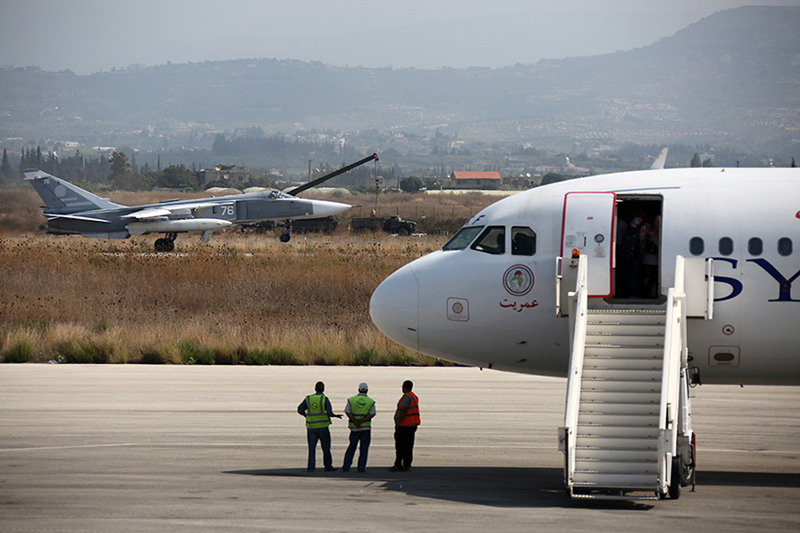
The real issue isn't tactical. It is instead the lack of American strategic thinking about the Middle East after Islamic State. Its defeat will leave a regional political vacuum that must be filled somehow. Instead of reflexively repeating President Obama's errors, the Trump administration should undertake an "agonizing reappraisal," in the style of John Foster Dulles, to avoid squandering the victory on the ground. First, the U.S. ought to abandon or substantially reduce its military support for Iraq's current government. Despite retaining a tripartite veneer of Kurds, Sunni Arabs and Shiite Arabs, the capital is dominated by Shiites loyal to Iran. Today Iraq resembles Eastern Europe in the late 1940s, as the Soviet anaconda tightened its hold. Extending Baghdad's political and military control into areas retaken from ISIS simply advances Tehran's power. This cannot be in America's interest. Iraq's Kurds have de facto independence and are on the verge of declaring it de jure. They fight ISIS to facilitate the creation of a greater Kurdistan. Nonetheless, the Kurds, especially in Syria and Turkey, are hardly monolithic. Not all see the U.S. favorably. In Syria, Kurdish forces fighting ISIS are linked to the Marxist PKK in Turkey. They pose a real threat to Turkey's territorial integrity, even if it may seem less troubling now that President Recep Tayyip Erdogan's plans have turned so profoundly contrary to the secular, Western-oriented vision of Kemal Atatürk. Second, the U.S. should press Egypt, Jordan and the Gulf monarchies for more troops and material assistance in fighting ISIS. America has carried too much of the burden for too long in trying to forge Syria's opposition into an effective force. Yet even today the opposition could charitably be called "diverse." It includes undeniably terrorist elements that are often hard to distinguish from the "moderates" the U.S. supports. Getting fresh contributions from Arab allies would rebalance the opposition, which is especially critical if the U.S. turns away, as it should, from reliance on the Iraqi forces dominated by Tehran. Third, the Trump administration must take a clear-eyed view of Russia's intervention. The Syrian mixing bowl is where confrontation between American and Russian forces looms. Why is Russia active in this conflict? Because it is aiding its allies: Syria's President Bashar Assad and Iran's ayatollahs. Undeniably, Russia is on the wrong side. But Mr. Obama, blind to reality, believed Washington and Moscow shared a common interest in easing the Assad regime out of power. The Trump administration's new thinking should be oriented toward a clear objective: pushing back these Iranian and Russian gains. Start with Iran. Tehran is trying to cement an arc of control from its own territory, through Baghdad-controlled Iraq and Mr. Assad's Syria, to Hezbollah-dominated Lebanon. This would set the stage for the region's next potential conflict: Iran's Shiite coalition versus a Saudi-led Sunni alliance. The U.S.-led coalition, enhanced as suggested above, needs to thwart Iran's ambitions as ISIS falls. Securing increased forces and financial backing from the regional Arab governments is essential. Their stakes are as high as ours — despite the contretemps between Qatar and Saudi Arabia (and others) — but their participation has lagged. The U.S. has mistakenly filled the gap with Iraqi government forces and Shiite militias. Washington is kidding itself to think Sunnis will meekly accept rule by Iraq's Shiite-dominated government or Syria's Alawite regime. Simply restoring today's governments in Baghdad and Damascus to their post-World War I boundaries would guarantee renewed support for terrorism and future conflict. I have previously suggested creating a new, secular, demographically Sunni state from territory in western Iraq and eastern Syria. There may well be other solutions, but pining for borders demarcated by Europeans nearly a century ago is not one of them. At the same time, the U.S. must begin rolling back Russia's renewed presence and influence in the Middle East. Russia has a new air base at Latakia, Syria, is involved in combat operations, and issues diktats about where American warplanes in the region may fly. For all the allegations about Donald Trump and Russia, the president truly in thrall to Moscow seems to have been Mr. Obama.
Russia's interference, particularly its axis with Mr. Assad and Tehran's mullahs, critically threatens the interests of the U.S., Israel and our Arab friends. Mr. Assad almost certainly would have fallen by now without Russia's (and Iran's) assistance. Further, Moscow's support for Tehran shatters any claim of its truly being a partner in fighting radical Islamic terrorism, which got its modern start in Iran's 1979 revolution. Both Iran and the Assad regime remain terror-sponsoring states, only now they are committing their violence under Russia's protective umbrella. There is no reason for the U.S. to pursue a strategy that enhances Russia's influence or that of its surrogates. As incidents in Syria and Iraq increasingly put American forces at risk, Washington should not get lost in deconfliction negotiations or modest changes in rules of engagement. Instead, the Trump administration should recraft the U.S.-led coalition to ensure that America's interests, rather than Russia's or Iran's, predominate once ISIS is defeated. Ambassador John Bolton is Chairman if Gatestone Institute, a senior fellow at the American Enterprise Institute, and author of "Surrender Is Not an Option: Defending America at the United Nations and Abroad".
© 2017 Gatestone Institute. All rights reserved. The articles printed here do not necessarily reflect the views of the Editors or of Gatestone Institute. No part of the Gatestone website or any of its contents may be reproduced, copied or modified, without the prior written consent of Gatestone Institute.
|
Our goal is to have intelligent discussion of the topics of the day. We realize everyone has their opinion and they should be allowed to express it in a discussion forum without calling each other names. We learn from discussion and not from name calling or argument.We use cookies to personalise content and ads, to provide social media features and to analyse our traffic. We also share information about your use of our site with our social media, advertising and analytics partners. See details
Contact Form
Showing posts with label Sunni Arabs. Show all posts
Saturday, July 1, 2017
What Is Going To Happen When Assad Is Gone?
Labels:
assad,
chemical attacks,
conservative blogs,
conservative musings,
Conservative Tom,
Egypt,
Erdogan,
Iran,
Iraq,
John foster Dulles,
jordan,
Kurds,
shiite arabs,
Sunni Arabs,
syria,
Trump,
Turkey
Friday, December 30, 2016
Palestinian Authority And Hamas Are A Mess
UN Vote on Settlements Can't Hide Palestinian Collapse
the-american-interest.com, Walter Russell Mead
President Obama’s decision not to block a UN Security Council resolution declaring Israeli settlements on the West Bank illegal can be read many ways. In part, it’s an Obama counter-strike against President-elect Trump’s unconventional moves aimed at sidelining Obama before the Inauguration. In part, it’s payback from the White House against a Netanyahu government that the White House feels has frustrated its quest for peace in the Middle East. In part, it’s a principled statement of sincere belief by a large group in the White House, representing many in the Democratic Party, reflecting the deep convictions of many American liberals and, especially, of American liberal Jews, about right and wrong in the modern Middle East. If American Jews were to hold a referendum on settlement policy, it is likely that the “no” side would win; American Jews are far more liberal than their counterparts in Israel, and the gap between the two communities is growing rather than shrinking over time.
Many Palestinians and many of their sympathizers would like to see this vote as a landmark victory for the Palestinian cause in a long campaign to isolate Israel diplomatically and to delegitimize it morally in the eyes of the world. The vote is certainly a propaganda victory for the Palestinian cause, but it does nothing to help the Palestinians in practical terms. Indeed, a sober look at the situation suggests that the Palestinians have not been this weak, this divided or this helpless in many decades. Almost everywhere one looks around the world, the net effect of the policies of the Obama presidency has been to undermine the movements and the values that the President hoped to support; the cause of the Palestinians and the quest for the two state solution are no exceptions to the rule.
Palestinians have been organizing to fight Zionism for well over 100 years; during all that time the fundamental problems of the Palestinians have come from the weakness of Palestinian political leadership and the lack of capacity of Palestinian institutions. During the Mandate period when Palestine was under British rule, the Jews organized a proto-state and a political leadership that was able to make the numerically smaller Jewish community much more effective and powerful on the ground than their Palestinian Arab rivals. The Palestinian Arabs were cursed by family and clan divisions, and perhaps most of all by the incompetent leadership of the Grand Mufti Amin al-Husseini, and were politically divided, militarily impotent and diplomatically inept in the most critical hours of their history.
Today the Palestinians have fixed the third problem; their diplomacy is far more accomplished and effective than it was in the 1940s and before. But they continue to fall farther and farther behind the Israelis when it comes to political organization and military power. Not only have the Palestinian territories devolved into two micro-states (Gaza and the West Bank, so that instead of a two-state solution one would have to speak of a three state solution barring a Palestinian civil war), but both Hamas in Gaza and Fatah in the West Bank have become increasingly corrupt, ineffective and exhausted. Both of the major Palestinian political organizations depend on foreign paymasters to cover their expenses; neither has shown much ability to build a real state or to solve the problems of the Palestinian people.
Meanwhile, the diplomatic success of the very professional and dedicated cadre of Palestinian representatives and notables who represent Palestinian interests to the international community has created a strong base of support for Palestinian aspirations in much of the world. But the last few years have seen a catastrophic decline in the power of Palestinian allies to affect events on the ground. The Sunni Arabs, the most natural if always self-interested and undependable allies of the Palestinian cause, are so weak and divided that they look to Israel as a defender of the Sunni world against the Persians and the Shi’a. The European Union has never been less able to exert influence beyond its frontiers. The incapacity of the United Nations to do anything concrete in the Middle East has never been more obvious; ask the people of Aleppo how much of a player the United Nations really is. The end of the Obama administration would have been a setback for the Palestinians even if Hillary Clinton had been the next President; with the succession of Donald Trump the United States appears to be shifting toward a pro-Likud orientation in its Israel policy. Putin has broken from the Russian tradition of sympathy for the Palestinians; Erdogan at least for now is prioritizing his need for Israeli support over his instinctive sympathy for the Palestinians and in any case, his identification with Hamas threatens to perpetuate rather than to heal Palestinian weakness and division.
Meanwhile, inside Israel, the pro-settlement Right senses that this unprecedented moment of Palestinian weakness offers a historic opportunity.
No vote in the impotent echo chamber of the Security Council can change any of these facts. What will come of this constellation of events is hard to predict, but history appears to be teaching the Palestinians another tough lesson: diplomatic success when not backed by military and political effectiveness does not help you much in the long run.
Wednesday, March 18, 2015
Will Netanyahu's Re-Election Spell The End To Middle East Elections? We Suspect So. Palestinians Should Pay For Their Rejection Of Earlier Proposals.
The Role of the Palestinian Authority in Israel's Election Results
by Alan M. Dershowitz
March 18, 2015 at 1:25 pm
Comment
|
Those around the world who are upset with Prime Minister's Benjamin Netanyahu electoral victory over the Zionist Camp party should put much of the responsibility for Israel's rightward turn squarely where it belongs: on the Palestinian Authority (PA).
At least twice over the last 15 years, Israel has offered the Palestinians extraordinarily generous two-state solutions. The first time was in 2000-2001 when Ehud Barak and Bill Clinton offered the Palestinians more than 90% of the West Bank and all of the Gaza Strip, with a capital in Jerusalem. Yassir Arafat turned down the offer and started an intifada, in which 4000 people were killed. This self-inflicted wound by the leader of the PA contributed greatly to the weakening of Israel's peace camp, most particularly of Ehud Barak's Labor party. The current Zionist Camp party, which is an offshoot of Labor, has continued to suffer from that weakening.
Then again, in 2007, Ehud Olmert offered the Palestinians an even more generous resolution, to which Mahmoud Abbas failed to respond positively. This failure also contributed to the weakening of the Israeli center-left and the strengthening of the right.
Israel is a vibrant democracy, in which people vote their experience, their fear and their hope. In 2000-2001 and 2007, most Israelis had high hopes for a peaceful resolution of the Palestinian conflict. These hopes were dashed by Arafat's rejection and Abbas' refusal to accept generous peace offers. It is not surprising therefore, that so many Israelis now vote their fear instead of their hope.
The Obama administration also contributed to the election results in Israel by refusing to listen to Israeli concerns -- concerns shared by Israelis of every political stripe -- about the impending deal with Iran. Many Israelis have given up any hope of influencing the Obama administration to demand more from the Iranians. The current deal contains a sunset provision which all but guarantees that Iran will have nuclear weapons within a decade. Zionist Camp leader Isaac Herzog made a serious mistake when he said he trusted President Obama to make a good deal with the Iranians. Few Israelis share that trust, as do few members of Congress, and few Sunni Arab governments. That lack of trust was reflected in voting for a Prime Minister who has been more confrontational and less trusting.
If Israelis voted their fears, these were not entirely irrational fears; they were based on the history of the region.
The international community, academics and the media tend to have short memories. They will blame Netanyahu, and especially his campaign rhetoric, for a result of which they disapprove. But Netanyahu's rhetoric found a receptive audience because many Israeli voters have long memories. They remember what the leaders of the Palestinian Authority, the Obama administration, the Iranian mullahs and the United Nations have done and said with regard to Israel. They remember the lethal responses to earlier peace offers.
So let's not look at a snapshot of these election results. Instead, let's look at a videotape of the last 15 years in order to understand how Israel's democracy produced the current election results.
Only time will tell whether these results will engender a better resolution of the Iranian threat, the Palestinian stalemate and other issues of concern to the world. But history has shown that positive results can never be achieved by directing pressure unilaterally at the Israeli government, and not at the Palestinian Authority, the Iranian mullahs, the Obama administration and the international community.
Already, the spokespersons for the PA have predicted that the reelection of Netanyahu marks the end of any realistic peace process, without reminding their listeners of how Palestinian intransigence marked the end of earlier peace processes and impacted this election. They are once again threatening to bring their grievances to the International Criminal Court and other international institutions, which would surely be a setback to any realistic prospects for a resolution.
So instead of casting the blame on Netanyahu and the Israeli right for all the problems of the Middle East, let all sides look at themselves in the mirror of reality and decide how they can contribute to making the world a safer place, by preventing Iran from ever obtaining a nuclear arsenal and by encouraging a compromise resolution of the Palestinian issue that protects Israel's security while providing the Palestinians with a viable, demilitarized state.
At least twice over the last 15 years, Israel has offered the Palestinians extraordinarily generous two-state solutions. The first time was in 2000-2001 when Ehud Barak and Bill Clinton offered the Palestinians more than 90% of the West Bank and all of the Gaza Strip, with a capital in Jerusalem. Yassir Arafat turned down the offer and started an intifada, in which 4000 people were killed. This self-inflicted wound by the leader of the PA contributed greatly to the weakening of Israel's peace camp, most particularly of Ehud Barak's Labor party. The current Zionist Camp party, which is an offshoot of Labor, has continued to suffer from that weakening.
Then again, in 2007, Ehud Olmert offered the Palestinians an even more generous resolution, to which Mahmoud Abbas failed to respond positively. This failure also contributed to the weakening of the Israeli center-left and the strengthening of the right.
Israel is a vibrant democracy, in which people vote their experience, their fear and their hope. In 2000-2001 and 2007, most Israelis had high hopes for a peaceful resolution of the Palestinian conflict. These hopes were dashed by Arafat's rejection and Abbas' refusal to accept generous peace offers. It is not surprising therefore, that so many Israelis now vote their fear instead of their hope.
![]()
Israeli President Reuven Rivlin casts his vote in yesterday's elections. (Image source: Israel Government Press Office)
|
The Obama administration also contributed to the election results in Israel by refusing to listen to Israeli concerns -- concerns shared by Israelis of every political stripe -- about the impending deal with Iran. Many Israelis have given up any hope of influencing the Obama administration to demand more from the Iranians. The current deal contains a sunset provision which all but guarantees that Iran will have nuclear weapons within a decade. Zionist Camp leader Isaac Herzog made a serious mistake when he said he trusted President Obama to make a good deal with the Iranians. Few Israelis share that trust, as do few members of Congress, and few Sunni Arab governments. That lack of trust was reflected in voting for a Prime Minister who has been more confrontational and less trusting.
If Israelis voted their fears, these were not entirely irrational fears; they were based on the history of the region.
The international community, academics and the media tend to have short memories. They will blame Netanyahu, and especially his campaign rhetoric, for a result of which they disapprove. But Netanyahu's rhetoric found a receptive audience because many Israeli voters have long memories. They remember what the leaders of the Palestinian Authority, the Obama administration, the Iranian mullahs and the United Nations have done and said with regard to Israel. They remember the lethal responses to earlier peace offers.
So let's not look at a snapshot of these election results. Instead, let's look at a videotape of the last 15 years in order to understand how Israel's democracy produced the current election results.
Only time will tell whether these results will engender a better resolution of the Iranian threat, the Palestinian stalemate and other issues of concern to the world. But history has shown that positive results can never be achieved by directing pressure unilaterally at the Israeli government, and not at the Palestinian Authority, the Iranian mullahs, the Obama administration and the international community.
Already, the spokespersons for the PA have predicted that the reelection of Netanyahu marks the end of any realistic peace process, without reminding their listeners of how Palestinian intransigence marked the end of earlier peace processes and impacted this election. They are once again threatening to bring their grievances to the International Criminal Court and other international institutions, which would surely be a setback to any realistic prospects for a resolution.
So instead of casting the blame on Netanyahu and the Israeli right for all the problems of the Middle East, let all sides look at themselves in the mirror of reality and decide how they can contribute to making the world a safer place, by preventing Iran from ever obtaining a nuclear arsenal and by encouraging a compromise resolution of the Palestinian issue that protects Israel's security while providing the Palestinians with a viable, demilitarized state.
Subscribe to:
Posts (Atom)