Contact Form

Name

Email *

Message *

Showing posts with label nuclear bomb. Show all posts

Saturday, July 18, 2015

Iranian Nuclear Deal Is Bad, Bad, Worse Than Any Deal


Six Strikes against the Nuclear Deal with Iran


EXECUTIVE SUMMARY: The very bad agreement reached yesterday between the Western powers and Iran underscores the weakness of the US; grants Iran nuclear legitimacy; spurs nuclear proliferation in the region; bolsters Iran’s ability to project force and support terrorism; changes the balance of power in the region in favor of Iran; and brings the US into sharp conflict with Israel, leading perhaps to an Israeli military strike on Iran.
There are (at least) six significant and immediate bad results from the agreement reached yesterday between the Western powers and Iran.
1. America the weak: The way in which the negotiations were conducted underscored the weakness of the US. The Obama administration was willing to offer almost unlimited concessions to the skillful Iranian negotiators, ignoring all its own deadlines and red lines. It is clear that President Obama was desperate for a deal in order to leave office with a ”legacy.”
While Washington congratulates itself on a “successful” result, what counts is the perceptions of the countries in the region. Alas, all countries in the region can only conclude that America is indeed weak. America has capitulated to Iran.
2. Nuclear legitimacy: Instead of insisting on the dismantling of all uranium enrichment facilities in Iran, as was accomplished in Libya, the US actually accorded international legitimacy to a large-scale Iranian 2. nuclear infrastructure, including thousands of centrifuges. The deal leaves almost intact all central components of the Iranian nuclear program.
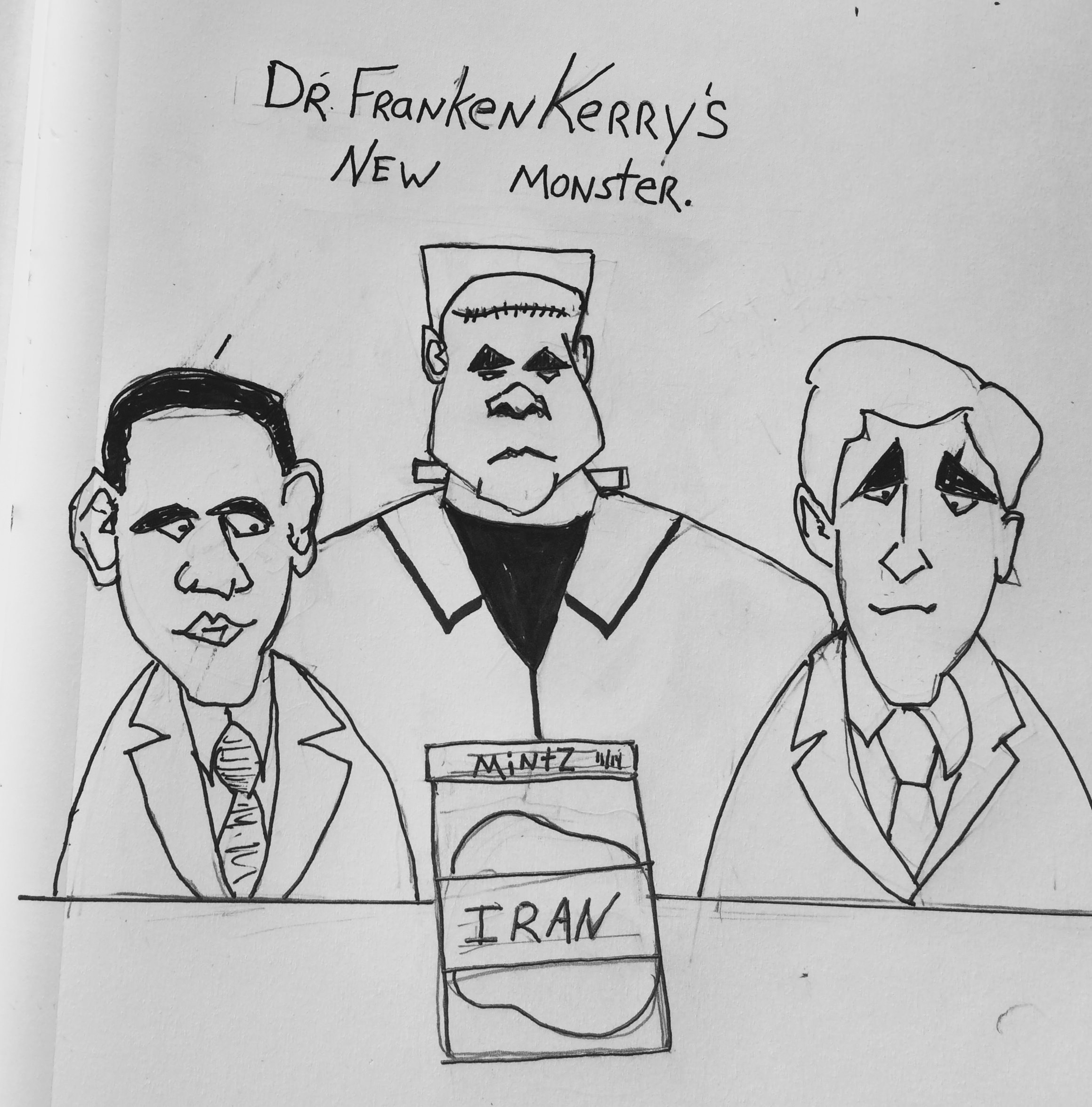
US Secretary of State John Kerry has in fact admitted that Iran might be just three months away from a nuclear bomb within the framework of the nuclear agreement. In doing so, the US has totally ignored UN Security Council Resolution 1696 of July 2006, which demanded that Iran suspend enrichment activities, as well as American demands for the dismantlement of the nuclear facilities.
3. Proliferation: This agreement is a stimulus for nuclear proliferation. Indeed, Saudi Arabia has announced its desire for “the same type of infrastructure” that has been allowed to Iran. It is to be expected that countries such as Egypt and Turkey will emulate Saudi Arabia. These states share Iranian ambitions for a leadership role in the region and it is highly unlikely they will refrain from acquiring capabilities that match Iran’s. Actually, the regional nuclear race has already begun and a multi-polar nuclear Middle East is on the way. This is a strategic nightmare.
An American attempt to provide a nuclear umbrella (“extended deterrence”) to the Gulf States in order to forestall nuclear proliferation already has failed. Saudi King Salman refused to attend the US-Gulf State summit. This reflects disappointment with what Washington had to offer, and signals Saudi intentions to try to take care of itself on its own.
4.  Force projection and terrorism: The international sanctions regime against Iran already has eroded. States and businesses already are lining-up to capitalize on the economic opportunities emerging in the Iranian market. The unfreezing of Iranian bank accounts and the projected increase in oil production will enrich the coffers of the Iranian regime with more than $100 billion. This will allow the diversion of many resources to an Iranian arms build-up, and will buttress Tehran’s aspiration to project force far beyond its borders. Moreover, the cash influx enhances Iranian capability for supporting proxies, such as the Shiite-controlled government in Iraq, Assad’s regime in Syria, Hizballah in Lebanon, Hamas in Gaza, and the Huties in Yemen. The Iranian capacity for subversion and for exporting terror will be greatly magnified.
5. Balance of power: The American decision to accept Iran as a nuclear-threshold state, and Obama’s statements in favor of a “responsible Iranian role” in the region, accompanied by an inflated American threat perception of ISIS – signal a most significant change in American Middle East foreign policy. This accord marks an end to Iran’s regional isolation. Instead, America seems to be siding with the Shiites against Sunnis. This move changes dramatically the regional balance of power, instilling even greater uncertainty in regional politics.
The naïve American belief that Iran can become a “normal” state – will backfire. While cautious, Iran is nevertheless a “revisionist” power trying to undermine the status quo. It does not hide its hegemonic aspirations. Its subversive activities in Shiite Bahrain and the Shiite eastern province of Saudi Arabia (where most of the oil is), and in other Gulf countries, might create an unbearable situation for the West. Eventually, Iran might even attain its declared goal of putting an end to the American presence in the Persian Gulf.
6. Conflict with Israel: American policy is now on a collision course with Israel. The consensus in Israel is that Obama signed a very bad deal, which is dangerous for the Middle East and well beyond it. Israelis, as well as most Middle Easterners, do not buy the promise of a moderate Iran. They know better. Israelis take seriously the calls of the Iranian mobs “Death to America. Death to Israel.”
Thus an Israeli military strike on Iran has become more likely, and in the near future – before the US puts the brakes on military supplies to the Israeli army.
Efraim Inbar, a professor of political studies at Bar-Ilan University, is the director of the Begin-Sadat Center for Strategic Studies, and a fellow at the Middle East Forum.

Saturday, January 3, 2015

Can You Imagine A World Where Iran Has A Nuclear Weapon?

Lindsey Graham: Iran Nuclear Push Is 'Biggest Threat to World'

Image: Lindsey Graham: Iran Nuclear Push Is 'Biggest Threat to World'(Alex Wong/Getty Images)
Friday, 02 Jan 2015 03:03 PM
By Joel Himelfarb
  Comment  |
   Contact  |
  Print   |
    A   A  
One of Congress' most prominent foreign policy voices has expressed alarm that Iran is moving towards becoming a military nuclear power like its longtime ally North Korea.

In an interview published Friday by the Israeli media outlet Israel Hayom, South Carolina Sen. Lindsey Graham said he does not object to Iran having a nuclear energy program, but is  "very concerned" about Tehran's uranium enrichment efforts becoming a path to atomic weapons capability.

Fifteen nations with nuclear power programs do not enrich uranium, Graham said.
That's why I want any deal to come before Congress for our vote and approval. I fear a North Korea outcome," he added.

The South Carolina Republican was referring to the last effort to regulate a rogue state's nuclear ambitions – the case of  the communist regime in North Korea.

"Republicans and Democrats both bought into the idea that you could allow the North Koreans a small enrichment program and the U.N. would control the outcome," Graham said. "Well, it didn't work. They broke out. They have nuclear weapons."

In Graham's view, it is a mistake to treat the Israeli-Palestinian conflict as the central threat to regional stability. The biggest problem, he said, is the Iranian nuclear threat.

"The Iranian nuclear ambitions are the biggest threat to the world in general," he said. "Israel needs to be reassured that Congress will be there in an appropriate way."
Graham emphasized that House and Senate Republicans who will be in the majority in the 114th Congress "will be pushing measures to make sure that the Iranian nuclear negotiations are handled properly, that sanctions are reimposed if the Iranians walk away from the table or if they cheat on any deal."

Graham was scathing in his assessment of President Barack Obama's performance in addressing an array of issues related to radical Islam and terrorism.

Obama "approached Iran with an open hand, not a clenched fist, but I think that his 'leading from behind' model has not served our national security interests well," Graham said. "What you see is that after six years, there are more radical Islamic organizations than there were before 9/11, holding more territory, more safe havens, more money and more resources with which to strike the U.S. and our allies."

Graham also emphasized that Congress will not support imposing sanctions against Israel over issues such as settlements, which should be resolved in negotiations with the Palestinians.

"When it comes to military assistance, economic assistance, Congress is firmly in Israel's camp. There is absolutely no support in any segment of American political life to restrict aid to Israel. There is absolutely no support for the idea of sanctioning Israel overthe settlement issue," he said.
"I just want the Israeli people to know that Congress does have your back," Graham stated.

Related Stories:
© 2014 Newsmax. All rights reserved.

Friday, November 7, 2014

Iran's Good Friend In The White House, Writes Them A Love Note Without Advising Saudi Arabia, UAE Or Israel!

obama and iran


US President Obama reportedly wrote a secret letter to Iran’s Supreme Leader Khamenei urging Iran to reach a nuclear deal, without informing Israel.
khameneiSenior sources have revealed that US President Barack Obama secretly wrote to Iranian Supreme Leader Ayatollah Khamenei in mid-October, and urged Iran to reach a deal on its nuclear program and join the US coalition against Islamic State (ISIS).
The letter, revealed by Wall Street Journal, told Khamenei that cooperation on ISIS depends on an agreement being reached by the November 24 deadline regarding Iran’s nuclear program, which Israel has warned aims to build nuclear weapons.
Obama administration officials didn’t deny the letter when asked by foreign diplomats in recent days, the report added, although the US didn’t inform Israel, Saudi Arabia and the United Arab Emirates about the letter. The move is seen as disregarding the security concerns those countries have raised regarding Iran’s nuclear program and a potential nuclear arms race it could spark.
Khamenei has called for Israel’s destruction, and last month around the time of Obama’s letter blamed America for creating ISIS, while Iran’s Revolutionary Guards recently clarified America remains its number one enemy.
Just last week American and Arab officials revealed to the Wall Street Journal that Obama has moved closer to Iran and it’s terror proxies Hamas and Hezbollah. They noted on secret channels of communications to Iran via senior Shi’ite sources in Iraq.
For the full story, click here.
Source: Israel National News
Copyright 2014 Mike Mintz

Wednesday, April 9, 2014

Kerry Downplays Iran Nuke Details, However, They Are Close To Being Able To Make A Bomb.

U.S.: ‘T-Minus 2 Months to Nuclear Iran’

Prime Minister Binyamin Netanyahu made the same statement to the United Nations in 2012 and in 2013.
U.S. Secretary of State John Kerry.
Photo Credit: State Dept. Website screen capture
The United States has belatedly awakened to the fact that Tehran is ignoring its policies and moving ahead with nuclear development – as Israel predicted more than a decade ago.
U.S. Secretary of State John Kerry told the Senate Foreign Relations Committee on Tuesday it would take Iran just two months to produce enough fissile material to produce a nuclear weapon of mass destruction.
Israeli Prime Minister Binyamin Netanyahu made the same statement – in fact he warned it would take less time, unless actions were taken to slow or stop the process – in speeches to the United Nations in 2012 and in 2013.
Over the years, the Iranian nuclear program was hit with numerous mysterious problems that slowed down the process, including destructive viruses, assassinated nuclear physicists, and broken components, all of which were generally blamed on Israel.
Netanyahu’s predecessors in office have also warned the international community that Iran has been marching ahead with its nuclear development program. That has continued apace regardless of United Nations sanctions, diplomatic efforts, negotiations and any other attempts to slow down its drive to create nuclear weaponry.
This time as world powers gathered in Vienna to talk about working on a new agreement to slow down Iranian activity on its nuclear program in exchange for relief from international sanctions, Kerry was warning American lawmakers that time is up.
The best the world can hope for is to get the Iranians to increase the “breakout” window from two months to half a year, maybe a year.
“I think it’s public knowledge today that we’re operating with a time period for a so-called breakout of about two months. Six months to 12 months is… I’m not saying that’s what we’d settle for, but even that is significantly more [time],” he said, according to Reuters.
Still, Kerry claimed Iran only has enough so far for “just one bomb’s worth, conceivably, of material, but without any necessary capacity to put it in anything, to deliver it, to have any mechanism to do so.”
However, a recent shipment of sophisticated missiles and a missile launcher sent by Iran to the Hezbollah terrorist organization in Syria proves that may not be the case. The missiles were of a new, advanced design built with a warhead capable of carrying a much heavier payload – possibly one that could carry nuclear material.
The trucks that were carrying the missiles and the launcher to a Hezbollah base were destroyed in an air strike that left four Hezbollah terrorists.


About the Author: Hana Levi Julian began her career in journalism out of boredom while earning a BA in Mass Communication, creating a news department at SCSU's radio station because all the disc jockey positions were filled. In addition to her former position as a Jewish Press columnist and senior correspondent and editor at Arutz-7, Ms. Julian has written for Babble.com, Chabad.org and numerous other media outlets.

Thursday, October 4, 2012

Iranians Could Wipe Israel in 24 Hours


If someone makes a statement, one must believe what they say. To not do so, is foolhardy. So it goes in the Middle East. The latest blast from Iran is that Israel could be destroyed in 24 hours.  

Anyone who does not listen to the Iranians, has their head deeply stuck in the sand. The world must listen to them and prepare for the unthinkable. Could the Iranians be further along in their nuclear ambitions than has been reported?  Or are they all bluster?

We believe the former.

Conservative Tom


IRANIAN OFFICIAL SAYS COUNTRY NEEDS ONLY ‘24 HOURS AND AN EXCUSE’ TO DESTROY ISRAEL
Iranian Official Says Iran Needs only 24 Hours and an Excuse to Destroy Israel
AP
Words from Tehran about wiping Israel off the map have been launched with abandon in recent weeks. Here’s another one for the lexicon. This time from Hojjat al-Eslam Ali Shirazi, representative for Supreme Leader Ayatollah Ali Khamenei to the Qods Force, who not only reiterated the bombastic threat but also added his own twist: that Iran can do the job in just 24 hours.
Specifically, he said all Iran needs is “24 hours and an excuse” to finish off the Jewish state. The Jerusalem Post reports on the interview:
In his first public interview in a year, reported in the Persian-language Jahan News, which is close to the regime, Shirazi said if Israel attacked Iran, the Islamic Republic would be able to turn the conflict into a war of attrition that would lead to Israel’s destruction.
“If such a war does happen, it would not be a long war, and it would benefit the entire Islamic umma [the global community of Muslims]. We have expertise in fighting wars of attrition and Israel cannot fight a war of attrition,” Shirazi said, referring to Iran’s eight-year war of attrition against Iraq.
Iran’s Qods Force is a unit of the Revolutionary Guard that aims to export the Islamic Revolution worldwide, and is reported to be active in the Middle East, Asia and South America. Last year the U.S. accused its operatives of working on a plot to assassinate the Saudi ambassador in Washington.
The Post reports that Khamenei tapped Shirazi last year as his personal envoy to the Qods Force:
Click here to find out more!
In his interview, Shirazi said that Israel was “close to annihilation” and wanted to attack Iran as an act of desperation.
“Are our enemies intelligent, wise or foolish? They are foolish. It’s also possible that they will do this foolish thing [and attack Iran]. Why do we sometimes say this is the strongest probability? Because today the Israelis are telling us that ‘we are not the Israel of yesterday, we are getting weaker day by day and the Islamic Republic is getting stronger day by day,’” he added.
“Well, when Israel finds itself in danger of extinction, it flails around, and so it’s easy for it to do foolish things and will start a war just to sting Iran.”
Shirazi is in good company. Other statements in just the past week from Iranian leaders in the same spirit as Shirazi’s include:  President Mahmoud Ahmadinejad’s assertion that Israel has no historical roots in the Middle East and will be “eliminated,” Revolutionary Guard Gen. Mohammad Ali Jafari saying a conflict between Iran and Israel will destroy the Jewish state – “the end of the story for them,” and Brigadier General Hossein Salami of the Revolutionary Guard saying a war will provide “a historical opportunity for the Islamic Revolution to wipe them [Israel] off the world’s geographical history.”
All this means we’re unlikely to hear such statements cease anytime soon.

Thursday, September 27, 2012

Signs That Attack on Iran Is Near

The following blog discusses the signs that Israel is close to a showdown with Iran. Add to this Netanyahu's speech at the UN today and it appears as if things are definitely heating up.  What do you think?

Conservative Tom

4 signs that Israel's showdown with Iran is almost here

The Week's Editorial Staff - The Week,  September 17th, 2012

Israel warns that the clock is ticking, and that Iran is dangerously close to acquiring nuclear weapons. Is a long-feared military clash looking more and more likely?
Over the last several days, Israeli Prime Minister Benjamin Netanyahu has loudly and repeatedly urged that President Obama draw a “red line” that Iran's nuclear program can't cross, warning that without such a line, the Islamic Republic will likely be within reach of building its first atomic bomb in six or seven months. Obama administration officials say Netanyahu's timetable is wrong, and that Tehran will need at least a year to gather the nuclear fuel it would need, and even longer to fit a warhead onto a missile. Is a violent showdown between Iran and Israel nearly here? Many analysts see Netanyahu's increasingly vocal demands as proof that conflict is looming. Here, four other signs that the clock might really be running out:
1. Iran is getting more and more belligerent
Tehran hasn't exactly been mending its ways in the face of aggressive warnings and tightening sanctions, says Tyler Durden at Zero Hedge. In fact, Iran's Revolutionary Guard recently stoked tensions even further by admitting that “its troops are now on the ground in Syria,” helping the embattled regime in its effort to wipe out the pro-democracy opposition. Of all the disturbing developments surrounding Iran's refusal to curb its nuclear program, that could be the one “to light this whole mess on fire.”
2. And accusing nuclear inspectors of sabotage
Iran's nuclear program chief, Fereydoon Abbasi-Davani, says “only mutual trust” will allow his country to soothe the West's fears about his country's nuclear program, say Najmeh Bozorgmehr and James Blitz in Britain's Financial Times, which Iran insists is for peaceful purposes. But it's becoming pretty clear that neither side believes a word the other says. This week, Abbasi-Davani even accused International Atomic Energy Agency inspectors of having been infiltrated by “terrorists and saboteurs” who in August used explosives to knock out power to one of Iran's uranium enrichment facilities. The IAEA, of course, denies the charge, and says Iran is simply unwilling to cooperate to provide “credible assurance” that it's not trying to build a bomb.
3. The West is gathering an armada off  Iran
If you need proof that Western leaders think Israel is getting ready to strike Iran, take a look at the Persian Gulf, says Sean Rayment at Britain'sTelegraph. The U.S. and Britain are massing an armada of warships because they believe that Tehran would respond to an attack on its nuclear facilities by mining or blockading the Strait of Hormuz, a shipping lane that handles 35 percent of the world's oil distributed by sea. This “unprecedented show of force” is a clear sign that the long-feared showdown might be near. 
4. Diplomacy is going nowhere
“There is still time” to work out a negotiated solution and avoid war, Martin Indyk, America's former ambassador to Israel tells CBS News. “I'm pessimistic about that,” though, as Iran hasn't budged. If nothing changes, “then I am afraid that 2013 is going to be a year in which we're going to have a military confrontation with Iran.”