Contact Form

Name

Email *

Message *

Showing posts with label Tripoli. Show all posts

Wednesday, May 18, 2016

ISIS Terror Moves To Libya. Aren't We Proud Of Deposing Gadaffi?


Report details "scenes of horror" in ISIS-held Libya


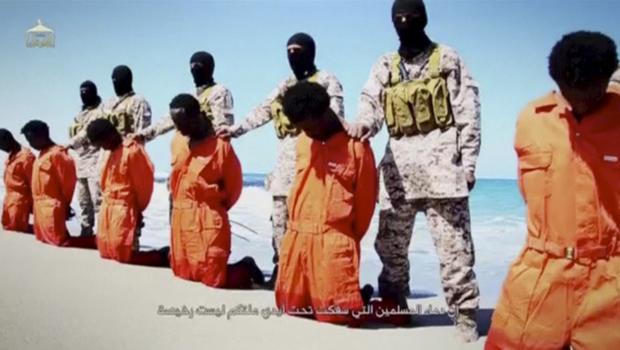
ISIS militants stand behind what are said to be Ethiopian Christians along a beach in Wilayat Barqa, Libya, in this still image from an undated video made available on a social media website on April 19, 2015.
 REUTERS
CAIRO -- A leading international rights group on Wednesday released a report documenting atrocities by Libya's Islamic State of Iraq and Syria (ISIS) affiliate - including instances of "crucifixions" and shooting a man to death for "cursing God" - in the coastal city of Sirte, a stronghold of the militants.
Human Rights Watch recounts "scenes of horror" that followed the city's seizure by ISIS militants in February 2015, with beheadings of dozens of residents accused of being spies or sorcerers.
Men were flogged for acts such as smoking or listening to music, and fathers were ordered to "marry off their daughters" to the group's fighters as ISIS spread a wave of terror among the townspeople.
The 41-page HRW report entitled "'We Feel We Are Cursed': Life under ISIS in Sirte, Libya," is based on interviews with 45 Sirte residents conducted by the New York-based group in March. The residents were among the two thirds of the city's 80,000-strong population that fled after ISIS overran Sirte.
The militant branch, more known for its spread in Iraq and Syria, gained a foothold in Libya amid the chaos that engulfed the country since the ouster andkilling of the longtime autocratic leader Muammar Qaddafi in 2011.
ISIS managed to exploit the turmoil as political rivalries left Libya torn between rival governments, parliaments, and myriad of militias backing either side. Its spread triggered fears in Europe at the prospects of the continent being separated from a permanent ISIS base in Libya only by a relatively small stretch of the Mediterranean Sea.
"While the world's attention is focused on atrocities in Syria and Iraq, ISIS is also getting away with murder in Libya," said Letta Tayler, a senior terrorism and counterterrorism researcher at HRW, using an alternative acronym for the Islamic State group.
U.S. military experts estimated in April that ISIS has up to 6,000 fighters in Libya. However, Libyan military intelligence officials have told HRW that the affiliate's numbers are up to 1,800 - 70 percent of whom are foreigners. Estimates by other Libyan security analysts put the number of ISIS fighters in the country at 3,000. Some fighters were originally migrants who came to Libya's coastal cities in hopes of crossing into Europe by sea - risky journeys that have claimed thousands of lives in the past years - but then became stuck in Libya and joined the militants.
In running Sirte, HRW said ISIS gave homes and all the goods seized from residents who fled to its fighters.
Sirte, the birthplace of Qaddafi, was among cities worst hit by a wave of retaliatory attacks, lootings, and killings that followed the dictator's ouster. This also helped ISIS find a haven among those disillusioned by Libya's post-Gadhafi governments.
Along with witness accounts, the HRW report also offered a glimpse into what life under ISIS has been like in Sirte.
After taking the city, ISIS handed out a 13-point charter or rulebook and seized public funds. In return for personal safety, residents had to comply with its rulings, based on the group's harsh interpretation of Islamic law, or Sharia.
Sirte's central Martyrs' Square was transformed into a stage for public extrajudicial killings - including beheadings by a sword - for a wide variety of offenses.
If the group killed someone accused of "cursing God," that person's family would not even be allowed to bury his body because he was denounced by ISIS as an "infidel." Also, ISIS reportedly had a hit list of 130 names, mostly of government officials, police, and other loyalists.
Women were forced to cover up and wear the conservative black head-to-toe cloak known as abbaya from the age of 10, and were not allowed to leave home without a male guardian. ISIS established a religious police that fined offenders up to $116 and flogged male relatives for not acting as proper guardians to their women. Many mothers covered up their daughters younger than 10 years, as a precaution and for fear of the militants.
ISIS also imposed the "zakat" or religious tax, something enforced in other ISIS-controlled territories and even by its rival al Qaeda group. Farmers were forced to hand over to ISIS one out of every 10 sheep and one out of every five camels.
The HRW report comes just days after the United States and other Western countries threw their support behind Libya's newly formed and U.N.-brokered government, saying they would supply the government with weapons to counter ISIS.
The move is also seeking to end the power struggle that started in 2014 between a Tripoli-based parliament and the country's internationally-recognized assembly, seated in eastern Libya.
But while the step could boost the U.N.-brokered government's efforts to consolidate power and regain control over Libyan state institutions like the central bank and national oil company, it also comes with risks - not least of which is that the arms could end up in hands of ISIS or militias in a country already awash with weapons.

Thursday, April 2, 2015

Of Course Hillary Lied. She Lied, People Died.

image: http://www.wnd.com/files/2015/04/hillary-libya.jpg
Hillary Clinton walks from  her C-17 military transport upon her arrival in Tripoli  Libya, Oct. 18, 2011.
Hillary Clinton walks from her C-17 military transport upon her arrival in Tripoli Libya, Oct. 18, 2011.
Two days after the Sept. 11, 2012, terrorist attack in Benghazi, then-Secretary of State Hillary Clinton received an email from confidante and former Bill Clinton White House staffer Sidney Blumenthal punching holes in the administration narrative that blamed the attack on an anti-Islam YouTube video.
One day earlier, Blumenthal presented Clinton with information from a “sensitive source” supporting the video narrative. But he followed up that correspondence with a contrary report that the attack was carried out by a jihadist group that had planned it at least one month in advance.
Yet Clinton and the Obama administration persisted for weeks in blaming the obscure anti-Islam video as the primary motivation. In her memoir, “Hard Choices,” published last June, Clinton continued to defend the YouTube-video storyline, claiming it was a reflection of what the U.S. intelligence community believed at the time.
The latest information comes as Rep. Trey Gowdy, R-S.C., chairman of the House committee investigating the Benghazi attack, on Tuesday asked Clinton to appear for a private interview regarding her controversial use of a private email account during her tenure as secretary of state.
Gowdy sent a letter to Clinton’s attorney characterizing the former secretary’s “email arrangement with herself” as “highly unusual, if not unprecedented.” He added Clinton’s disclosure that she deleted all emails from her private server “only exacerbates our need to better understand what the secretary did, when she did it and why she did it.”
In an article jointly published last week by Gawker and ProPublica, the websites disclose Blumenthal prepared detailed intelligence briefs that were sent regularly to Clinton’s private email address.
They report that the dispatches, sent under Blumenthal’s name, were actually based on information gathered and prepared by Tyler Drumheller, a former chief of the CIA’s clandestine service in Europe who left the agency in 2005 and now serves as a private contractor.
The leaked emails were posted on the Internet by Gawker in 2013. The website says it was forwarded the emails from Blumenthal’s AOL account by the hacker using the alias “Guccifer.”
“Guccifer” reportedly hacked Blumenthal’s email in March 2013. Guccifer has since been identified as Marcel Lazar Lehel, a Romanian hacker serving a seven-year sentence for hacking into the accounts of Romanian government officials.
Ansar al Shariah
The leaked emails show that on Sept. 12, 2012, one day after the Benghazi attack, Blumenthal sent an email to Clinton citing a “sensitive source” saying the interim Libyan president, Mohammed Yussef el Magariaf, was told by a senior security officer the attack was provoked by the anti-Islam YouTube film and also by allegations from political opponents that Magariaf had CIA ties.
The memo reads: “A senior security officer told [interim Libyan President Mohammed Yussef] el Magariaf that the attacks on that day were inspired by what many devout Libyans viewed as a sacrilegious internet video on the prophet Mohammed originating in America.”
However, the next day, Blumenthal sent an email titled “Re: More Magariaf private reax.” It said Libyan security officials believed the terrorist group Ansar al Shariah was behind the attack and that the group prepared it a month in advance.
The email further states the Brigade “took advantage of the cover” provided by the purported demonstrations against the YouTube video.
Despite the emails and other evidence, Clinton and the Obama administration persisted in blaming the attack on anger over the YouTube video.
In her initial comments on the Bengahzi attack, Clinton referenced the video.
“Some have sought to justify this vicious behavior as a response to inflammatory material posted on the Internet,” she said. “The United States deplores any intentional effort to denigrate the religious beliefs of others. Our commitment to religious tolerance goes back to the very beginning of our nation. But let me be clear: There is never any justification for violent acts of this kind.”
In “Hard Choices,” Clinton defended the actions of then-United Nations Ambassador Susan Rice, who on Sunday, Sept. 16, 2012, infamously appeared on five morning television programs to offer the official Obama administration response to the Benghazi attack.
In nearly identical statements, Rice asserted that the attack was a spontaneous protest in response to a “hateful video.”
Writes Clinton in her book: “Susan stated what the intelligence community believed, rightly or wrongly, at the time. That was the best she or anyone could do. Every step of the way, whenever something new was learned, it was quickly shared with Congress and the American people. There is a difference between getting something wrong, and committing wrong. A big difference that some have blurred to the point of casting those who made a mistake as intentionally deceitful.”
‘Everybody knew’
Clinton’s claim that the intelligence community believed the attack was a spontaneous protest in response to a “hateful video” is further called into question by numerous revelations.
Gregory Hicks, the No. 2 at the U.S. Embassy in Tripoli during the time of the attack, testified to Congress he knew immediately it was a terrorist attack, not a protest turned violent.
According to Hicks, “everybody in the mission” believed it was an act of terror “from the get-go.”
The CIA’s station chief in Libya reportedly emailed his superiors on the day of the attack that it was “not an escalation of anti-American protest.”
With additional research by Joshua Klein.

Read more at http://www.wnd.com/2015/04/hacked-hillary-emails-punch-holes-in-benghazi-story/#8SiDFzAtMSqUFCJv.99

Wednesday, September 3, 2014

Libyan Airplanes Missing. Could They Be Used For Terror Attacks?

Seized Airliners - Terror Attacks?


Missing Libyan Jetliners Raise Fears of Suicide Airliner Attacks on 9/11


Egypt set for military intervention as Libya spirals toward failed state
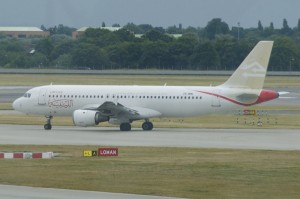
Libyan Airlines (Nouvelair Tunisie) Airbus A320-212; damaged at Tripoli airport on July 14, 2014. Photo:  Aero Icarus
Libyan Airlines (Nouvelair Tunisie) Airbus A320-212; damaged at Tripoli airport on July 14, 2014

Islamist militias in Libya — a nation falling into chaos — have reportedly stolen from the airport in Tripoli as many as a dozen large, commercial jetliners that could be used in terror attacks. The Washington Times and the Washington Free Beacon are reporting that western intelligence agencies are warning that 9/11-like attacks could be in the final planning stages.


REPORT: 11 commercial jetliners missing after Islamist takeover of Tripoli airport... Developing...

U.S. intelligence agencies…are attempting to locate all aircraft owned by two Libyan state-owned airline companies, as security in the country continued to deteriorate amid fighting between Islamists and anti-Islamist militias.
Over the Labor Day weekend, Western Journalism posted news about the takeover by Islamist fighters of at least part of the U.S. Embassy compound in Tripoli.


-- Islamist militias in Libya took control of nearly a dozen commercial jetliners last month, and western intelligence agencies recently issued a warning that the jets could be used in terrorist attacks across North Africa.
Intelligence reports of the stolen jetliners were distributed within the U.S. government over the past two weeks and included a warning that one or more of the aircraft could be used in an attack later this month on the date marking the anniversary of the Sept. 11, 2001, terrorist attacks against New York and Washington, said U.S. officials familiar with the reports.
“There are a number of commercial airliners in Libya that are missing,” said one official. “We found out on September 11 what can happen with hijacked planes.”
The official said the aircraft are a serious counterterrorism concern because reports of terrorist control over the Libyan airliners come three weeks before the 13th anniversary of 9/11 attacks and the second anniversary of the Libyan terrorist attack on the U.S. diplomatic compound in Benghazi.
Four Americans, including Ambassador Christopher Stevens, were killed in the Benghazi attack, which the Obama administration initially said was the result of a spontaneous demonstration against an anti-Muslim video.

Saturday, July 12, 2014

What Happened In Benghazi? Military Leaders Who Were NOT There Testify.

Testimony Reveals What Military Did While Benghazi Post Burned

Image: Testimony Reveals What Military Did While Benghazi Post Burned A vehicle in flames after it was set on fire inside the U.S. consulate compound in Benghazi on Sept. 11, 2012. (Getty Images)
Saturday, 12 Jul 2014 09:20 AM

Share:
  Comment  |
   Contact Us  |
  Print  
|  A   A  
One by one, behind closed doors in Washington, D.C.,, military officers explained what they did and didn't do the night the U.S. diplomatic post in Benghazi, Libya, burned.
Together their 30 hours of testimony to congressional investigators gives the fullest account yet of the military's response to the surprise attacks that killed the U.S. ambassador and three other Americans the night of Sept. 11, 2012, and early the next morning.
Transcripts of the interviews, with some names and classified information blacked out, were released Wednesday
The nine officers, including retired Gen. Carter Ham, then the head of the military's U.S. Africa Command, described making on-the-fly decisions with only sparse information about the crisis unfolding at a diplomatic post and the nearby CIA compound.

None of them was in Benghazi. The closest? Some were 600 miles away in Tripoli, the Libyan capital; others gave orders from command headquarters in Germany or Washington.
They did not witness what went on in the White House or at the State Department. Ex-Secretary of State Hillary Rodham Clinton, former Defense Secretary Leon Panetta and others have testified about Benghazi. More hearings are coming.
The nine officers shed light on the nature of the attacks; speculation that the military was ordered to "stand down" from helping Americans; suggestions that the U.S. should have rushed jets or a special operations team to Benghazi; and early misperceptions that the attack began as a protest over an anti-Islam video.
Some lingering questions about the Benghazi attacks and what the officers told the House Armed Services Committee and the House Oversight and Government Reform Committee this year:
_____
DID MILITARY LEADERS INITIALLY BELIEVE THE TROUBLE RESULTED FROM A STREET PROTEST?
Some heard that, some didn't; nothing was clear about events on the ground at first.
One of the earliest reports came from Ambassador Chris Stevens, who told his deputy in a phone call cut short: "We're under attack."
"We started calling it an attack from inception," said Army Lt. Col. S.E. Gibson, who was at the U.S. Embassy in Tripoli. "We never referred to it as anything else."
Another military official in Tripoli, whose name was withheld, said he wasn't sure how to interpret that word — "attack" — at first.
He had heard about protesters who scaled the walls of the U.S. Embassy in Cairo earlier that night. "It could be, you know, vandals are attacking," he said.
Retired Vice Adm. Charles "Joe" Leidig Jr., deputy commander of AFRICOM, said he was awoken in the night at his headquarters in Germany with word that "there had been protesters, and they had overrun the facility in Benghazi."
But Ham, who was alerted while visiting the Pentagon, said he heard no mention of protesters.
So he's sure he didn't pass on anything like that when he informed Panetta and Gen. Martin Dempsey, chairman of the Joint Chiefs of Staff, of the attack. Dempsey and Panetta personally took word to President Barack Obama at the White House.
Speaking for the Obama administration, then-U.N. Ambassador Susan Rice appeared on Sunday talk shows five days later and suggested the attacks were born from regional protests against an anti-Islamic video. The administration later recanted that position but never thoroughly articulated what they believe happened. Republicans say Obama soft-pedaled a terrorist attack to protect his re-election.
Over the two days when the attacks were occurring, there was "very, very little discussion that I can recall about why did this happen." Ham said. "There just wasn't time for that, frankly."
____
WAS A FOUR-MAN TEAM HEADED FOR BENGHAZI ORDERED TO STAND DOWN?
Technically, no, the team was not ordered, as some have asserted, to stand by as militants attacked Americans 600 miles away. But they were told not to go to Benghazi and instead to stay and protect personnel in Tripoli. In hindsight, the attacks were over by then, anyway.
The special operations officer leading that team and the commander who gave him the order both told investigators that it was the right decision.
The team, led by Gibson, was in Tripoli to help train Libyan special forces. When the Benghazi attack began, Gibson's first duty was to protect the embassy in Tripoli amid fears that it also would be targeted. He helped evacuate the staff to a classified, more-secure location. Once he felt they were safe on the morning of Sept. 12, Gibson was ready to rush to Benghazi to help.
One Libyan plane carrying a six-man U.S. security team already had taken off. Gibson wanted his group on the second chartered flight. He called the special operations command center for Africa to say they were heading to the airport.
He was told, "Don't go. Don't get on that plane."
"Initially, I was angry," he recalled. "Because a tactical commander doesn't like to have those decisions taken away from him. But then once I digested it a little bit, then I realized, OK, maybe there was something going on. Maybe I'm needed here for something else."
Rear Adm. Brian Losey, who gave the order, said he needed Gibson's team in Tripoli in case trouble started there.
Although some Republican lawmakers have suggested the team might have helped repel attackers in Benghazi, their flight would have arrived after the final assault that killed two CIA contractors.
Losey dismissed the notion that the foursome could have been much help in Benghazi, where Americans already were moving to the airfield for evacuation with the aid of Libyan forces and the U.S. security team from the first plane. Losey noted that Gibson's group consisted of a communications specialist, a medic and a weapons operator with his foot in a cast.
"That's not a security team," Losey said. Sending them in "didn't make a lot of sense."
Gibson said if his group had flown to Benghazi, their flight would have crossed paths with the first plane as it returned bearing wounded Americans. Because they stayed, his medic was there to meet two seriously injured people at the Tripoli airport. The medic is credited with saving one's life.
___
RIGHT OR WRONG, WASN'T THAT AN ORDER TO "STAND DOWN"?
Not according to Losey and Gibson.
Civilians might say that Losey ordered Gibson to stand down from his race to the scene. But Losey and Gibson say in their military parlance, standing down means ceasing operations.
"It was not a stand-down order," Gibson said. "It was not, 'Hey, time for everybody to go to bed.' It was, you know, 'Don't go. Don't get on that plane. Remain in place.'"
"It was never an order to stand down," Losey said. "It was an order to remain in place and continue to provide your security role in Tripoli."
___
DID CLINTON GIVE A "STAND DOWN" ORDER, AS SOME REPUBLICANS HAVE THEORIZED?
"No," said Losey.
"I never received any orders from the secretary of state or heard of any orders from the secretary of state," said Leidig, also based in Stuttgart, Germany.
"No," said Ham, who commanded the Africa operations. "And we would not receive direct communications from the secretary of state."
Ham said no one else ordered him to stand down, either, and no one tried to stop him from helping the Americans in Benghazi any way he could.
"The conversation really was more along lines of, you know, 'What do you need? What can we do?'" he said. "And every request for forces that I asked of the secretary of defense was approved."
___
WHAT DID THE MILITARY DO TO HELP?
Following the first report of trouble about 9:40 p.m. local time on Sept. 11, officials began looking for military planes that could head to Benghazi for evacuations. None would be available for hours.
An unmanned drone already in Libya was quickly sent to survey the situation at the diplomatic post. Nighttime darkness limited its usefulness.
Two military members — both from Special Forces — were in the six-man team that flew from Tripoli to Benghazi around midnight and aided with the defense and evacuation of the CIA base.
An Air Force C-17 transport plane flew the Benghazi evacuees from Tripoli to Germany the night of Sept. 12, about 24 hours after the attacks began.
A U.S. anti-terror team sent from Spain arrived in Tripoli after the evacuees had gone.
Two military teams — one in Croatia and the other in the U.S. — prepared to go but, as the situation changed, weren't brought to Libya. They would have arrived too late.
Not until the morning of Sept. 12 was the 31st Fighter Wing in Aviano, Italy, ordered to get four F-16 jets and four pilots ready to respond if needed. The call to Benghazi never came.
___
WHY DIDN'T THEY SCRAMBLE THE F-16 FIGHTERS?
Military leaders decided early on that jets armed with 500-pound bombs were unsuited for the chaotic crisis in an urban area.
"Ultimately, it was my decision that said no, not the right response in this circumstance," Ham said.
He didn't have anyone on the ground to provide target information for airstrikes. He didn't want to harm innocent people or risk inflaming more Libyans to join the attack. He believed some militants had missiles capable of downing a plane.
"Had I made a different decision, had strike aircraft deployed, we don't really know what the outcome would have been," Ham said. "Maybe it would have been positive, but maybe it would have got shot down. Maybe it would have killed civilians."
Brig. Gen. Scott Zobrist, then the wing commander at Aviano, had similar worries. He said that, even if called right away, it would have taken 20 hours to get jets to Benghazi from the base in Italy normally used for training flights.
Pilots would have to be recalled from their homes, bombs loaded onto planes, the 1,000-mile route planned. The jets would need refueling along the way, which meant coordinating with tanker planes stationed in England — something that typically takes days to plan.
___
COULD THE MILITARY HAVE DONE MORE?
Perhaps.
In hindsight, Ham said, he should have reached out to his Libyan contacts and other U.S. officials to get Americans evacuated from Benghazi faster. That might have saved the two lives that were lost hours after the first attack at the diplomatic post.
While the evacuation from Benghazi was being planned by the embassy and the CIA, Ham said, he switched his focus toward gearing up a possible hostage rescue mission, because the ambassador was still missing.
Meanwhile, surviving U.S. personnel were gathered at the CIA base in Benghazi. Ham said he believed they were relatively safe. He and other military leaders said they weren't told that the CIA compound already had come under gunfire and rocket-propelled grenade attacks in the middle of the night.
The U.S. security team that arrived at the Benghazi airport after midnight was detained by Libyan officials for several hours. That delayed the evacuation, Ham said, and "allowed sufficient time for the second attack to be organized and conducted."
During that attack, around 5 a.m., mortar fire killed two CIA security contractors on the roof and wounded other Americans.
Less than an hour later, the evacuation of all American personnel from Benghazi began.

© Copyright 2014 The Associated Press. All rights reserved. This material may not be published, broadcast, rewritten or redistributed.